Certified vs Licensed Electrician in Singapore: What You Need to Know
Certified and licensed are not the same thing. Here is why only an EMA-issued LEW licence legally allows electrical installation work, and how to confirm you are hiring one.
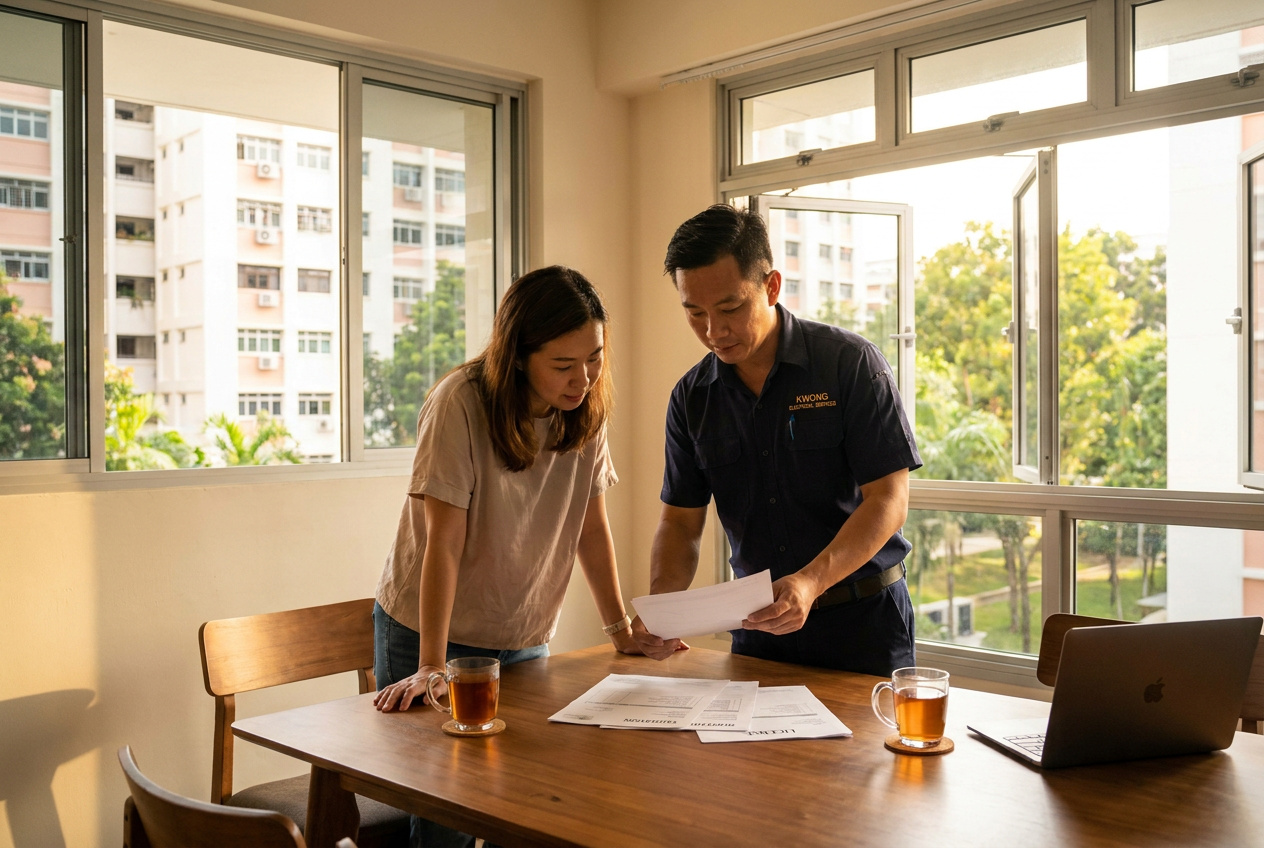
When you look for an electrician in Singapore, you will see 'certified' and 'licensed' used as if they mean the same thing. They do not. They point to fundamentally different qualifications, with real legal and safety implications.
Getting this right is not just about hiring the right person. It is about keeping your electrical work legal, safe, and clear of any insurance trouble. In Singapore's regulated industry, only one type of qualification lets someone legally carry out electrical installation work.
Singapore's licensing framework
Singapore's electrical industry runs under tight regulation by the Energy Market Authority (EMA). The framework draws a line between two things.
Certification is about education: qualifications from ITE, the polytechnics, or training institutions. These programmes teach electrical theory, safety, and technical skills. Certification shows someone has completed formal training.
Licensing is about legal authorisation from the EMA to carry out electrical installation work. A Licensed Electrical Worker (LEW) holds government approval to do specific types of electrical work. Licensing shows someone is legally permitted to work on installations.
Here is the key point: certification on its own does not grant legal permission to do electrical work. Without an active LEW licence from the EMA, no one can legally touch electrical installations in a home or business.
The Electricity Act states that no one may carry out electrical installation work unless they are a Licensed Electrical Worker or working under direct LEW supervision. Breaches can bring fines up to S$10,000, up to 12 months in prison, or both.
The three LEW grades
Singapore's LEW system splits workers into three grades, based on system complexity and load.
- Grade 7 (L7) Licensed Electrician: installations up to 45kVA and 1,000 volts. Covers nearly all typical home work, from outlets, switches, and light fixtures to ceiling fans and distribution boards. Most HDB and residential work sits here.
- Grade 8 (L8) Licensed Electrical Technician: installations up to 500kVA (design up to 150kVA) at 1,000 volts. Suits larger homes, shops, offices, food courts, and small factories.
- Grade 9 (L9) Licensed Electrical Engineer: the highest level, for high-voltage systems up to 400kV depending on licence conditions. Needed for large commercial buildings, industrial sites, substations, and major infrastructure.
For most homeowners, a Grade 7 LEW is enough. You will need Grade 8 if your property's load goes above 45kVA, such as a larger condo or a home with heavy electrical demand.
Why 'certified' isn't enough
The difference carries real legal and financial weight.
- Legal liability: the Electricity Act makes hiring an unlicensed electrician a liability for property owners. If unlicensed work causes fire, injury, or death, both the worker and the owner face consequences.
- Insurance: most property policies require licensed professionals. If an investigation finds unlicensed work contributed to an incident, insurers may deny the claim outright. A S$500,000 claim could be rejected over a few hundred dollars saved.
- HDB requirements: all electrical work must be done by LEWs registered with electrical contractors. Unlicensed changes must be put right before a sale can proceed.
- Practical problems: if installations are not to code, future licensed electricians may refuse to work on your system without costly rectification first.
The maths is simple: a licensed electrician might cost 10 to 20% more upfront, but the potential cost of fire damage, a denied claim, or redoing the work can be hundreds of times higher.
How to verify LEW credentials
Checking credentials is straightforward through Singapore's regulatory system.
- Ask for the LEW licence number when you get quotes. Genuine professionals share it readily.
- Check the EMA's Register of Licensed Electrical Workers online. Confirm the licence is currently valid (not expired or suspended), the name matches the person you are dealing with, the grade suits your job, and the status reads 'Active'.
- Verify contractor registration through the EMA's Register of Licensed Electrical Contractors. LEWs must work under a registered contractor.
Red flags: hesitation to give a licence number, claims that licensing 'doesn't matter' for small jobs, offers to work without paperwork 'to save money', or showing training certificates in place of an LEW licence.
DIY versus licensed work
The Electricity Act draws the boundaries clearly.
Allowed without an LEW licence:
- Replacing bulbs and LED strips
- Resetting tripped circuit breakers
- Plugging and unplugging appliances
- Replacing batteries in smoke detectors
Requires a LEW:
- Installing new outlets or switches
- Relocating existing outlets
- Fitting light fixtures that need wiring
- Running new cables
- Adding or replacing circuit breakers
- Hardwiring appliances (water heaters, air-con, ovens)
- Any work on distribution boards
If the task means making electrical connections or altering circuits, it needs a licensed electrician, however simple it looks.
Frequently Asked Questions
What happens if I hire an unlicensed electrician? You take on serious legal, financial, and safety risks. Under the Electricity Act, both the person doing unlicensed work and the property owner can face fines and be required to put the work right at your own cost. Insurance is a major concern: most policies require licensed professionals, and claims may be denied if unlicensed work contributed to an incident. For HDB properties, unlicensed changes must be rectified before a sale proceeds. Beyond all that, unlicensed work creates genuine fire and electrocution risks. The licensing system exists because bad electrical work can be life-threatening.
Can foreign-certified electricians work in Singapore? No. Electricians licensed overseas cannot do electrical work here without an EMA-issued LEW licence, whatever their overseas qualifications. The EMA recognises certain overseas qualifications as part of the application, but foreign electricians must complete local licensing: showing equivalency, possibly taking bridging courses on Singapore regulations, and passing the LEW examination. Always verify licensing regardless of overseas experience claims.
How can I verify someone is truly licensed? Ask for the LEW licence number, then search the EMA's public Register of Licensed Electrical Workers. The database shows the name, licence number, grade, and status. Confirm the licence is active, the grade fits your job, and the expiry leaves time to finish. Also confirm they work under a registered electrical contractor via the EMA's Register of Licensed Electrical Contractors. Be wary if someone shows training certificates or diplomas instead; those do not replace an active LEW licence.
Do all renovation contractors employ licensed electricians? No. BCA renovation licences cover building and construction work, but electrical work needs separate LEW licensing from EMA, a different authority. Reputable contractors work with registered electrical contractors, but some cut corners with unlicensed labour. When you engage a renovation contractor, ask specifically which registered electrical contractor will do the electrical work, and request LEW licence numbers to verify. For HDB renovations, you as the owner are responsible for ensuring licensed workers, even if your contractor arranged the job.
What's the difference between the LEW grades? Three grades. Grade 7 (L7) Licensed Electrician works up to 45kVA and 1,000 volts, covering nearly all residential work including outlets, switches, lighting, and distribution boards, and is enough for most homeowners. Grade 8 (L8) Licensed Electrical Technician handles up to 500kVA (design up to 150kVA) at 1,000 volts, for larger properties, commercial premises, or high-load equipment. Grade 9 (L9) Licensed Electrical Engineer works on high-voltage systems up to 400kV, for large commercial, industrial, and infrastructure projects. Higher grades can do lower-grade work.
Is a diploma in electrical engineering the same as a LEW licence? No. A diploma is formal education showing theoretical knowledge. The LEW licence is government authorisation that specifically permits electrical installation work. Getting a LEW licence takes educational qualifications plus supervised practical experience, then passing the LEW examination. Think of medicine: a degree is needed to become a doctor, but the degree alone does not grant the right to practise. You need the medical licence too. When hiring, do not be swayed by diplomas alone. The LEW licence is what legally permits the work, so always verify the number through the EMA register.
In summary
The gap between certified and licensed is not just wording. It is a fundamental legal and safety matter. Certification shows training; only an EMA-issued LEW licence grants legal authorisation to carry out electrical installation work.
The few minutes it takes to verify an LEW through the official EMA register give you certainty that your work meets Singapore's rules. Ask for licence numbers, confirm them in the EMA database, and check that workers operate under a registered contractor.
For reliable work by experienced Licensed Electrical Workers, explore our HDB and residential LEW services, built for Singapore homes. Our licensed team handles everything from routine installs to full upgrades, with full compliance and your peace of mind.