Singapore Electrician Regulations: What Homeowners Must Know
From the Electricity Act to SS 638 and the new RCCB retrofit deadline, here is the legal framework behind every power point in your home, in plain English.
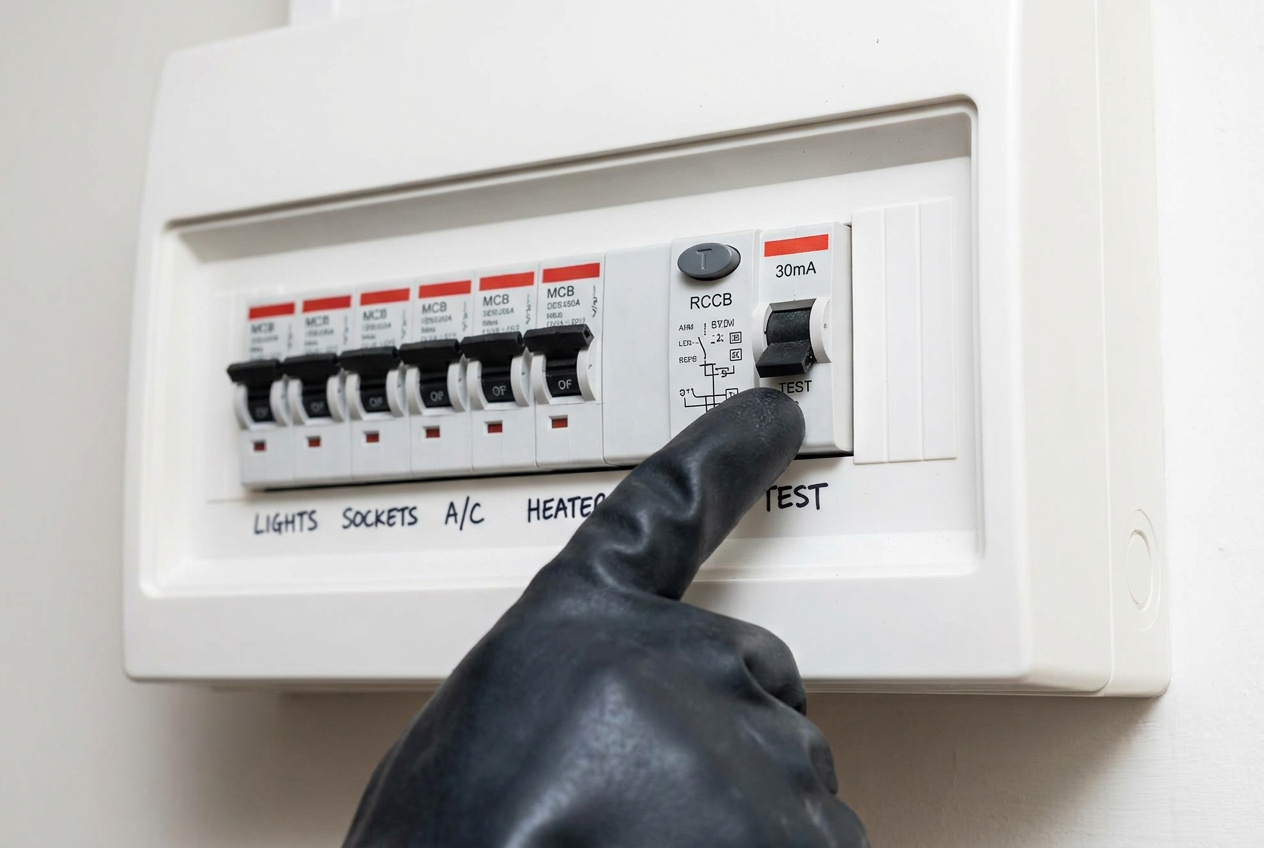
When you flick a switch or plug in the kettle, you are probably not thinking about regulations. Yet behind every power point sits a carefully built legal system designed to protect lives and property.
These rules exist because electricity carries real risk. Every year, electrical incidents cause fires, injuries, and property damage. What keeps those numbers from being far worse is a strong system built on the Electricity Act and run by the Energy Market Authority (EMA).
Knowing the framework matters whether you own, rent, or run a business. When work needs doing, understanding the law helps you make good decisions and avoid serious consequences.
The foundation: the Electricity Act
Singapore's electrical safety rules come from the Electricity Act, which sets the legal framework for all electrical installation work. It defines what electrical work is, who may do it, and what happens when someone works outside the law.
Under the Act, electrical installation work covers more than most people realise. Installing new circuits, replacing distribution boards, adding power points, and upgrading consumer units all count. The common thread is a permanent change to a property's electrical infrastructure.
The Act bans unauthorised work outright. If you are not a Licensed Electrical Worker, you cannot legally carry out electrical installation work in Singapore. That holds no matter how confident you feel, how many tutorials you have watched, or how many friends have done it before without trouble.
It also sets criminal penalties. Doing installation work without a LEW is an offence under section 82 of the Electricity Act 2001, punishable (via the Act's general penalties) by a fine of up to S$10,000 and/or up to 12 months' imprisonment, with extra daily fines for a continuing offence. Contractors who engage unlicensed workers face their own separate penalties.
EMA's role
The Energy Market Authority runs the regulatory framework. EMA assesses applications, conducts examinations, and issues licences to those who qualify. Applicants must prove competence through formal assessments covering electrical principles, safety, and the regulations.
EMA's oversight does not stop at the first licence. Licensed Electrical Workers must renew periodically so they stay current with evolving standards. EMA also investigates complaints, inspects installations, and enforces the rules when breaches occur.
For consumers, EMA offers verification. Through the e-Licence Information Services (ELISE) portal, anyone can confirm whether a person claiming to be licensed really holds valid credentials. That transparency helps you choose who to hire.
Singapore Standard 638: the technical backbone
The Electricity Act provides the legal authority and EMA provides oversight, but Singapore Standard 638 (SS 638) sets the technical detail of how installations must be built.
SS 638, titled Code of Practice for Electrical Installations, specifies wire gauges, circuit layouts, earthing, and protective device requirements. It is not optional guidance. The Electricity Act brings SS 638 in by reference, so compliance is a legal requirement.
One key requirement concerns residual current circuit breakers (RCCBs). Since July 1985, SS 638 and its predecessor CP5 have required RCCB protection in new residential installations. SS 638:2018 specifically mandates 30mA sensitivity devices for socket-outlet circuits and bathroom final circuits, and most modern Singapore installations extend the same protection to lighting circuits. RCCBs cut electrocution risk sharply by disconnecting power fast when earth leakage is detected. For a full ELCB versus RCCB comparison, including the HDB RCCB mandate, see our dedicated guide.
SS 638 also sets earthing requirements, giving fault currents a safe path to ground so dangerous voltages do not appear on metal enclosures and equipment. Circuit capacity rules prevent the overloading that causes fires.
The standard is updated from time to time. Work that met an older edition may not meet the current one, so knowing that today's SS 638 applies helps you anticipate what a job might need.
Licensed Electrical Workers (LEW)
Licensed Electrical Workers are the human side of the system. They are individuals who have proven their competence and hold valid EMA licences for specific types of electrical work.
The LEW system is graded, with each grade covering a different scope and complexity. That structure keeps workers to tasks that match their training.
The point that matters most for owners: only a LEW can legally perform electrical installation work. There is no exception based on how simple the job looks. The rule applies to a whole new consumer unit and to a single added power point alike.
When a LEW does installation work, they must submit documentation to EMA, creating an official record of who did what and when. They also carry professional liability. Substandard work can mean licence suspension or revocation, legal liability, and possible criminal charges.
For you, hiring a LEW provides legal protection. If unlicensed work causes a fire, your insurer may deny the claim under policy exclusions for illegal activity. Using a licensed professional protects both your safety and your finances.
What non-compliance can cost
The penalties are heavy because the consequences can be catastrophic.
Carrying out electrical work without a LEW is an offence under section 82 of the Electricity Act 2001, punishable (via the Act's general penalties) by a fine of up to S$10,000 and/or up to 12 months' imprisonment. These apply whether or not the work caused any harm. The offence is doing the work unlicensed.
Owners who engage unlicensed workers also face consequences. Engaging someone you know, or should have known, lacks credentials can bring fines and liability. Civil liability looms large too. If unauthorised work causes a fire that damages neighbouring properties, you could face huge civil claims.
Insurance compounds the risk. Most property policies exclude damage from illegal activity, so if unauthorised work starts a fire and the insurer finds it was unlicensed, they may deny the claim entirely.
For HDB residents, there is more. Unauthorised work breaches HDB's conditions of tenancy, which can affect your property rights and complicate a future resale.
RCCB retrofit mandate (effective 1 July 2025)
One change every homeowner needs to know about is the RCCB retrofit requirement that took effect on 1 July 2025. Per EMA, all residential premises built before 1985 must have a residual current circuit breaker (RCCB) installed; the 2025 amending instrument is the Electricity (Electrical Installations) (Amendment) Regulations 2025 (S 454/2025), published 30 June 2025. The EMA enforcement date of 1 July 2025 has already passed, so non-compliant households are now potentially subject to enforcement action.
This closes a long-standing gap. Homes built before July 1985 came before the RCCB requirement for new installations, so many older HDB flats and private properties have run without this layer of earth-leakage protection. Without an RCCB, an earth fault that should trip in milliseconds can deliver sustained current to a person, causing serious or fatal shock.
The penalty for non-compliance is up to S$5,000. Beyond the fine, insurers may treat a non-compliant installation as grounds to reduce a claim after an electrical incident. The liability of running a non-compliant pre-1985 installation clearly outweighs the cost of fixing it.
Subsidies are available under the EMA-HDB scheme. Eligible pre-1985 HDB households get a 100% subsidy for 1-room and 2-room flats, and a 95% subsidy for 3-room and larger flats. If your flat predates 1985 and has not been retrofitted, arrange assessment and installation by a Licensed Electrical Worker without delay. Private landed and condominium owners in pre-1985 properties bear the full cost but carry the same legal obligation.
What this means day to day
Here is how the framework shapes your everyday decisions as an owner.
- DIY is illegal except for basic tasks. You can change bulbs, reset breakers, and plug in appliances. You cannot install power points, alter circuits, or replace distribution boards. To understand what is inside your panel, see our guide on the HDB circuit breaker box.
- Always verify licensing first. Do not rely on a business card or a verbal claim. A quick ELISE check takes minutes and saves you from real risk.
- Proper work takes time and follows a process. A LEW must submit documentation to EMA. If someone offers quick work with no paperwork, they are offering illegal work.
- Price differences reflect real value. Licensed electricians charge more because they carry insurance, maintain their licence, follow code, and provide documentation. Saving with an unlicensed worker is false economy.
- Keep your records. Hold on to work orders, invoices, and submission receipts. They prove compliance, support insurance claims, and help when you sell.
- Emergencies still need a licensed pro. Urgency does not create an exception to the licensing rules.
- Deal with non-compliant work early. If you find earlier work that looks non-compliant, having a licensed professional assess and fix it protects you far better than hoping nobody notices.
Frequently asked questions
What exactly counts as electrical installation work needing a licensed electrician?
It is any permanent change to a property's electrical infrastructure: new circuits, adding or relocating power points, replacing distribution boards, installing fixed appliances like water heaters, and changing circuit layouts. The defining feature is permanence, work that becomes part of the building's fixed electrical system. Even seemingly simple tasks, like adding a single power point or wiring in a ceiling fan, need a licensed professional. What matters is not how complex it looks but whether it modifies the permanent installation. If you are unsure, assume it needs a LEW. Tasks that do not require licensing include changing bulbs, resetting tripped breakers, plugging in appliances, and swapping detachable light fittings. HDB work adds further considerations, but the need for a licensed professional stays the same across property types.
How do the regulations protect me when I hire a licensed electrician?
They build several layers. Licensing is the first, since a LEW has shown minimum competence through examinations and assessments, independently verified by EMA. Technical standards like SS 638 form the second layer, binding the worker to detailed specifications. You do not need to judge wire gauges yourself, you just need work done by a licensed professional bound by those rules. Documentation creates accountability, because a LEW must submit records to EMA showing who did what and when, which supports investigations and insurance claims. And insurance protection is critical but easy to overlook. Most policies exclude damage from illegal activity, so licensed work keeps your cover intact, while unlicensed work that causes a fire can see your claim denied.
What are the actual penalties for DIY or hiring an unlicensed person?
They are substantial. Carrying out electrical work without a LEW is an offence under section 82 of the Electricity Act 2001, punishable (via the Act's general penalties) by a fine of up to S$10,000 and/or up to 12 months' imprisonment, with extra daily fines for a continuing offence. These apply even if no harm results, because the offence is the unlicensed work itself. If the work does cause fire, injury, or death, further and far more serious charges follow. Owners who engage unlicensed workers also face consequences, and the should have known standard means failing to check credentials can count as negligence. Civil liability may be the most devastating part. If unauthorised work causes a fire that spreads to neighbours, you could lose your own property and still face claims for theirs, all without insurance cover. For HDB residents, unauthorised work also breaches the conditions of tenancy and can complicate resale.
How does SS 638 affect work in my home?
SS 638 is the technical specification governing all installations in Singapore, covering wire sizes, circuit layouts, protective devices, earthing, and virtually every technical aspect. Compliance is legally mandatory, not optional guidance. This protects you through systematic compliance rather than relying on expertise you may not have, since a licensed worker must follow its specifications. One critical requirement is RCCB protection. Since July 1985, SS 638 and its predecessor CP5 have required RCCB protection for new residential installations, and SS 638:2018 specifically mandates 30mA sensitivity devices for socket-outlet circuits and bathroom final circuits, with most modern installations extending the same to lighting circuits. RCCBs save lives by cutting power fast when earth leakage is detected. Professional electrical troubleshooting can assess your current protection and recommend upgrades. SS 638's earthing rules send fault currents safely to ground, and its capacity rules prevent overloading that causes fires. Because the standard is updated periodically, older work may not meet current requirements, and any modification must bring the installation up to current standards.
Do the rules differ between HDB flats and private property?
The core framework, the Electricity Act, EMA licensing, and SS 638, applies uniformly across all property types. Whether you live in an HDB flat, a condominium, or a landed home, the need for a licensed worker is identical. HDB does add procedural layers, with its own rules on renovations and modifications and extra approval processes. The licensing requirement is the same, what differs is the procedural context. For routine maintenance without structural change, HDB's extra requirements are minimal, while bigger work involving structural change, such as major rewiring or adding circuits that need wall chasing, usually needs an HDB renovation permit. Condominiums add another layer through Management Corporation requirements, with MCST approvals often needed before renovations. These add to, but do not replace, the core regulatory requirements, and credential verification applies equally everywhere.
What should I do if earlier work on my property looks non-compliant?
Address it proactively, since that produces better outcomes than ignoring it. Engage a licensed professional for a thorough assessment, which can tell you whether the work actually breaches current standards. Some older work may not meet today's SS 638 but did comply when it was done, so you may be dealing with dated practice rather than illegal work. Even so, any modification must bring the installation up to current compliance. You generally are not liable for work done before you owned the property, but once you know about a safety issue, you take on responsibility for addressing it, and the insurance implications are significant. Property sales add pressure too, because inspections often surface electrical issues, buyers may demand corrections, and for HDB flats, HDB may require fixes before approving a transfer. When you have corrections done, get proper documentation.
In short
Singapore's regulatory framework protects lives and property through systematic safety standards. Understanding it helps you make good decisions and see why licensing matters.
When work needs doing, the framework is clear: engage Licensed Electrical Workers who comply with the technical standards. That way the job is done by qualified people using proven safety practice.
Whether you are planning a renovation, fixing a fault, or maintaining your home, working within the framework protects your interests. Our licensed electrical workers understand both the legal requirements and the technical standards behind safe, compliant installations.