Singapore Electrician License: Why EMA Licensing Protects You
Hiring an unlicensed electrician can void your insurance and leave you paying twice. Here is why Singapore licenses electrical work, what EMA actually does, and how the system protects you.
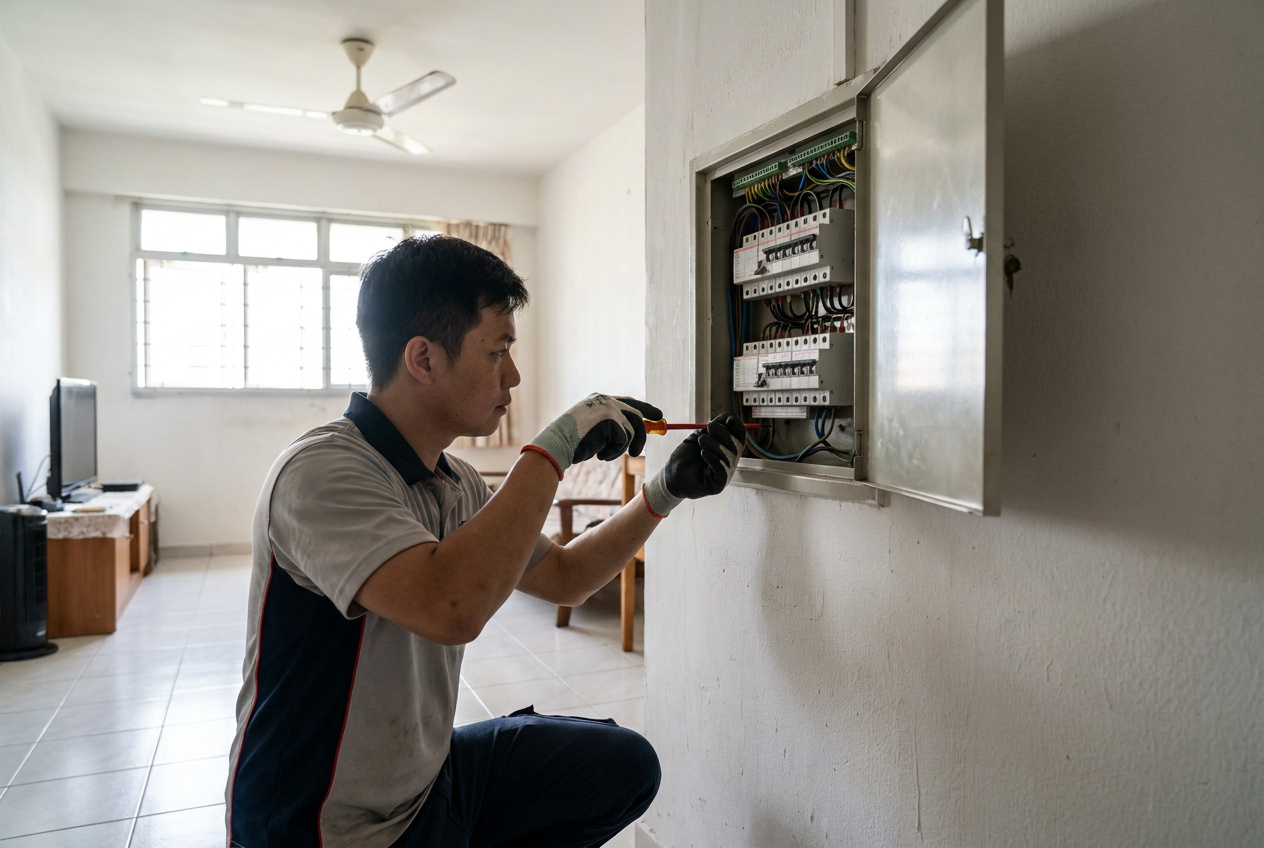
Picture this. Someone shows up, quotes a great price, and sounds like they know their stuff. A few months later your new circuit keeps tripping. You ring EMA to check the work, and you find out the person never held a valid Singapore electrician license. Now you are paying to redo everything properly, and your insurer is asking awkward questions.
It happens more often than people expect. That is exactly why Singapore runs one of the most thorough electrical licensing systems in the region. A Singapore electrician license is not just a piece of paper. It is your assurance that the person touching the wires in your walls actually knows what they are doing.
Why the licensing rules exist
Every country with a working electrical grid licenses its electricians in some form. Singapore simply takes it seriously, and for good reason. Electricity can kill, and bad electrical work can cause fires, electrocution, or equipment damage that costs far more than the original job.
The legal backbone sits in the Electricity Act and the Electricity (Electrical Installations) Regulations. These laws require all electrical installation work to be carried out by a Licensed Electrical Worker (LEW) registered with EMA. That is not a suggestion. It is the law.
Doing electrical work without a valid Singapore electrician license is an offence that can lead to fines or prosecution. On a practical level, unlicensed work can void your property insurance and leave hidden safety hazards that linger for years.
The requirement covers a wide range, from a simple outlet to a complex three-phase system. Whether you are renovating an HDB flat or upgrading a commercial building, the work has to be done by someone holding the right license grade.
What EMA actually does
The Energy Market Authority does far more than hand out licenses and walk away. EMA oversees the whole electrical sector through ongoing monitoring, enforcement, and standards work.
Here is the practical breakdown:
- License administration. EMA processes applications, checks qualifications, runs examinations, and keeps the official registry. That registry lets you confirm whether someone really holds a valid license before you hire them.
- Standards enforcement. EMA adopts and enforces SS 638:2018 (Code of Practice for Electrical Installations) through the Electricity (Electrical Installations) Regulations. The standard itself is published by the Singapore Standards Council under Enterprise Singapore, with mandatory compliance from 15 November 2020. It replaced the older CP5 code and sets the technical requirements for all electrical work, including provisions for our tropical climate and dense, high-rise living.
- Compliance monitoring. Through inspections and audits, EMA checks that work meets code. For major installations, it requires electrical diagrams and certifications before the supply is energised.
- Enforcement. When something goes wrong, EMA investigates, issues warnings, imposes fines, suspends licenses, or prosecutes the serious cases. That is what gives the system real teeth.
- Professional development. EMA works with the industry to raise training standards and keep electricians current with new technology and safety practice.
How licensing protects you
The system delivers real, concrete protection, not just regulatory theory.
- Proven competence. A licensed electrical worker has shown technical knowledge through examinations and hands-on experience. The three grades, L7 (Electrician), L8 (Electrical Technician), and L9 (Electrical Engineer), each map to specific voltage and load limits, so electricians only work within what they are qualified for.
- Insurance and liability. Licensed electricians typically carry professional indemnity insurance, and insurers are more willing to honour claims when the work was done by a licensed professional to code. When unlicensed people do the work, claims may be denied and you carry the cost.
- Quality you can rely on. Because their license depends on keeping standards up, licensed electricians have a strong reason to do good work. Consistently poor work risks suspension or revocation.
- Safety compliance. Licensed electricians are trained in Singapore's own codes, including ELCB specifications, earthing requirements, and circuit protection.
- A way to resolve disputes. If something goes wrong, you can raise it through EMA's complaint process. EMA can investigate and discipline. That route simply does not exist with an unlicensed operator.
- Proper paperwork. Licensed electricians provide documentation, including LEW certificates that confirm code compliance. You often need these for property sales, insurance claims, and future renovation work.
What bad electrical work can cost you
To see why Singapore takes this seriously, look at what happens without it.
- Fire. Wrong wiring, the wrong circuit protection, undersized cable, or faulty earthing can overheat and start a fire. Proper installation, which licensed electricians understand, cuts that risk sharply.
- Electrocution. Licensed electricians know the safety steps, including lockout and tagout, voltage testing, and proper protective gear. They know when a circuit can be worked live and when it must be switched off.
- Property damage. Incorrect work can wreck expensive appliances, cause voltage swings, or trigger system failures. Licensed electricians understand load calculations, voltage needs, and compatibility.
- Future headaches. Singapore's codes account for future maintenance and changes. Licensed work can be safely serviced and upgraded later, instead of becoming a mess that complicates the next job.
The money side of doing it properly
Some people see licensing as a needless cost. That view misses a few things.
- Insurance protection. Unlicensed work can void your policy or lead to denied claims. Any savings vanish the moment something goes wrong, and a single denied claim can run into tens or hundreds of thousands of dollars.
- No expensive rework. Unlicensed work often fails code and has to be redone when an inspection or a sale uncovers it. Paying properly once costs less than paying twice.
- Property value. Properly documented work by a licensed professional adds value and keeps transactions smooth. Buyers and banks want to see compliant, safe systems with LEW certification.
- Long-term safety. Electrical systems last decades. Investing in a proper installation buys you years of safe, reliable service.
The three license grades, explained
Singapore's system recognises that different work calls for different competence. EMA issues three grades of Licensed Electrical Worker, each with its own voltage and load limits.
- Grade L7 (Licensed Electrician). For installations up to 1,000V with approved load up to 45 kVA. L7 holders can design, install, repair, maintain, operate, inspect, and test within those limits, and can work on installations up to 500 kVA under the supervision of a higher grade LEW. Most home electrical work sits inside L7 scope.
- Grade L8 (Licensed Electrical Technician). For installations up to 1,000V and 500 kVA, and able to design and submit plans for installations up to 150 kVA. Homeowners needing HDB residential LEW services usually engage an L7 or L8, depending on the load.
- Grade L9 (Licensed Electrical Engineer). The top grade, covering installations at various voltage levels (1kV, 22kV, 66kV, 230kV, or 400kV) depending on the individual licence. L9 holders are registered professional engineers under the Professional Engineers Act. High-voltage commercial and industrial work may require an L9 practitioner.
How EMA enforces the rules
Understanding enforcement helps explain why the system works.
- Before installation. For significant work, EMA requires electrical drawings before work starts, which catches code problems early.
- Inspections. EMA inspects installations, especially for new builds, major renovations, or when a complaint comes in, checking that the work meets code and that a licensed electrician did the regulated portions.
- Complaint investigations. When consumers report suspected unlicensed work, poor installations, or safety breaches, EMA looks into it.
- Disciplinary action. EMA can suspend or revoke licenses, attach conditions, require extra training, or issue warnings. Serious breaches can lead to prosecution.
- Registry verification. EMA's online registry lets anyone confirm an electrician's license status, grade, and validity, so you can check qualifications before you commit.
Your part as a consumer
EMA's framework gives you strong protection, but you have a role too.
- Verify the license. Before hiring, check EMA's registry for a valid license of the right grade. Do not assume. Confirm.
- Ask for documentation. Get LEW certificates on completion. You may need them for a sale or an insurance claim.
- Know the scope. Different grades authorise different work. Make sure the grade fits your job.
- Report problems. If you suspect unlicensed or unsafe work, tell EMA. Enforcement depends partly on alert consumers.
- Keep records. Hold on to LEW certificates, inspection reports, and diagrams. They prove compliance and help future work.
Where licensing is heading
Singapore's system keeps evolving.
- Smart homes. As homes add automation and smart electrical systems, licensing standards adapt so electricians understand the technology.
- Renewable energy. Solar and energy storage bring new technical demands, and EMA's framework is widening to cover them.
- Sustainability. Energy efficiency rules are increasingly baked into electrical codes, so electricians keep up with sustainable practice.
- Digital processes. EMA is steadily digitising its processes, making verification and certification faster while keeping oversight intact.
Frequently asked questions
Why not just hire someone cheaper without a license?
It can look cheaper at first, but the risk far outweighs the saving. Insurers commonly deny claims for damage caused by unlicensed work, which can leave you liable for catastrophic costs. If faulty wiring by an unlicensed person starts a fire, you could lose your property's value and face legal liability if anyone is hurt. Unlicensed work also tends to fail code, leaving real hazards behind. On top of that, it often has to be redone when uncovered during a sale, renovation, or inspection, and banks may refuse a mortgage on a property with unlicensed electrical work. You end up paying twice. It is also illegal under the Electricity Act, and both the unlicensed worker and an owner who knowingly engages them can face penalties.
How does EMA confirm an electrician is qualified?
The process is layered. It starts with examinations testing theory, practical understanding, safety standards, and Singapore's codes. Applicants must show relevant work experience, with the required level rising by grade. For higher grades, EMA may add practical assessments or portfolio reviews, and it verifies education and training from recognised institutions. Once licensed, the electrician stays under continuous oversight. EMA keeps the registry current for status, grade, and any disciplinary action, and monitors quality through inspections and complaint investigations. Licensed electricians submit LEW certificates for the work they do, which lets EMA track compliance and step in if a pattern of poor work appears.
What happens if unlicensed work is done on my property?
The fallout is legal, financial, safety related, and practical. Legally, both you and the unlicensed person can face penalties under the Electricity Act. Financially, an insurer that discovers unlicensed work after a fire, damage, or injury may deny the claim, leaving you personally liable for losses that can reach hundreds of thousands of dollars. Your property also becomes harder to sell, since buyers will ask for LEW certificates and banks may refuse financing without them. The safety risk is the most serious part. Unlicensed individuals often lack a full grasp of codes, load calculations, earthing, and circuit protection, so their work can look fine while hiding dangerous defects for years. And future renovations get complicated, because a licensed electrician often has to redo earlier unlicensed work before continuing.
Does licensing really make electrical work safer?
Singapore's safety record is strong evidence that it does. Competence checks make sure electricians understand the fundamentals (voltage, current, circuit protection, earthing, and safe procedures) before they work. Accountability adds a powerful incentive, because the threat of suspension or revocation, and the end of a career, motivates good practice more than fines alone. Standardisation through SS 638:2018, which superseded CP5 with mandatory compliance from 15 November 2020, means proven practice is applied consistently everywhere. And inspections catch violations early, before they can cause harm. Regions with comprehensive licensing consistently report fewer electrical fires, electrocutions, and property losses.
Can I check an electrician's license myself?
Yes, and you should, before engaging anyone. EMA keeps an online registry of licensed electrical workers showing license number, grade, validity, and current status. You can search by name or license number to confirm someone really holds valid credentials. Ask for the license number and grade up front. A legitimate electrician shares it readily, and hesitation is a warning sign. Check that the grade fits your work and that the license has not expired. When the job is done, ask for LEW certificates, which can be cross checked against the registry. Do not rely on verbal claims or marketing alone.
What if I suspect someone is doing unlicensed work?
Unlicensed work endangers not just the owner but neighbours, future occupants, and emergency responders, so reporting helps protect everyone. Note what you saw, including dates, locations, descriptions, names, and any messages suggesting unlicensed operation, and keep photos of the work, vehicles, or advertising as evidence. Report to EMA through their official channels, by website, email, or phone, with as much detail as you can. For an obvious, immediate danger, contact EMA promptly and flag the urgency. For HDB flats, tell your town council, and for condominiums, let the MCST know. If you have already engaged someone you now doubt, stop the work, verify through the registry, document what was done, and seek EMA's advice.
How often do licensed electricians renew?
EMA requires periodic renewal so electricians keep pace with changing technology, standards, and regulations. The renewal period depends on the grade, and it is not automatic. It needs an active application and confirmation that the electrician still meets competence standards. Renewal typically involves continuing professional development through courses, workshops, or industry education, and EMA may look at whether the electrician kept up active practice. A long gap can mean extra checks. Disciplinary history factors in too, and some renewals may require refresher examinations, especially for higher grades or after major code changes. For you, that means a valid, recently renewed license on the registry is a sign of current, confirmed competence.
Making the right choice
Singapore's licensing system exists to protect you. EMA's role reaches well beyond issuing licenses, into enforcement, code development, and constant monitoring.
The graded structure keeps electricians within their competence, and renewal keeps them current. For you, that adds up to real protection against serious risks, from electrocution and fire to insurance trouble and lost property value.
When you need work done to Singapore's standards, our licensed electrical works services deliver fully compliant installations by qualified electricians. For home projects that need professional LEW certification, our HDB residential LEW services are carried out by licensed practitioners working under EMA oversight.