
Gas Water Heater in Singapore: How It Works, Costs and Safety Rules
How gas water heaters work in Singapore, what they cost to buy and install, PUB and gas safety rules, and when to choose gas over an electric storage or instant heater.
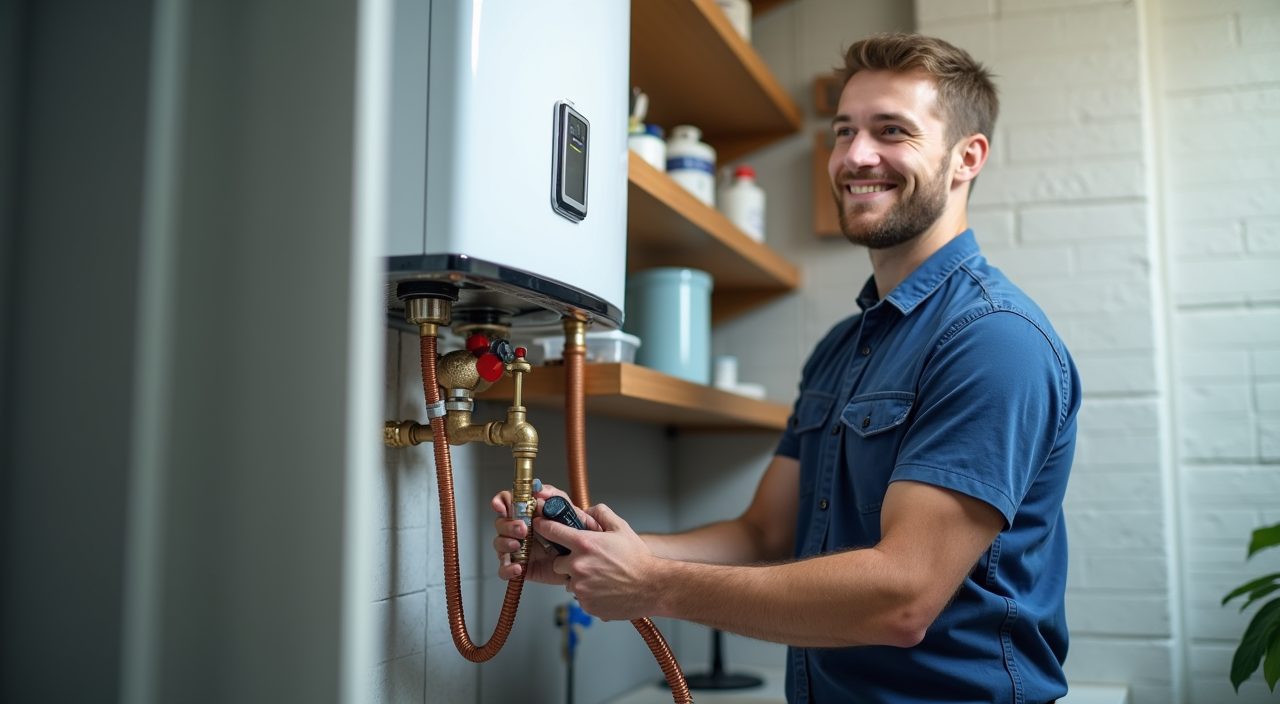
A gas water heater heats water on demand by burning town gas or LPG as water flows through a copper heat exchanger, so you get continuous hot water without waiting for a tank to reheat. In Singapore they are common in older HDB flats and landed homes that already have a piped town gas supply, and they must be installed by a licensed gas service worker and vented to open air. Expect to pay roughly 250 to 600 SGD for the unit and another 80 to 250 SGD for installation, depending on pipe work and location.
Most Singapore homes today use electric water heaters, but gas remains a strong option where a town gas line already runs to the kitchen or bathroom. Gas heats water faster and often costs less per litre to run, though it carries stricter safety and ventilation rules than electric. This guide explains how the system works, realistic costs, the safety rules that actually apply here, and how to decide between gas and electric.
How does a gas water heater work?
A gas water heater is almost always an instant (tankless) unit in Singapore. When you open a hot tap, water flow triggers the burner, which fires town gas or LPG under a copper heat exchanger. Cold water passing through the exchanger picks up heat and comes out hot within a few seconds, and the burner shuts off when you close the tap.
Because there is no storage tank, a gas instant heater delivers unlimited hot water as long as the gas and water keep flowing. The trade-off is that output temperature depends on flow rate: run several hot taps at once and the water gets cooler, since the burner has a fixed heating capacity.
- Ignition: modern units use battery or mains electronic ignition, not a standing pilot flame.
- Fuel: piped town gas (from City Energy) in most flats, or LPG cylinders where town gas is not available.
- Flue: combustion gases must vent to open air, never into an enclosed indoor space.
Gas vs electric water heater in Singapore: which is better?
There is no single winner. Gas usually wins on running cost and flow for larger households, while electric wins on simpler installation and safety in small enclosed bathrooms. The right choice depends on whether you already have a town gas supply and where the heater needs to sit.
Use these points to compare the three common types found in local homes.
- Gas instant: unlimited hot water, lower running cost per litre, but needs town gas or LPG and outdoor-vented, well-ventilated installation.
- Electric instant (single-point): compact, heats one shower quickly, higher electricity draw, ideal for a single bathroom.
- Electric storage tank: steady hot water for a filled tank, slower to reheat, takes up wall space, very common in HDB bathrooms.
- Rule of thumb: if a town gas pipe is already at the location, gas is worth costing out; if not, adding a gas line is rarely worth it for one heater.
How much does a gas water heater cost in Singapore?
For a typical branded gas instant heater, budget around 250 to 600 SGD for the unit itself, with premium models running higher. Installation by a licensed worker usually adds 80 to 250 SGD, more if new gas piping, a longer flue, or wall repositioning is needed.
Running cost is harder to pin down because it depends on usage and gas tariffs. As a general guide, gas heating tends to cost less per litre of hot water than electric instant heating, which is one reason households with existing town gas keep their gas heaters. Ask your installer for a total quote that separates the unit, materials, gas connection, and labour so you can compare fairly.
- Unit: roughly 250 to 600 SGD depending on brand and capacity.
- Installation: roughly 80 to 250 SGD for a straightforward swap.
- Extra: new gas piping, flue extension, or relocating the unit adds cost and should be quoted line by line.
What safety rules apply to gas water heaters here?
Gas work in Singapore is regulated. Any installation, relocation, or repair of a gas water heater and its piping must be done by a licensed gas service worker registered with the relevant authority, not by a general handyman. This is a legal requirement, not just best practice, because a bad gas connection risks leaks and carbon monoxide.
The single biggest hazard with gas instant heaters is carbon monoxide from poor ventilation. Older cases of poisoning in Singapore homes have been linked to heaters installed in enclosed bathrooms without proper airflow or an outdoor flue.
- Never install a gas instant heater inside an enclosed bathroom or a room without ventilation to open air.
- Combustion gases must vent outside through a proper flue; the space needs fresh-air intake so the burner has enough oxygen.
- Only a licensed gas service worker may connect the gas supply; keep the certificate or invoice as proof.
- Fit or maintain a carbon monoxide alarm as an extra layer of protection, especially in older units.
- If you smell gas, shut the gas isolation valve, do not switch electrical items on or off, ventilate the area, and call your gas supplier or a licensed worker.
When should you replace or service a gas water heater?
A gas instant heater typically lasts around 8 to 12 years with regular use. Warning signs that it needs service or replacement include weak or fluctuating hot water, a burner that struggles to ignite, soot marks or yellow flames instead of blue, and any smell of gas.
Have the unit and its flue checked periodically, and act quickly on any sign of incomplete combustion, since yellow flames and soot point to a carbon monoxide risk. If the heat exchanger is corroded or the casing is rusting through, replacement is usually safer and cheaper than repeated repairs.
How do you get a gas water heater installed properly?
The safe path is to have a licensed gas service worker assess the location, confirm town gas or LPG supply, plan the flue and ventilation, and install the unit to code. If you are booking water heater installation as part of a bathroom or kitchen upgrade, bundling it with the wider renovation keeps the plumbing, gas, and finishing work coordinated by one team.
A good installer will check gas pressure, pressure-test the connection for leaks, verify the flue vents outside, and hand over a clear invoice showing the licensed worker's details. Insist on that paperwork; it is your proof the job was done legally and correctly.
Frequently asked questions
Is a gas water heater cheaper to run than electric in Singapore? Generally gas heating costs less per litre of hot water than electric instant heating, but the gap depends on your usage and current gas and electricity tariffs. For a household with an existing town gas supply, gas is usually the cheaper running option.
Can I install a gas water heater in my HDB bathroom? Only if it can be vented to open air with proper ventilation, and only through a licensed gas service worker. Enclosed bathrooms without airflow are unsafe for gas instant heaters because of carbon monoxide risk, so many HDB flats use electric heaters instead.
Do I legally need a licensed worker for a gas heater? Yes. Installing, moving, or repairing a gas water heater and its gas piping must be carried out by a licensed gas service worker; DIY gas work is not permitted and voids safety cover.
How long does a gas water heater last? With regular servicing, around 8 to 12 years. Replace sooner if you see soot, yellow flames, a corroded heat exchanger, or persistent ignition problems, as these signal safety and reliability issues.