
Kitchen Cabinet Materials Compared (Laminate vs Quartz)
Laminate vs quartz for Singapore kitchen cabinets: what each covers, real cost ranges, durability in HDB and condo kitchens, and how to choose.
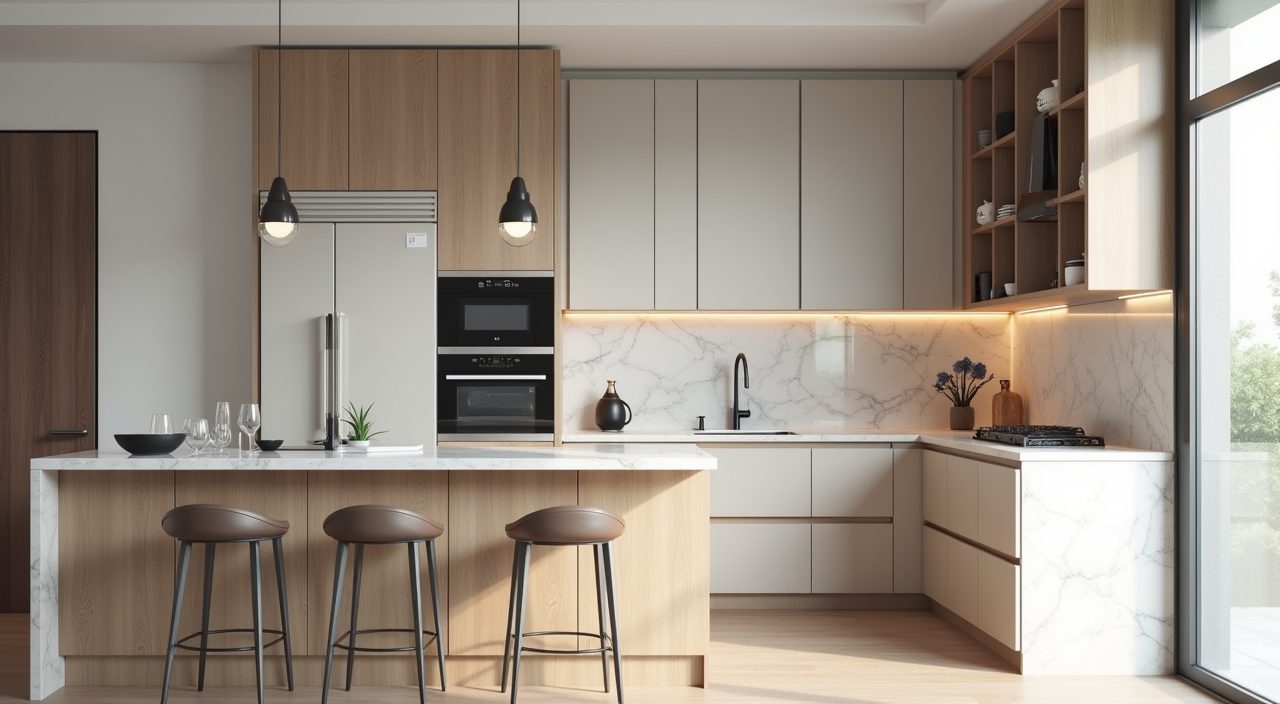
For most Singapore kitchens, laminate is the practical choice for cabinet doors and carcasses, while quartz is the standard choice for the countertop. They are not really rivals: laminate is a surface finish for the cabinet boxes and doors, and quartz is a solid slab for the worktop. A common setup pairs plywood or moisture-resistant carcasses with laminate doors and a quartz countertop on top.
The confusion comes from lumping everything under one label. When homeowners ask about kitchen cabinet material, they are usually comparing the door finish (laminate, acrylic, or spray paint) and the countertop material (quartz, sintered stone, or solid surface) at the same time. This guide separates the two so you can budget each part honestly.
What is the difference between laminate and quartz in a kitchen?
Laminate is a thin decorative sheet, usually high-pressure laminate (HPL), that is glued onto a cabinet carcass or door panel. It is the finish you see and touch on the cabinet fronts. Quartz is engineered stone made from crushed quartz bound with resin, sold as a solid slab and used mainly for countertops because it can bear knife work, hot pots, and daily scrubbing.
So the honest comparison is laminate cabinet doors versus a quartz countertop, not one against the other. Many Singapore kitchens use both together, and the pricing question is really about the door finish plus the worktop, calculated per running foot or per slab.
How much do laminate cabinets and quartz countertops cost in Singapore?
Carpentry here is usually quoted per running foot (also called per foot run). Prices move with your carcass material, hardware brand, and how custom the design is, so treat the figures below as typical ranges rather than fixed quotes.
Because ranges vary widely between contractors, always compare quotes on the same spec (same carcass, same hinge brand, same countertop grade) rather than headline price alone.
- Laminate top and bottom cabinets: often around 150 to 300 dollars per running foot, depending on carcass and hardware.
- Quartz countertop: often around 80 to 160 dollars per running foot for the slab and basic edging, higher for premium brands or thick profiles.
- Acrylic or spray-paint doors cost more than laminate for the same cabinet.
- Soft-close hinges, tall pull-out units, and imported hardware add to the base rate.
Is laminate or quartz more durable for a Singapore kitchen?
For countertops, quartz is far more durable than a laminate surface. It resists scratches, stains, and everyday knocks better than laminate, and it does not need sealing the way natural granite or marble does. That is why quartz has become the default worktop for HDB and condo kitchens.
For cabinet doors, laminate holds up well when the carcass underneath resists moisture. Singapore humidity and the occasional wet floor are the real enemies of kitchen carpentry, so the carcass material matters as much as the door finish. Ask what board sits behind the laminate before you sign off.
Which carcass material should you choose under the laminate?
The carcass is the hidden box that carries the load and takes the humidity. The three you will hear most are plywood, moisture-resistant MDF, and blockboard, and the choice affects both price and lifespan.
In a wet kitchen or a ground-floor unit, spend on the carcass first. A good carcass with a mid-range door finish will outlast a cheap carcass with a fancy door.
- Plywood: strong, screw-holds well, generally the best pick for wet kitchen areas.
- Moisture-resistant MDF: smooth and stable, good for painted or acrylic finishes, less tolerant of standing water than plywood.
- Blockboard: budget friendly and light, acceptable for dry zones and upper cabinets.
What about quartz alternatives like sintered stone and solid surface?
Quartz is the middle ground, but it is not the only worktop option. Sintered stone (brands like the ones sold as porcelain slabs) handles heat and UV better and is very hard, though it can chip on sharp edges and usually costs more. Solid surface (such as acrylic-based worktops) allows seamless joins and easy repair, but it scratches and scorches more easily than quartz.
If you cook with very hot pans often, sintered stone is worth pricing. If you want a seamless island with an integrated sink and a softer look, solid surface may suit you. For most households, quartz remains the balanced default.
How do you get the carpentry done well?
Kitchen cabinets are custom carpentry, so the finish is only as good as the measurement, the carcass, and the installation. When you plan your carpentry works, confirm the carcass material in writing, the door finish, the hinge and runner brand, and whether the countertop cut-out for the sink and hob is included in the quote.
A contractor who handles renovation, electrical, and plumbing together can coordinate the sink plumbing, the hob and oven power points, and the cabinet build so the trades do not clash on site. If you want a clear breakdown before committing, ask for a per running foot quote for the cabinets and a separate line for the countertop so you can compare like for like.
Frequently asked questions
Can I put a quartz countertop on laminate cabinets? Yes, this is one of the most common setups in Singapore. The laminate doors and carcass carry the cabinet, and the quartz slab sits on top as the worktop, so the two materials do different jobs and work well together.
How long do laminate kitchen cabinets last? With a good moisture-resistant carcass and proper installation, laminate cabinets commonly last well over a decade in a Singapore home. Water damage to the carcass, not the laminate itself, is the usual reason cabinets fail early.
Is quartz heat resistant enough for daily cooking? Quartz tolerates warmth but is not fully heatproof, because the resin binder can scorch or discolour under a very hot pot. Always use a trivet or heat pad, and consider sintered stone if you regularly put hot cookware straight down.
Why are two quotes for the same kitchen so different? Usually the carcass grade, hardware brand, door finish, and countertop thickness differ even when the cabinet layout looks identical. Ask each contractor to itemise carcass, door finish, hardware, and countertop so you compare the same specification.