
Adding Dimmers to Your Home: Compatibility, Wiring and What to Watch For
A Singapore homeowner's guide to adding dimmers: LED compatibility, neutral wire needs, single vs multi-way wiring, and the safety points to check first.
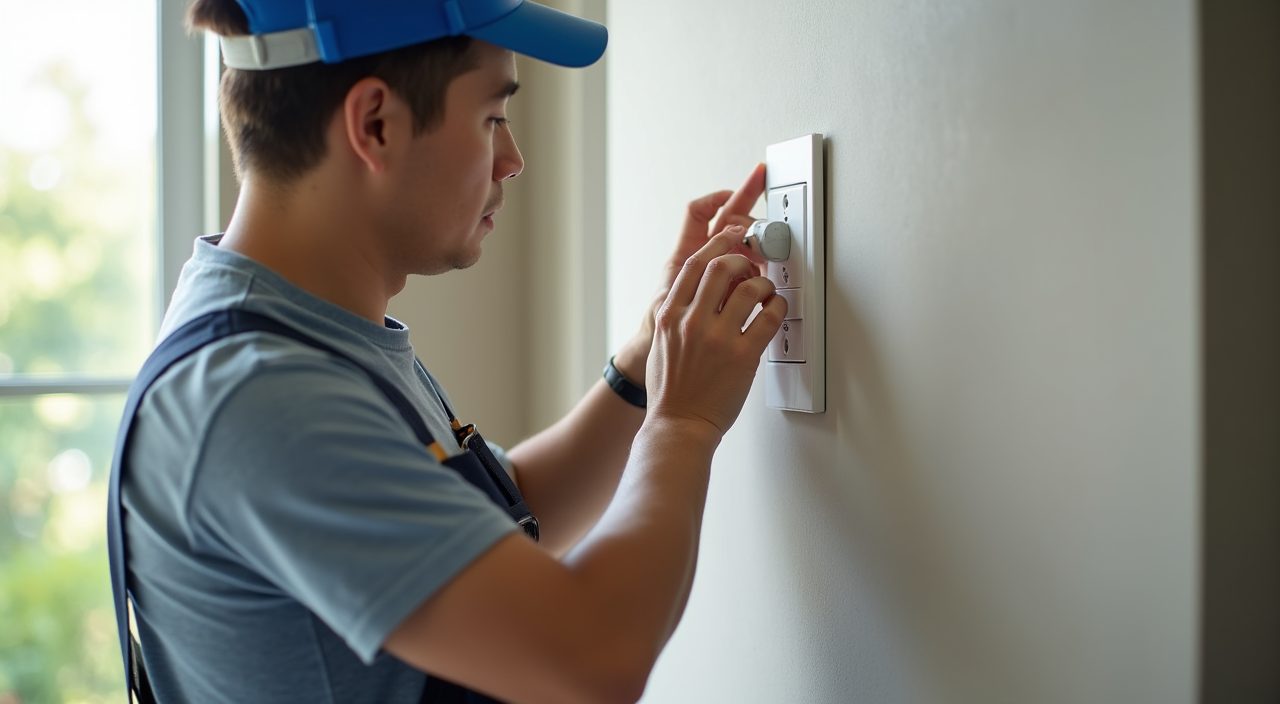
Adding a dimmer is usually straightforward, but the single biggest thing to get right is matching the dimmer to your bulbs. Most homes in Singapore now run LED lighting, and you need both LED-rated dimmers and bulbs marked as dimmable, or you will get flicker, buzzing or a very narrow dimming range. Beyond the bulb match, check whether your wall box has a neutral wire, whether the switch is single-way or two-way, and confirm the load falls within the dimmer's rating.
This guide walks through compatibility, the wiring points that trip people up, and the common problems to watch for. Some swaps are a simple like-for-like change, but anything involving new wiring, a consumer unit change or two-way circuits is best handled by a Licensed Electrical Worker under Singapore rules.
Are my bulbs and dimmer compatible?
Compatibility comes down to three things: the bulb must be dimmable, the dimmer must be rated for LED, and the total wattage must sit inside the dimmer's range. A non-dimmable LED bulb on a dimmer will flicker, buzz, or simply refuse to dim, and it can shorten the bulb's life.
Older dimmers were built for incandescent and halogen loads of 40W and up, so a handful of low-wattage LEDs may not register at all. Look for a dimmer specified as trailing-edge or LED-compatible, and check the minimum load it supports.
LED bulbs must say dimmable on the box; plain LED bulbs are not.
Match the dimmer type: trailing-edge dimmers suit most modern LEDs, leading-edge suits older or higher-wattage loads.
Add up the wattage of all bulbs on the switch and keep it within the dimmer's stated min and max.
When mixing brands of bulb on one circuit, expect uneven dimming; using one bulb model gives the smoothest result.
Do I need a neutral wire for a dimmer?
Most standard rotary and push dimmers do not need a neutral and work fine with just the live and switched-live wires found in a typical wall box. This is why a basic dimmer swap is often a clean like-for-like job.
Smart dimmers are the exception. Many Wi-Fi or Zigbee dimmers need a constant neutral to power their electronics, and a lot of older Singapore switch boxes only have live wires run to them. If there is no neutral at the switch, you either choose a no-neutral smart dimmer designed for that situation or have a neutral pulled to the box, which means opening up wiring and is electrician territory.
Single-way, two-way and multi-gang: what changes?
The wiring setup decides how simple the job is. A single-way switch controls one light from one point and is the easiest to convert. Two-way (and intermediate) setups let you control the same light from two or more points, such as both ends of a staircase or hallway, and these need dimmers designed for two-way use.
Multi-gang plates, where several switches sit on one faceplate, add another constraint: dimmers are physically deeper and generate heat, so fitting several into one plate can force you to derate them.
Single-way: one switch, one light, simplest dimmer swap.
Two-way: control from two points; use a two-way compatible dimmer, and typically only one point needs the dimmer module.
Multi-gang: check the plate depth and heat derating; you may not fit a dimmer in every position.
Fan speed control is separate: a light dimmer must never be used to control a ceiling fan motor, which needs a proper fan controller.
How do I actually wire a dimmer in?
At a high level, a like-for-like dimmer swap replaces the existing switch: turn off the circuit at the consumer unit, remove the old switch, note the live and switched-live connections, and transfer them to the matching terminals on the dimmer. The tricky part is that terminal labels vary by brand, and two-way or neutral-required models add wires that are easy to get wrong.
Turn off the correct circuit breaker and confirm the light is dead with a tester before touching anything.
Photograph the existing wiring before you disconnect it.
Match each wire to the dimmer's labelled terminals; do not guess.
Seat the dimmer squarely in the box so the faceplate sits flush and nothing is pinched.
Restore power and test across the full dimming range, watching for flicker or buzzing.
What problems should I watch for?
Flicker and buzzing are the most common complaints, and they usually trace back to a bulb and dimmer mismatch rather than a faulty product. A narrow dimming range, where the light jumps from bright to off with little in between, is another sign the dimmer type does not suit the LEDs.
Some LEDs also glow faintly when switched off, which points to a small leakage current, often fixed by a no-neutral dimmer's bleed resistor or a different bulb. If a dimmer runs hot to the touch, the load may be too close to its maximum, and you should reduce the wattage or move up to a higher-rated model.
When should I call a licensed electrician?
A straightforward like-for-like dimmer swap on a single-way switch is within reach for a confident DIYer, provided the power is off and the wiring is simple. But under Singapore rules, electrical installation work should be carried out by a Licensed Electrical Worker, and anything beyond a basic swap is worth handing over. That includes running a new neutral, changing two-way circuits, adding load to a crowded consumer unit, or any job where the existing wiring looks old or non-standard.
If you would rather not open up the wall at all, our electrical services team can assess your circuits, recommend dimmers that match your existing LEDs, and install them safely and neatly. Getting the compatibility right the first time avoids the flicker-and-return cycle that catches out a lot of self-installs.
Frequently asked questions
Can I put any LED bulb on a dimmer? No. The bulb must be marked dimmable and the dimmer must be LED-rated. A non-dimmable LED on a dimmer will flicker, buzz or fail to dim, and pairing a dimmable LED with an old incandescent-style dimmer often gives poor results too.
Why do my LED lights flicker on a dimmer? Flicker almost always comes from a mismatch: a non-dimmable bulb, an incompatible dimmer type, or a load below the dimmer's minimum. Switching to a trailing-edge LED-compatible dimmer and confirming every bulb is dimmable usually clears it.
Do smart dimmers need a neutral wire? Many do, and a lot of older Singapore switch boxes have no neutral at the switch. Either choose a no-neutral smart dimmer built for that case, or have an electrician run a neutral to the box.
Is it legal to install a dimmer myself in Singapore? A simple like-for-like swap with the power off is something many homeowners do, but electrical installation work is meant to be done by a Licensed Electrical Worker. For new wiring, two-way circuits or consumer unit changes, use a licensed professional.