
Best Flooring for a Wet Kitchen and Bathroom in Singapore
The best flooring for wet kitchens and bathrooms in Singapore is anti-slip porcelain or ceramic tile. Here is how to choose, and what to avoid.
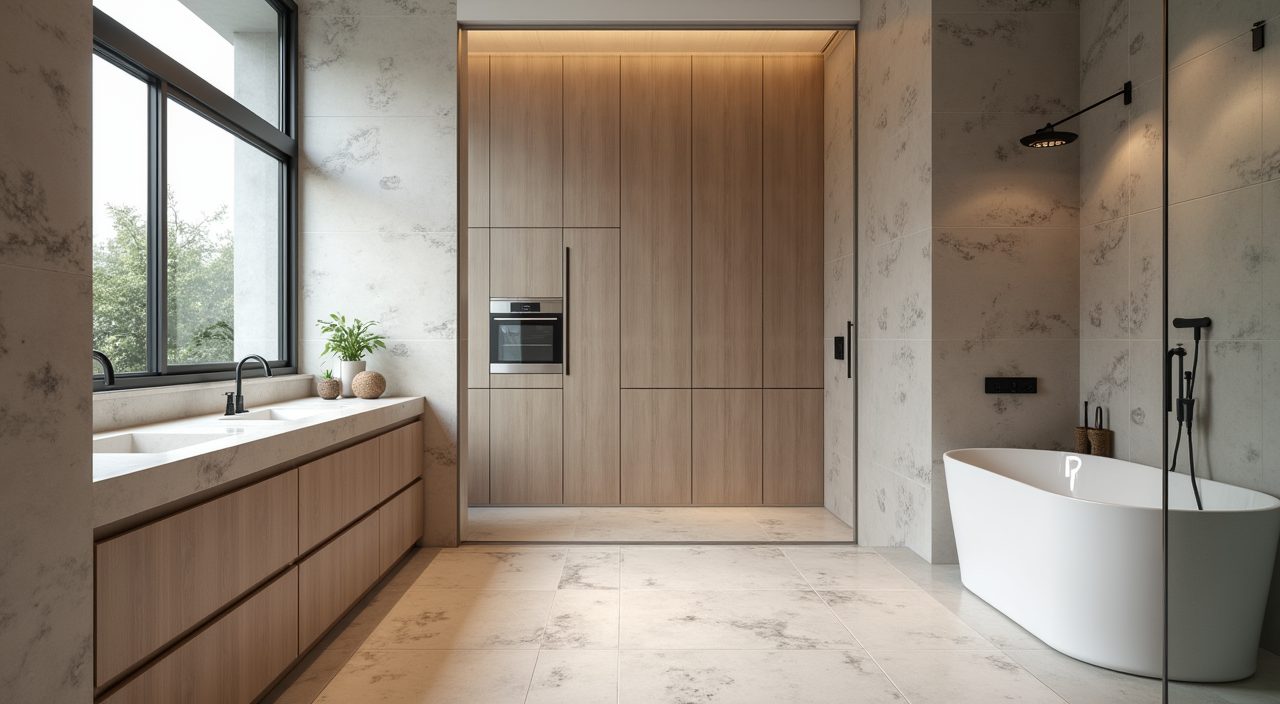
For a wet kitchen or a bathroom in Singapore, the best flooring is anti-slip porcelain or ceramic tile with a matt finish and a slip rating of R10 or higher. Porcelain is denser and less porous than ceramic, so it handles standing water, humidity and heavy cleaning better over the years. Avoid solid timber, laminate and most vinyl click flooring in these areas, since constant moisture eventually warps or lifts them.
Singapore homes deal with high humidity all year, frequent floor washing, and wet zones that stay damp for hours. That combination punishes any floor that absorbs water or relies on glue that softens when wet. The right choice is less about looks and more about water resistance, grip when wet, and how easy the surface is to keep hygienic.
What makes flooring suitable for wet areas in Singapore?
Three things matter most: low water absorption, good slip resistance when wet, and durability under daily cleaning. A material that scores well on all three will outlast one that only looks good in the showroom.
Slip resistance is measured by an R rating (R9 to R13) or a wet pendulum value. For a wet kitchen or bathroom floor, aim for R10 or R11. Anything below that gets dangerously slippery once soap or water hits it.
- Water absorption: porcelain absorbs under 0.5 percent, ceramic a bit more, natural stone varies widely
- Slip rating: R10 to R11 for bathrooms and wet kitchens, R9 is fine only for dry areas
- Finish: matt or textured grips better than glossy or polished
- Cleaning: non-porous surfaces resist mould, grime and staining
Is porcelain or ceramic tile better for a bathroom?
Both work well, but porcelain is the stronger pick for wet zones. It is fired at higher temperatures, making it denser, harder and almost non-absorbent, so it shrugs off water, scratches and heavy foot traffic. Ceramic is cheaper and easier to cut, which suits walls and lighter-use floors.
For a bathroom floor that gets soaked daily, choose porcelain in a smaller format or with more grout lines, since grout adds grip. Rectified porcelain gives a cleaner look but needs skilled laying. Ceramic remains a sensible budget option if you pick an anti-slip matt tile.
- Porcelain: denser, near-zero water absorption, best for wet floors, costs more
- Ceramic: softer, slightly more porous, good for walls and lower-traffic floors, cheaper
- Both: choose matt anti-slip finishes rated R10 or higher for wet zones
- Mosaic or small-format tiles add grout lines that improve grip underfoot
What about vinyl, laminate and timber flooring?
Laminate and solid or engineered timber are the wrong call for a wet kitchen or bathroom. Their cores are wood-based, so trapped moisture swells the boards, lifts edges and encourages mould underneath. They belong in dry living areas and bedrooms.
Vinyl is more nuanced. Standard click-lock LVT is not built for constant water and can trap moisture at the seams. A fully waterproof vinyl or a sheet vinyl with heat-welded joints can survive a bathroom, but many Singapore homeowners still prefer tile for wet zones because it lasts longer and never lifts.
- Solid and engineered timber: avoid in wet areas, moisture warps the core
- Laminate: avoid, the HDF core swells when water seeps in
- Click-lock LVT: risky, seams can let water through over time
- Waterproof sheet vinyl: possible for bathrooms if joints are properly sealed, but tile still wins on lifespan
Do I need different flooring for a wet kitchen versus a dry kitchen?
Many Singapore homes split the kitchen into a dry area for prep and a wet area for heavy cooking, washing and washing-machine use. The wet kitchen needs the same treatment as a bathroom: anti-slip porcelain, a proper fall to the floor trap, and sealed grout.
The dry kitchen has more freedom. You can still use tile, but some homeowners choose large-format porcelain or even certain waterproof vinyls there because spills are lighter and less frequent. Keeping the wet kitchen fully tiled protects the rest of the home from water spreading.
How important are grout, waterproofing and the floor gradient?
The tile is only half the job. Water gets in through grout lines and poorly formed floors, so waterproofing and gradient decide whether your wet area stays dry underneath. In Singapore, a membrane is applied to the screed before tiling in bathrooms and wet kitchens to stop water reaching the slab and your neighbour below.
The floor must slope gently toward the floor trap so water drains instead of pooling. Epoxy grout resists staining and mould far better than standard cement grout, which is worth the extra cost in a shower or wet kitchen. Skipping any of these steps is the most common reason wet-area floors fail early.
- Waterproof membrane: applied under the tiles, essential for bathrooms and wet kitchens
- Floor gradient: a slope toward the floor trap prevents pooling
- Grout choice: epoxy grout resists mould and stains better than cement grout
- Corners and edges: seal junctions between floor and wall carefully
How do I get wet-area flooring installed properly?
Wet-area flooring is not a job to rush or hand to the cheapest hacker. The waterproofing, gradient and tile laying all have to be done in the right order, or you end up with leaks, pooling and eventual re-hacking. Getting the wet kitchen and bathroom done together during a renovation is usually the most cost-effective approach.
A qualified renovation contractor can advise on tile choice, handle hacking and waterproofing, and lay the floor with correct falls. If you are weighing up the cost of retiling a bathroom or a full wet-area redo, it helps to see clear renovation pricing before you commit, so you can compare materials and labour honestly rather than guessing.
Frequently asked questions
What is the best anti-slip rating for a Singapore bathroom floor? Aim for R10 or R11 for bathroom and wet-kitchen floors. R9 is only safe for dry areas, and glossy polished tiles become slippery the moment water hits them.
Can I use the same tile on the floor and the walls? You can use matching tiles for a seamless look, but the floor tile must be anti-slip rated, while wall tiles can be glossy since you do not walk on them. Many homeowners pick a coordinated pair rather than the exact same tile.
Is natural stone like marble or granite good for wet areas? Natural stone looks premium but is porous and needs regular sealing, and polished stone gets very slippery when wet. Honed or textured granite can work, but porcelain is lower maintenance and more forgiving in a humid Singapore bathroom.
How long does a properly tiled wet area last? With correct waterproofing, gradient and quality porcelain, a wet kitchen or bathroom floor can easily last 15 to 20 years or more. Most early failures come from skipped waterproofing or poor floor falls, not from the tile itself.