
CCTV for Condos and Landed Homes: MCST Approval and Camera Placement
A Singapore homeowner's guide to CCTV installation: MCST approval for condos, PDPA rules, camera placement, and what an install actually costs.
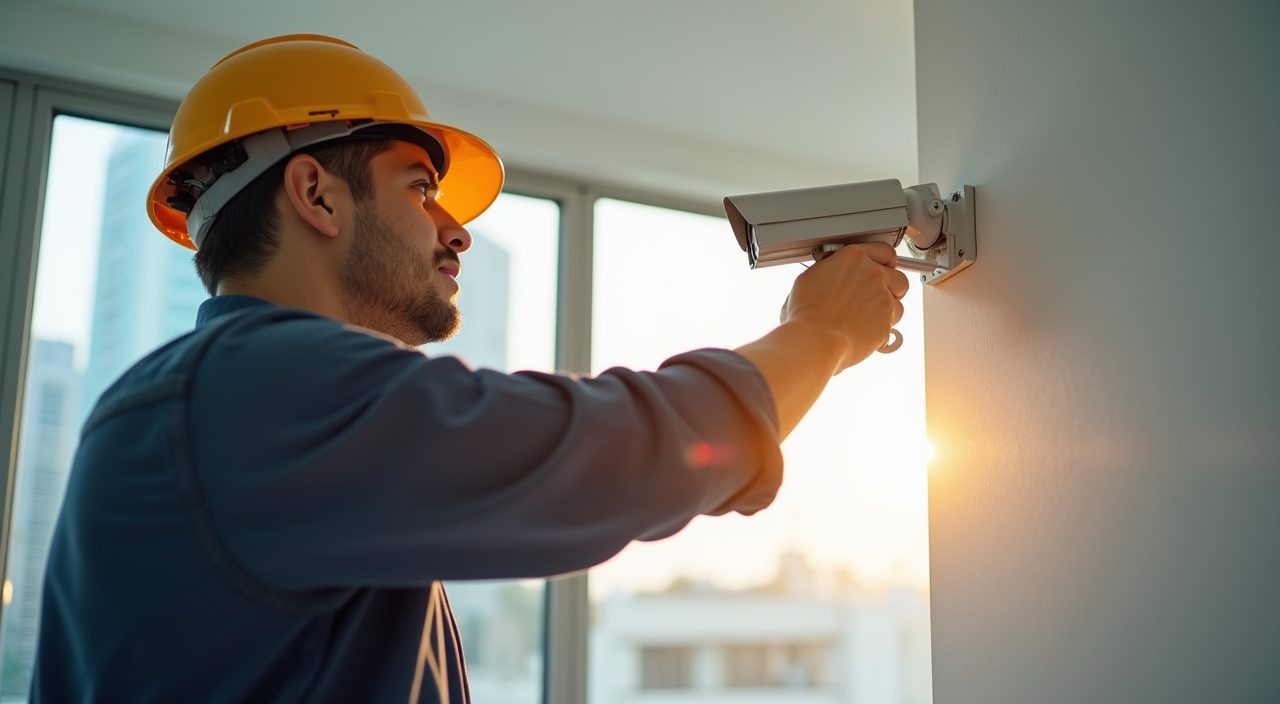
For a condo, you can install CCTV inside your own unit freely, but any camera at your main door, in the corridor, or pointing into common areas almost always needs written approval from your MCST (the condo's management corporation). For a landed home, you own the land, so you can install cameras without asking anyone, as long as they mainly cover your own property and you avoid recording neighbours or the public road in a way that is unfair. In both cases you are bound by Singapore's Personal Data Protection Act (PDPA) once your cameras capture identifiable people beyond your household.
The two situations are genuinely different. A condo is shared property governed by by-laws and a managing agent, so the rules are about the whole development, not just your unit. A landed home gives you far more freedom, but freedom is not the same as no limits: your neighbour still has a reasonable expectation of privacy inside their own home. This guide covers approval, placement, PDPA, and what a proper install involves so you get it right the first time.
Do I need MCST approval to install CCTV in a condo?
Inside your own unit, no. You can mount cameras in your living room, at a window, or facing your balcony without asking anyone. The moment a camera is fixed to, or points at, common property, the answer changes. Your main door faces a shared corridor, the lift lobby is common area, and drilling into corridor walls affects the building fabric, so all of these normally require MCST written approval first.
Most condos in Singapore have a specific by-law or a standard application form for door cameras and video doorbells. The managing agent will usually want to see where the camera points, confirm it does not capture a neighbour's door head-on, and check that any wiring or drilling is neat and reversible. Installing first and asking later is a common mistake: the MCST can direct you to remove an unapproved camera, and you may have to make good the wall.
- Inside your unit: no approval needed for cameras that stay within your own space.
- Main door or video doorbell facing the corridor: apply to the MCST first, in writing.
- Anything drilled into common property walls or ceilings: needs approval and often a licensed contractor.
- Cameras pointing into a neighbour's unit or their private area: usually refused, and a PDPA and privacy risk.
What are the rules for CCTV at a landed home?
At a landed property you own the land, so you do not need anyone's permission to install cameras on your own house, gate, or boundary wall. The practical limits come from privacy and neighbourliness rather than a management body. Aim your cameras so they primarily cover your gate, driveway, entrances, and perimeter, and avoid framing a neighbour's windows, front door, or backyard as the main subject.
Some incidental capture of the public footpath or road is generally accepted, since a camera watching your own gate will inevitably see a slice of the street. Problems arise when a camera is clearly angled to watch a neighbour's private space or is used to monitor a specific person. If a dispute escalates, it can end up as a harassment or privacy matter, so keep your coverage defensible and be ready to explain why each camera points where it does.
How does PDPA apply to home CCTV?
CCTV used purely for your own household and domestic purposes falls outside the main obligations of the PDPA. So a homeowner watching their own gate and door for security is normally fine without registering anything. The picture changes if you employ a domestic helper, run a home business, or share footage widely, because you may then be handling other people's personal data in a way the Act cares about.
Good practice keeps you safe either way. Put up a simple notice that CCTV is in operation, do not point cameras into spaces where people expect privacy such as a helper's room or a shared bathroom, keep recordings only as long as you genuinely need them, and store footage securely so it is not casually accessible. If you ever hand footage to the police for an incident, that is a legitimate use; posting a neighbour's face on social media to shame them is where people get into trouble.
- Household security use: generally exempt from the main PDPA duties.
- Display a visible CCTV notice, especially where a helper or visitors are recorded.
- Never place cameras in bedrooms, bathrooms, or a helper's private room.
- Keep footage secure and delete it once it is no longer needed.
Where should I place cameras for the best coverage?
Think in terms of the paths an intruder must take rather than trying to see everything. The highest-value angles are your main entry points and the approach to them: the front gate, the main door, the driveway, and any side or rear access. Mount cameras high enough to be out of easy reach, around 2.5 to 3 metres, and angle them slightly down so you capture faces and not just the tops of heads.
Lighting and backlight matter as much as position. A camera facing a bright window or an open sky at midday will silhouette anyone standing in front of it, so favour angles where light falls on the subject. For night coverage, choose cameras with proper infrared or a low-light sensor, and make sure a porch light or bright reflective surface is not sitting directly in the frame washing everything out.
- Condo unit: main door or peephole camera, balcony or window facing the approach, and any private lift lobby you are allowed to cover.
- Landed home: front gate, main door, driveway, side gate, and rear access are the priority points.
- Mount at about 2.5 to 3 metres, angled slightly downward for clear faces.
- Avoid pointing cameras straight into bright light or an open sky.
Wired or wireless: which is better for a Singapore home?
Wired systems, usually running over network cable to a recorder, give the most reliable footage and continuous recording, which matters if an incident happens while your internet is down. They need cabling routed through walls or trunking, so they suit a renovation, a new install, or a landed home where you can run cable in the ceiling. In a condo, any cabling across common property needs to be part of your MCST approval.
Wireless or battery cameras are quick to fit and good for renters or spots where running cable is impractical, such as a balcony or a rear corner. The trade-offs are battery changes or recharging, dependence on a strong Wi-Fi signal, and footage that lives in the cloud or on an SD card rather than a hardwired recorder. Many Singapore homes end up with a hybrid: wired cameras at the key entry points, plus a wireless unit or two to fill awkward gaps.
- Wired: most reliable, records through internet outages, best set up during a renovation.
- Wireless: fast to install, flexible, but depends on Wi-Fi and battery upkeep.
- Condo cabling across corridors or risers must be covered by MCST approval.
- Hybrid setups are common and often the most practical.
Should I hire a licensed installer or do it myself?
Plug-in wireless cameras that only need Wi-Fi and a phone app are genuinely DIY-friendly, and many homeowners set these up themselves. The picture changes once you need mains wiring, a recorder, cabling run through walls, or drilling into a condo's common property. Any work that touches your fixed electrical wiring should be done by a properly qualified electrician, and neat, safe cabling is what keeps a system reliable for years rather than months.
This is where using a contractor who handles both the electrical work and the CCTV installation pays off. A proper team can plan camera positions for real coverage, run cabling cleanly so it passes an MCST inspection, connect power safely, and set up the recorder and remote viewing. If you want it done to a standard that satisfies your management corporation and lasts, it is worth getting a licensed electrical and CCTV installation team to quote and carry out the work rather than piecing it together yourself.
What does CCTV installation cost in Singapore?
Costs vary widely with the number of cameras, whether they are wired or wireless, the camera resolution, and how much cabling and drilling the job needs. A simple single wireless camera can be a low, self-installed outlay, while a full multi-camera wired system with a recorder for a landed home is a larger project. As a rough guide, expect a professionally installed multi-camera package to run into the low four figures once cabling, mounting, a recorder, and labour are included, with the exact figure depending on your layout.
Get an itemised quote rather than a single lump sum. Ask what is included: the cameras and their resolution, the recorder and storage, cabling and trunking, mounting, configuration of remote viewing, and any making-good of walls. For a condo, factor in the time to prepare the MCST application. Because every home is different, treat any number you see online as a starting range and confirm with a site visit before you commit.
Frequently asked questions
Can my MCST force me to remove a CCTV camera? Yes, if the camera is on or pointing at common property without approval, or if it breaches a by-law, the MCST can direct you to remove it and reinstate the wall. This is why you apply in writing before installing anything that touches the corridor or common areas.
Is it legal to record my neighbour's front door in a condo or landed home? A camera that incidentally catches part of a shared corridor or the street is usually acceptable, but deliberately framing a neighbour's door or private space as the main subject is not. Angle cameras to cover your own property first, and be prepared to adjust if a neighbour raises a genuine concern.
Do I need a permit to install CCTV at my landed home? No general permit is required to install CCTV on your own landed property. You still have to respect privacy and PDPA where the footage captures other people, and any mains electrical work should be carried out by a qualified electrician.
How long should I keep CCTV footage? Keep it only as long as you have a real reason to, which for most homes is a rolling period of a couple of weeks to a month before older footage is overwritten. Retaining recordings indefinitely with no purpose is poor practice and, where other people are captured, harder to justify.