
DB Box Explained: MCB, RCCB and Your Safety
What a DB box is, how MCBs and RCCBs protect your Singapore home, and how to know when your distribution board needs upgrading.
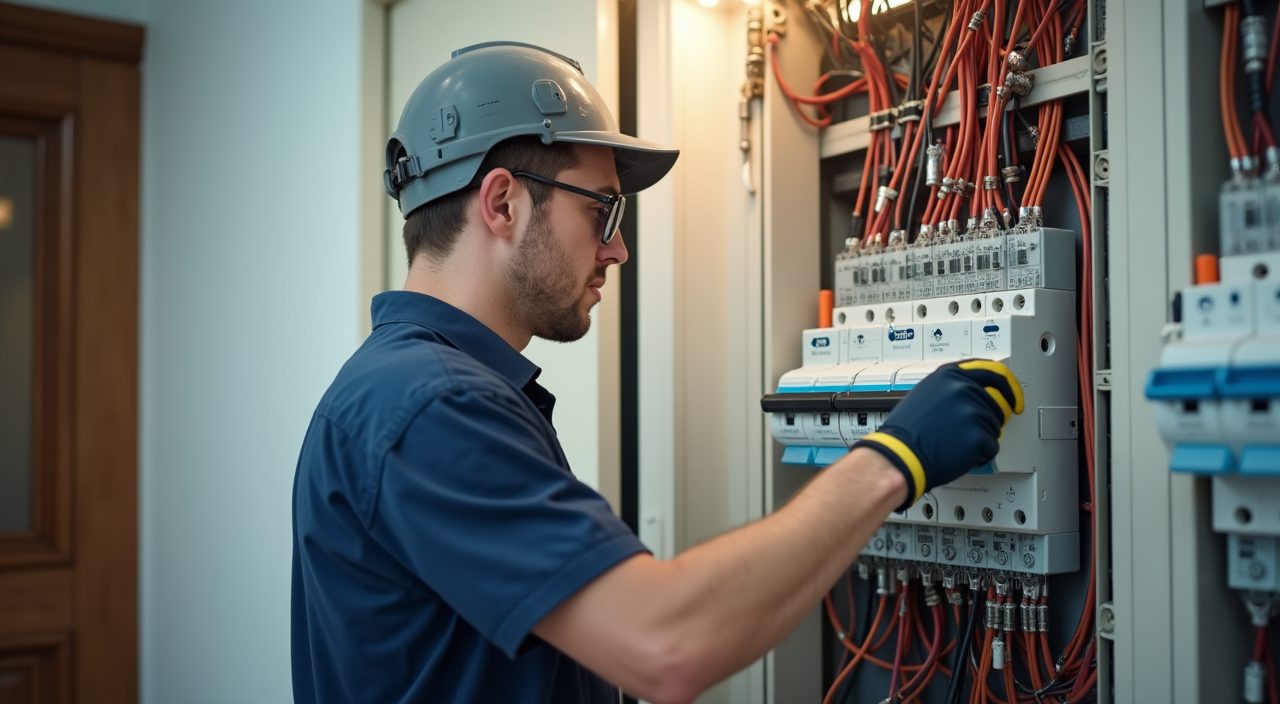
A DB box, short for distribution board, is the central panel that receives incoming mains power and splits it into separate circuits for your home. It holds the protective switches that cut power during faults: the MCB (miniature circuit breaker) trips on overloads and short circuits, while the RCCB (residual current circuit breaker) trips fast when it detects current leaking to earth, which is what protects you from electric shock.
In a Singapore flat or house, the DB box is usually a metal or plastic panel mounted near the entrance, in a store or in a utility area. It is the single most important piece of electrical safety equipment in your home, and understanding what sits inside it helps you recognise when something is wrong and when it is time to get it checked.
What is a DB box and what does it do?
The DB box distributes electricity from your incoming supply into individual circuits, for example lighting, power sockets, the aircon, the water heater, the kitchen, and the oven or hob. Each circuit gets its own breaker so a fault in one area does not knock out your whole home.
It also acts as the safety hub. Every protective device that isolates a faulty circuit or trips to stop a dangerous leakage current lives inside this board. When people say the power tripped, they almost always mean a device inside the DB box switched off.
The main parts you will see are:
- Main switch: isolates all power to the home
- MCBs: one per circuit, guarding against overload and short circuit
- RCCB: guards against earth leakage and shock, often protecting a group of circuits
- Busbar and neutral or earth bars: the internal connections that link everything
What is an MCB and how does it protect me?
An MCB, or miniature circuit breaker, protects the wiring of a single circuit. If too many appliances draw more current than the cable is rated for (an overload), or if there is a short circuit, the MCB trips and cuts that circuit before the wiring can overheat and cause a fire.
MCBs are rated in amps, such as 6A, 10A, 16A, 20A or 32A, matched to the cable and load of each circuit. If one MCB keeps tripping, it is often a sign that the circuit is overloaded or that an appliance on it is faulty. Repeatedly resetting a breaker without finding the cause is not a fix; it is a warning worth investigating.
What is an RCCB and why does it matter for safety?
An RCCB, or residual current circuit breaker, is the device that most directly protects human life. It constantly compares the current flowing out on the live wire against the current returning on the neutral. If some current is leaking away, for example through a person touching a live part or through moisture in a wall, the balance is broken and the RCCB trips in a fraction of a second.
In Singapore, a residual current device is required on the electrical installation, and modern boards typically use a 30mA RCCB for shock protection. Because wet areas raise the risk, RCCB protection matters most for circuits serving bathrooms, kitchens, water heaters and outdoor points. You should test your RCCB roughly every few months by pressing its Test button; if the power does not cut off when you press Test, the device is not doing its job and needs a licensed electrician to look at it.
MCB vs RCCB: what is the difference?
The simplest way to remember it: an MCB protects the wiring, and an RCCB protects the person. They guard against different dangers, which is why a proper DB box uses both together.
In short:
- MCB: trips on overload and short circuit, protecting cables from overheating
- RCCB: trips on earth leakage, protecting people from electric shock
- RCBO: a combined unit that does both jobs in one module, increasingly common in newer boards
How do I know my DB box needs upgrading?
Older Singapore homes, especially resale flats, sometimes have DB boxes with only MCBs and no RCCB, or with a single old-style ELCB that no longer meets current expectations. If your board has no working RCCB, shock protection is missing, and that is the most important reason to upgrade.
Watch for these signs that your distribution board deserves a check or a replacement:
- No RCCB present, or the RCCB does not cut power when you press Test
- Frequent, unexplained tripping across circuits
- Scorch marks, a burning smell, a warm board, or a buzzing sound
- Not enough spare ways to add circuits during a renovation
- A very old board with brittle, discoloured or non-standard breakers
Who can work on a DB box in Singapore?
Work inside the distribution board is not a DIY job. In Singapore, electrical work on your fixed installation should be carried out by a Licensed Electrical Worker, and installing or replacing a DB box needs proper testing and, for larger installations, the involvement of a Licensed Electrical Worker recognised by the authorities. Getting this right is about both safety and staying compliant.
If your board is due for an upgrade, if you are renovating and need more circuits, or if you simply want the whole thing inspected, this is exactly the kind of distribution board and DB box work our licensed electricians handle. A proper job includes labelling every circuit clearly, fitting the correct MCB ratings, ensuring RCCB protection is in place, and testing the board before it is signed off.
Frequently asked questions
Is a DB box the same as a fuse box? Not quite. A fuse box uses replaceable fuse wire or cartridges, while a modern DB box uses resettable breakers (MCBs) and residual current protection (RCCB or RCBO). Most Singapore homes today have breaker-based DB boxes, and older fuse-based boards are usually replaced during renovation.
Why does my whole flat go dark when one thing trips? If a single RCCB protects many circuits, an earth-leakage fault on any one of them will trip that RCCB and cut everything downstream. Splitting circuits across more than one RCCB, or moving to RCBOs, keeps a single fault from blacking out the whole home.
How often should I test the RCCB? Pressing the Test button roughly every three months is a sensible habit. If nothing trips when you press it, stop relying on that protection and arrange for a licensed electrician to inspect the board.
Can I just keep resetting a breaker that keeps tripping? No. Repeated tripping means a real fault, an overload, or a failing appliance. Resetting it again and again hides the warning and can be dangerous; the safer move is to find and fix the cause.