
Home Electrical Safety Checklist (Singapore)
A practical home electrical safety checklist for Singapore homeowners: RCCB tests, socket loads, wiring age, aircon and heater points, and when to call a LEW.
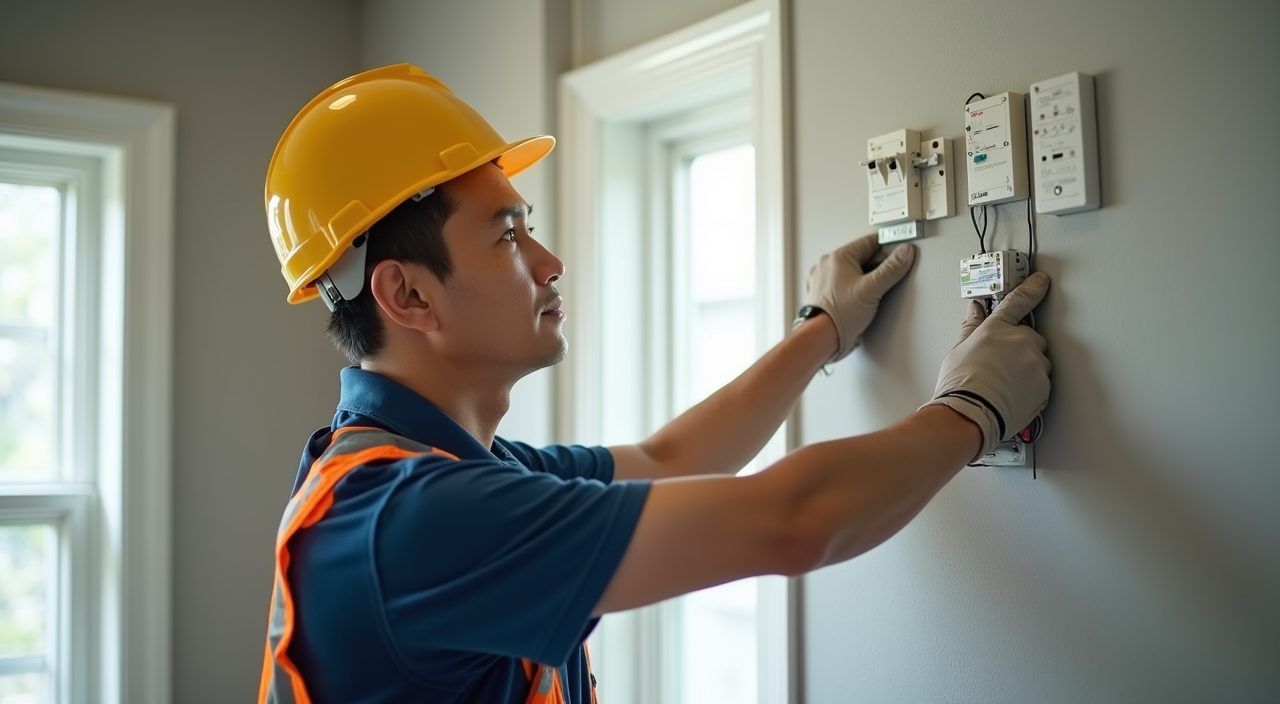
A basic home electrical safety check in Singapore covers five things: test that your RCCB trips, look for damaged sockets and cables, avoid overloading power points and adaptors, check the age and condition of your wiring, and pay attention to water heaters and aircon points. If your flat or house is more than about 25 to 30 years old and has never had its wiring inspected, that is the single most important item to act on.
Singapore homes run on a 230V single-phase supply (400V three-phase for larger landed properties), which is more than enough to cause serious injury or fire if fittings fail. The good news is that most risks are easy to spot with a quick monthly and yearly routine. This checklist walks through what to look for, what the rules require, and when the job legally has to go to a licensed professional.
How do I test my RCCB every month?
Your RCCB (residual current circuit breaker), sometimes labelled ELCB or safety switch, is the device in your distribution board (the DB box) that cuts power in a fraction of a second if current leaks to earth, for example through a person. It is your main protection against fatal electric shock, so it must actually work.
To test it, press the button marked T or TEST on the RCCB. The main switch should trip off immediately. Switch it back on to restore power. Do this roughly once a month. If pressing TEST does nothing, or if the RCCB trips for no clear reason again and again, stop using the affected circuits and get it checked.
- Find the RCCB in your DB box, usually near the front door or in a service area.
- Press T or TEST; power should cut off at once.
- Reset by flipping the switch back up.
- No trip when tested means the device may be faulty; arrange a check.
What should I look for at sockets, plugs and cables?
Most everyday hazards are visible if you take a slow look around the home. Warmth, discolouration, buzzing or a burning smell at a socket all point to a loose or overloaded connection that needs attention before it worsens.
Singapore uses the BS 1363 three-pin square plug and 13A socket. Damaged or cracked sockets, frayed flex, and cheap unmarked adaptors are common culprits behind faults.
- Cracked, scorched or discoloured socket faces or plug tops.
- Sockets that feel warm or make a crackling or buzzing sound.
- Frayed, cut or taped-over cables, especially on kettles, irons and heaters.
- Plugs that fall loosely out of the socket instead of gripping.
- Extension cords run under carpets or through doorways where they get crushed.
How do I avoid overloading sockets and adaptors?
Overloading is one of the most common causes of home electrical fires. A 13A socket has a limit, and stacking multiple high-power appliances on one point through multi-plug adaptors can push it past that limit.
As a rule, keep heavy heat-producing appliances on their own socket. Kettles, water heaters, irons, hair dryers, air fryers and portable induction cookers all draw a lot of current and should not share one adaptor.
- Never daisy-chain adaptor into adaptor or extension into extension.
- Use a single, good-quality extension with its own fuse and a Safety Mark.
- Give kettles, heaters, air fryers and irons a socket to themselves.
- Look for the SPRING Singapore Safety Mark on plugs, adaptors and appliances.
When is my wiring too old and who can inspect it?
Electrical wiring does not last forever. Insulation on older cables becomes brittle over the decades, and older installations may lack the RCCB protection that is standard today. If your HDB flat, condo or landed home is more than about 25 to 30 years old and the wiring has never been reviewed, it is worth having it assessed.
In Singapore, electrical installation and rewiring work must be carried out by a Licensed Electrical Worker (LEW). For a landed property or any premises above the household consumer threshold, an Electrical Installation Licence from the Energy Market Authority is also required, and that licence must be kept valid with periodic inspection by an LEW.
- Fuses or breakers that trip often for no obvious reason.
- Flickering lights or sockets that only work sometimes.
- A rewireable fuse board with no RCCB, common in very old units.
- A burning or fishy plastic smell near the DB box or sockets.
- Brown scorch marks around switches or socket outlets.
What about water heaters, kitchens and wet areas?
Water and electricity are the most dangerous combination in the home, so bathrooms and kitchens deserve extra care. Instant and storage water heaters should be on a dedicated circuit protected by an RCCB, and the heater itself should carry its own isolation switch.
Keep sockets and switches away from direct splashing, and never touch switches or plugs with wet hands. In the kitchen, keep cables clear of the hob and sink, and make sure appliances near water are properly earthed.
- Water heaters on their own RCCB-protected circuit with an isolation switch.
- No sockets within reach of the shower or directly beside the sink.
- Dry hands before touching any switch, plug or appliance.
- Earthed appliances near water, with no exposed metal or bare wires.
Getting a professional electrical check done
Some items on this list you can do yourself in minutes, but anything involving the DB box, fixed wiring, or a suspected fault should go to a qualified professional. A scheduled visit is the reliable way to catch problems you cannot see, such as degraded insulation inside walls or a marginal earth connection.
This is where planned, preventive electrical maintenance pays off: a licensed electrician tests the RCCB and earthing, checks the distribution board and circuits, tightens loose terminals, and flags ageing wiring before it fails. Booking a routine inspection every few years, or when you move into an older home, is far cheaper than dealing with a fire or an outage. Our team can carry out this kind of inspection and any follow-up repairs.
Frequently asked questions
How often should I test my RCCB? Aim for about once a month by pressing the TEST button and confirming the power cuts off. Also test it after any prolonged power outage or if you have had electrical work done.
Can I do my own electrical wiring in Singapore? No. Electrical installation, rewiring and repairs to fixed wiring must be done by a Licensed Electrical Worker. You can safely replace a plug top or a light bulb, but the DB box and fixed wiring are not DIY jobs.
How do I know if my home wiring needs replacing? Warning signs include breakers that trip repeatedly, flickering lights, warm or discoloured sockets, a burning smell, and a very old fuse board with no RCCB. Homes older than 25 to 30 years with original wiring are worth having assessed by a licensed electrician.
Is a Safety Mark on appliances important? Yes. The Safety Mark shows a product meets Singapore safety standards, and many household electrical products are required to carry it. Avoid cheap unmarked plugs, adaptors and chargers, which are a common cause of overheating.