
How to Clean and Care for Sintered Stone Countertops the Right Way
A Singapore homeowner's guide to cleaning and caring for sintered stone countertops: daily wipe-downs, safe products, stain removal and what to avoid.
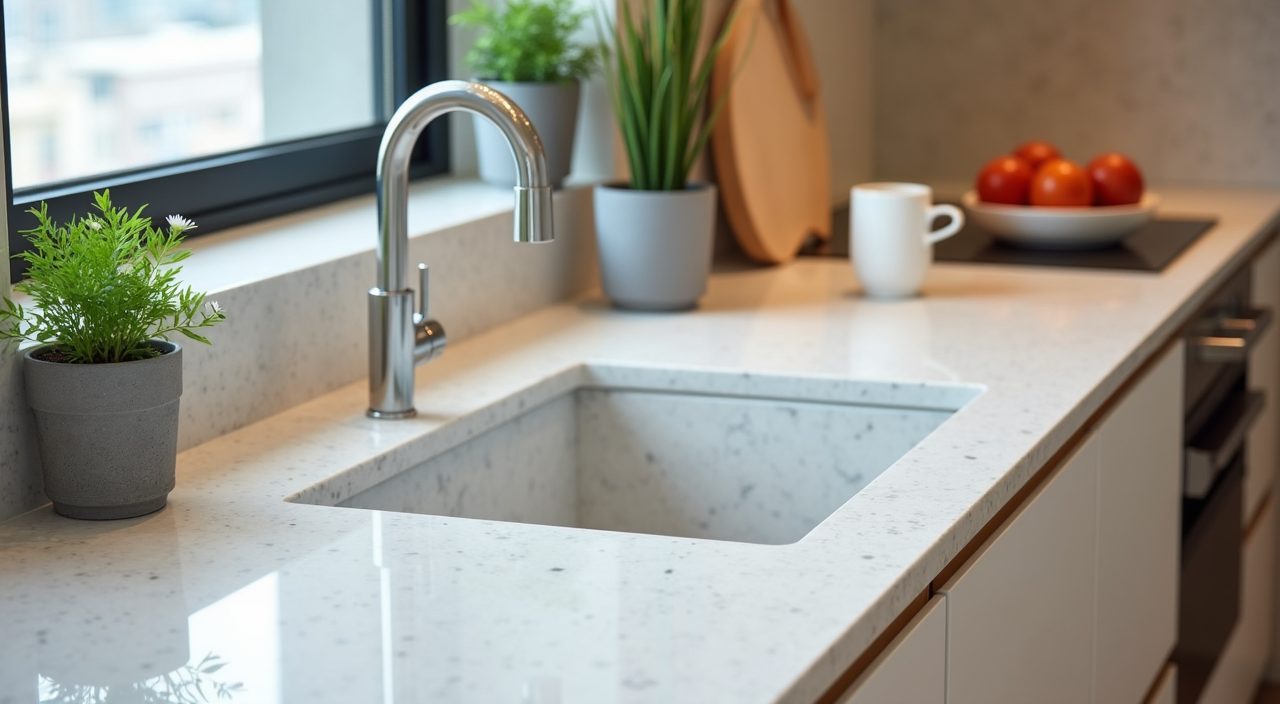
To clean sintered stone countertops, wipe daily with a soft cloth, warm water and a drop of pH-neutral dish soap, then dry with a clean towel to avoid water marks. Sintered stone is non-porous and does not need sealing, so you rarely need harsh chemicals. Avoid abrasive scouring pads, strong acids and undiluted bleach, and wipe spills promptly to keep the surface looking new.
Sintered stone (brands like Neolith, Dekton, Laminam and Lapitec are common in Singapore) is made by compacting mineral powders under high heat and pressure. The result is a dense, non-porous slab that resists heat, scratches and stains far better than most natural stone. That said, it is not indestructible, and a few simple habits will keep a kitchen or vanity top looking sharp for years in Singapore's humid climate.
What makes sintered stone different from granite or quartz?
Sintered stone is fully vitrified, meaning it has almost zero porosity. Water, oil and most household liquids sit on the surface rather than soaking in, so it never needs sealing. Granite is porous and needs periodic sealing; engineered quartz contains resin binders that can scorch or discolour under high heat.
Because there is no resin, sintered stone handles heat and UV better than quartz. You can set a hot pot down briefly without the panic you would feel on a quartz top, though a trivet is still the sensible habit.
- Sintered stone: non-porous, no sealing, high heat and UV resistance.
- Quartz: low porosity but resin can scorch and yellow near heat or sunlight.
- Granite: porous, needs sealing every year or two to resist stains.
How do you clean sintered stone every day?
For daily cleaning, warm water with a few drops of pH-neutral dish soap on a soft microfibre cloth is all you need. Wipe the surface, rinse the cloth, go over it again with clean water, then dry with a fresh towel. Drying matters in Singapore because hard water can leave faint white marks if it air-dries.
Do this after cooking and after preparing food that leaves oily or coloured residue. Prompt wiping means stains almost never get a chance to set, which is the whole advantage of a non-porous surface.
- Use a soft microfibre cloth or non-scratch sponge.
- Use warm water and a drop of neutral dish soap.
- Rinse, then dry to prevent water spots.
- Wipe spills soon after they happen, not hours later.
What should you avoid using on sintered stone?
The surface is tough, but a few products and habits cause avoidable damage. Skip abrasive steel wool, scouring pads and gritty powder cleansers, which can dull a polished finish over time. Also avoid hydrofluoric acid and any product containing it (found in some rust removers and industrial descalers), as it attacks the mineral surface.
Strong acids and undiluted bleach are not needed for routine cleaning and can affect matte finishes if left to sit. If you use a stronger cleaner for a stubborn mark, apply it briefly, then rinse thoroughly with clean water.
- Avoid: steel wool, abrasive pads, gritty scouring powders.
- Avoid: hydrofluoric acid, oven cleaners and paint strippers.
- Avoid: leaving strong acids or neat bleach on the surface.
- Avoid: dragging heavy cookware to prevent chipping the edge.
How do you remove tough stains and marks?
Most marks lift with a slightly stronger cleaner and a little patience. For dried food, limescale or grease, a general-purpose cream cleaner or a diluted stone-safe degreaser works well; apply, leave for a minute, then wipe and rinse. For metal marks left by pots or cutlery, a dab of cream cleaner on a soft cloth usually buffs them away.
For limescale from Singapore's mineral-rich tap water, a diluted white vinegar solution on glossy surfaces can help, but rinse quickly and do not leave acid sitting on matte finishes. Always test any stronger product on a hidden corner first.
- Dried food or grease: cream cleaner or diluted degreaser, then rinse.
- Metal or scuff marks: cream cleaner buffed with a soft cloth.
- Limescale: short contact with diluted vinegar on gloss, rinse fast.
- Ink or dye: dab of isopropyl alcohol, then rinse with water.
Can heat, knives and heavy items damage it?
Sintered stone resists heat and scratches better than almost any other countertop, so brief contact with a hot pan or an occasional knife slip rarely leaves a mark. Even so, treat these tolerances as a safety margin, not a licence. Use a trivet for very hot pans and a chopping board for knife work to protect both the surface and your blades.
The one real weakness is impact at the edges. A heavy pot dropped on a corner or an unsupported overhang can chip the slab. Thin large-format tops especially benefit from proper support underneath, which is a fabrication and installation detail, not something you can fix later with cleaning.
Should you get it professionally installed or repaired?
Cleaning is a homeowner job, but cutting, fabricating and installing sintered stone is not. The slabs are large, heavy and prone to cracking if mishandled, and cut-outs for sinks and hobs need the right tooling to avoid stress fractures. If you are planning a new kitchen or vanity, it is worth having an experienced renovation team fabricate and fit the tops so the joins, overhangs and support are done correctly.
If an existing top is chipped or a seam has failed, a professional can assess whether it can be repaired with a colour-matched filler or whether a section needs replacing. For a clear idea of what fabrication, supply and installation costs in Singapore, it helps to talk through your layout and get proper pricing before committing.
Frequently asked questions
Do sintered stone countertops need sealing? No. Sintered stone is non-porous and fully vitrified, so it does not absorb liquids and never needs the periodic sealing that natural stone like granite or marble requires.
Can I cut directly on a sintered stone worktop? You can without scratching the surface in most cases, but it will blunt your knives quickly and risks chipping a fragile edge, so a chopping board is still the better habit.
Is bleach safe on sintered stone? Diluted bleach used briefly and rinsed off is generally fine for disinfecting, but it is not needed for routine cleaning; neutral dish soap and water handle everyday hygiene, and you should never leave neat bleach sitting on the surface.
Why does my countertop have white water marks? Those are usually limescale deposits from Singapore's hard tap water drying on the surface; wipe the top dry after cleaning, and remove existing marks with a short contact of diluted vinegar on glossy finishes, rinsing quickly afterwards.