
How to Clean and Maintain Kitchen Cabinet Doors by Finish Type
A Singapore homeowner's guide to cleaning kitchen cabinet doors by finish: laminate, melamine, acrylic, PET, spray paint, veneer and glass, without damage.
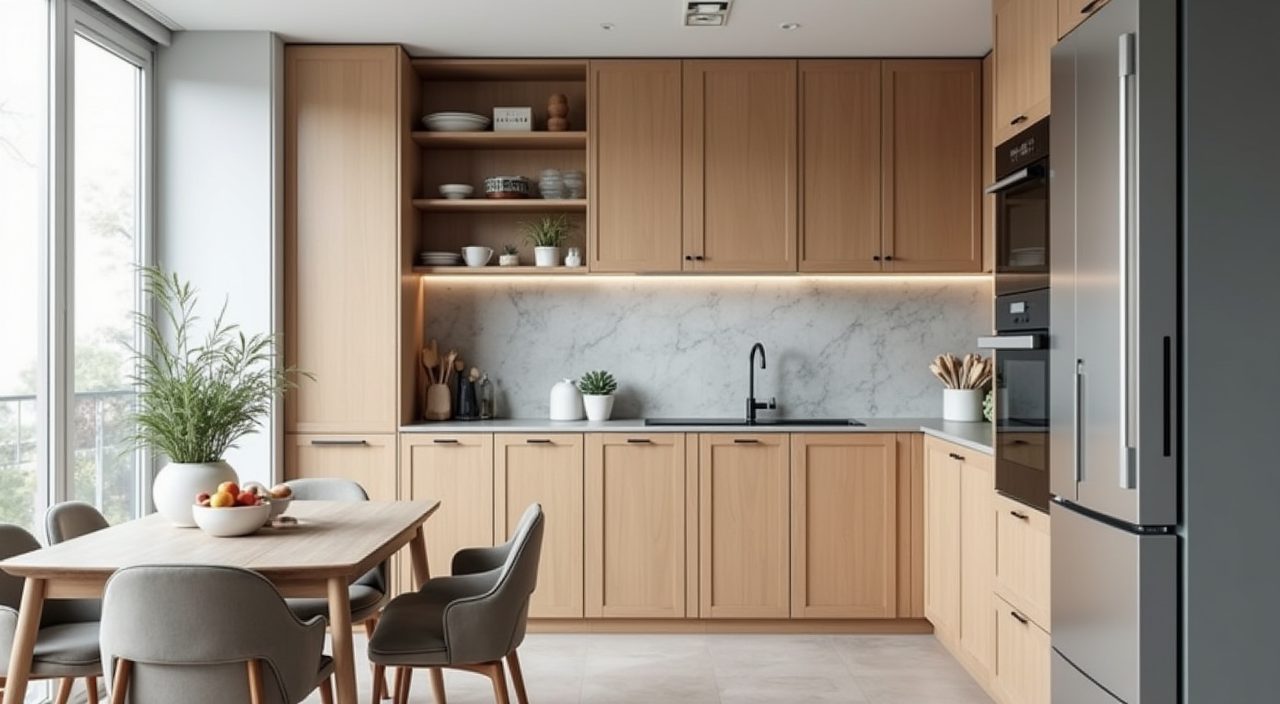
For almost every kitchen cabinet finish in a Singapore home, the safe method is the same: wipe with a soft microfibre cloth and a mild solution of dish soap in warm water, then wipe dry immediately. The differences come down to what you must avoid. High gloss acrylic and PET scratch easily and need soft cloths only, laminate and melamine tolerate a bit more scrubbing, veneer hates standing water, and no finish should ever meet a scouring pad, bleach or a strong solvent.
The reason finish type matters so much here is our climate. Singapore humidity, cooking oil from wok frying, and the fine grease film that settles on every surface near a stove all attack cabinet doors faster than in drier countries. Knowing which finish you have lets you clean effectively without dulling the surface, lifting an edge, or voiding a workmanship warranty. This guide walks through the common finishes used by local renovation firms and how to care for each.
What cabinet door finishes are common in Singapore kitchens?
Most HDB and condo kitchens use a carcass of moisture resistant plywood or board with a door front in one of a handful of finishes. The finish is the visible surface, and it decides both the look and the cleaning rules.
If you are not sure which one you have, check your renovation quotation or ask your contractor. The finish is almost always listed by name on the carpentry line items.
- Laminate: a printed plastic sheet pressed onto board, matte or textured, the workhorse finish in HDB kitchens
- Melamine or polymer: a thinner factory laminate common on flat pack and lower cost carpentry
- Acrylic: a high gloss mirror like surface, premium, scratches show easily
- PET: a glossy finish that looks similar to acrylic but is more scratch and heat tolerant, often better value
- Spray paint or 2K lacquer: a painted MDF door, smooth matte or satin, seamless look but chips if knocked
- Wood veneer: a thin real wood layer, warm grain, sensitive to water and heat
- Glass or aluminium framed: used on upper display doors and some modern designs
How do I clean laminate and melamine cabinet doors?
Laminate and melamine are the most forgiving finishes, which is why they dominate local kitchens. A weekly wipe with warm water and a drop of dish soap on a microfibre cloth handles everyday grease. For stubborn oil splatter near the hob, a small amount of a gentle multi surface spray works, but wipe it off and dry the door rather than letting it sit.
The one real enemy is water at the joints and edges. Laminate is glued to a board core, and if moisture creeps into an unsealed edge or a chipped corner it can swell the board underneath. Never leave a wet cloth draped over a door, and dry the base cabinet doors under the sink where drips collect.
- Do: microfibre cloth, warm soapy water, wipe dry after
- Do: tackle grease early before it bakes into a sticky film
- Avoid: scouring pads, abrasive cream cleansers, and bleach
- Avoid: standing water on horizontal edges and unsealed joints
How do I clean acrylic and PET high gloss doors without scratching them?
High gloss acrylic and PET give that flawless mirror look, but every scratch and swirl shows under kitchen lighting. The rule is soft materials only. Use a clean, damp microfibre cloth with a little dish soap, wipe in straight lines rather than hard circles, then buff dry with a second dry microfibre cloth to avoid streaks and water spots.
Never reach for a Magic Eraser style melamine sponge, powder cleanser, or any pad with grit, since these micro scratch the surface permanently. Keep the protective film on for as long as practical during the reno, and be gentle around fingerprints, which are the main complaint with gloss doors. PET tends to hide marks slightly better than acrylic and handles heat from a nearby kettle or air fryer a little more gracefully.
- Use two cloths: one damp to clean, one dry to buff
- Wipe in straight strokes, not aggressive circles
- Never use melamine foam erasers, powders, or scouring pads
- Keep steam and direct heat sources away from gloss surfaces
How do I care for spray paint, veneer, and glass doors?
Spray paint or 2K lacquer doors look seamless but the painted layer can chip if knocked hard or scrubbed with anything abrasive. Clean with a soft damp cloth and mild soap only, avoid solvents like acetone or thinner, and dab rather than scrub at a mark. Wood veneer needs the gentlest touch of all: wipe along the grain with a barely damp cloth, dry it straight away, and never let water pool, because trapped moisture lifts the thin wood layer and swells the board.
Glass and aluminium framed doors are easier. A standard glass cleaner or diluted vinegar solution on the glass is fine, but spray it onto the cloth rather than the door so liquid does not seep into the frame or the hinge area. Wipe aluminium frames with plain soapy water to keep them from developing a dull film.
- Spray paint: soft cloth and mild soap, no solvents, protect from knocks
- Veneer: wipe along the grain, barely damp, dry immediately
- Glass: spray cleaner onto the cloth, not the door, to protect the frame
- Aluminium frames: plain soapy water, then dry to avoid streaks
What should I never do to any cabinet finish?
A few habits will damage almost any finish, so they are worth stating plainly. These apply whether you have budget laminate or premium acrylic.
Beyond cleaning products, the biggest silent killer in Singapore kitchens is heat and steam. Position kettles, rice cookers, air fryers, and steamers so their vents do not blast directly onto a door or the underside of a wall cabinet, since repeated steam delaminates edges over time.
- No bleach, ammonia heavy cleaners, or strong solvents on any finish
- No scouring pads, steel wool, or abrasive powders
- No soaking wet cloths left on doors or leaking edges
- No direct steam or radiant heat from appliances onto door surfaces
- No furniture polish or wax build up, which attracts dust and streaks
How do I keep hinges, handles, and cabinet interiors in good shape?
Doors get the attention, but the hardware decides how a kitchen ages. Wipe handles regularly since they collect the most hand grease, and once or twice a year check that soft close hinges are not sagging. A drop of light machine oil on a stiff hinge and a quick screwdriver tightening of loose screws keeps doors aligned and closing softly.
Inside the cabinets, humidity and the odd spill are the concerns. Keep a small anti damp product or silica in cabinets that trap moisture, wipe up spills promptly, and every few months open doors to let interiors air out. This is especially worthwhile for cabinets under the sink and next to the fridge, where condensation is highest.
When should I repair or replace cabinet doors instead of cleaning?
Cleaning only goes so far. If you see swollen or soft board edges, lifting laminate, bubbling veneer, or doors that no longer sit square, those are structural signs that a wipe down will not fix. Water damage in particular tends to spread, so acting early on one door is cheaper than replacing a whole run later.
This is where a renovation contractor comes in. A local carpentry or renovation team can re laminate or replace individual door fronts, swap failed hinges, reseal edges, or rebuild a water damaged base cabinet, often without redoing the entire kitchen. If you want a realistic sense of what a door refresh or partial carpentry job costs in Singapore, it is worth asking our team for pricing on the specific work your kitchen needs, since it varies with material, door count, and finish.
Frequently asked questions
Can I use vinegar to clean kitchen cabinet doors? Diluted vinegar is fine on glass and generally safe as an occasional degreaser on laminate, but avoid it on natural stone, unsealed wood veneer, and raw aluminium, and never use it undiluted or leave it sitting, as the acidity can dull some finishes over time.
How often should I clean my cabinet doors? A light wipe of the doors around the hob and sink once a week prevents grease from baking on, with a fuller wipe down of all doors, handles, and edges every month. Catching oil early is far easier than removing a hardened film later.
Is Magic Eraser safe on gloss acrylic cabinets? No. Melamine foam erasers are mildly abrasive and will micro scratch high gloss acrylic and PET, leaving a permanent dull haze. Stick to a soft microfibre cloth and mild soapy water on gloss finishes.
My laminate edge is peeling, can I glue it back myself? A small lift can sometimes be re bonded with contact adhesive and clamped, but if the board underneath has swollen from water, gluing the surface back will not hold. In that case a contractor should replace or re laminate the affected door for a lasting fix.