
MCB Sizing Explained: How to Match Your Breaker to Your Circuit Load
A Singapore homeowner's guide to MCB sizing: how to match your breaker rating to circuit load, cable size and real-world appliances.
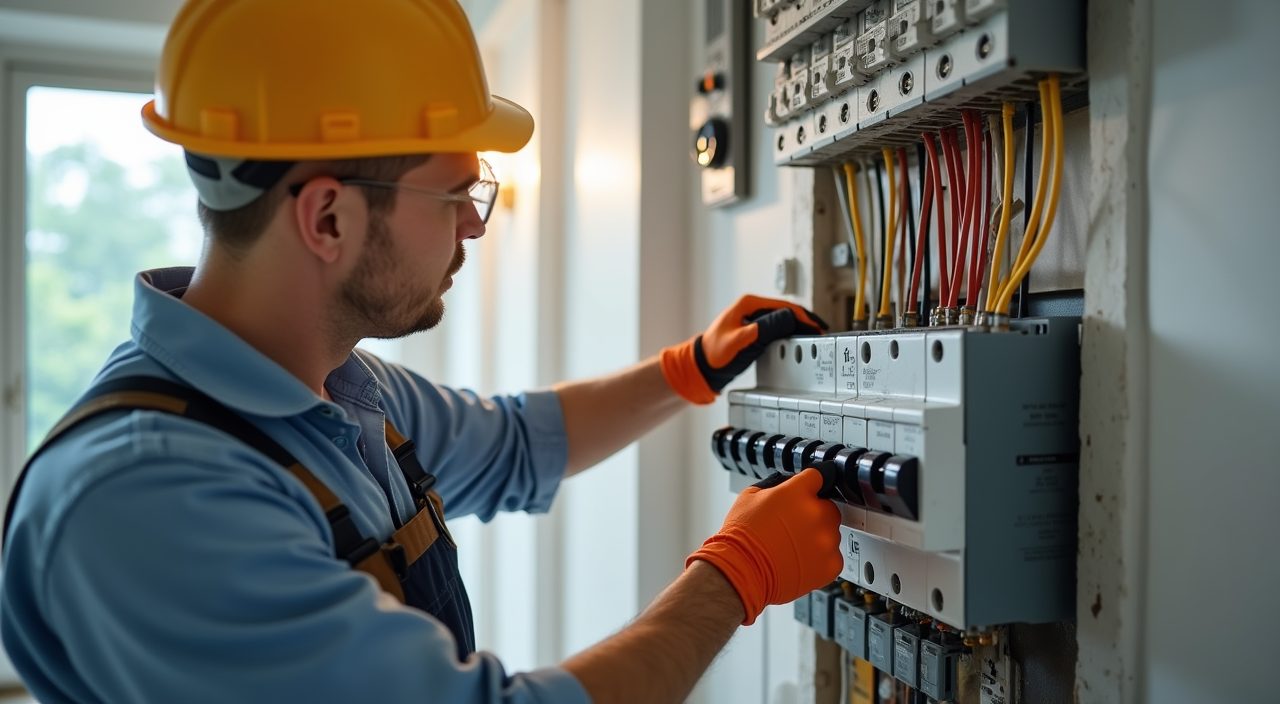
An MCB (miniature circuit breaker) must be sized so it trips before the cable feeding a circuit overheats, while still being large enough to carry the normal running load. In a typical Singapore home this means lighting circuits usually sit on a 6A or 10A MCB, general power sockets on 20A, and heavy appliances like water heaters, aircon or an oven on their own dedicated 16A to 40A breaker matched to the cable. The golden rule is simple: appliance load must be below the MCB rating, and the MCB rating must be at or below the safe current the cable can carry.
Getting this balance right matters because an oversized MCB is the dangerous mistake, not an undersized one. If the breaker is rated higher than the cable can safely handle, the wire can overheat inside your wall or conduit long before the breaker ever trips. This guide explains how MCB ratings, cable sizes and appliance loads fit together for a Singapore home running on a single-phase 230V supply.
What does an MCB actually do?
An MCB is an automatic switch in your distribution board (the DB box, sometimes still called the fuse box) that cuts power to a circuit when the current gets too high. It protects against two things: a sustained overload (too many appliances drawing current on one circuit) and a short circuit (a sudden large fault current). It does not protect people from electric shock; that job belongs to the RCCB or RCBO, which detects earth leakage.
Every MCB has a printed current rating, for example 6, 10, 16, 20, 32 or 40 amps. That number is the current it can carry continuously without tripping. Go above it for long enough and the breaker opens the circuit.
How do I match an MCB to the cable size?
The MCB protects the cable, not the appliance, so the breaker rating must never exceed the safe current-carrying capacity of the wire behind it. In Singapore homes the cabling follows the SS 638 wiring standard (the local equivalent of the IEC/BS 7671 approach), and a licensed electrician sizes the cable and MCB together based on the circuit length, the installation method and grouping.
As a rough guide for common domestic PVC copper cables, typical pairings look like this:
- 1.0 mm2 cable: lighting circuits, protected by a 6A or 10A MCB
- 1.5 mm2 cable: lighting or small loads, up to about 10A to 16A
- 2.5 mm2 cable: general 13A socket circuits, protected by a 20A MCB
- 4.0 mm2 cable: dedicated water heater or small aircon, around 20A to 32A
- 6.0 mm2 cable: instant water heaters, larger aircon or oven, around 32A to 40A
How do I work out the load on a circuit?
On a single-phase 230V supply, current in amps is roughly the appliance wattage divided by 230. A 3000W instantaneous water heater therefore draws about 13A, and a 4500W unit draws close to 20A. Add up the appliances that could run at the same time on one circuit to estimate the peak load.
The MCB rating should sit comfortably above that running load but at or below the cable capacity. A common mistake is stacking too many high-draw devices (kettle, microwave, air fryer) on one kitchen socket circuit, which nuisance-trips a correctly sized 20A breaker. The fix is a separate circuit, not a bigger breaker on the same thin cable.
- Lighting (LED, whole flat): usually well under 6A, so a 6A MCB is plenty
- 13A socket outlets (per circuit): 20A MCB on 2.5 mm2 cable
- Storage water heater (around 3000W): about 13A, dedicated 16A or 20A MCB
- Instant water heater (around 4500W): about 20A, dedicated 20A to 32A MCB on heavier cable
- Aircon (per unit): depends on model, often a dedicated 16A to 20A MCB
What is the difference between MCB curve types (B, C, D)?
MCBs come in tripping curves that describe how quickly they react to a short surge. Type B trips at roughly 3 to 5 times its rated current, Type C at about 5 to 10 times, and Type D at around 10 to 20 times. The curve matters for appliances that draw a big inrush of current when they switch on.
For a normal home, Type B and Type C cover almost everything:
- Type B: lighting and general sockets with little inrush, common in residential DBs
- Type C: motors, pumps, aircon compressors and anything with a startup surge
- Type D: high-inrush industrial gear, rarely needed in a flat or landed home
Why is an oversized MCB dangerous?
If someone swaps a tripping 20A breaker for a 32A one just to stop the nuisance trips, the underlying cable is still only rated for 20A. The circuit will now happily push current that overheats the wire inside the wall, degrades the insulation and can eventually cause a fire, all without the breaker ever noticing.
Persistent tripping is a symptom, not the problem. It usually means the circuit is overloaded or there is a fault. The correct response is to reduce the load, split the circuit, or have the wiring checked, never to fit a larger breaker onto cable that cannot handle it.
Can I change or size an MCB myself in Singapore?
No. Under Singapore's regulations, electrical work inside your consumer unit must be done by a Licensed Electrical Worker (LEW) or a qualified electrician. Replacing or resizing an MCB, adding a new circuit, or altering the DB board is not DIY territory here, both for safety and for legal compliance with the Energy Market Authority requirements.
If your breakers keep tripping, you are planning a renovation that adds heavy appliances like an induction hob or instant heater, or your DB board looks aged, this is the point to bring in a professional. Our electrical services team can inspect the board, calculate the correct loads, size the cable and MCB together, and certify the work so your home stays safe and compliant.
Frequently asked questions
What size MCB do I need for a water heater in Singapore? It depends on the heater's wattage. A storage heater around 3000W draws roughly 13A and typically sits on a dedicated 16A or 20A MCB, while a powerful instant heater near 4500W draws about 20A and needs a heavier cable with a 20A to 32A MCB. Always let a licensed electrician confirm the cable and breaker together.
Is a higher amp MCB always better? No, it is the opposite. The MCB must match the cable it protects, and fitting a rating higher than the cable can carry removes the protection and creates a fire risk. Bigger is only correct if the cable is also sized for it.
Why does my MCB keep tripping even though nothing looks wrong? Frequent tripping usually means the circuit is overloaded (too many appliances at once), there is a short circuit, or there is an earth-leakage fault picked up by the RCCB. The answer is to find the cause, not to fit a larger breaker; a bigger MCB on the same cable is unsafe.
What is the difference between an MCB and an RCCB? An MCB protects the wiring from overload and short circuit, cutting power when current is too high. An RCCB (or RCBO, which combines both) protects people by detecting earth leakage that could cause an electric shock. A safe DB board uses both together.