
Preventive Electrical Maintenance for Older Flats
A practical guide to electrical maintenance in Singapore for older HDB flats: what to check, how often, warning signs, and when to call a Licensed Electrical Worker.
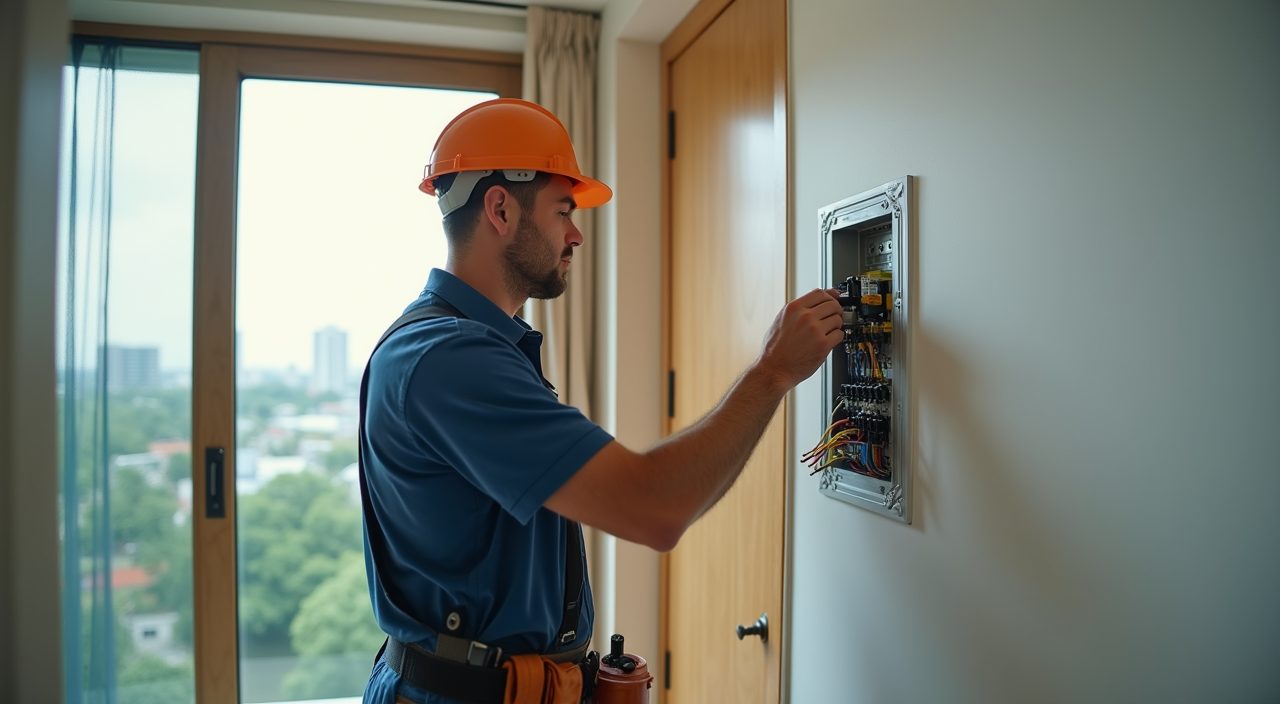
Preventive electrical maintenance means checking and servicing your flat's wiring, distribution board and fittings before they fail, rather than waiting for a trip, a burnt smell or a shock. For older HDB flats in Singapore, the highest-value steps are testing the RCCB (safety trip) every few months, having a Licensed Electrical Worker inspect the wiring roughly every 5 to 10 years, and replacing ageing switches, sockets and points that show heat marks or looseness.
This matters most in flats built before the 1990s. Older units often still run on wiring, boards and accessories from their original fit-out, and PVC cable insulation, plastic socket bodies and switch contacts all degrade with decades of heat and use. Singapore's humidity, salt-laden coastal air and heavy air-conditioning load add stress that a newer flat simply has not accumulated yet.
What does preventive electrical maintenance actually cover?
It is a mix of small checks you can do yourself and periodic work that must be done by a qualified person. The goal is to catch degradation early, keep protective devices working, and avoid the two things everyone fears: fire and electric shock.
A sensible scope for an older flat includes the following.
- Testing the RCCB or ELCB (the earth-leakage trip) using its test button
- Inspecting the distribution board for heat discolouration, buzzing or a burnt smell
- Checking sockets and switches for looseness, cracks, browning or warmth in use
- Reviewing whether circuits are overloaded, especially kitchen and aircon points
- Looking at earthing and bonding, particularly around wet areas
- Replacing brittle, discoloured or damaged wiring and accessories
How often should I service the electrics in an older HDB flat?
Test the RCCB yourself every one to three months by pressing its test button; it should trip instantly and cut power. If it does not trip, or will not reset, treat that as urgent and get it looked at.
For deeper checks, a practical rhythm is a visual walk-through once a year and a professional inspection every 5 to 10 years, sooner if the flat is over 30 years old or has never had its wiring reviewed. Also schedule an inspection before a renovation, before adding heavy loads like a second aircon or an instant water heater, and after any water leak or ceiling seepage near electrical points.
What are the warning signs an older flat needs electrical attention?
Some symptoms are easy to miss because they build up slowly. Do not wait for a full outage; the signs below mean something is already wrong and should be checked promptly.
- Frequent tripping of the RCCB or a specific circuit breaker
- A burning or fishy plastic smell near sockets or the distribution board
- Sockets, plugs or switch plates that feel warm or show brown scorch marks
- Flickering or dimming lights when appliances switch on
- Buzzing, crackling or sparking when you plug in or flick a switch
- Mild tingles from taps, metal casings or appliances (a possible earthing fault)
- Loose sockets where plugs no longer sit firmly
Which parts of an old flat's electrical system age fastest?
Distribution boards are a common weak point. Older boards may still use rewireable fuses or early breakers, and may lack a modern RCCB, which is the device that protects against fatal shock from earth leakage. Upgrading to a proper consumer unit with RCCB protection is one of the most worthwhile improvements in an ageing flat.
Wiring insulation, socket outlets and switches are the next concern. Decades of load, heat and humidity make PVC insulation brittle and turn contacts loose or pitted, which causes the heat and browning you can see and smell. Kitchen and bathroom accessories tend to suffer first because of moisture and high-power appliances.
Can I do any of this myself, and where is the legal line?
You can safely handle the low-risk checks: pressing the RCCB test button, looking and sniffing for problems at the board and sockets, keeping the board area dry and unobstructed, and avoiding overloaded power strips. Anything beyond observation should stop there.
In Singapore, work on fixed wiring, the distribution board, or adding and altering circuits must be carried out by a Licensed Electrical Worker (LEW). This is a regulatory requirement, not just best practice, and DIY work on fixed electrical installations is both unsafe and not permitted. If in doubt, do not open the board or touch fixed wiring yourself.
How do I get preventive maintenance done properly?
The reliable route is to engage a licensed electrician for a preventive electrical maintenance visit. A proper inspection covers the distribution board, RCCB function, socket and switch condition, earthing, and any circuits that look overloaded, followed by a clear list of what is fine, what to watch, and what needs replacing.
If you want this handled end to end, our preventive electrical maintenance service can inspect an older flat, test the protective devices, and replace ageing wiring, sockets or the consumer unit where needed, with the work done by qualified people. Booking a scheduled check is far cheaper and calmer than reacting to a trip or a burnt socket at night.
Frequently asked questions
How much does electrical maintenance cost in Singapore? It depends on the scope. A basic inspection of a flat is relatively inexpensive, while larger jobs like replacing the distribution board, rewiring a circuit or fitting RCCB protection cost more. The honest answer is that pricing scales with what needs replacing, so it is best to get a quote after an inspection rather than rely on a fixed figure.
Do I really need an RCCB in an older flat? Yes, an RCCB (residual current circuit breaker) is the device that trips fast on earth leakage and is your main protection against fatal shock. Many older flats either lack one or have an ageing unit, so confirming you have a working RCCB is one of the most important checks in this guide.
How long does electrical wiring last in a HDB flat? There is no fixed expiry, but wiring and accessories that are several decades old should be inspected and are often due for partial replacement, especially if there are heat marks, brittle insulation or frequent tripping. Condition matters more than age alone, which is why a professional inspection is the right way to judge it.
Is it safe to keep using a socket that feels warm? No, a socket that is warm to the touch, browned or loose is a warning sign of a poor connection or overload and can lead to fire. Stop using it, avoid overloading it further, and have a licensed electrician check and replace it.