Scandinavian Dining Area Design Ideas for Singapore Homes
Scandinavian dining ideas for Singapore HDB flats and condos: warm palettes, compact layouts, tropical-proof materials and lighting that suit local homes.
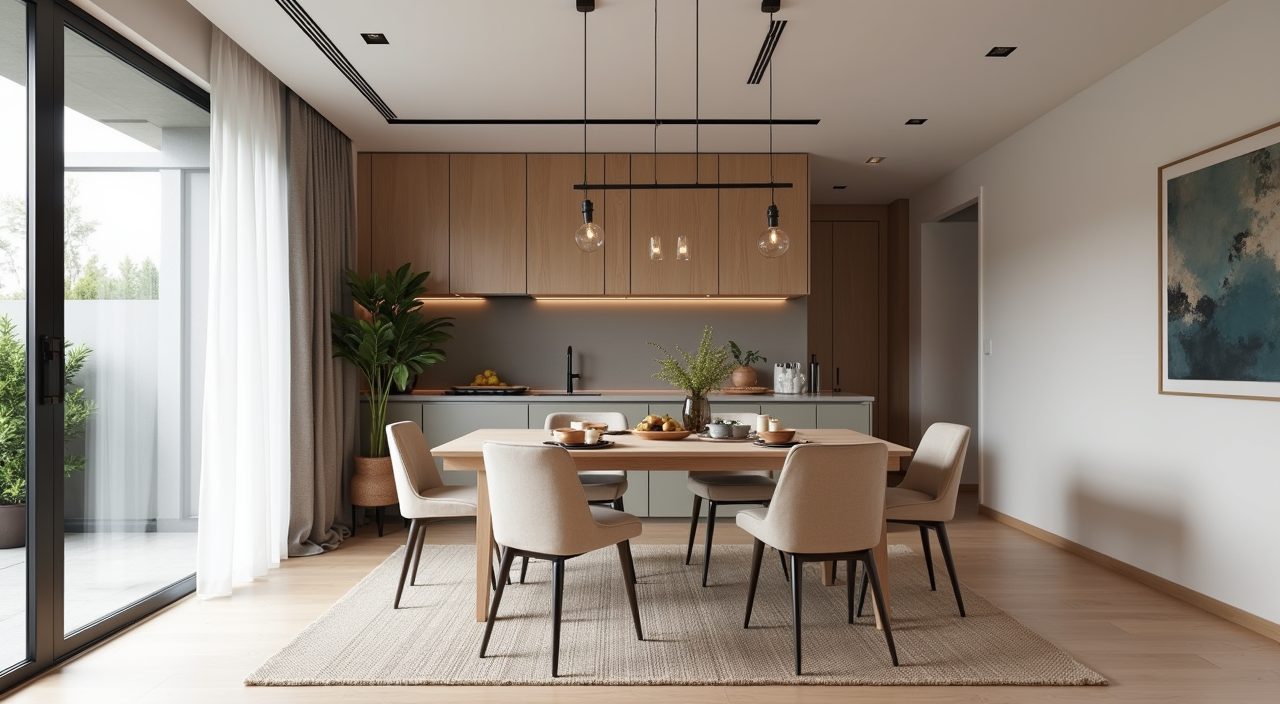
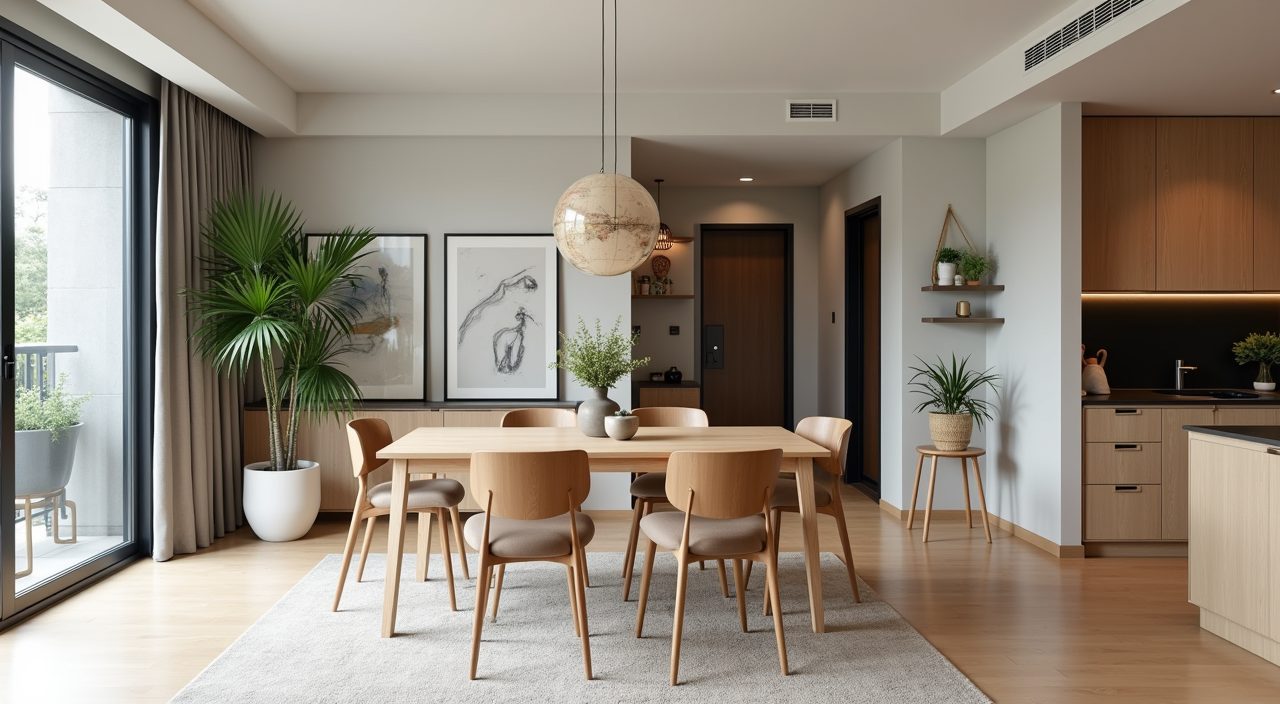
To design a Scandinavian dining area well in a Singapore home, keep the palette light and warm (soft whites, oat, pale timber), pick one honest natural material for the table, and let a single pendant light anchor the zone. In a typical HDB or condo where the dining space is squeezed between the kitchen and living room, the goal is an uncluttered, calm corner that feels bigger than it is, not a showroom set piece.
Scandinavian style works surprisingly well here because it was built for small homes and long dark winters, so it prizes light, space and function. In Singapore we flip the brief: we have too much harsh light and constant humidity instead of darkness and cold. The ideas below adapt the look to real local conditions, from 4-room BTO dining nooks around 2.2 by 2.5 metres to open-plan condo layouts where the dining table doubles as a work desk.
Start with a warm, light palette, not clinical white
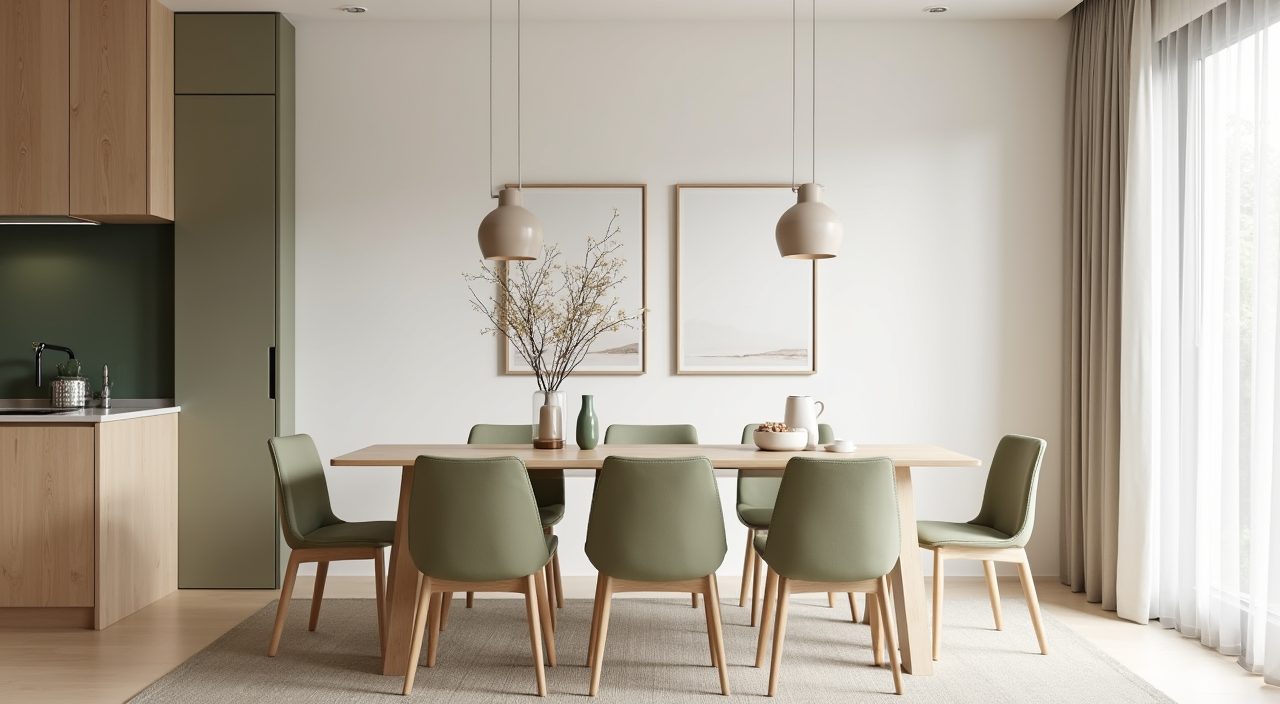
The Scandinavian base is light, but pure cold white can feel like a hospital under Singapore's bright daylight and cool LED downlights. Lean on warm whites, soft greige, oatmeal and pale wood tones so the space feels airy but still cosy. Reserve one or two muted accents (sage green, dusty blue, terracotta) for a rug, chair pads or artwork rather than painting a whole wall a strong colour.
For paint, a warm off-white on walls with a matt or eggshell finish hides fingerprints near the dining table better than flat white. If your unit gets strong afternoon west sun, test the colour on the actual wall at 4pm, since that light will push cool whites grey and warm whites yellow.
- Walls: warm white or soft greige (Nippon and Dulux both carry close matches).
- Timber tones: pale oak, ash or light-stained rubberwood, avoid orange-toned varnish.
- Accents: one muted colour repeated in two or three small items, not everywhere.
Choose a table that fits the real footprint, and round it if the space is tight
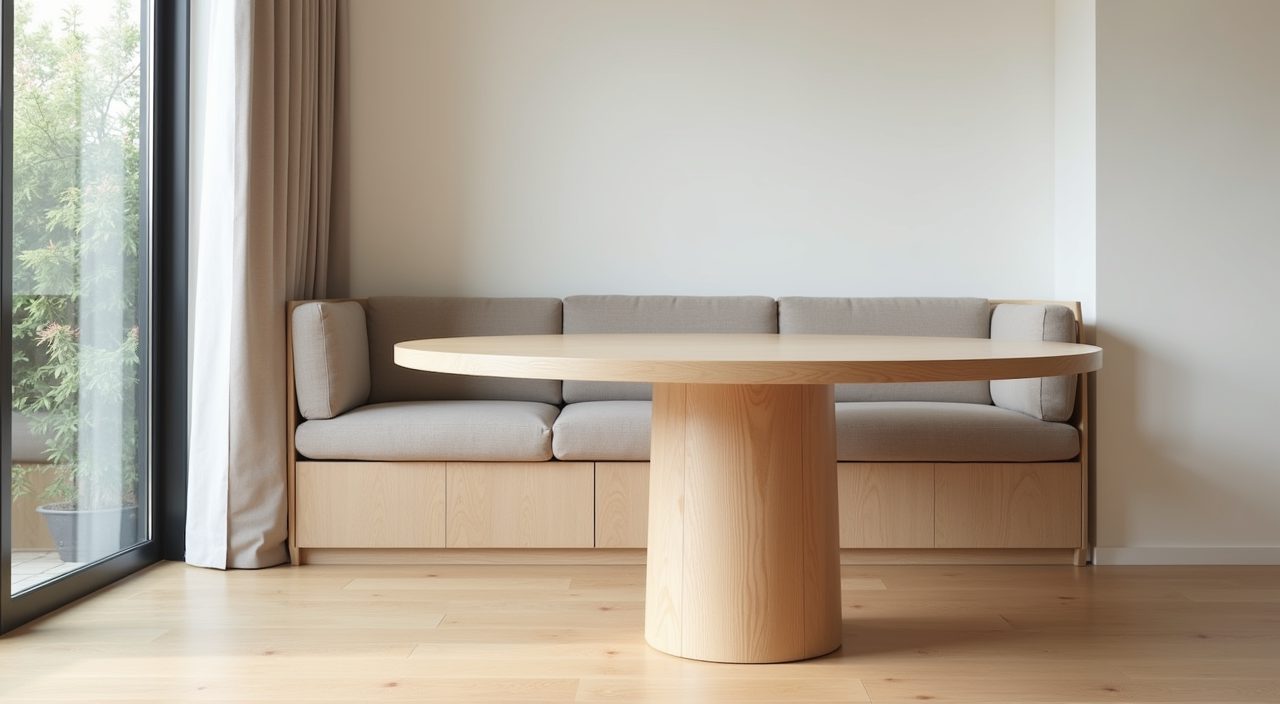
Measure honestly before you fall for a photo. In a 4-room HDB the dining zone often only allows a table around 1.2 to 1.4 metres long, and you still need roughly 900mm of clear space around it to pull out chairs and walk past. A round or oval table with a pedestal or splayed legs seats the same number in a smaller area and removes sharp corners in a walkway, which matters in narrow HDB layouts.
For condos with a longer wall, a 1.6 to 1.8 metre rectangular table in solid oak or oak veneer gives the classic Scandinavian silhouette. If you rarely host more than four, an extendable table (leaf stored away) keeps the everyday footprint small and expands only when guests come.
Mix chairs instead of buying a matching set
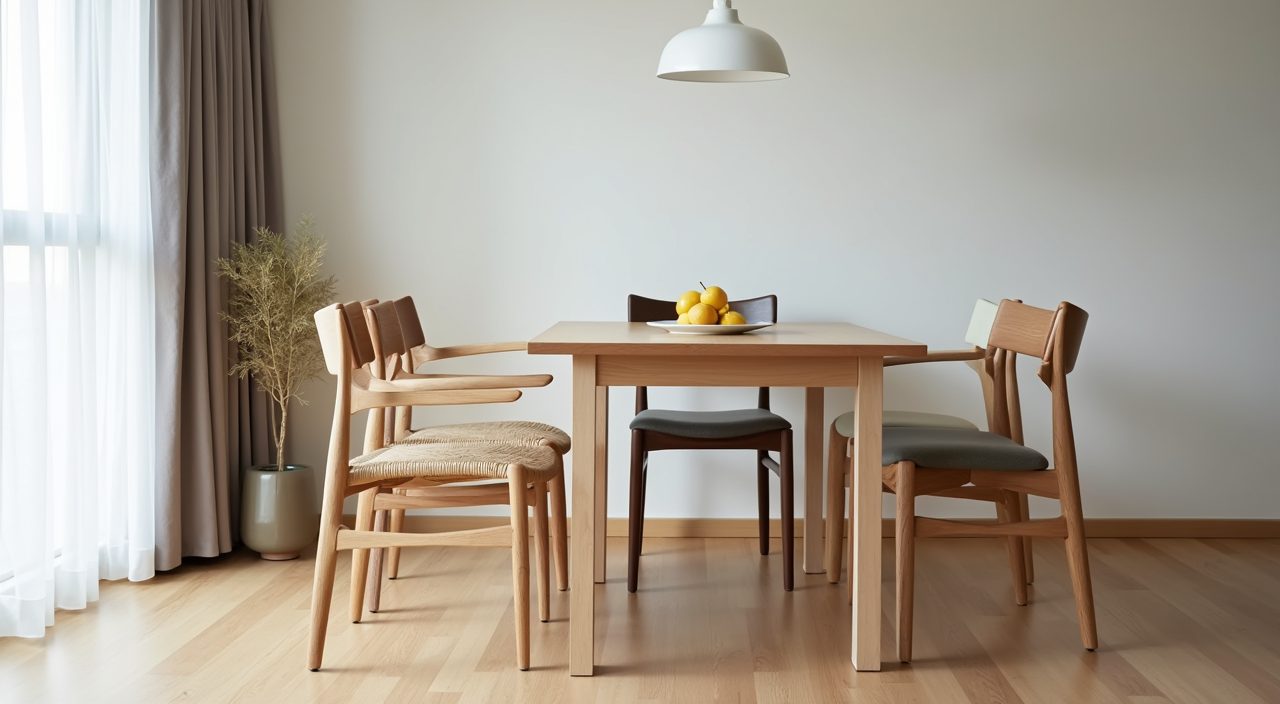
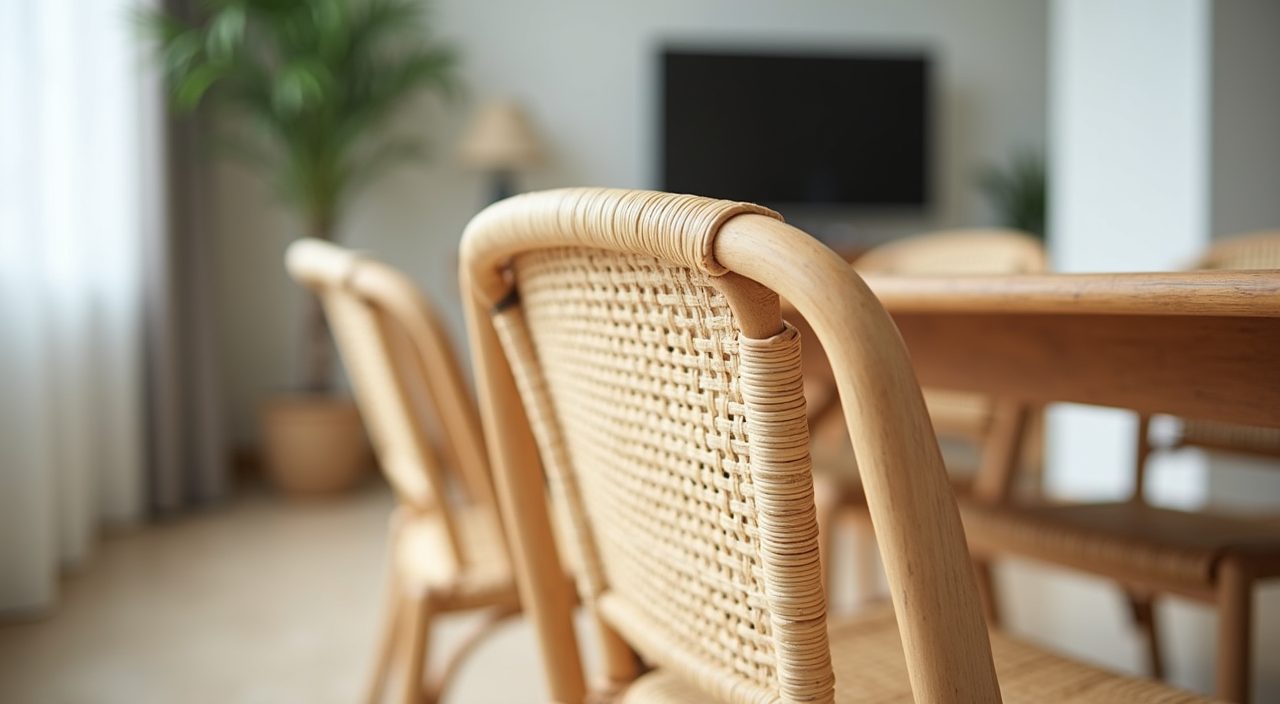
A hallmark of the relaxed Scandinavian look is chairs that coordinate without being identical. Pair light wood frames with one or two woven or upholstered seats, or run the same chair shape in two tones. This reads as considered rather than showroom-bought, and it lets you add a comfortable armchair at the head without hunting for a matching sixth piece.
Practical note for Singapore: fully upholstered fabric dining chairs trap food smells and can grow mildew if the room is humid and rarely aired. Timber, moulded shell or seats with removable washable covers age better here. Cane and rattan seats look great but need occasional care and a fan or aircon to stop them holding damp.
Hang one honest pendant to define the zone
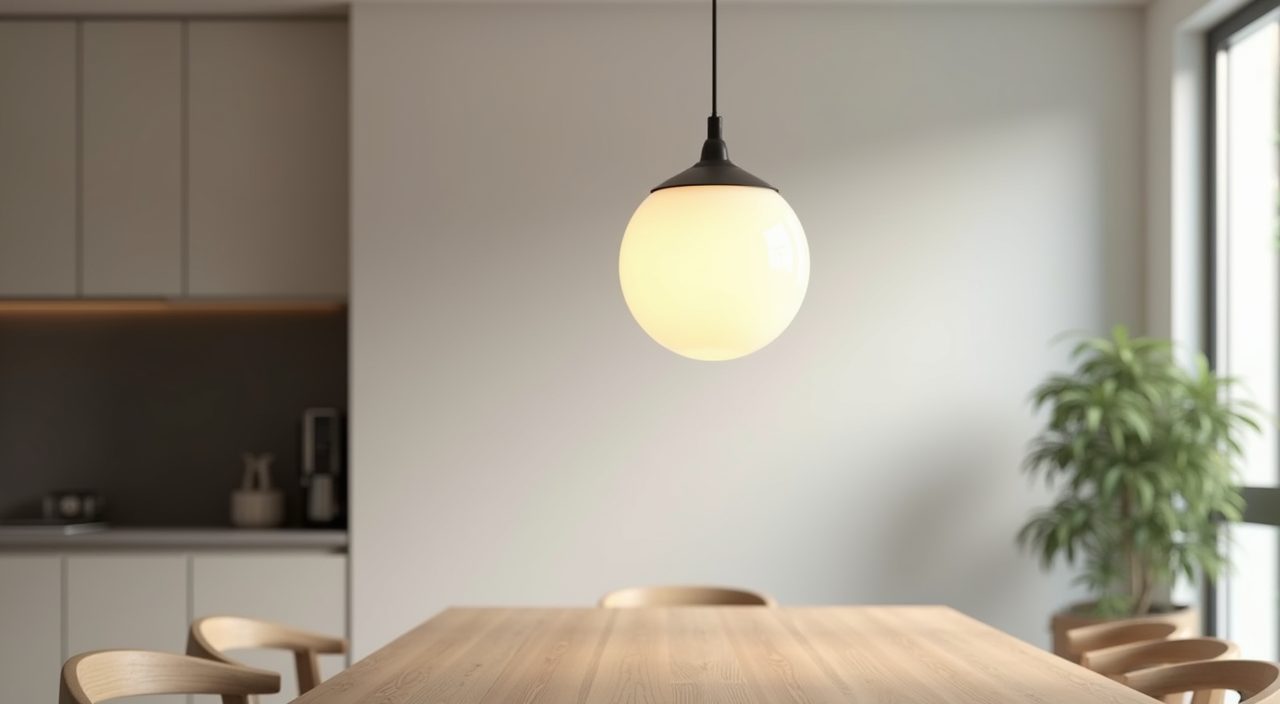
In open-plan HDB and condo layouts the dining area rarely has its own walls, so lighting does the job of marking the boundary. A single pendant or a small cluster centred over the table instantly says dining here without a partition. Classic Scandinavian shapes (opal glass globes, matt white or sand metal shades, pale wood) suit the style and throw soft, even light.
Hang the bottom of the shade about 700 to 800mm above the tabletop so it lights the food without blocking sightlines across the table. Use a warm white bulb around 2700K to 3000K, and put it on a dimmer if you can, since the same fitting then works for bright weekday dinners and low-lit weekend meals.
Pick tropical-proof materials over delicate ones
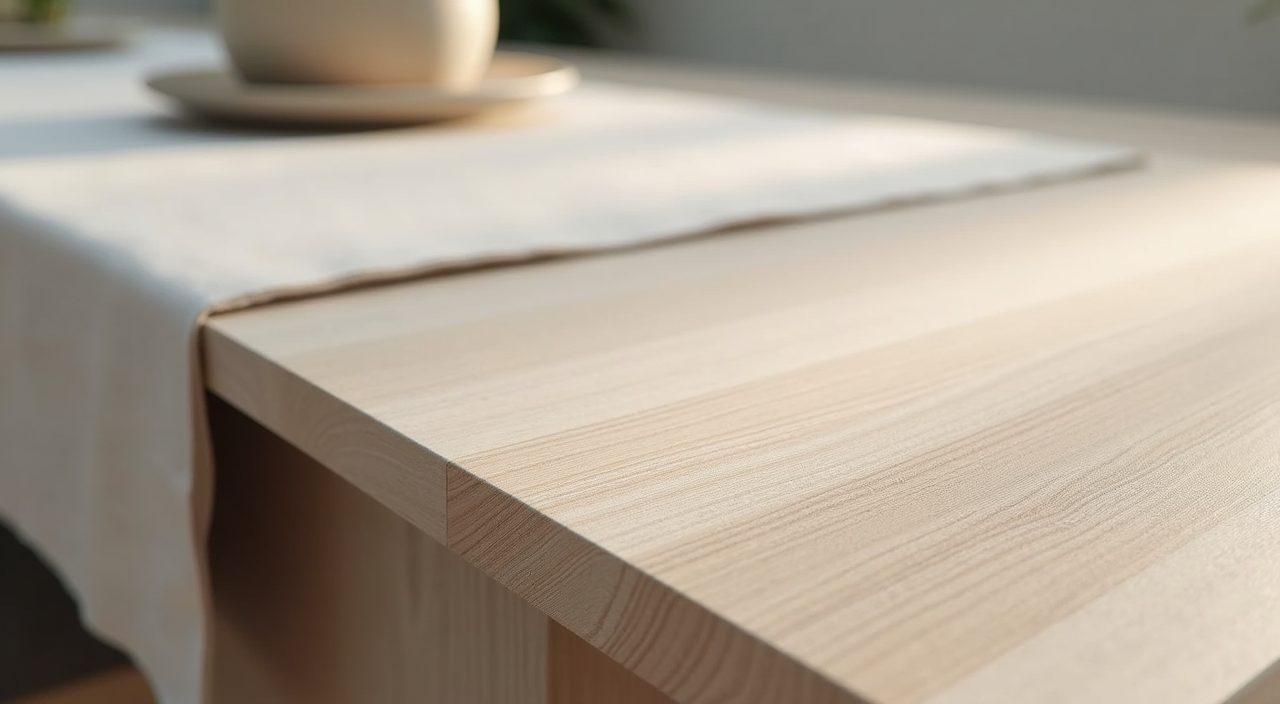
The catalogue Scandinavian home is full of raw pale timber and natural fibres, but Singapore's humidity, the occasional aircon-off weekend and everyday spills are hard on soft finishes. Solid wood can move and crack if it swings between damp air and cold aircon, so a good oak veneer on a stable core, or wood with a durable matt lacquer, is often the smarter buy for a dining table that sees daily use.
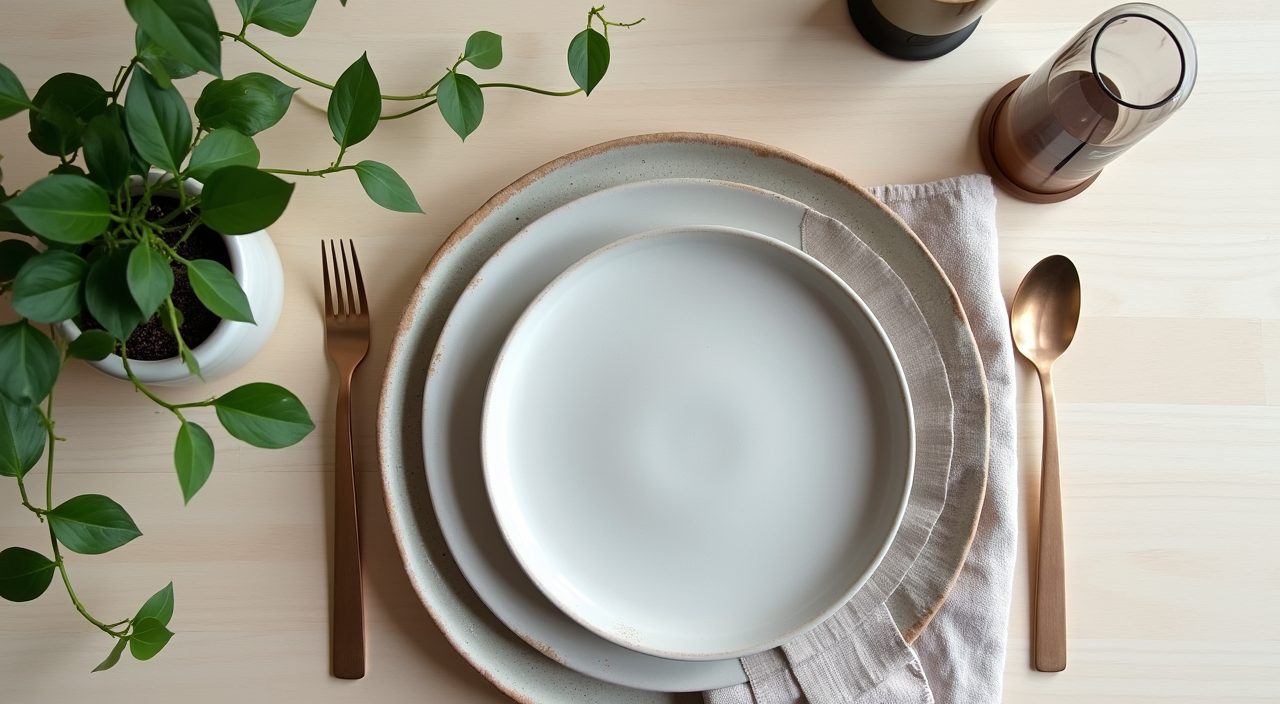
For a lighter budget or a rental, laminate and sintered stone tabletops now come in convincing pale wood and stone looks that shrug off water rings and heat. They lose a little of the tactile warmth of real timber, so bring softness back through a wool-blend rug, linen runner or woven placemats instead.
- Best value durable top: oak veneer or quality laminate on a stable core.
- Spill-proof and heat-proof: sintered stone or ceramic, in a matt pale finish.
- Add warmth back: linen, wool-blend rug, rattan or ceramic accessories.
Build in low, light storage for the everyday clutter
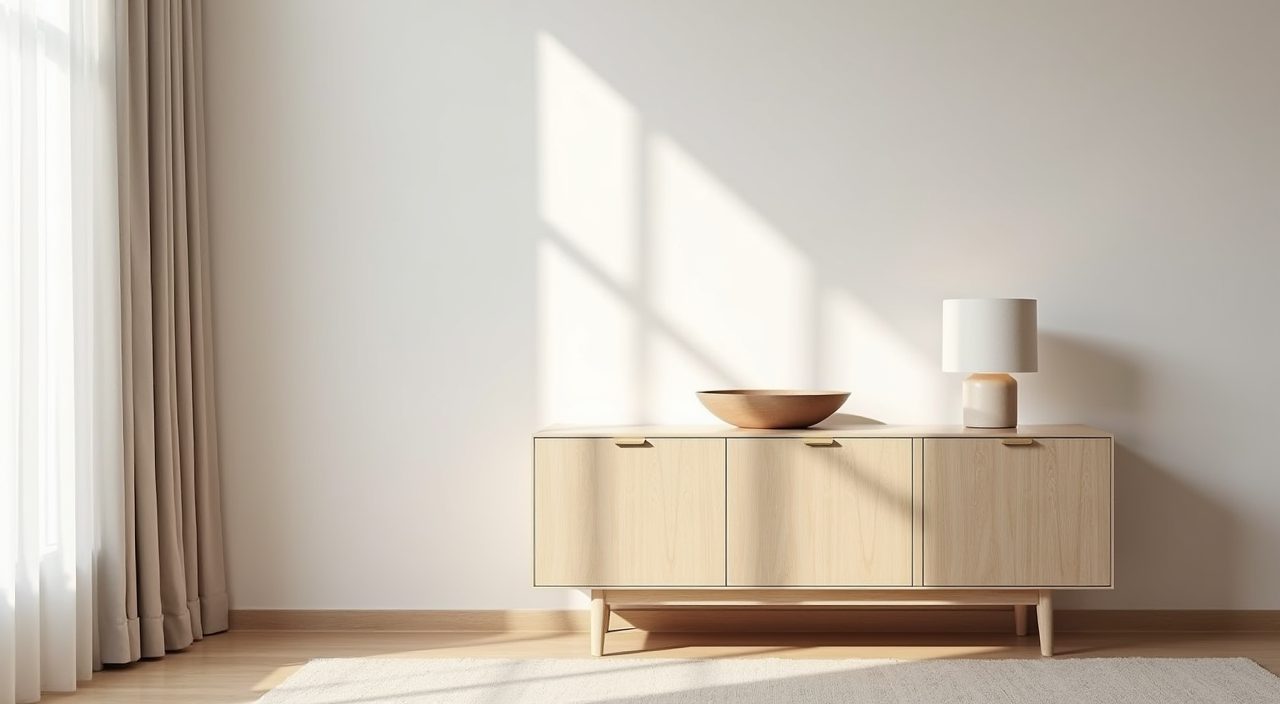
Scandinavian calm comes from hiding the mess, and dining areas collect it fast: keys, mail, chargers, kids' things. A low sideboard or a slim run of built-in cabinetry in pale timber or white gives you closed storage for tableware and a surface for a lamp or a bowl. Keeping it low and light-coloured stops it from crowding a small room the way tall dark units do.
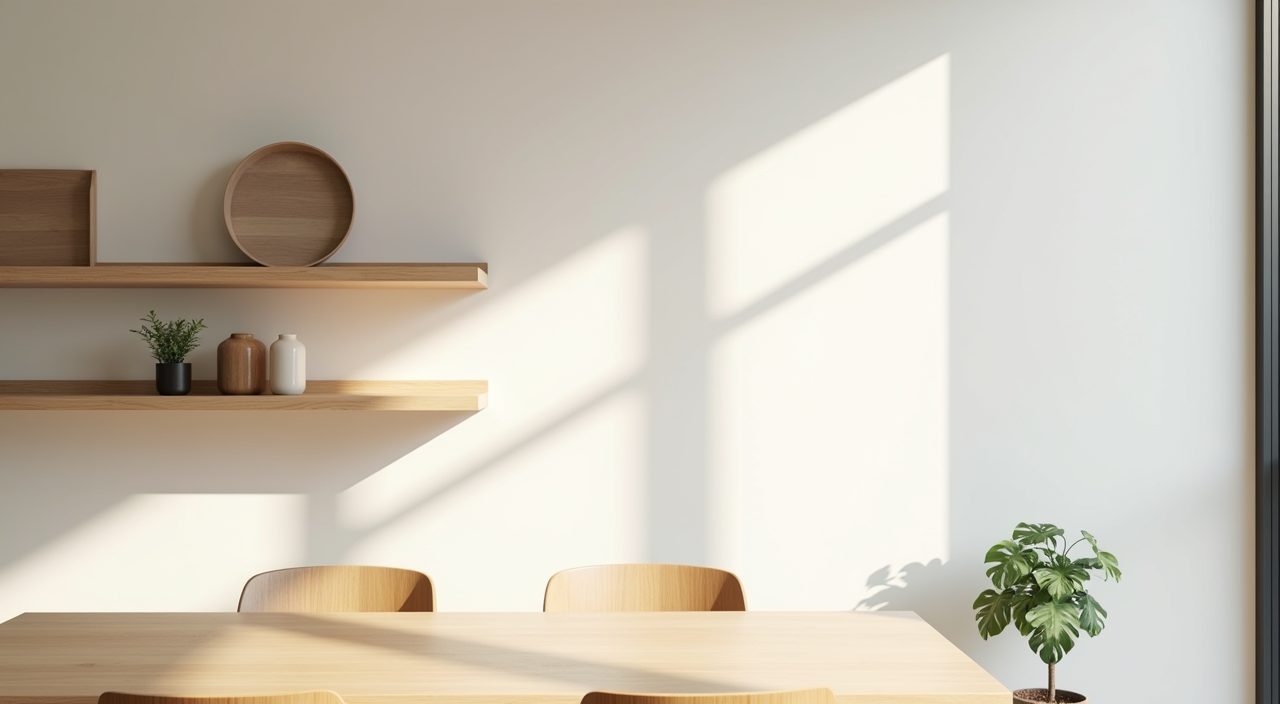
In compact flats, borrow the wall. Floating shelves or a shallow ledge hold a few ceramics and a plant without eating floor space, and a couple of wall hooks near the dining table handle bags. Resist filling every shelf; the style depends on breathing room, so aim for shelves that are more empty than full.
Layer in greenery and soft texture so it does not feel bare
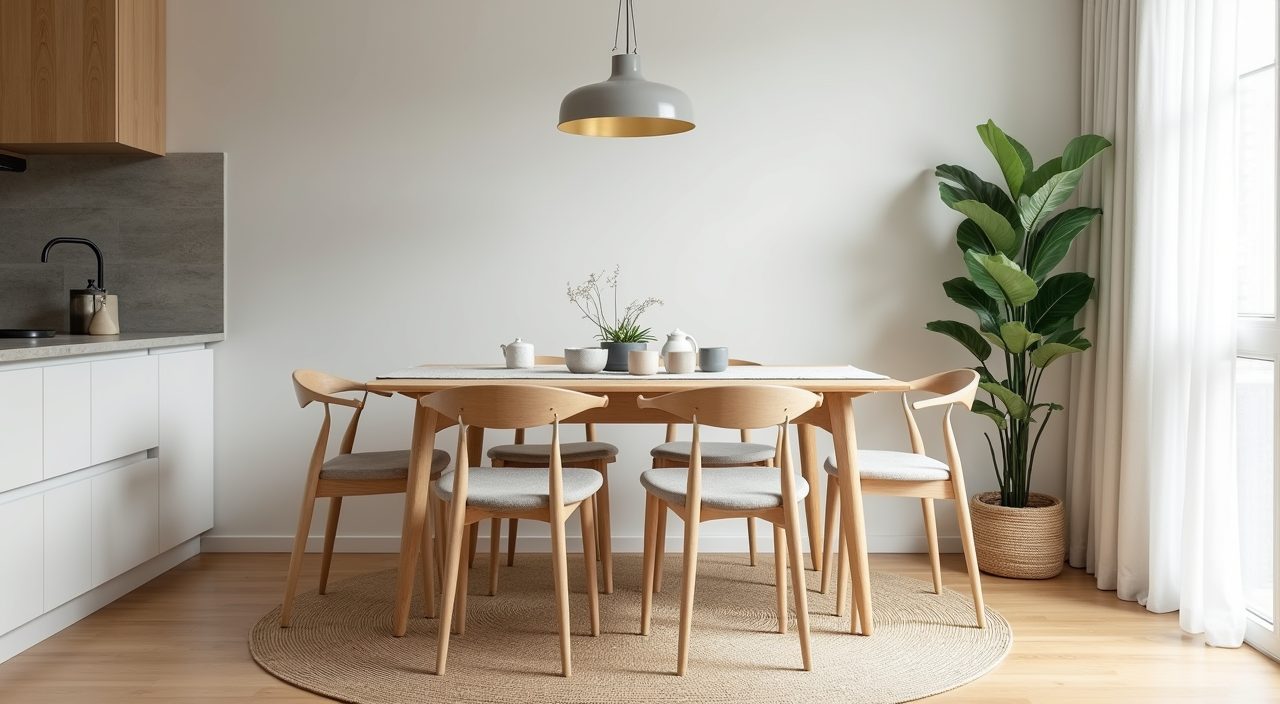
Pared-back can tip into cold if you stop at white walls and wood. A few plants add life and suit the light look, and Singapore's climate means many thrive indoors with little effort. A tall plant softens a corner, while a small pot or trailing plant on the sideboard breaks up hard lines.
Texture is the other half. A flatweave or wool-blend rug under the table grounds the zone and cuts echo in tiled homes, linen curtains diffuse harsh daylight into a soft glow, and a woven runner or ceramic vessels add quiet detail. These layers are what separate a warm Scandinavian dining area from a bare, unfinished one.
- Easy indoor plants for local homes: snake plant, pothos, ZZ plant, fiddle leaf fig in bright spots.
- Rug tip: size it so all chairs stay on the rug even when pulled out.
- Use a low-pile or flatweave rug that is easy to vacuum and quick to dry.
Let natural light lead, then control the glare
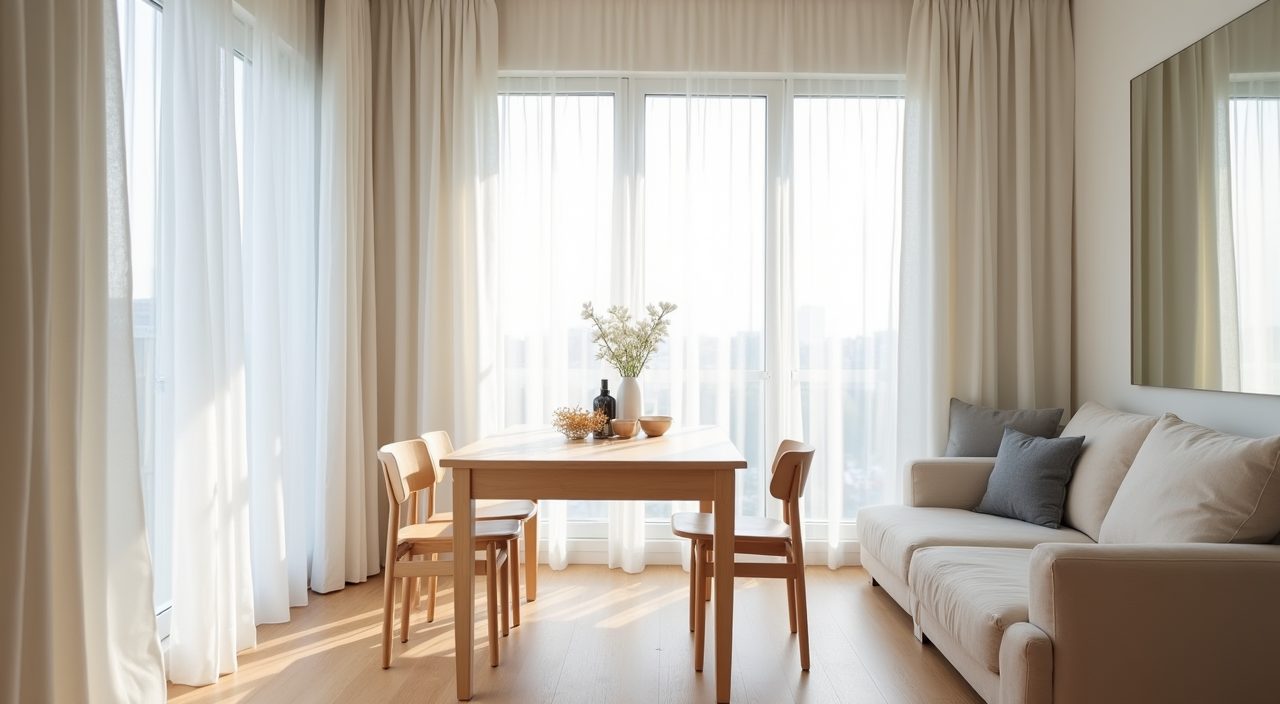
This style lives on daylight, and most Singapore units get plenty. Keep the dining area near the window where you can, use light or sheer window treatments, and avoid heavy dark curtains that fight the whole look. A large mirror on a side wall bounces light deeper into an interior flat and makes a tight dining nook feel more open.
The catch is glare and heat from west-facing windows. Sheer day curtains paired with a heavier night curtain, or roller blinds you can drop in the late afternoon, let you keep the bright airy feel most of the day without cooking at the table by 5pm. Position the table so no one eats staring straight into the setting sun.
What to plan and budget for
A Scandinavian dining area is one of the more budget-friendly looks to achieve because it rewards restraint: fewer, better pieces beat a room full of furniture. If you are only styling, budget for a table, chairs, a pendant light and soft furnishings, and expect the table and pendant to take the biggest share. If you want built-in cabinetry, integrated lighting on dimmers, repainting, or moving a light point to centre it over the table, that becomes renovation work rather than shopping, and it pays to plan it alongside the rest of the home so finishes and timber tones match. For anything involving new wiring for the pendant, adding sockets near the sideboard, or built-in carpentry, get a licensed contractor to handle the electrical and joinery so it is safe and properly finished. A qualified team can also advise which materials hold up to local humidity before you commit. If you would like a scandinavian dining area design singapore renovation done properly, from carpentry to lighting and the electrical behind it, it helps to bring in a contractor early so the design and the buildable reality line up from the start.
Frequently asked questions
Does Scandinavian style work in a small HDB dining area? Yes, and it is arguably the best fit. The style was designed for small northern homes, so its light palette, low storage and uncluttered layout make a compact 4-room or 5-room dining zone feel more open, not cramped.
Is real wood furniture a problem in Singapore's humidity? Solid wood can expand, contract or crack when air swings between humid and cold aircon, so many homeowners choose a good oak veneer or a durably lacquered top for daily-use dining tables. Real solid wood is fine if you keep the room reasonably ventilated and avoid extreme aircon cycling.
How much should I budget for the lighting and any wiring changes? Styling with a plug-in or existing point is inexpensive, but if you need to add or move a ceiling light point to centre a pendant over the table, that is electrical work and should be quoted by a licensed contractor. Budget for it separately from furniture and confirm the point position before the table arrives.
What is the difference between Scandinavian and Japandi for a dining area? Both are light, minimal and natural, but Japandi leans darker and more muted with Japanese influence, while Scandinavian is generally lighter and cosier. In a bright Singapore flat, either works, and many local homes blend the two.