Scandinavian Study Room Design Ideas for Singapore Homes
Scandinavian study room ideas built for Singapore homes: light palettes, humidity-smart materials, and clever small-space layouts for HDB flats and condos.
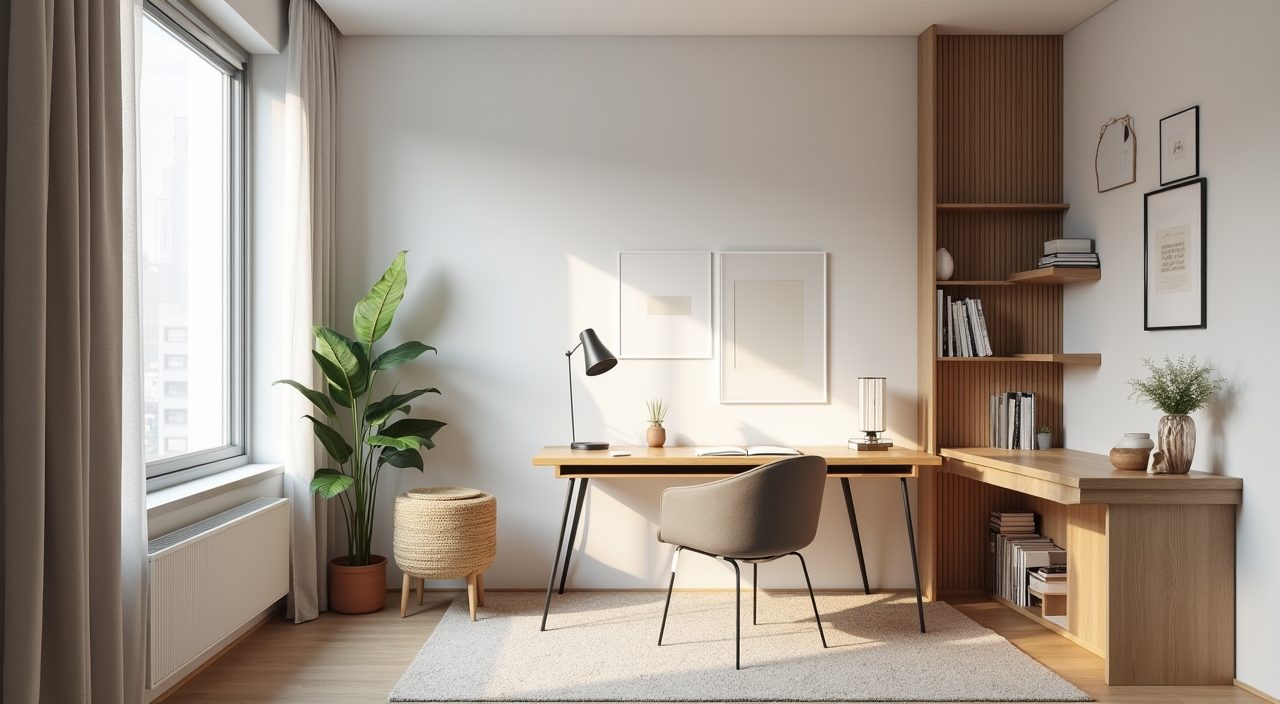
To design a Scandinavian study room well in a Singapore home, keep a light neutral palette (warm white, pale oak, soft grey), maximise natural light while controlling tropical glare, and choose moisture-resistant materials over solid softwoods that warp in our humidity. Prioritise built-in or wall-mounted storage to free up floor space, and add one or two natural textures (light wood, wool, linen) so the room feels calm rather than clinical.
Scandinavian design suits Singapore for a practical reason: it was built around small rooms and long, dim winters, which translates surprisingly well to compact HDB bedrooms and condo study nooks that need to feel bright and open. The catch is our climate. Real Nordic interiors lean on solid pine and untreated timber, but here that means swelling, warping and mould. The ideas below keep the airy Scandi look while swapping in finishes and layouts that actually survive year-round heat and humidity.
Start with a warm white and pale wood base, not stark white
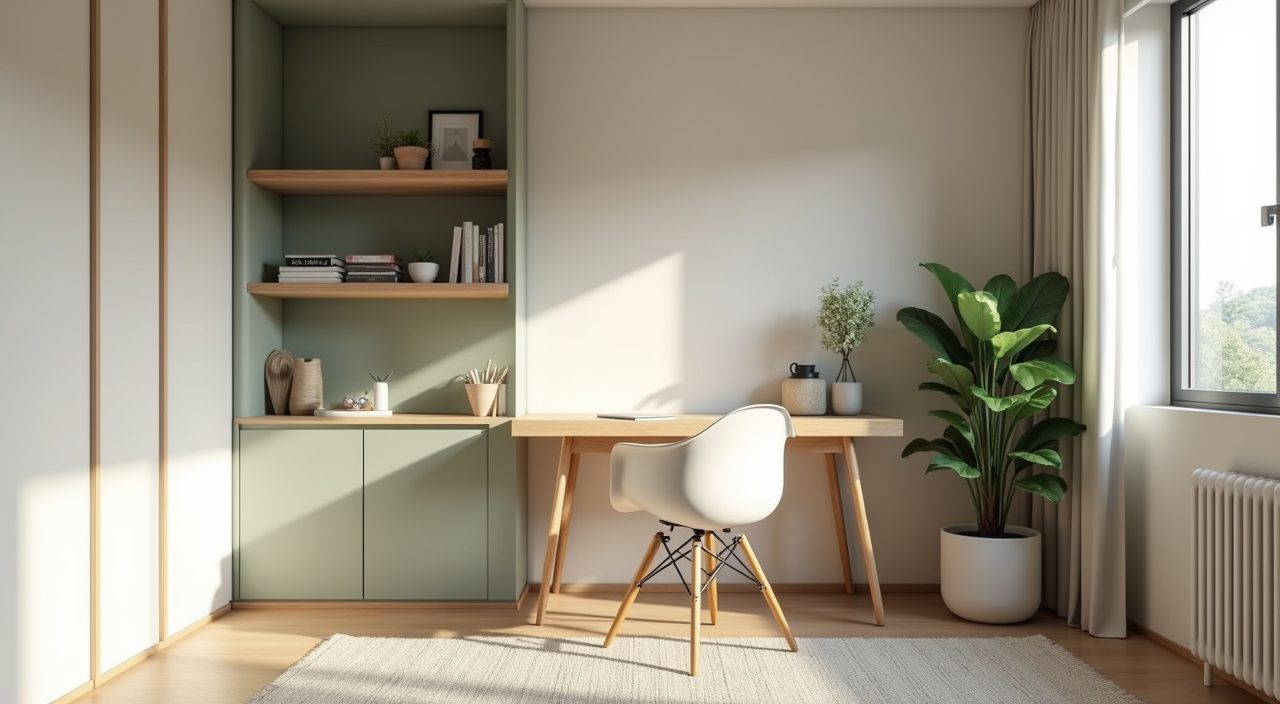
The core Scandinavian palette is light neutrals, but a cold pure white can feel harsh under Singapore's bright daylight and read blue under LED lighting. Go for a warm off-white or soft greige on the walls, then bring in pale wood tones on the desk and shelving so the room feels warm instead of sterile. This base also bounces light around, which matters in inward-facing HDB bedrooms that only get one window.
Layer in a single quiet accent so the space has a focal point without breaking the calm. A muted sage, dusty blue or soft terracotta on one wall, a chair or a set of storage boxes is enough. Keep the accent to roughly one element and let wood and white do the rest.
Choose humidity-smart materials over solid softwood
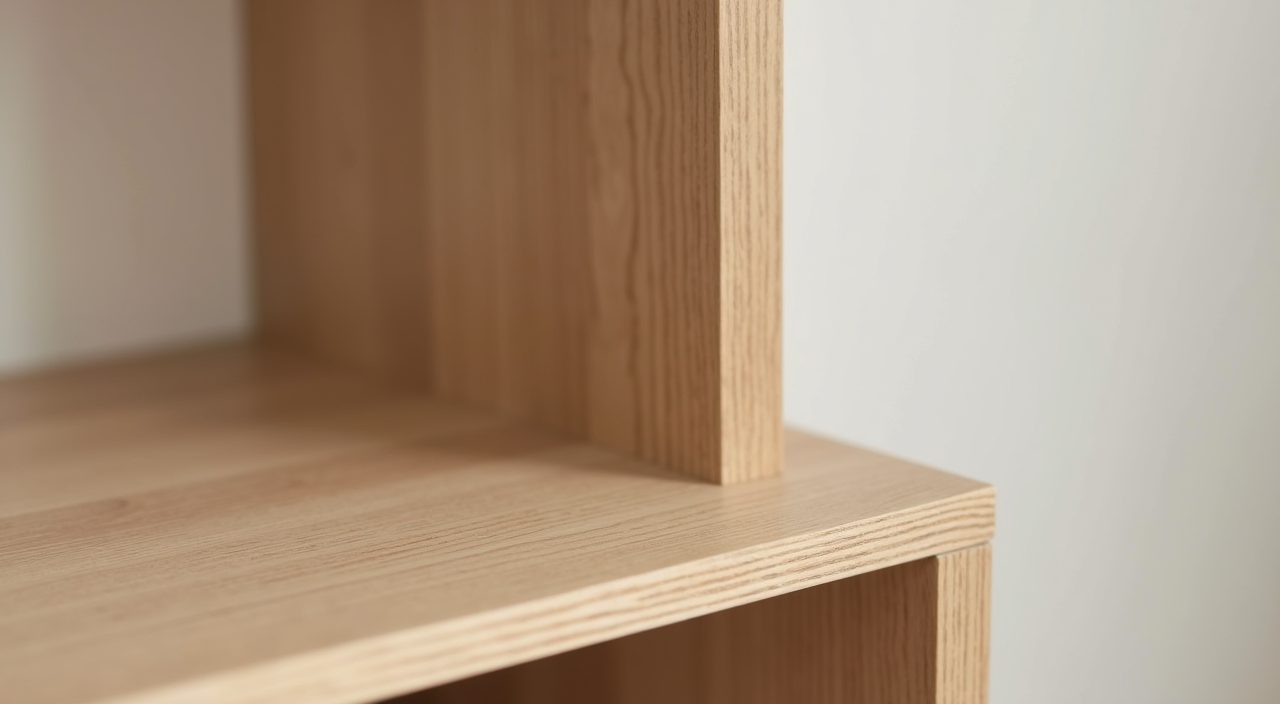
This is the change that matters most in Singapore. Authentic Scandi rooms use a lot of solid pine and oak, but in our humidity solid softwood expands, warps and can grow mould, especially against an external wall. You can keep the exact same light wood look using more stable, moisture-tolerant materials that hold up in a flat without constant aircon.
- Plywood or engineered wood with an oak or ash veneer for desks and shelving: stable, lighter on the wallet than solid timber, and easy to get in the right pale tone.
- Laminate or melamine surfaces in a matte wood-grain finish for carpentry that sees daily wear and the odd spill.
- Moisture-resistant MDF for built-in cabinet carcasses, sealed properly on all edges.
- For any real solid wood, ask your contractor for a proper sealed finish and keep it off damp external walls.
Work with tropical light: diffuse the glare, keep the brightness
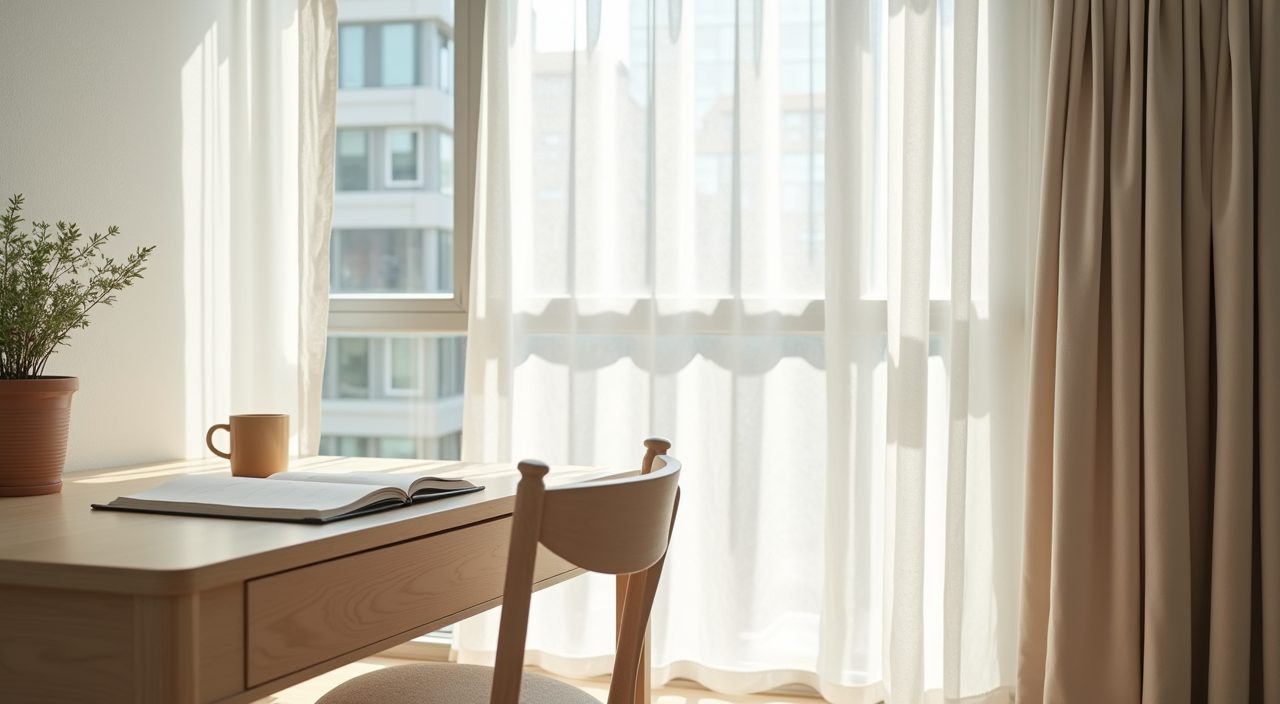
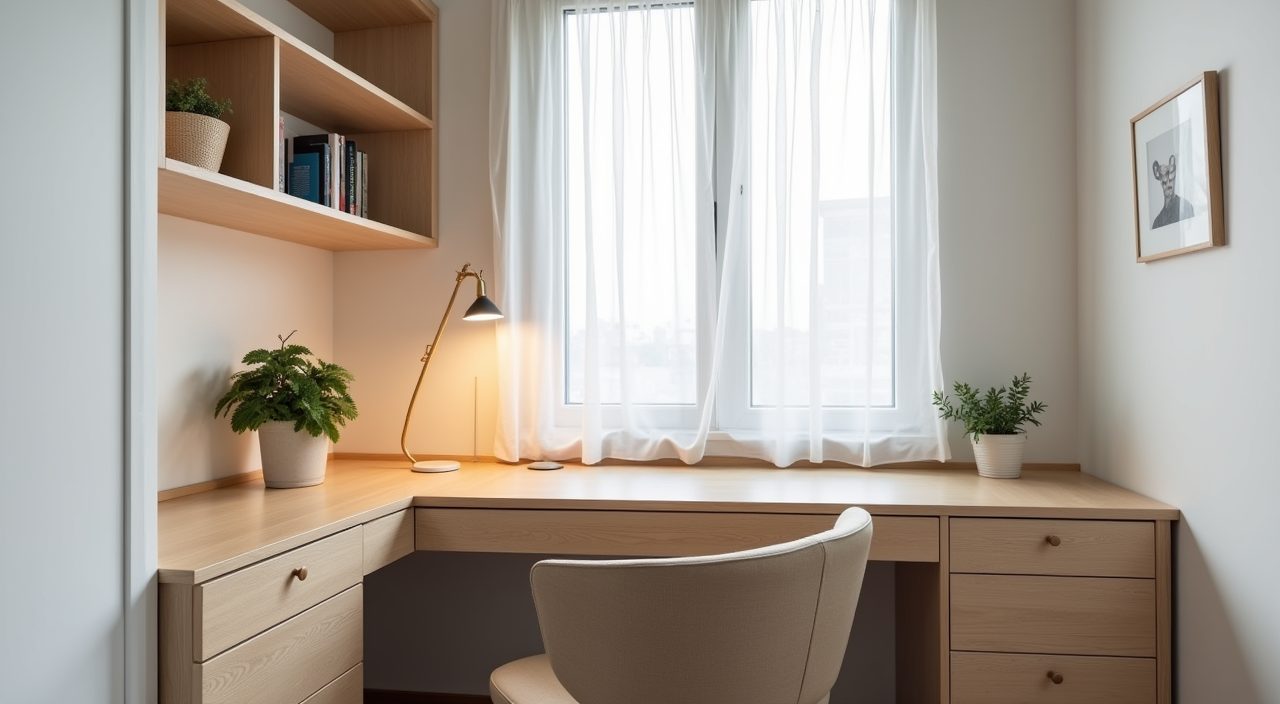
Scandinavian interiors chase every scrap of daylight, but Singapore's problem is the opposite: too much harsh light and heat gain, especially on west-facing units in the afternoon. The trick is to soften and diffuse the light rather than block it. Sheer white or light linen curtains keep the airy Nordic feel while cutting glare on your screen and reducing heat.
Position the desk so daylight comes from the side rather than directly behind or in front of your monitor, which causes reflections and eye strain. If the window gets fierce afternoon sun, pair the sheers with a simple roller blind or solar film so you can study comfortably at 3pm without the room going dark and gloomy.
Go vertical with wall-mounted storage to save floor space
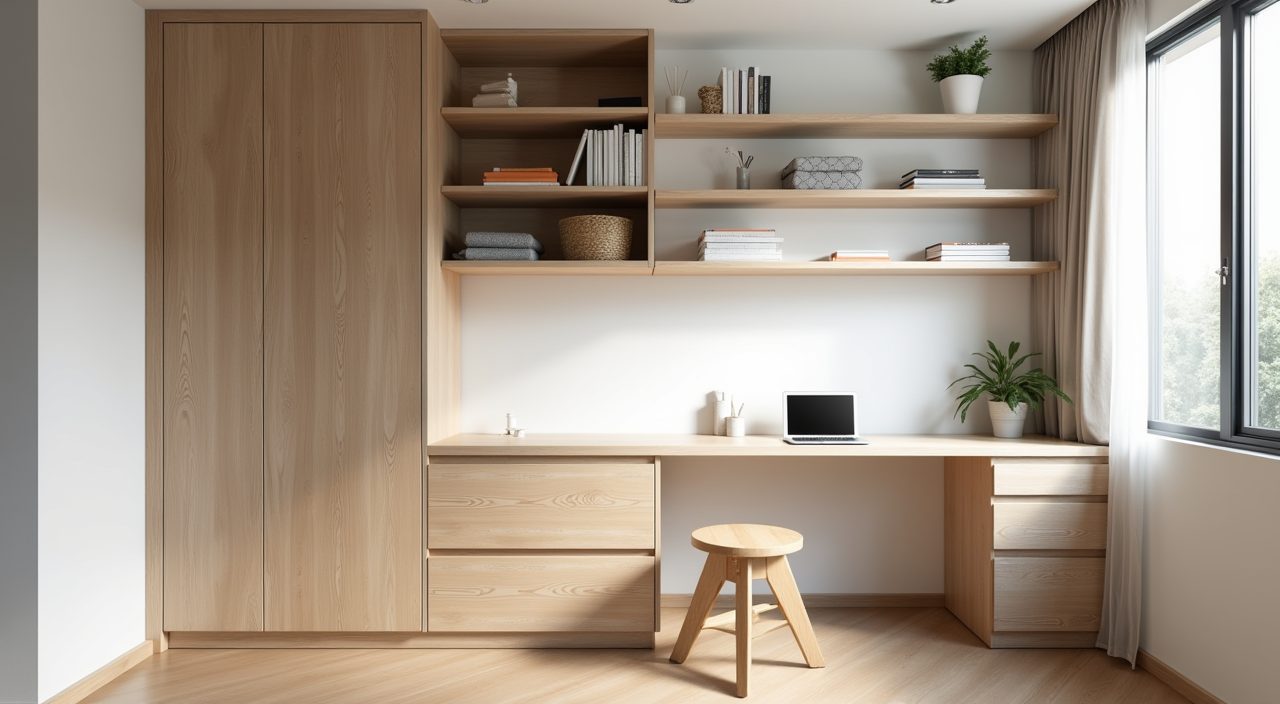
In a typical HDB bedroom-turned-study or a compact condo room, floor space is the scarce resource. Scandinavian design loves open wall shelving and slim floating units, which happens to be the right move for small Singapore rooms. Take storage up the wall so the floor stays clear and the room reads bigger.
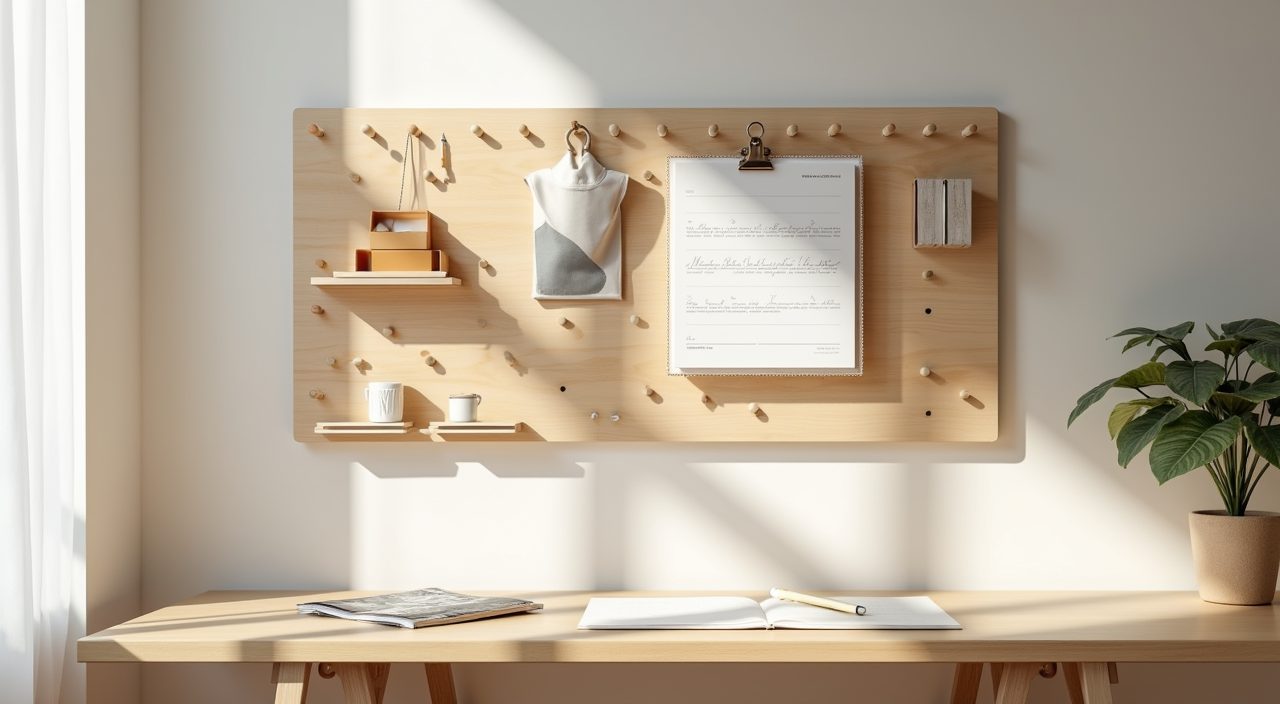
Open shelves in pale wood look distinctly Scandi and keep the room from feeling boxed in, but they show clutter, so mix in a few closed units or fabric boxes for the messy stuff. Floating shelves above the desk, a slim pegboard, and a wall-mounted cabinet give you plenty of storage without eating into the walkway.
Build a slim, clutter-free desk zone
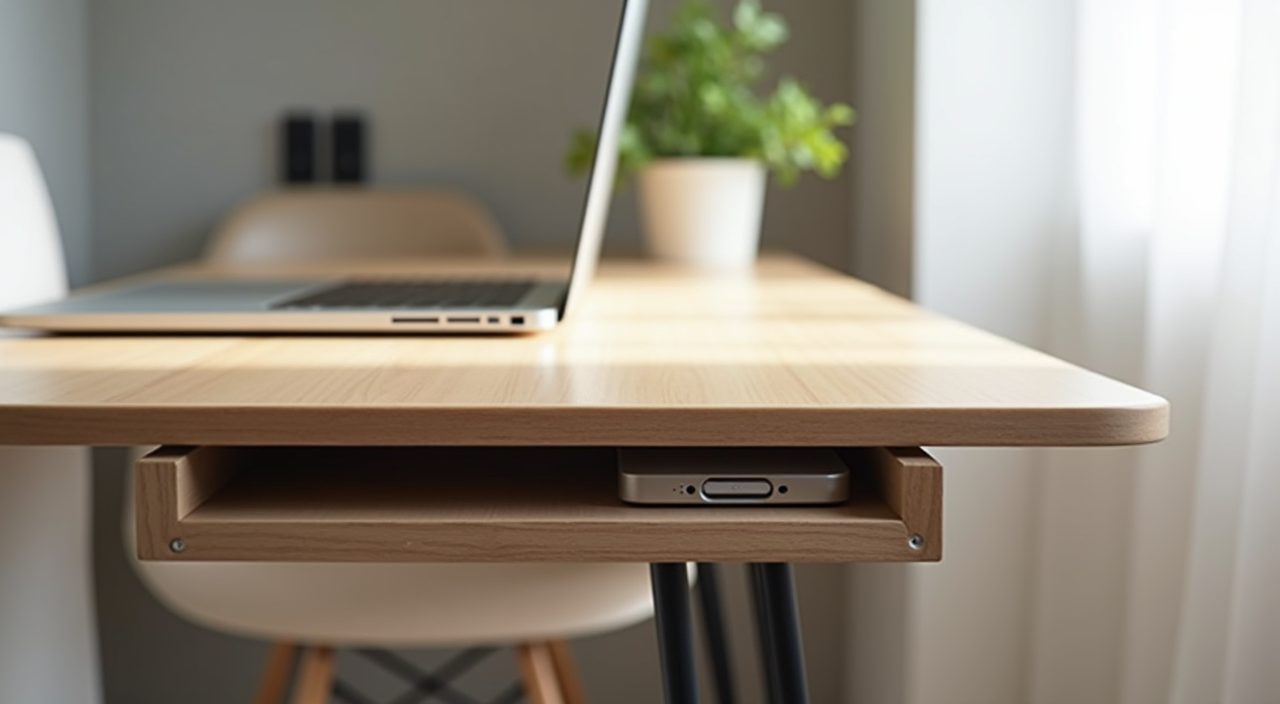
The Scandinavian look depends on clean surfaces, so the desk needs to hide cables and small items rather than pile them up. A simple light-wood desktop on hairpin or slim metal legs keeps the visual weight low and makes a small room feel more open. If space is tight, a wall-mounted fold-down or a desk that runs along the window under the sill can save serious floor area.
Plan cable management from the start: a discreet tray under the desktop, a grommet hole for wires, and a nearby power point mean the surface stays clean. Since Singapore desks usually carry a laptop, monitor, router and chargers, sorting this during renovation is far easier than fighting a tangle later.
Layer soft textures so the room feels calm, not cold
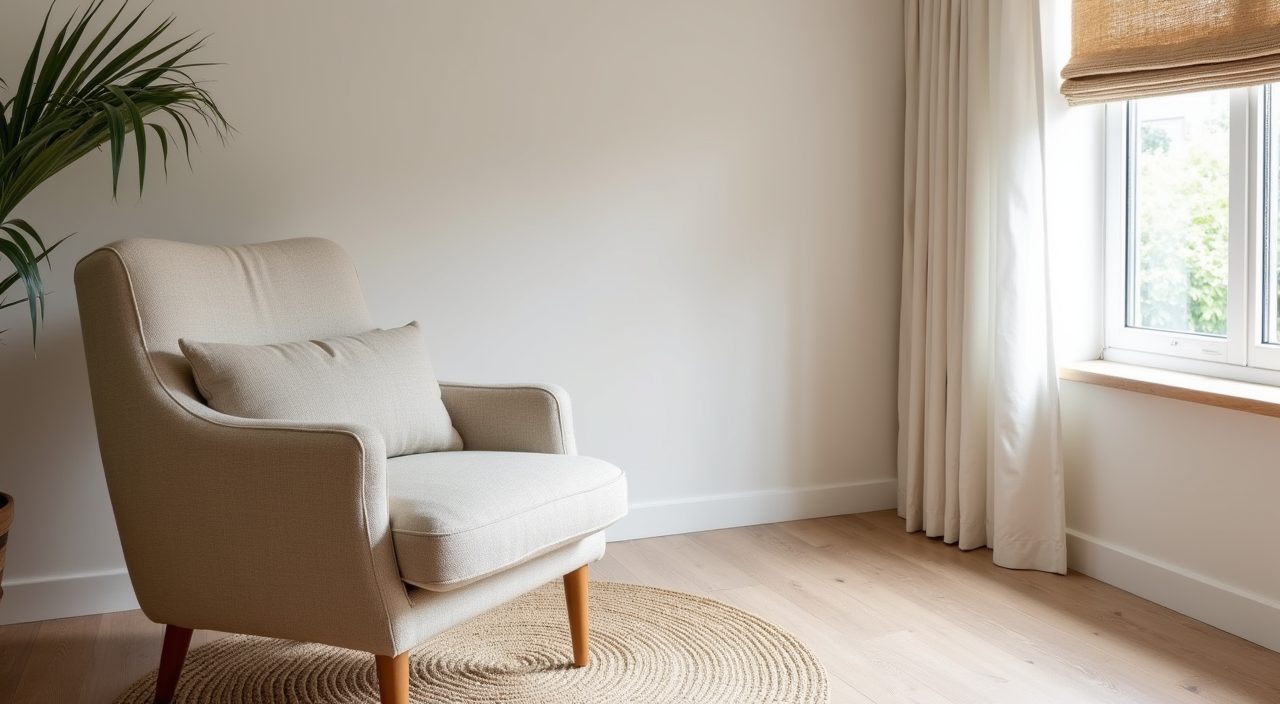
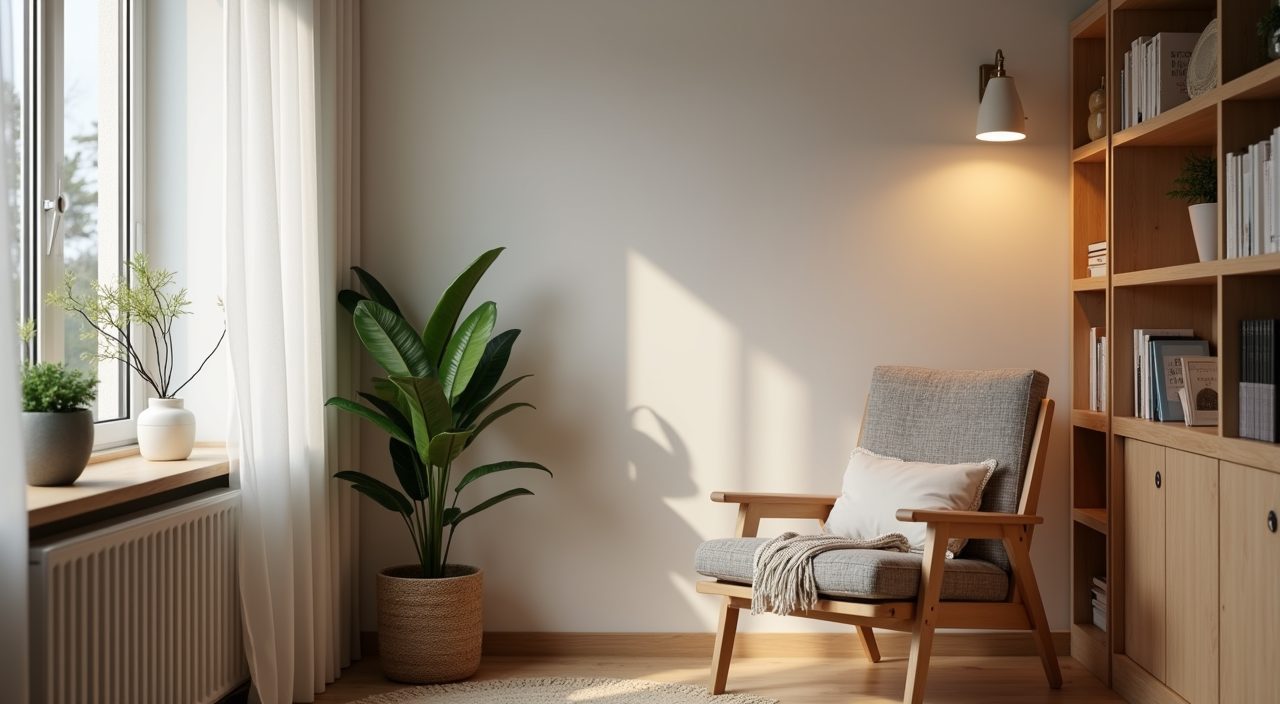
A purely white-and-wood room can feel flat or clinical, which is not the point of Scandi. The style relies on hygge: soft, tactile layers that make a space feel warm and lived-in. In a study that means a wool or bouclé chair cushion, a linen roman blind, a small flat-weave rug, and one or two natural elements.
Keep textiles breathable and easy to wash, since humidity and the occasional musty smell are real here. Natural linen and cotton handle the climate better than heavy synthetics, and a low-pile rug is easier to keep clean and dry than a thick shaggy one.
Layer your lighting for evening study
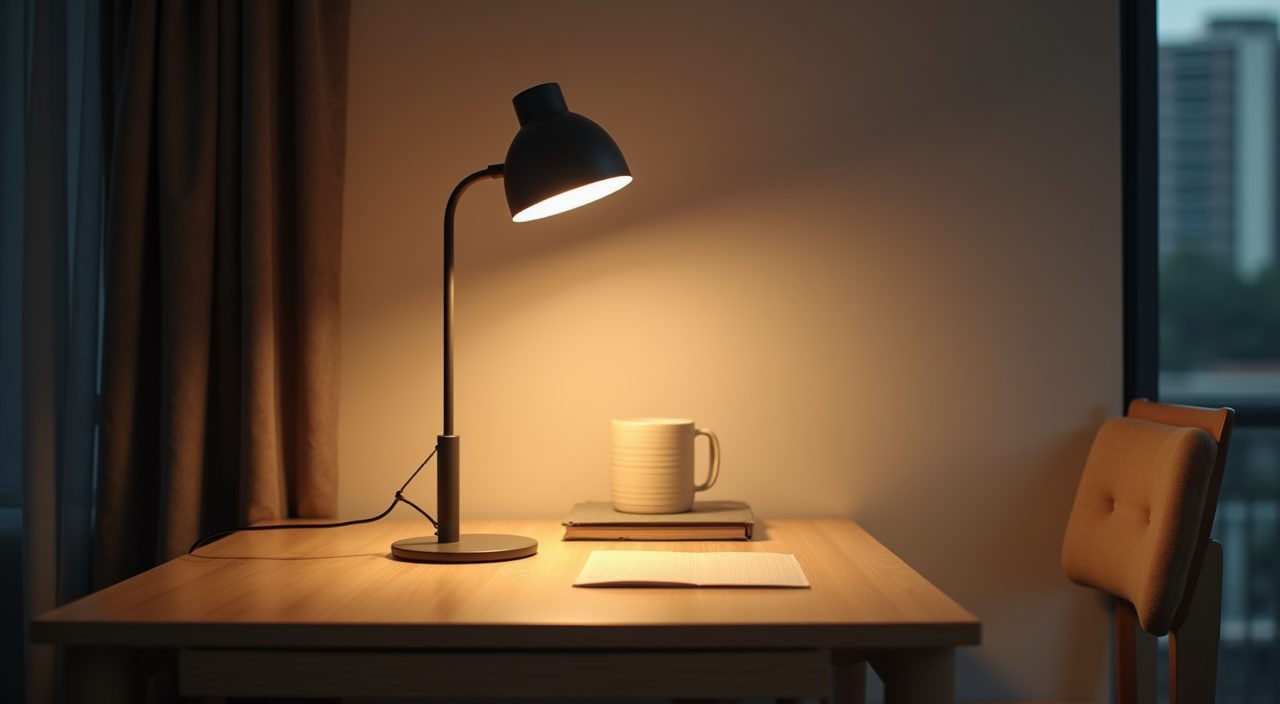
Nordic homes are famous for warm, layered lighting instead of one harsh ceiling light, and that is exactly what a home study needs at night. Aim for three layers: a soft general ceiling light, a focused task light at the desk, and a low ambient light for atmosphere. This lets you get a bright, focused setup for late-night work and a calmer glow for reading.
- Task: an adjustable desk lamp in a simple matte finish, ideally with adjustable brightness, aimed to avoid screen glare.
- Ambient: a floor lamp or a small wall light in a warm colour temperature around 2700K to 3000K.
- General: keep the ceiling light warm-toned too, and consider a dimmer so one room works for both deep focus and winding down.
- If you are rewiring, plan the switch and socket positions now so lamps and chargers land where you actually use them.
Add greenery and keep the room breathing
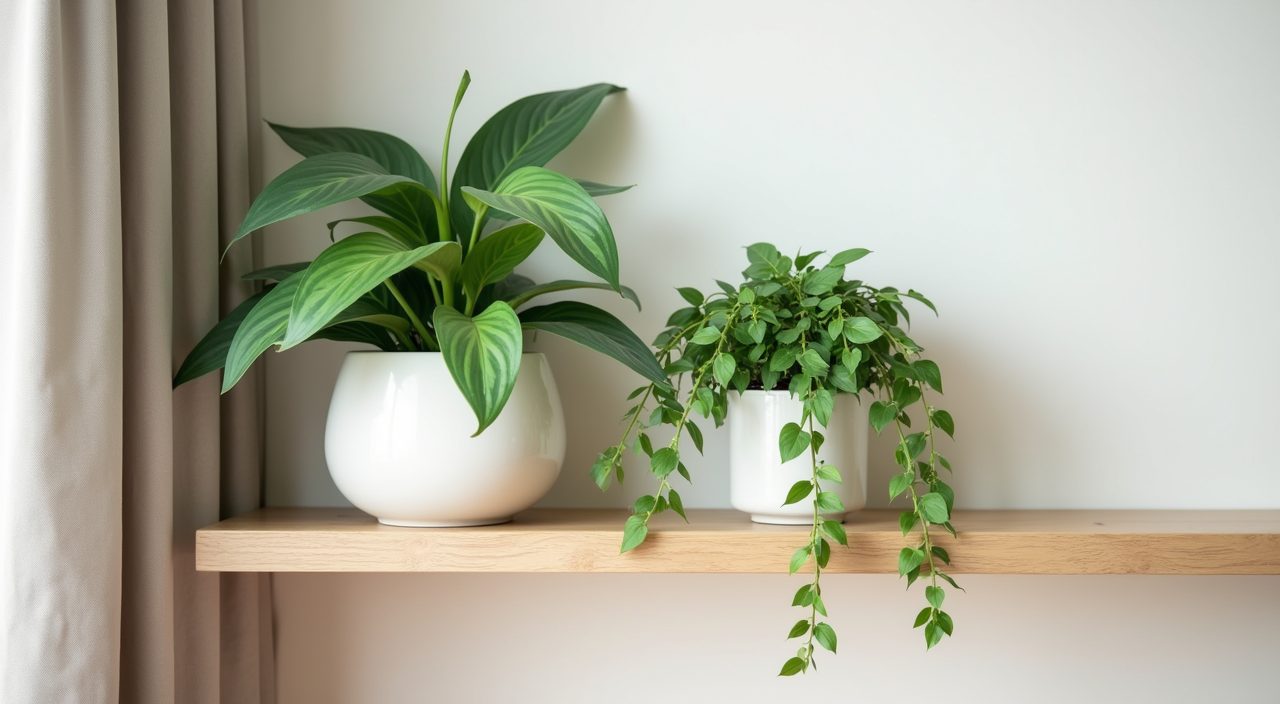
Scandinavian rooms almost always feature a plant or two, and greenery reads as instant warmth against all that pale wood and white. In Singapore this is easy: a pothos, snake plant or ZZ plant thrives indoors with little fuss, and the green pops nicely against a neutral backdrop.
Ventilation matters more than decoration, though. A closed-up study in our climate can get stuffy and encourage mould behind furniture. Leave a small gap behind large cabinets, run the fan or aircon periodically, and avoid pushing timber furniture flat against a damp external wall so air can move around it.
What to plan and budget for
A Scandinavian study is one of the more affordable rooms to do well because the look leans on simplicity rather than expensive finishes. Most of your money goes into carpentry (built-in desk and storage), any electrical work (extra power points, task lighting, network cabling) and window treatments. Budget for good moisture-resistant carpentry rather than the cheapest laminate, since that is what protects the look over Singapore's humid years. If you are only refreshing an existing room with paint, freestanding furniture and lighting, the cost stays modest. Once you add custom built-ins, rewiring for new sockets or plumbing changes nearby, it climbs, so get a proper quote before committing. When you are ready to move from mood board to real carpentry and wiring, a contractor who handles the renovation, electrical and any plumbing work together can plan a scandinavian study room design singapore renovation as one coordinated job, which avoids the gaps and finger-pointing you get when trades are booked separately. Ask for an itemised quote so you can see exactly where the budget goes.
Frequently asked questions
Does Scandinavian style work in a small HDB study room? Yes, and it is arguably the best fit. The style was designed around small, light-starved rooms, so its light palette, vertical storage and slim furniture make a compact HDB bedroom or study nook feel noticeably bigger and brighter than a dark or heavily furnished scheme.
Will solid wood furniture survive Singapore's humidity? Solid softwoods like untreated pine are risky here: they can warp, swell and grow mould, especially near external walls. You get the same pale Scandi look more reliably from plywood or engineered wood with an oak or ash veneer, laminate in a matte wood grain, or properly sealed solid wood kept away from damp walls.
How much does a Scandinavian study room cost to renovate in Singapore? It depends on how much is custom. A paint, furniture and lighting refresh is relatively cheap, while built-in carpentry, new electrical points and any wiring or plumbing changes cost more. Budget for quality moisture-resistant carpentry and get an itemised quote, since scope (custom built-ins versus freestanding pieces) is what moves the price most.
Do I need to rewire for a home study? Not always, but it is worth planning. Older flats often have too few power points for a modern desk with a laptop, monitor, router and chargers, plus lamps for layered lighting. If you are already renovating, adding sockets and network cabling at the desk is far cheaper and cleaner than retrofitting trunking later.