
Sintered Stone vs Quartz vs Solid Surface: The Full Countertop Comparison
Sintered stone, quartz and solid surface compared for Singapore kitchens: heat, scratch and stain resistance, price ranges, seams and which suits your home.
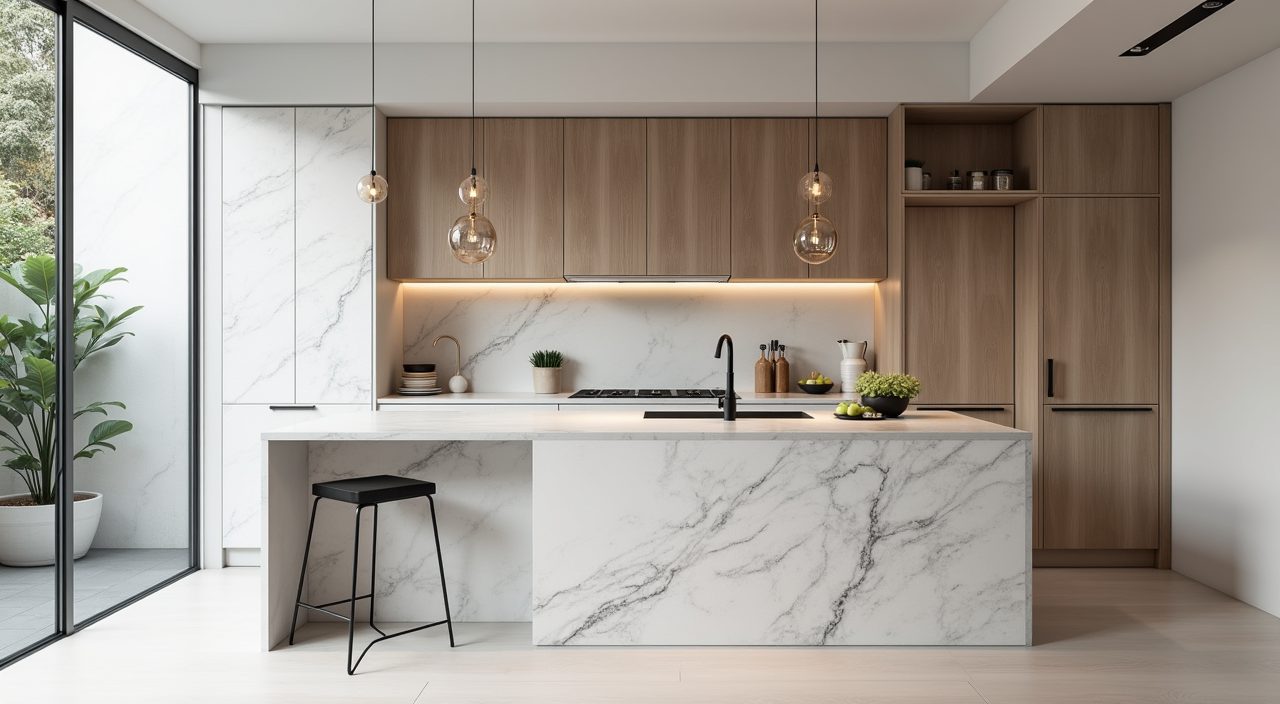
For most Singapore kitchens, sintered stone is the toughest option (best heat and scratch resistance), quartz is the popular middle ground (dense, stain resistant, wide colour range), and solid surface is the most affordable and seamless but the softest and least heat tolerant. There is no single best choice: it depends on how you cook, your budget and the look you want. Sintered stone suits heavy home chefs, quartz suits most families, and solid surface suits tight budgets or seamless designs.
All three are engineered surfaces you will see quoted for HDB and condo kitchens here. Quartz and sintered stone are stone-like slabs, while solid surface (brands like Corian and local equivalents) is an acrylic and mineral blend. The right pick balances durability, price per running foot, and whether you want a near invisible seam or a natural stone look.
What exactly are these three materials?
Quartz is an engineered slab made from roughly 90 percent crushed natural quartz bound with resin and pigment. Sintered stone is made from natural minerals compacted under extreme heat and pressure, with no resin, which makes it behave more like fired porcelain. Solid surface is a man made blend of acrylic or polyester resin with mineral filler, so it is more like a dense plastic composite than stone.
- Quartz: engineered stone, resin bound, non porous, huge colour range
- Sintered stone: mineral based, resin free, extremely hard and heat proof
- Solid surface: acrylic and mineral composite, soft, fully repairable, seamless
How do they compare on heat, scratch and stain resistance?
Sintered stone wins on heat: you can generally place a hot pot directly on it without damage, because it is fired at very high temperatures. Quartz resists everyday heat but its resin can scorch or discolour if you rest a very hot pan on it, so use a trivet. Solid surface is the most heat sensitive and can mark or warp from hot cookware, so trivets are essential.
On scratches, sintered stone is hardest and most scratch resistant, quartz is very hard but not scratch proof, and solid surface scratches most easily. The tradeoff flips on repairs: solid surface scratches and minor burns can be sanded out, while damage to quartz or sintered stone is usually permanent.
- Heat resistance: sintered stone best, quartz good with a trivet, solid surface weakest
- Scratch resistance: sintered stone best, quartz strong, solid surface softest
- Stain resistance: all three resist stains well since none are very porous
- Repairability: solid surface can be sanded and buffed, the other two cannot
What do they cost in Singapore?
Countertops here are usually quoted per running foot, and prices move with slab brand, thickness, edge profile and how many cutouts you need. As a rough guide, solid surface tends to be the most affordable, quartz sits in the middle, and premium sintered stone (especially thin large format or marble effect slabs) is typically the priciest. Fabrication, delivery and installation are often bundled into the running foot rate, but always confirm what is included.
Do not chase the lowest number alone. A cheaper slab with a thin profile, a basic edge and an obvious seam can look and wear very differently from a thicker slab with a mitred edge. Ask for a written quote that states the brand, slab thickness, edge type, number of sink and hob cutouts, and whether a backsplash is included.
- Solid surface: generally the lowest price tier per running foot
- Quartz: mid range, with wide price spread by brand and colour
- Sintered stone: usually the highest, more so for large format or ultra thin slabs
- Extras that add cost: mitred edges, waterfall ends, extra cutouts, upgraded backsplash
Which handles seams and big islands best?
Solid surface is the seam champion: pieces are chemically bonded and sanded so joins become almost invisible, which is ideal for long runs, curved shapes and integrated sinks. Quartz and sintered stone slabs have visible seams where two pieces meet, though a skilled fabricator keeps them tight and places them discreetly.
For a large island or an L shaped worktop, ask where the seam will fall before work starts. Sintered stone comes in very large format slabs that can reduce the number of joins, while solid surface can hide joins entirely but is softer for a heavy use island.
Which countertop is right for your kitchen?
Pick sintered stone if you cook hard, want to put hot pots down without thinking, and want the most durable surface with a natural stone or marble look. Choose quartz if you want a proven all rounder with the widest colour and pattern range and a sensible price. Go with solid surface if budget is tight, you want a seamless look with an integrated sink, or you like that scratches can be repaired later.
Also weigh your habits honestly. A light user who wants a clean seamless white worktop may be happiest with solid surface, while a keen cook who sears and stir fries daily will get more peace of mind from sintered stone or quartz.
- Heavy cook, hot pans, top durability: sintered stone
- Best all round choice, most colours, mid price: quartz
- Tight budget, seamless look, repairable: solid surface
How do you get it fabricated and installed properly?
Good templating and installation matter as much as the slab. Cutouts for the sink and hob, the edge profile, seam placement and level support all affect how the finished top looks and lasts, and a rushed fit can crack a slab or leave a lippy seam. It is worth using an experienced renovation team who can template accurately, coordinate with your cabinet maker, and stand behind the workmanship.
If you are comparing materials for a kitchen upgrade, our team can advise on the right surface for how you cook and give you a clear, itemised quote covering the slab, edge, cutouts and installation. See our pricing page for how kitchen countertop and renovation work is costed so there are no surprises on the final invoice.
Frequently asked questions
Is sintered stone worth the extra cost over quartz? If you cook a lot and want to place hot pots directly on the surface with the best scratch resistance, yes. If you want a proven surface at a friendlier price with more colour choices, quartz is usually the smarter value.
Can you put a hot pan directly on any of them? Only sintered stone is generally safe for direct hot cookware. Quartz and solid surface can scorch, discolour or warp, so always use a trivet or heat pad on those.
Which is easiest to repair if it gets damaged? Solid surface, because scratches and minor burns can be sanded and buffed out on site. Damage to quartz or sintered stone is typically permanent and may need a section replaced.
Do these countertops stain from coffee, turmeric or soy sauce? All three are non porous or nearly so and resist staining well if you wipe spills reasonably promptly. Very pigmented liquids like turmeric are least risky on quartz and sintered stone, and should still be cleaned off solid surface without long delay.