
Sintered Stone vs Quartz: Which Countertop Wins for a Singapore Kitchen?
Sintered stone vs quartz for a Singapore kitchen: how they compare on heat, stains, scratches, cost and hawker-style cooking, plus how to choose.
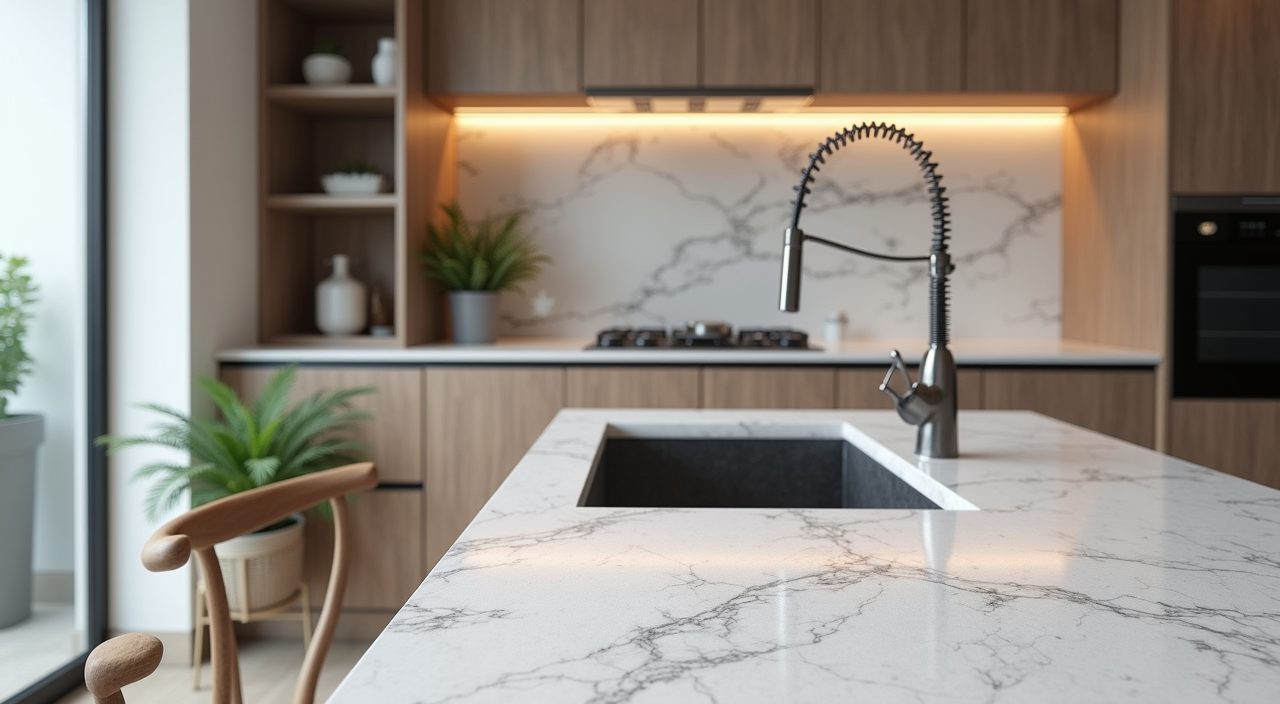
For most Singapore kitchens, sintered stone wins on heat and stain resistance, while quartz wins on price and easy fabrication. If you cook heavy, put down hot woks and want a near bulletproof surface, sintered stone is the safer long-term pick. If your budget is tight and you already use trivets and chopping boards, a good quartz slab will serve you well for years.
Both are engineered surfaces, so this is not a natural-stone debate. The real question is how each one behaves under real Singapore conditions: high humidity, heavy stir-frying, turmeric and soy sauce, and the price sensitivity of an HDB or condo renovation budget. Below is an honest, local comparison so you can match the surface to how you actually cook.
What is sintered stone and what is quartz?
Sintered stone is made from natural minerals (clay, feldspar, silica) pressed under extreme pressure and fired at very high heat, mimicking how rock forms in nature. There is no resin binder, which is why it handles heat so well. Common brands you will hear in Singapore showrooms include Neolith, Dekton, Lapitec and Laminam.
Quartz (engineered quartz) is roughly 90 percent or more ground natural quartz mixed with polymer resin and pigment. The resin makes it non-porous and easy to fabricate, but it is also the reason quartz is more sensitive to heat. Caesarstone, Silestone and Quantum Quartz are widely stocked here.
- Sintered stone: mineral-based, no resin, fired at high heat
- Quartz: natural quartz plus resin binder, non-porous
- Both are man-made slabs, not solid natural stone like granite or marble
How do they compare on heat resistance?
This is the biggest practical difference for a Singapore kitchen. Sintered stone can take a hot pot or wok straight off the stove without scorching or discolouring, because there is no resin to burn. That suits Chinese-style high-heat cooking well.
Quartz has a resin binder that can scorch, yellow or crack from thermal shock if you put a very hot pan directly on it. It is fine for daily use, but you must use trivets and pot stands. If you regularly lift a screaming-hot wok straight onto the counter, quartz is the weaker choice.
- Sintered stone: very high heat tolerance, hot pans generally safe
- Quartz: use trivets, avoid direct contact with very hot cookware
- Thermal shock (hot pan on a cool slab) is the main quartz risk
Which one resists stains and scratches better?
Both are non-porous and resist common kitchen stains far better than marble. Turmeric, soy sauce, coffee and oil wipe off easily from either surface if you clean up reasonably promptly. For everyday staining, both perform well.
On scratches, sintered stone is generally harder and more scratch resistant, though you should still use a chopping board rather than cutting directly on any counter. Quartz is durable too, but very hot exposure plus abrasion over years tends to show on quartz sooner. For UV and outdoor use (a balcony wet kitchen, for example), sintered stone holds colour better because quartz resin can fade in direct sun.
- Stains: both resist well, wipe spills promptly
- Scratches: sintered stone is typically harder
- UV fade: sintered stone better for sunlit or outdoor spots
- Always use a chopping board on either surface
What about price and installation in Singapore?
Quartz is usually the more affordable engineered option and is stocked by almost every countertop supplier here, so lead times are short and there is plenty of choice. Sintered stone typically costs more per running foot, partly for the material and partly because the slabs are hard and brittle to cut, which needs specialised tools and a more skilled fabricator.
Sintered stone is often supplied in very thin, large-format slabs. That looks sleek, but poor handling can crack it during transport or install, and cut-outs for sinks and hobs need care. This is where fabricator skill matters more than the brand on the slab. Get accurate site measurements and a clear scope before committing, and factor installation into your renovation budget rather than treating it as an afterthought.
- Quartz: generally cheaper, widely stocked, faster to source
- Sintered stone: pricier, harder to cut, needs a skilled fabricator
- Thin large-format sintered slabs demand careful handling
- Prices vary by brand, thickness and finish, so get itemised quotes
Which suits Singapore-style cooking?
If your household does a lot of high-heat wok cooking, deep frying and hot-pot style meals, sintered stone forgives the way people actually cook in many Singapore homes: fast, hot and sometimes without reaching for a trivet. It is the low-worry option for a heavy-use kitchen.
If you cook lighter, bake, or are disciplined about trivets and boards, quartz gives you most of the practical benefits at a friendlier price. Many condo and HDB kitchens are perfectly happy with quartz. The honest answer is that both are excellent surfaces; the winner depends on your cooking habits and budget, not on one being universally better.
How do I get it measured and installed properly?
Once you have picked a surface, the finish quality comes down to accurate measurement, clean cut-outs and careful installation, especially for brittle sintered slabs. A good contractor will template the counter, confirm sink and hob positions, and coordinate the countertop with your cabinetry so seams sit in sensible places.
If you want a firm idea of what your kitchen countertop and surrounding renovation work will cost, it helps to speak to a Singapore contractor who can walk your unit, take real measurements and give an itemised quote covering material, fabrication and installation. That way you compare like for like instead of guessing from a per-foot headline figure. You can ask us about pricing for your kitchen countertop and renovation to get a clear breakdown before you commit.
Frequently asked questions
Is sintered stone worth the extra cost over quartz? If you cook with high heat, want the best scratch and UV resistance, and plan to keep the kitchen for many years, the premium is usually justified. For lighter cooking or a tighter budget, quartz delivers most of the benefits for less.
Can you put a hot pan directly on quartz? Better not to. The resin in quartz can scorch, discolour or crack from thermal shock, so always use a trivet or pot stand. Sintered stone is far more forgiving with direct heat, but a trivet is still good habit.
Which is easier to maintain day to day? Both are non-porous and wipe clean with mild soap and water; neither needs sealing like natural stone. Avoid harsh abrasive pads on either, and clean acidic or coloured spills promptly to keep the finish looking new.
Do sintered stone and quartz stain from turmeric or soy sauce? Both resist common Singapore-kitchen stains well because they are non-porous. Wipe up spills reasonably soon and you are unlikely to see lasting marks on either surface.