Small Bedroom Design Ideas to Maximise Space in Singapore
Practical small bedroom design ideas for Singapore HDB and condo homes: layout, storage, palettes and lighting that make a tight room feel bigger.
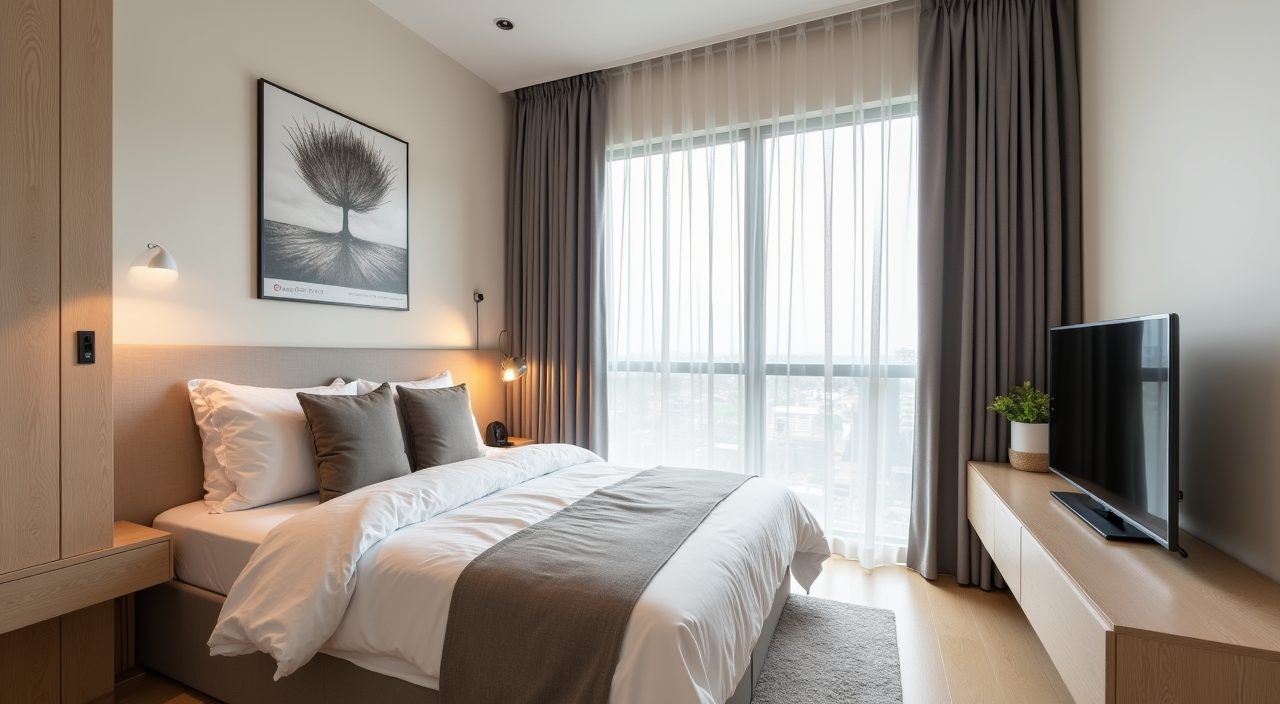
To make a small Singapore bedroom feel bigger, keep the palette light and consistent, push storage up the walls and into custom carpentry, and pick one or two space saving furniture pieces instead of many small ones. Let natural light do the heavy lifting, keep the floor as clear as possible, and choose finishes that cope with our humidity. The result is a room that reads calm and open even at HDB scale.
Most Singapore bedrooms are genuinely small. A common HDB bedroom runs about 2.4 by 3 metres, the smaller third bedroom in a flat can be under 7 square metres, and many newer condo bedrooms are just big enough for a queen bed with a narrow walkway on one side. That reality shapes every decision below: you are designing for a tropical climate, tight square footage, and often a room that also has to hold a wardrobe, a study corner, and an aircon unit.
Keep one light, cohesive palette wall to wall
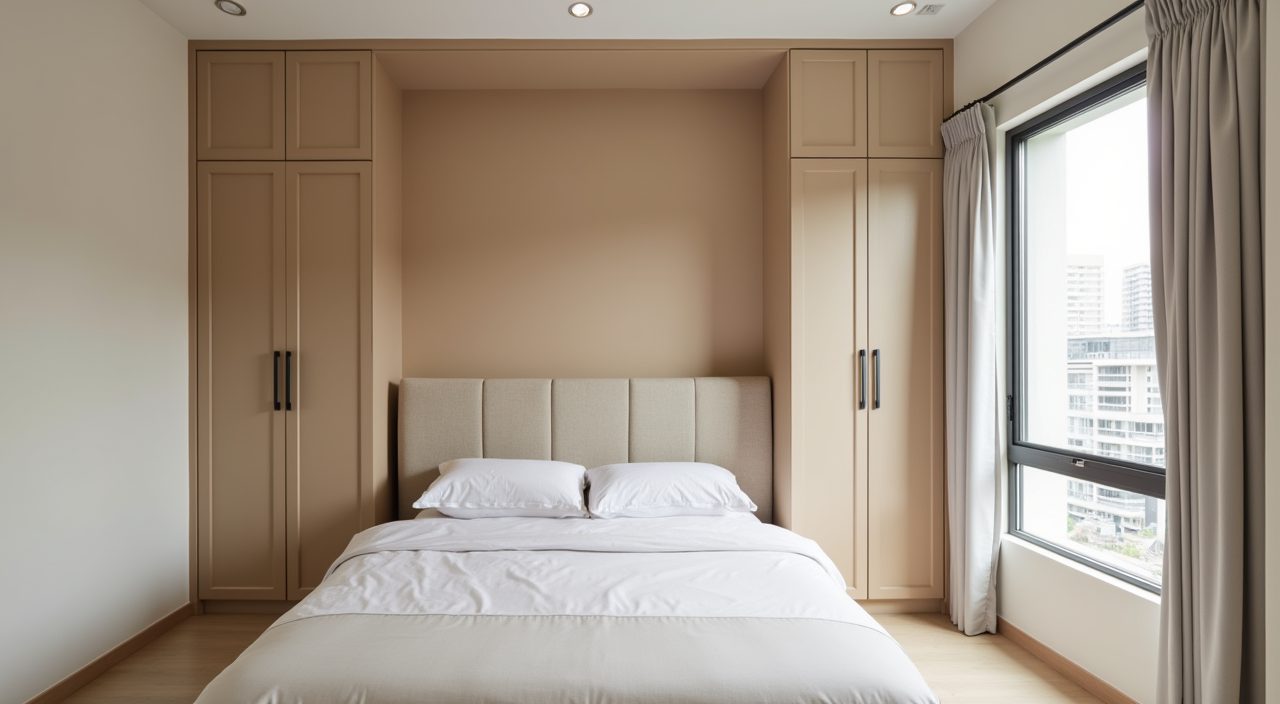
In a small room, colour breaks make the space feel chopped up. Painting the walls, built in wardrobe, and ceiling in the same soft, light tone lets the eye travel without stopping, which reads as more space. Warm whites, pale greige, soft oat, and muted sand all work well under Singapore's bright daylight and stay easy to live with over the years.
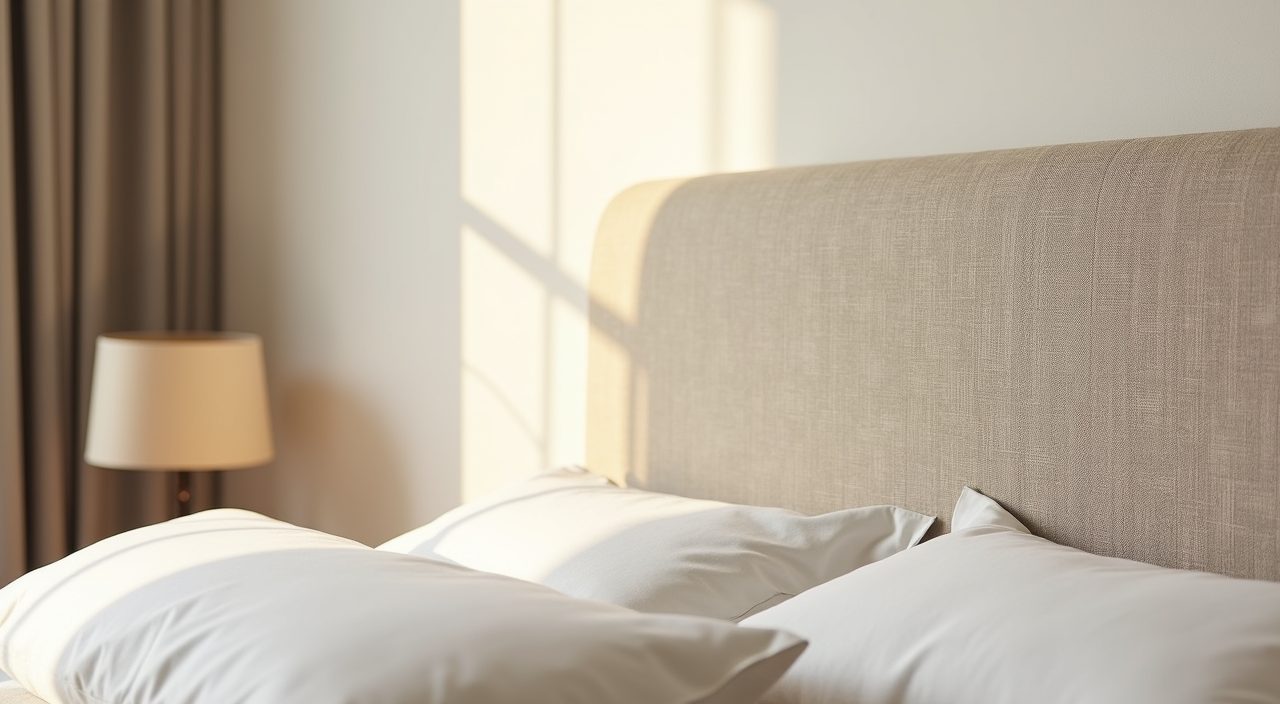
This does not mean the room has to be boring. Add depth through texture and one restrained accent: a fabric headboard, timber grain on the wardrobe fronts, or a single deeper feature colour behind the bed. Keep the accent to one surface so it frames the room rather than shrinking it.
Build storage up to the ceiling, not out into the floor
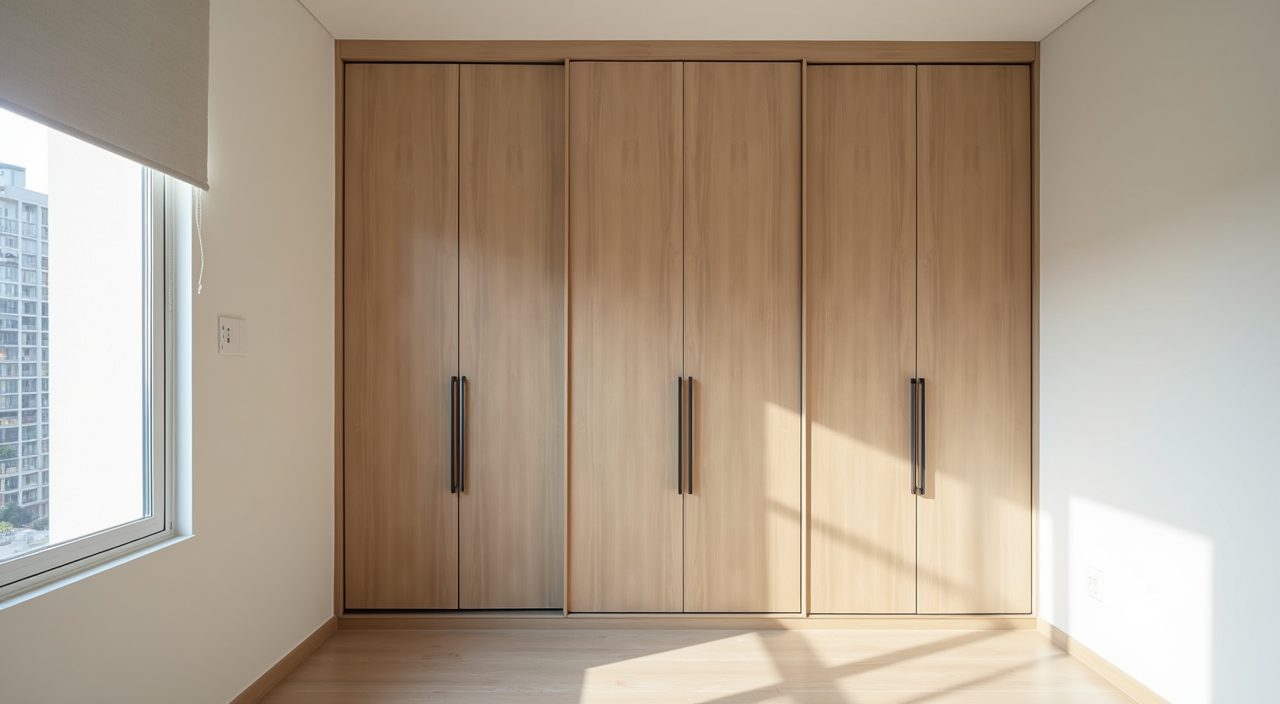
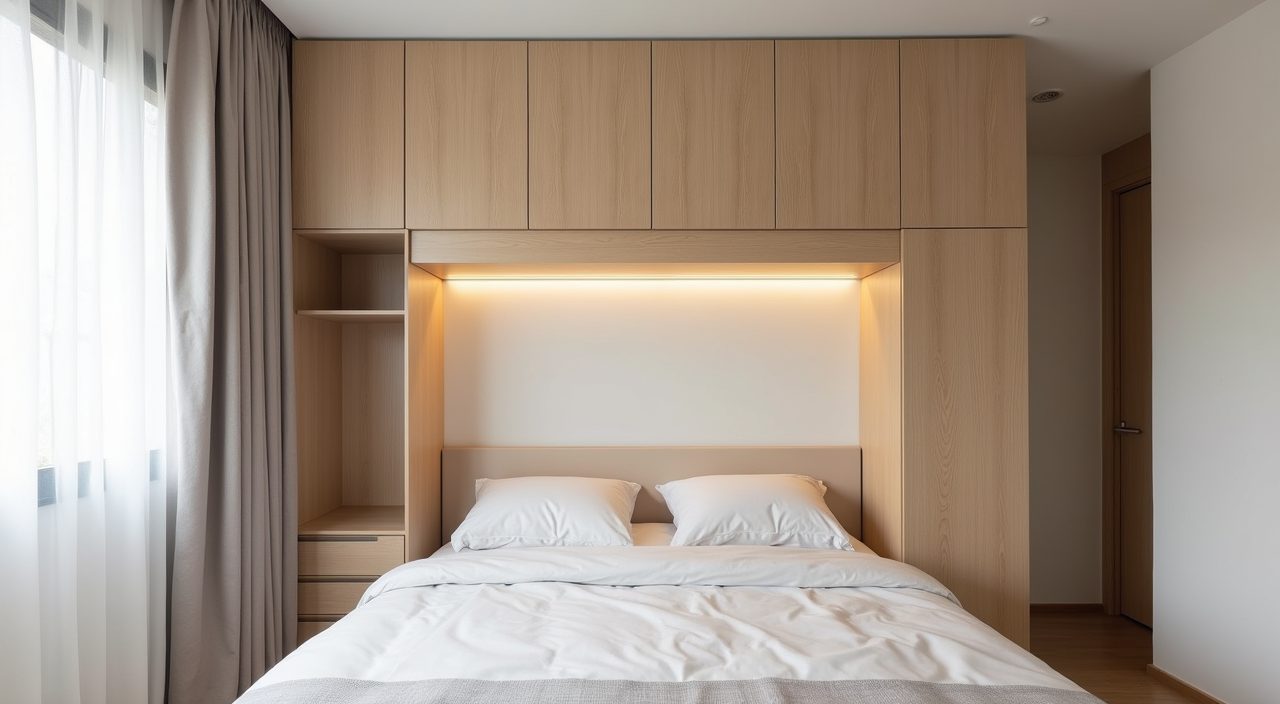
Floor space is the thing you never have enough of, so send storage vertical. A full height built in wardrobe that runs to the ceiling adds a large amount of hanging and shelf space while using the same footprint as a shorter one, and it removes the dust trap gap on top. Carpentry that is designed to the exact room dimensions almost always beats loose furniture in a tight HDB bedroom because it uses every awkward corner.
Where a full wardrobe wall is too much, look for the dead zones. The space above the bedroom door, the strip beside the window, and the area over the bed head can all take slim shelving or overhead cabinets.
- Full height wardrobe to the ceiling, sliding doors if the walkway is narrow.
- Overhead cabinets above the bed head for bedding and seasonal items.
- A shallow niche or ledge beside the bed instead of a bulky bedside table.
Choose a bed with storage or a platform base
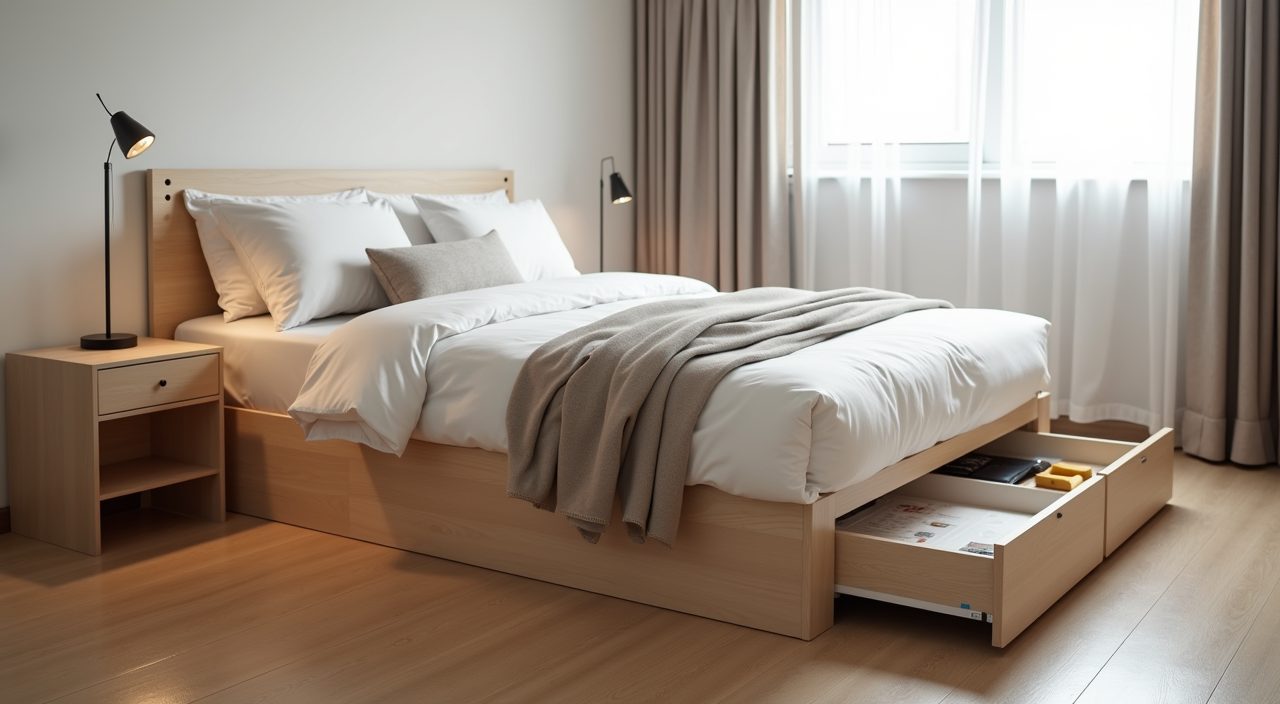
The bed is the single biggest object in the room, so make it earn its place. A storage bed with drawers or a hydraulic lift up base reclaims the large volume under the mattress for luggage, bulky bedding, and off season clothes, which is a real win in flats with no store room to spare. For very tight third bedrooms, a low platform bed can make the ceiling feel higher and the room calmer.
Be honest about the tradeoff. Lift up storage needs clearance to open and is harder to reach into daily, so it suits things you use rarely. Drawer bases are easier for everyday use but need floor room to pull out, so check the walkway before you commit to a side.
Let daylight in and keep window dressing simple
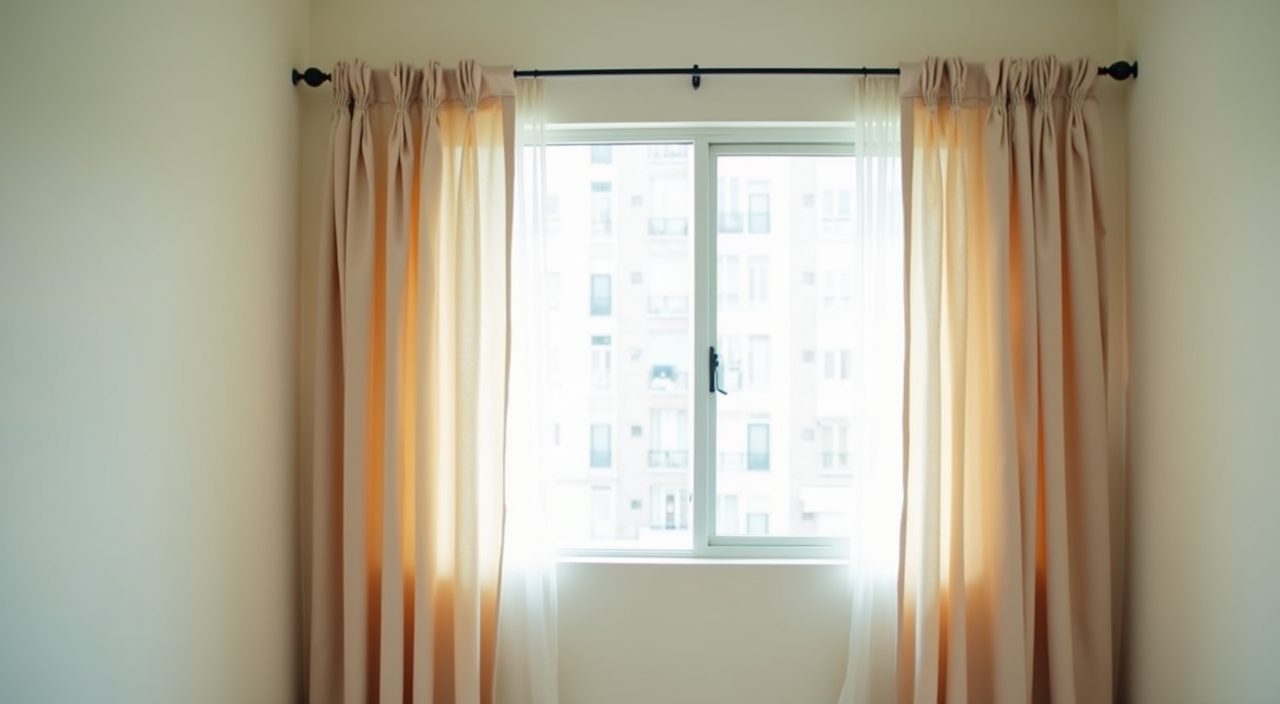
Natural light is the cheapest way to make a small room feel open, and Singapore gives you plenty of it. Keep the window as unobstructed as you can and avoid heavy, dark curtains that eat the wall. Sheer day curtains paired with a blackout blind or a second dimout layer give you glare control in the afternoon without visually closing the room.
Mount the curtain track close to the ceiling and let it run wider than the window itself. This trick makes the window read taller and broader than it is, which lifts the whole room. Light coloured blinds or curtains keep the palette consistent with the walls.
Use mirrors and reflective surfaces with intent
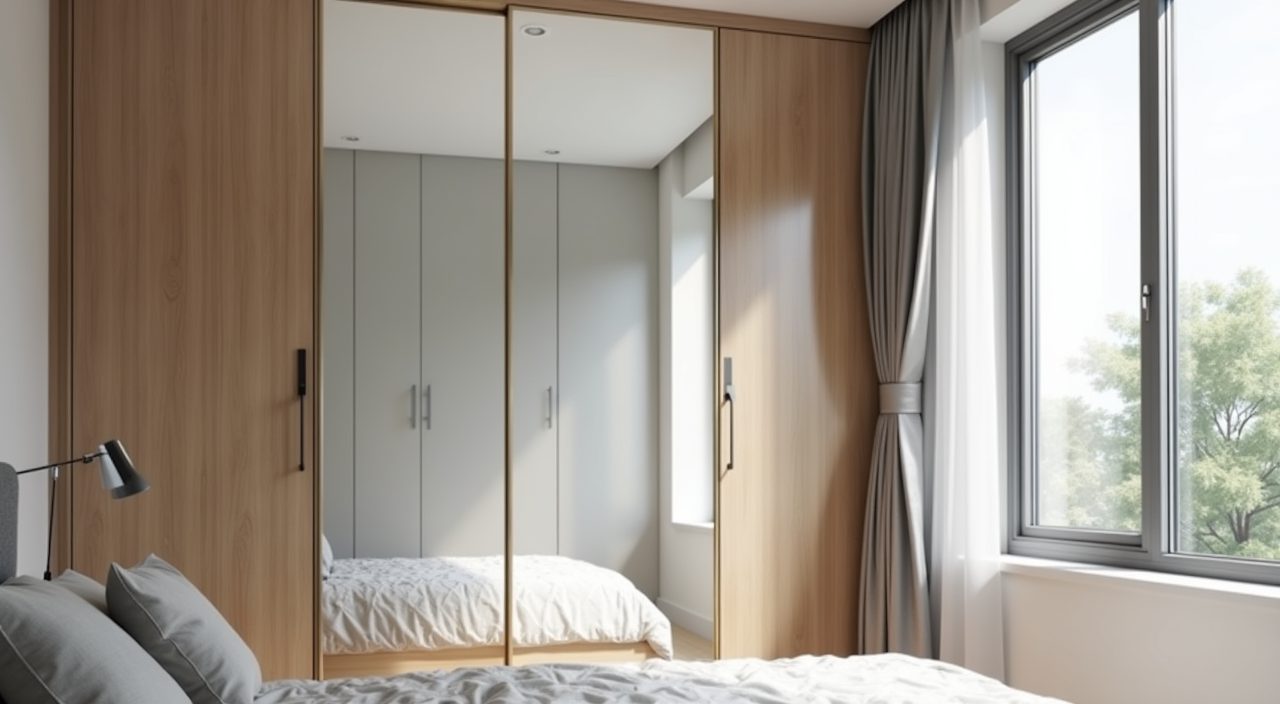
A well placed mirror bounces light and visually doubles part of the room, which is genuinely effective in a windowless or dim bedroom. A tall mirror on the wall facing or beside the window works hardest because it catches daylight. Mirror fronted wardrobe doors are a two in one move: they give you a full length dressing mirror and make the wardrobe wall recede.
Do not overdo it. One or two reflective surfaces feel intentional and calm; mirrored surfaces on every wall feel busy and show every fingerprint. In our humidity, keep mirrors slightly off the wettest corners and wipe them down to avoid edge spotting over time.
Layer your lighting instead of relying on one ceiling light
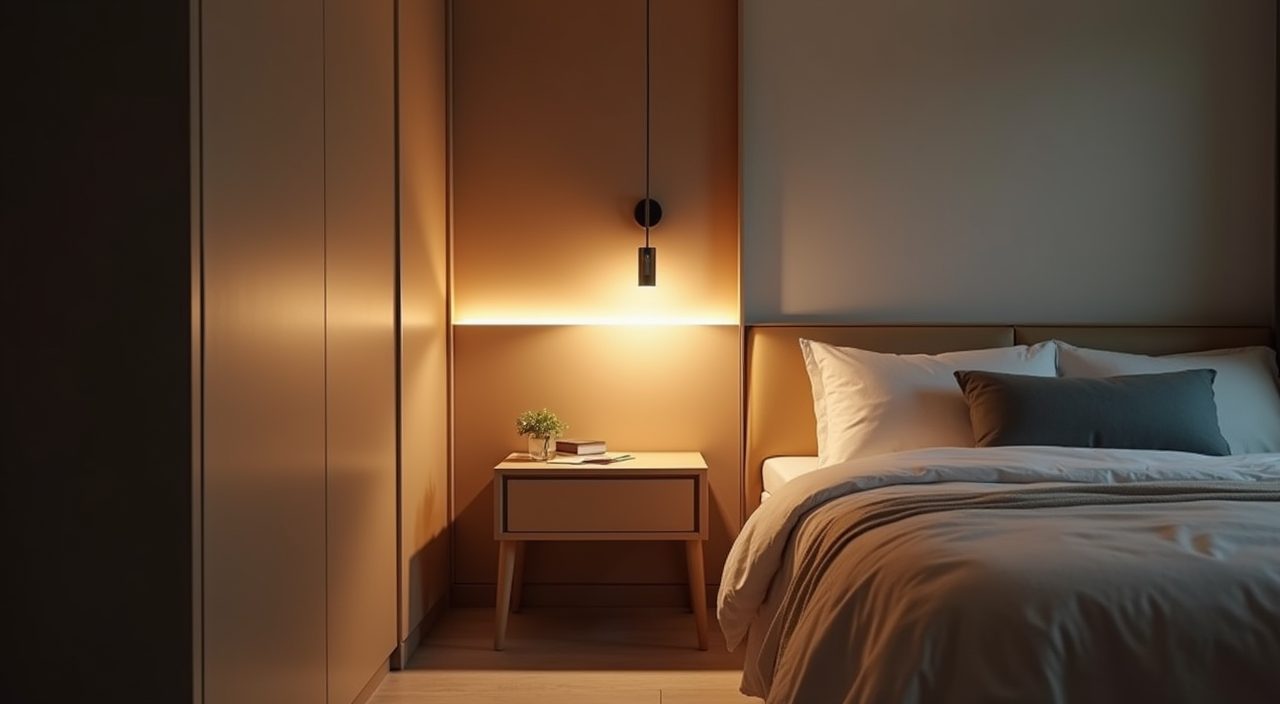
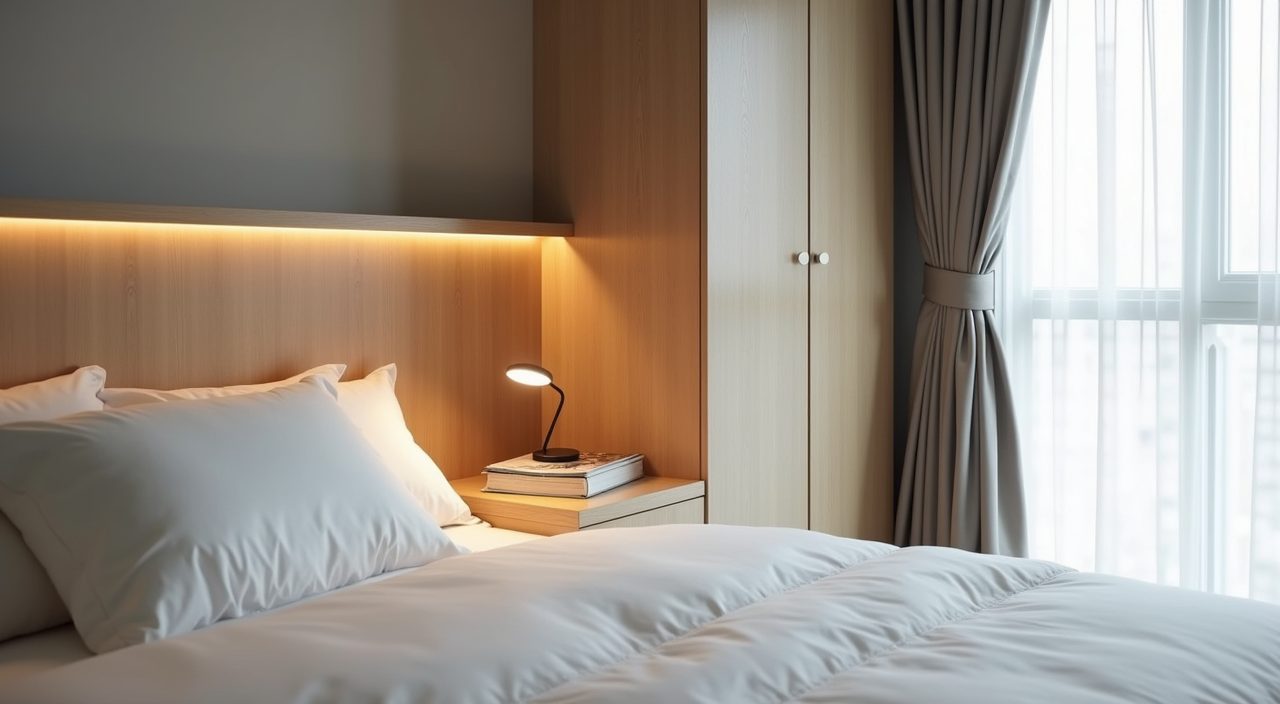
A single bright ceiling light flattens a small room and throws harsh shadows. Layering is the fix: a soft ambient source overhead, plus task and accent lights that you can switch independently. Wall mounted reading lights or slim pendants beside the bed free up the bedside surface and stop the room feeling like a box lit from one point.
Because lighting layers usually mean extra wiring, dimmers, and switched points, plan them during renovation while the walls and ceiling are open. Retrofitting later means hacking finished surfaces. Warm white LEDs around 3000K suit a bedroom and feel restful in the evening.
- Ambient: recessed downlights or a cove for general fill.
- Task: wall reading lights or pendants that keep the bedside clear.
- Accent: a warm strip inside the wardrobe or under a floating shelf.
Pick multi use and slim profile furniture
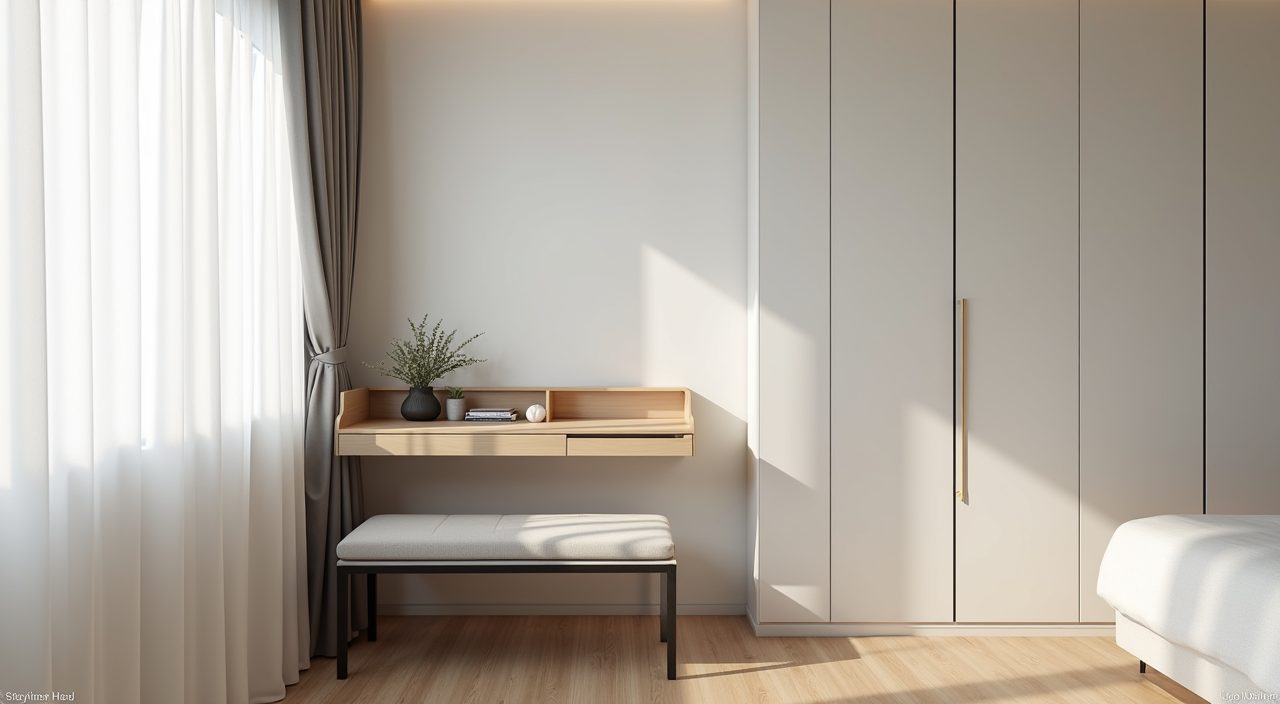
In a room this size, every piece should do more than one job or take up less room than usual. A slim floating desk that doubles as a dressing table, a bench at the foot of the bed that opens for storage, or a wall mounted folding desk for a work from home corner all give you function without crowding the floor. Legs that are visible under furniture, rather than solid bases to the ground, keep sightlines open and make the room feel airier.
Resist the urge to fill the space. A small bedroom with three well chosen pieces feels more generous than one packed with small furniture. Leave a clear walkway of at least around 60 to 70 centimetres on the side you get in and out of the bed.
Match finishes to the tropical climate
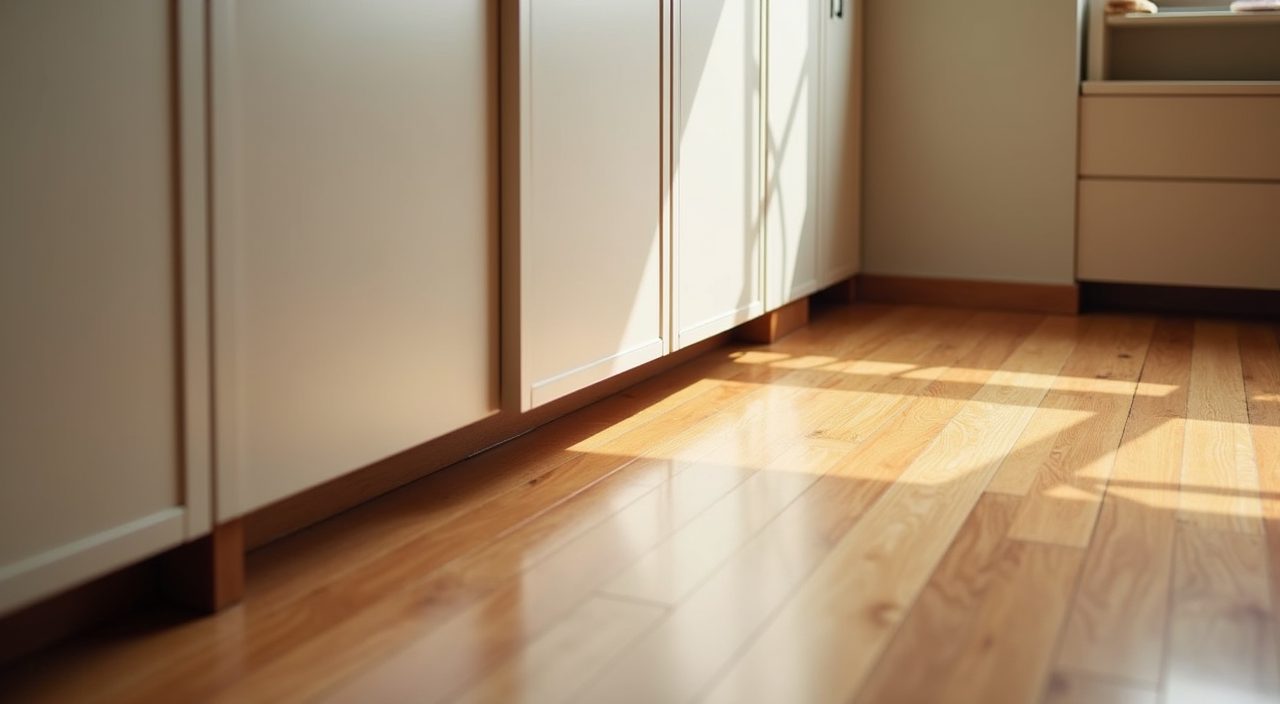
Singapore's heat and humidity punish the wrong materials, and a small room hides nothing. For flooring, vinyl and laminate are popular because they are warmer underfoot than tile and easier to change, but in a bedroom prone to damp, moisture resistant options and proper subfloor prep matter. For carpentry, moisture resistant plywood and quality laminate fronts hold up far better than cheap particleboard, which can swell near bathrooms or under a leaky window.
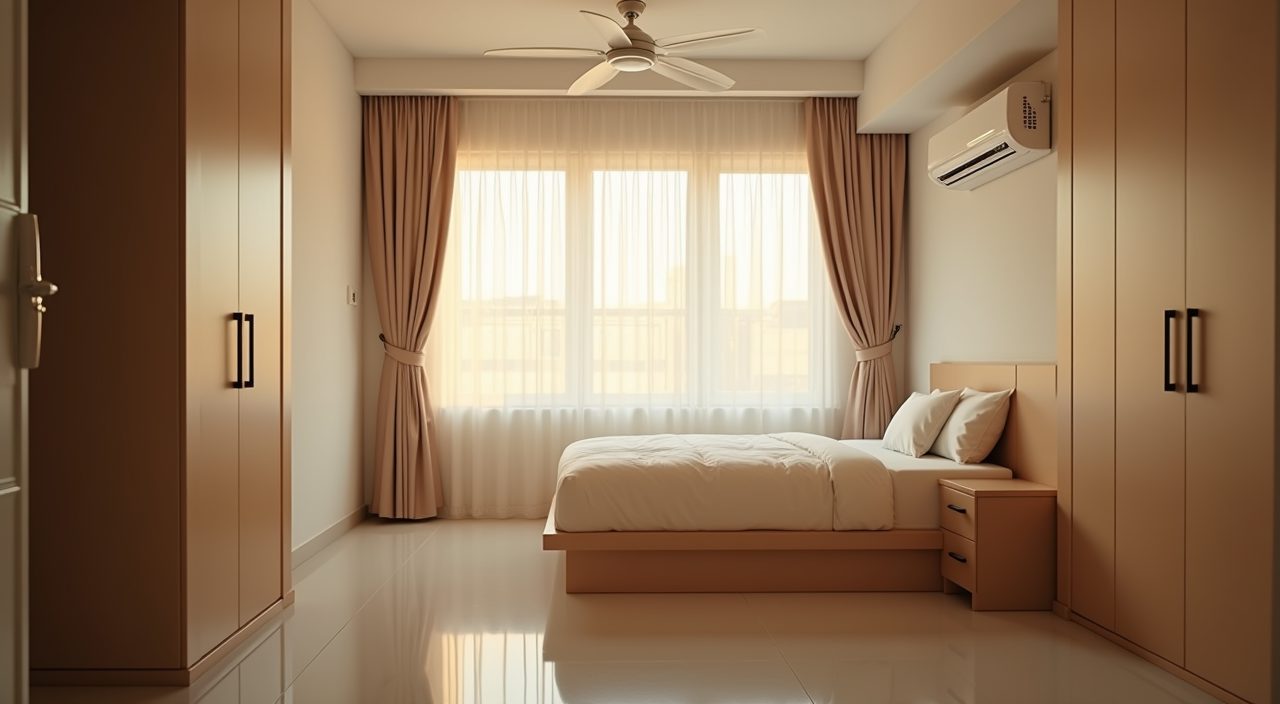
Think about airflow too. A ceiling fan alongside the aircon keeps the room comfortable and reduces the stuffy, closed in feeling a small bedroom can get. Matte and low sheen finishes hide the fine dust and haze that settle in our climate better than high gloss surfaces that show every mark.
What to plan and budget for
Be realistic that the biggest costs in a small bedroom are usually carpentry and any electrical rewiring for new lighting layers or switch points, not the paint or the bed. Custom built ins cost more than off the shelf furniture but often pay off in a tight room because they use space that loose pieces waste. Budget separately for the bed, mattress, curtains or blinds, and any aircon or fan work, and set aside a contingency because small rooms often hide surprises like uneven walls or old wiring. If you want firm numbers, get a proper site measure and an itemised quote rather than trusting a rough guess. When you are ready to move from ideas to an actual small bedroom design ideas singapore renovation, a contractor who handles the carpentry, electrical, and finishing together will keep the scope coordinated and avoid the gaps that happen when trades are hired piecemeal.
Frequently asked questions
How do I make a small HDB bedroom look bigger? Keep one light, consistent colour across the walls and wardrobe, take storage up to the ceiling to free the floor, maximise natural light with simple window dressing, and add a mirror to bounce light. Fewer, larger pieces of furniture read as more spacious than many small ones.
Are built in wardrobes worth it in a small room? Usually yes. A custom wardrobe uses the full height and awkward corners that loose furniture leaves empty, and sliding doors avoid the swing clearance a hinged door needs. The tradeoff is higher cost and less flexibility to move it later, so it suits homes you plan to stay in.
What flooring works best for a small Singapore bedroom? Vinyl and laminate are common because they feel warmer than tile, are quieter, and are easier to replace. In a bedroom exposed to damp or near a bathroom, choose moisture resistant options and make sure the subfloor is prepared properly so the floor does not lift over time.
How much walking space should I leave around the bed? Aim for roughly 60 to 70 centimetres of clear walkway on the side you use to get in and out, and enough room for wardrobe or drawer fronts to open fully. If that walkway forces the bed against a wall, plan bedding changes and cleaning access around it before you commit to the layout.