
The Aircon Isolator Explained: The Little Switch That Powers Your Whole System
What an aircon isolator switch does, why Singapore homes need one, where it goes, and how to size and wire it safely with a licensed electrician.
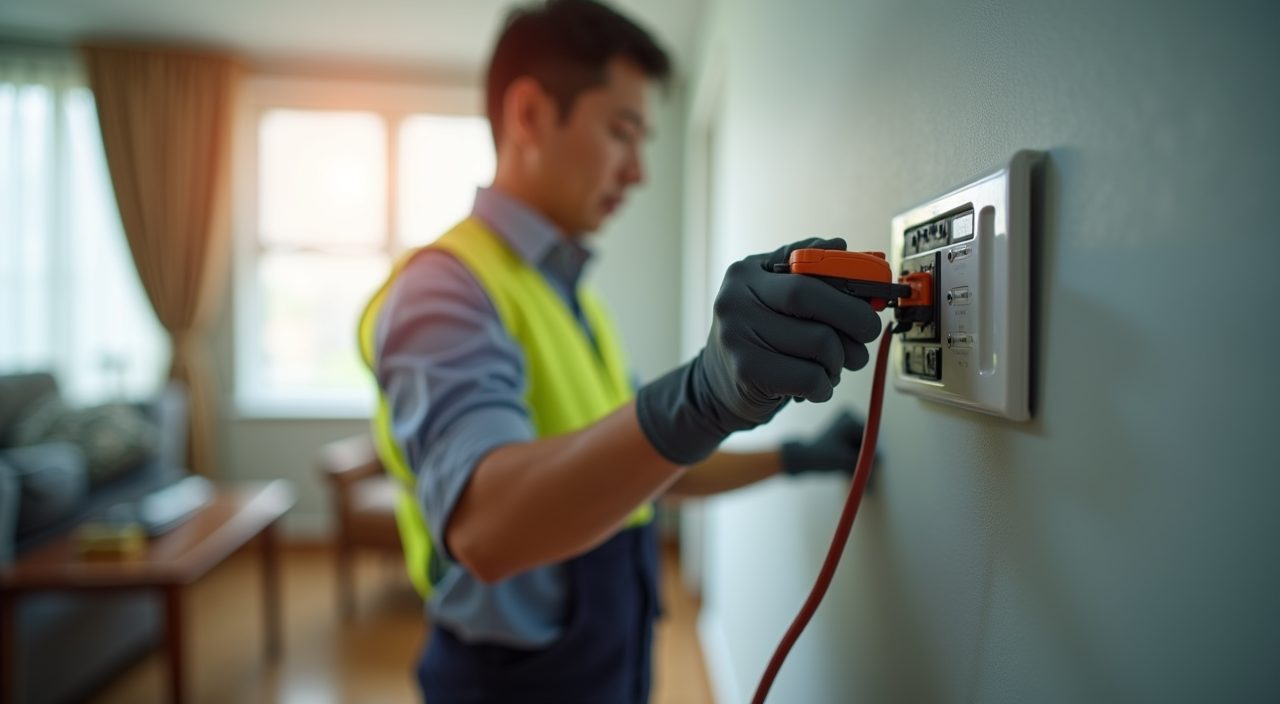
An aircon isolator switch is a dedicated on and off switch that cuts all power to your air conditioner at a single point, usually mounted near the outdoor condenser or the fan coil unit. It lets a technician safely service, repair or replace the unit without going back to the main distribution board and switching off other circuits. In most Singapore homes it is a small double-pole switch that sits between the aircon's own circuit and the unit itself.
Think of it as a local kill switch for your cooling system. When it is off, the aircon is fully dead and safe to work on, even though the rest of your flat still has power. It is a small fitting, but it is the piece that makes routine servicing and emergency repairs quick and safe, which is exactly why installers ask for one.
What does an aircon isolator switch actually do?
The isolator breaks the live supply to the air conditioner so the unit is completely disconnected from the mains. This is different from just switching the aircon off with the remote, which only puts the electronics to sleep while power is still present at the board and inside the unit.
During servicing, a technician needs the circuit truly dead before opening the casing or touching the compressor. The isolator gives them a visible, lockable point to do that right at the unit, instead of trekking to your DB and guessing which breaker feeds the aircon.
- Provides a single, local point to cut power to the aircon
- Lets one system be isolated without switching off the whole flat
- Gives technicians a safe, visible off position during repairs
- Reduces the risk of the unit being switched back on by accident mid-service
Do I really need an isolator in a Singapore home?
For a typical HDB flat, condo or landed home in Singapore, an isolator is strongly recommended and most reputable aircon installers will insist on one. It is standard good practice under the local wiring approach for any fixed appliance that needs regular servicing, and aircon units get serviced every few months here because of our climate.
Older flats sometimes have the aircon simply wired to a breaker in the DB with no local switch. That still works electrically, but it makes every service call slower and forces the technician to isolate a whole circuit at the board. Adding a proper isolator is a small job that pays off every time the unit is touched.
Where is the isolator switch usually installed?
The isolator is normally mounted close to the equipment it protects so a technician can reach it easily while working. In most Singapore homes that means near the outdoor condenser unit at the service balcony or aircon ledge, and sometimes an additional one near an indoor fan coil unit.
Placement matters. It should be accessible, not buried behind the unit or above a fixed shelf, and if it sits outdoors it needs a weatherproof enclosure rated for exposure to rain and sun. A wall box tucked just beside the ledge, within arm's reach, is the usual spot.
- Outdoor: beside the condenser on the aircon ledge or service balcony
- Indoor: near the fan coil unit for multi-split or ducted systems
- Always somewhere a technician can reach without a ladder or tools
- Outdoor units need a weatherproof or IP-rated enclosure
Single-pole or double-pole, and how is it sized?
For an aircon, a double-pole isolator is the sensible choice because it disconnects both the live and neutral conductors at once, leaving nothing energised at the unit. A single-pole switch only breaks the live, which is less safe for servicing work. Most aircon isolators sold and fitted here are double-pole for this reason.
Sizing depends on the unit's current draw, so the isolator rating in amps must comfortably match or exceed the aircon circuit. A licensed electrician reads the equipment rating and the protective device at the board, then picks an isolator and cable that are correctly matched. This is not a guess-and-buy job at the hardware shop.
- Double-pole: breaks live and neutral, preferred for aircon
- Single-pole: breaks live only, generally not ideal here
- Rating in amps must suit the aircon's current and its circuit breaker
- Weatherproof rating matters for any outdoor position
Can I install or move an isolator myself?
No. In Singapore, fixed electrical wiring work, including adding or relocating an aircon isolator and running the cable back to the board, is regulated and should be carried out by a licensed electrical worker. It is not a DIY task, and doing it yourself risks both your safety and problems with insurance or compliance later.
This is where our electrical services come in. A licensed electrician can assess your existing aircon wiring, add a correctly sized and weatherproof isolator, tidy the cable run and confirm everything is safe and properly matched to your unit, whether you are in an HDB flat, a condo or a landed home.
How does the isolator relate to my aircon servicing?
Every time your aircon is chemically washed, topped up with gas or repaired, the technician uses the isolator to make the unit safe before opening it. A working, accessible isolator means faster, cleaner service visits and one less thing to argue about with a contractor.
If your isolator is missing, corroded, cracked or stuck, flag it before your next service. Replacing a tired outdoor switch is a quick job, and it is far better to sort it out during a planned visit than to discover the switch has failed when you actually need to cut the power.
Frequently asked questions
Is the aircon isolator the same as the breaker in my DB? No. The breaker at the distribution board protects the whole aircon circuit against faults and overload, while the isolator is a local switch at the unit whose job is to safely disconnect that one appliance for servicing. You usually have both, and they do different things.
Why is my isolator outside in the rain, is that safe? It is fine as long as it is a weatherproof or suitably rated enclosure meant for outdoor use. Outdoor isolators are common here because condensers sit on ledges and balconies. If the casing is cracked, discoloured or letting water in, get a licensed electrician to replace it.
My aircon still works with the isolator off, is that normal? No, that is a warning sign. With the isolator off the unit should be completely dead. If it still runs, the wiring may be incorrect or the switch may be faulty, and you should stop using it and have a licensed electrician check it.
Can I add an isolator to an older flat that never had one? Yes. A licensed electrician can fit a correctly sized isolator and route the wiring to your board, which is a common upgrade in older HDB flats that were built before local switches near the aircon became standard practice.