
Water Heater Switch & Isolator Safety
A Singapore homeowner's guide to water heater switch and isolator safety, when to replace a faulty switch, and why a licensed electrician should do it.
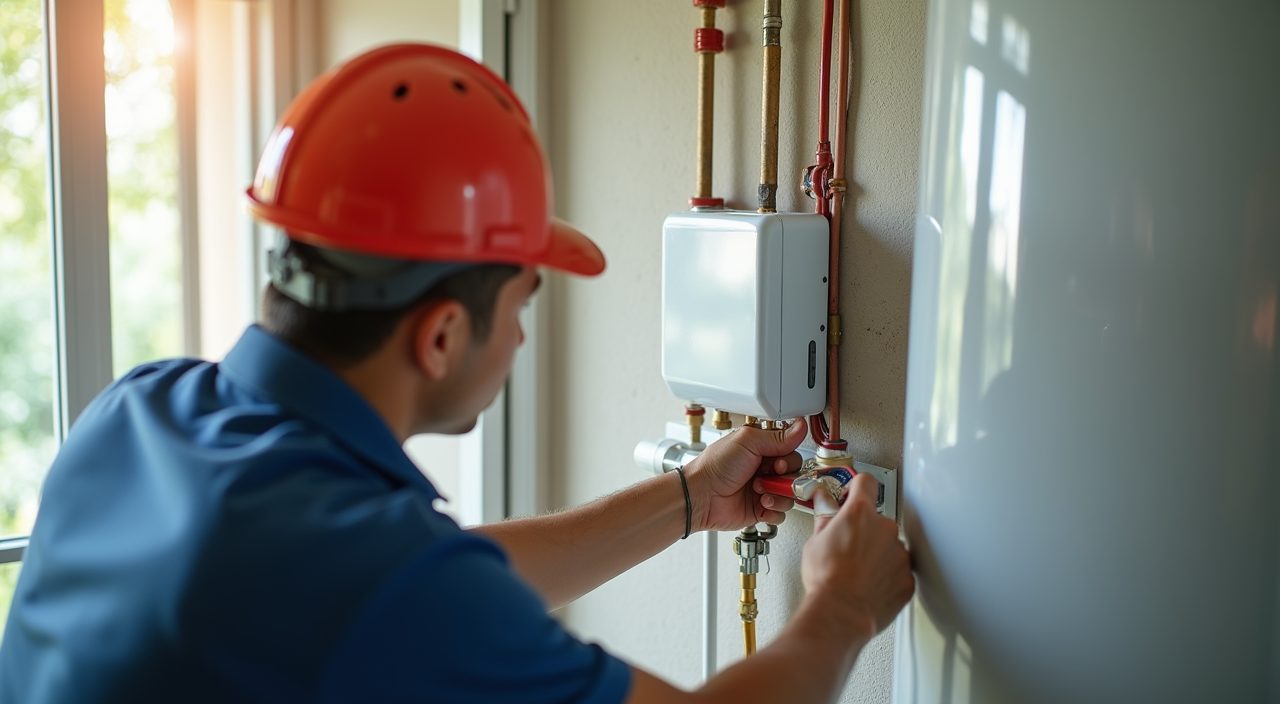
A water heater switch (often the double-pole switch with a neon light and a pull cord or rocker mounted outside your bathroom) is the isolating switch that cuts power to the heater. If it buzzes, feels warm, is discoloured, trips often, or the neon indicator behaves strangely, stop using it and have it replaced. In Singapore this is electrical work that carries mains voltage into a wet area, so it should be done by a licensed electrician, not left as a casual DIY job.
Water heaters draw a high, sustained current, so their switch and isolator take more thermal stress than an ordinary light switch. Over years of daily use the contacts wear, the plastic can heat-cycle, and connections can loosen. Understanding what the switch does and the warning signs of failure helps you act before a minor fault becomes a shock or fire risk.
What is a water heater switch and isolator?
The switch you see near the bathroom door is usually a 20A double-pole (DP) switch. Double-pole means it breaks both the live and neutral wires at once, fully isolating the heater so it is safe to work on. The neon light tells you the heater circuit is energised.
In many homes the heater is also protected at the consumer unit (your distribution board) by its own circuit breaker, and increasingly by a residual current device (RCCB) that trips on earth leakage. The wall switch, the breaker, and the RCCB work together: the switch is for daily on/off and isolation, while the breaker and RCCB are the safety cut-outs.
- Double-pole switch: isolates both live and neutral, rated for the heater's load (commonly 20A).
- Neon indicator: shows the circuit is live, not that the water is hot.
- Circuit breaker at the DB: protects the wiring against overload and short circuit.
- RCCB: trips fast on earth leakage, the key protection against electric shock.
What are the warning signs that a water heater switch needs replacing?
A healthy switch operates cleanly and stays cool. Any heat, smell, noise, or discolouration at the switch is a signal that contacts are failing or a connection is loose, both of which generate dangerous heat.
Treat the signs below as reasons to stop using the heater and call an electrician. Do not keep flipping a switch that sparks, buzzes, or smells hot.
- The switch feels warm or hot to the touch.
- Buzzing, crackling, or sparking when you switch on or off.
- A burning or plastic smell near the switch.
- Brown or yellow scorch marks, or a melted, deformed faceplate.
- The neon light flickers, stays on when off, or does not light at all.
- The breaker or RCCB trips whenever the heater runs.
- The switch feels loose, wobbly, or does not click firmly.
Why does bathroom location matter for safety?
Bathrooms are wet zones, so the rules are stricter than for a dry room. The heater switch is normally installed outside the bathroom or well away from the shower spray, and any accessory inside a wet zone must have a suitable ingress protection (IP) rating.
Just as important, a bathroom circuit should be protected by an RCCB with a 30mA rating, which disconnects the supply within milliseconds if current leaks to earth through water or a person. If your home is older and has no RCCB protection on the heater circuit, that is worth raising with your electrician when the switch is replaced.
Can I replace a water heater switch myself?
It is strongly discouraged. The switch handles full mains voltage feeding a high-load appliance in a wet area, and a wrong connection, an under-rated switch, or a loose terminal can cause overheating, shock, or fire. Getting the polarity or the double-pole wiring wrong can also leave the circuit live when you think it is off.
In Singapore, electrical work of this nature is meant to be carried out by a competent, licensed person. Beyond legality, an electrician will confirm the correct switch rating, check the cable and connections, verify earthing, and test the RCCB, none of which a typical homeowner can do safely.
How is a water heater switch replaced properly?
A proper replacement is more than swapping a faceplate. The electrician isolates the circuit at the distribution board, verifies it is dead, and inspects the existing wiring and terminals for heat damage before fitting a correctly rated double-pole switch.
When you arrange water heater switch replacement through us, the work is done by a licensed electrician who checks the load rating, tightens and tests connections, confirms the earth and RCCB protection, and leaves the switch operating cleanly. If the electrician finds a deeper issue, such as damaged cable or a missing RCCB, they will explain it before doing more.
- Isolate at the DB and prove the circuit is dead.
- Inspect wiring, terminals, and insulation for heat or scorch damage.
- Fit a correctly rated double-pole switch suited to the heater load.
- Test operation, earthing, and RCCB tripping before handover.
How often should the switch and heater be checked?
There is no fixed expiry date, but a switch that is used daily for many years is a wear item. A quick visual and touch check every few months (looking for heat, discolouration, or a sluggish action) catches most problems early.
It is also sensible to have the heater circuit inspected when you renovate, when you move into an older flat, or if the heater itself is being replaced. Pressing the RCCB test button periodically confirms the shock protection still works; if it does not trip, get it looked at promptly.
Frequently asked questions
Does the neon light on the switch mean the water is hot? No. The neon only shows the circuit is energised. The water temperature depends on the heater's own thermostat and how long it has been on.
Should I turn the water heater switch off when not in use? For an instant (tankless) heater it is common and safe to switch off after showering, and it saves standby power. For a storage heater, follow the manufacturer's guidance; many are left on but on a timer. Either way, a switch that heats up or sparks when operated should be replaced.
My RCCB trips only when the heater runs, what does that mean? It usually points to earth leakage from the heater element or wiring, not just the switch. Stop using the heater and have an electrician diagnose the heater, cable, and switch together rather than simply resetting the breaker.
Is replacing a water heater switch expensive? A straightforward switch replacement is a relatively small job, but the final cost depends on the switch rating, wiring condition, and whether added protection like an RCCB is needed. Ask for a clear quote after the electrician has inspected the existing installation.