
Why Does My RCCB Keep Tripping? Common Causes and Fixes in Singapore Homes
RCCB keeps tripping in your Singapore home? Learn the common causes, from wet appliances to faulty wiring, and how to safely find and fix the fault.
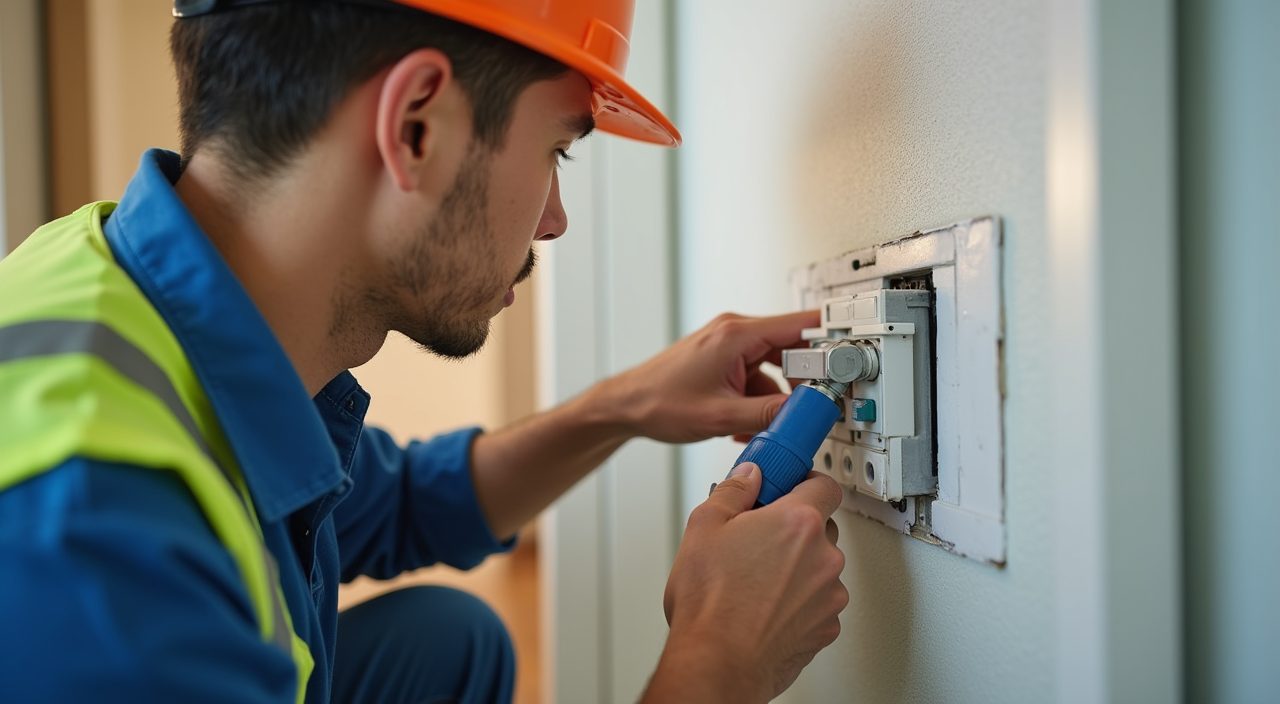
An RCCB (residual current circuit breaker) keeps tripping because it has detected current leaking to earth, which usually means moisture has got into an appliance or socket, a wire or cable is damaged, or one appliance has developed an earth fault. In Singapore's humid climate, water heaters, kettles, washing machines and outdoor points near wet areas are the most common triggers. The RCCB is not being faulty; it is doing its job by cutting power the instant it senses a leak that could give someone a shock.
Your RCCB is the single most important safety device in your Distribution Board (the DB box, sometimes still called the fuse box). It watches the current flowing out on the live wire and back on the neutral, and if the two do not match within a tiny margin, it assumes the missing current is leaking somewhere it should not, so it trips in a fraction of a second. This guide walks through why it trips, how to narrow down the cause yourself safely, and when to call a Licensed Electrical Worker.
What is an RCCB and how is it different from an MCB?
An RCCB protects people from electric shock by detecting current leaking to earth. An MCB (miniature circuit breaker), the smaller individual switches next to it, protects the wiring from overload and short circuit. They guard against different dangers, so knowing which one tripped tells you a lot about the problem.
In most Singapore homes the DB has one main RCCB covering several circuits, which is why a single fault anywhere can knock out power to half the flat at once.
- RCCB trips: current is leaking to earth, often moisture or a damaged appliance. This is a shock-risk fault.
- MCB trips: too many appliances on one circuit (overload) or a live-neutral short. This is usually an overload or wiring fault.
- If only one MCB trips but the RCCB stays on, the problem is isolated to that one circuit.
- If the RCCB trips and takes several MCBs down with it, the earth leakage could be on any of those circuits.
What are the most common causes of RCCB tripping in Singapore homes?
Because Singapore is hot and humid all year, moisture is the number one culprit. Water heaters (instant and storage), kettles, washing machines, dishwashers and air-conditioner units sit at the top of the list because they combine water, heat and heavy current. Older appliances whose insulation has aged, and cheap or damaged extension cords, are close behind.
Wiring problems also cause leakage: rodent-chewed cables, nail or drill damage after renovation, water seeping into an outdoor or bathroom socket, or a badly wired point left by an unlicensed handyman. A single faulty appliance is far more common than a whole-house wiring fault, so start by suspecting one device.
- Faulty or aged water heater element (very common in Singapore bathrooms).
- Moisture in outdoor sockets, bathroom points, aircon ledges or kitchen areas.
- A defective appliance: kettle, washing machine, fridge, microwave, iron.
- Damaged cables from renovation drilling, pests, or wear.
- Overloaded or waterlogged extension cords and multi-plug adaptors.
- A genuinely worn-out RCCB (least common, but possible after 10 to 15 years).
How can I find out which appliance or circuit is causing it?
You can usually pinpoint the fault with a simple process of elimination, and it is safe to do because you are only switching things off and on. The idea is to isolate everything, reset the RCCB, then add circuits back one at a time until it trips again.
Work calmly and do not force anything. If the RCCB refuses to reset even with all MCBs off, or you smell burning or see scorching, stop and call a Licensed Electrical Worker.
- Switch off all the individual MCBs (the small switches), then try to reset the main RCCB to the ON position.
- If the RCCB now stays on, switch the MCBs back on one at a time. The one that makes it trip again marks the faulty circuit.
- On that circuit, unplug every appliance, reset again, then plug items back in one by one to find the guilty device.
- Once found, stop using that appliance and get it repaired or replaced.
- If the RCCB will not reset even with all MCBs off, the fault is likely in the main wiring or the RCCB itself: call a licensed electrician.
Why does my RCCB only trip when it rains or at certain times?
Weather-linked tripping is a strong clue that water is getting into an outdoor point, a bathroom fitting, an aircon condenser unit, or a poorly sealed conduit. Rain raises humidity and can seep into cracked outdoor socket covers or aircon wiring on the ledge, creating a temporary earth leak that clears once things dry out.
Time-of-day patterns point to a specific appliance. If it trips every morning, think water heater or kettle; every wash cycle points to the washing machine; late at night could be the fridge or aircon compressor kicking in. Note exactly what was running when it tripped, since that log makes diagnosis much faster.
Is it safe to keep resetting the RCCB myself?
Resetting the RCCB once to test is fine. Repeatedly forcing it back on when it keeps tripping is not, because the trip means a real earth leakage exists and someone could get a shock from the faulty appliance or wiring. Never tape the switch, jam it, or bypass the RCCB to keep the power on; that removes your shock protection entirely.
You should also press the small T (Test) button on the RCCB every few months. It should trip instantly. If it does not trip when you press Test, the device may have failed and needs replacing by a licensed electrician, since a dead RCCB gives no protection even though power still flows.
When should I call a licensed electrician, and who is allowed to do the work?
In Singapore, fixed electrical wiring work must be carried out by a Licensed Electrical Worker (LEW) licensed by the Energy Market Authority. You can safely unplug appliances and reset switches yourself, but opening the DB, replacing an RCCB, tracing hidden wiring faults, or rewiring a socket is licensed work by law, both for safety and for your home insurance to remain valid.
Call a professional when the RCCB will not reset with all MCBs off, when you cannot isolate the fault, when there is burning smell, scorching or buzzing, or when the Test button fails. Our team handles electrical fault-finding, RCCB and DB upgrades, and full rewiring across Singapore homes, and we can trace an intermittent earth leak properly with the right test instruments rather than guesswork.
A licensed electrician will use an insulation resistance test and an earth leakage clamp meter to find exactly where current is escaping, then repair or replace the faulty section and confirm the circuit is safe before restoring power.
Frequently asked questions
Can a faulty RCCB itself cause nuisance tripping? Yes. After roughly 10 to 15 years, or in very dusty or humid DB boxes, an RCCB can become oversensitive and trip with no real fault present. A licensed electrician can test it and replace it if it is confirmed faulty, but they will always rule out a genuine leakage first.
Why does my RCCB trip the moment I switch on the water heater? An instant trip when a water heater comes on almost always means the heating element has cracked and is leaking current to earth through the water inside it. This is a classic and dangerous fault in Singapore bathrooms, so stop using that heater and have it checked or replaced.
Is a tripping RCCB dangerous or is it protecting me? It is protecting you. Every trip means it caught a leak that could otherwise cause a shock or fire. The danger lies in the underlying fault, not the RCCB, so the correct response is to find and fix the cause rather than to disable the breaker.
How much does it cost to fix RCCB tripping in Singapore? It depends entirely on the cause. Replacing one faulty appliance may cost nothing beyond the appliance, while fault-finding and replacing an RCCB or a damaged cable is a licensed electrician call-out with parts. Ask for the diagnosis first, since a quick isolation test often shows the fix is a single appliance rather than expensive rewiring.