
Why Every Water Heater in Singapore Needs a Double Pole Isolator Switch
A double pole isolator switch cuts both live and neutral to your water heater, which is why it is standard and safe practice in every Singapore home.
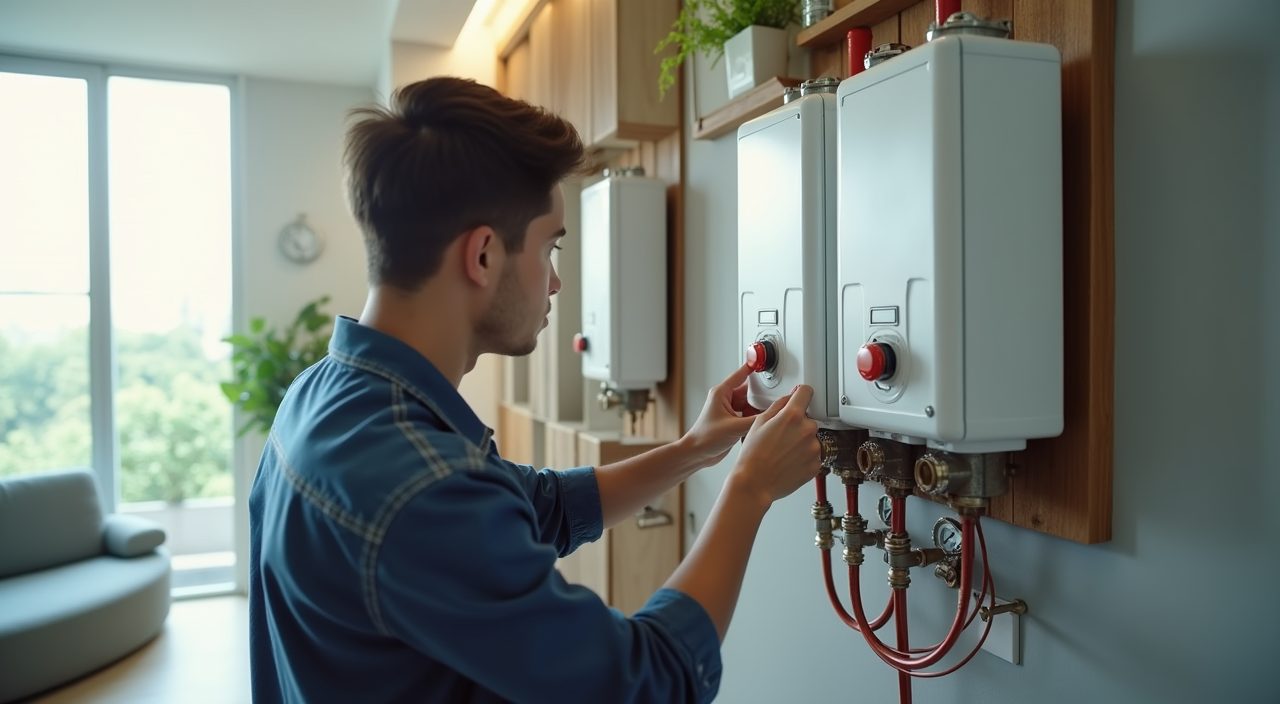
A water heater in Singapore needs a double pole isolator switch because it disconnects both the live and the neutral wire at once, fully isolating the heater from the mains before anyone touches it or works on it. A single pole switch only breaks the live wire and leaves the neutral connected, which can stay dangerous under certain fault conditions. For a high-power appliance sitting in a wet bathroom, cutting both poles is the safe, standard way to wire it.
This is not just good practice. In Singapore, fixed electrical work like a water heater circuit falls under rules enforced by the Energy Market Authority, and the accepted way to control a storage or instant heater is a dedicated switched circuit with a double pole isolator. The switch is usually the flat rectangular unit with a neon light, mounted just outside the bathroom or shower area.
What is a double pole isolator switch?
An isolator switch is a manual switch whose only job is to fully cut power to one appliance so it can be used or serviced safely. Double pole means it breaks two conductors at the same time: the live and the neutral. When you flip it off, both wires feeding the heater are open, so no current can flow through the element at all.
In a typical Singapore bathroom you will see this as a 20A or 45A rated switch with a small orange or red neon indicator that glows when the heater circuit is on. It is deliberately placed outside the wet zone, near the door, so you can switch the heater on and off without reaching into a damp area.
- Single pole (SP): breaks only the live wire, neutral stays connected
- Double pole (DP): breaks both live and neutral, full isolation
- Water heaters in Singapore use DP because of the wet, high-power environment
- The neon light tells you at a glance whether the heater circuit is live
Why does the neutral wire matter for safety?
People assume that switching off the live wire makes an appliance completely dead. Usually it does, but not always. If there is a wiring fault, a wrongly connected neutral, or a mix-up in the circuit, the neutral can still carry a voltage relative to earth. In a dry room that is a minor risk. In a bathroom, standing on a wet floor, it becomes a real one.
By cutting both poles, a double pole isolator removes that uncertainty. The heater element and its wiring are separated from the supply on both sides, so there is no path for current whether the fault is on the live or the neutral side. That is the whole point of using DP for a wet, body-contact appliance like a shower heater.
Storage heater or instant heater: does the switch differ?
Both storage tank heaters and instant (tankless) heaters need a double pole isolator, but the current rating differs because instant heaters draw far more power. A storage heater is usually a smaller load, while an instant heater heats water on demand and pulls a heavy current for the few minutes you shower.
This is why an instant heater almost always needs its own dedicated circuit, a larger cable, and a higher rated switch, not just a spare socket. Getting the rating and cable size right is exactly the kind of detail a licensed electrician checks before installing.
- Storage heater: lower continuous load, commonly a 20A double pole switch
- Instant heater: high on-demand load, often a 45A double pole switch on its own circuit
- Instant heaters usually need a dedicated cable run back to the distribution board
- Both types should be protected by an RCCB or RCBO for shock protection
Does the isolator replace an RCCB or earth leakage protection?
No. A double pole isolator switch and residual current protection do two different jobs, and you need both. The isolator is a manual on and off switch that you control. The RCCB or RCBO in your distribution board is an automatic device that trips within milliseconds if it detects current leaking to earth, for example through a person.
In a correctly wired Singapore bathroom the water heater sits on a circuit that has earth leakage protection at the board and a double pole isolator at the wall. The two work together: the RCCB reacts to faults automatically, and the isolator lets you deliberately cut all power when you want to.
How do I know my heater switch is wired correctly?
The honest answer is that you often cannot tell just by looking, because both single and double pole switches can look similar from the front. What matters is what happens inside the wall and at the distribution board, which is not something to guess at with a live circuit.
If you are installing a new heater, replacing an old one, or you have doubts about an existing setup, this is worth having a licensed electrician check. Our team handles water heater installation and the associated switch and circuit work, confirming the isolator is genuinely double pole, correctly rated, and protected by earth leakage at the board. That is the safe way to be sure rather than trusting the previous owner's wiring.
- Confirm the switch is double pole, not single pole
- Check the rating matches the heater (20A storage, often 45A instant)
- Verify the circuit has RCCB or RCBO protection at the board
- Make sure the switch sits outside the wet shower zone
What does it cost and when should I upgrade?
Swapping a switch alone is a small job, but the real cost depends on what else needs to change: cable size, a new dedicated circuit, or an upgrade at the distribution board. A straightforward like for like isolator replacement is usually modest, while running a new dedicated circuit for a powerful instant heater costs more because of the extra cabling and board work. Any electrician should quote after seeing the actual setup rather than over the phone.
Good reasons to upgrade include moving from a storage to an instant heater, a switch that is cracked, discoloured or has a dead neon light, or discovering that the existing control is only single pole. If you are renovating a bathroom anyway, it is the natural moment to get the heater circuit brought up to a proper double pole standard.
Frequently asked questions
Is a double pole isolator switch legally required for water heaters in Singapore? Fixed electrical installation work is regulated in Singapore and the accepted safe practice for a water heater is a dedicated circuit controlled by a double pole isolator, with earth leakage protection at the board. Rather than treating it as a technicality, treat it as the standard every properly wired home should meet, and have a licensed electrician confirm your setup.
Can I replace a water heater switch myself? For a wet-area, high-power appliance this is not a safe DIY job. Fixed wiring should be done by a licensed electrical worker who can confirm the pole configuration, current rating, cable size and earth leakage protection are all correct.
How do I know if my current switch is single pole or double pole? You usually cannot tell from the front panel alone, since they look alike. It has to be checked at the wiring and the distribution board by someone qualified, because opening a live circuit to inspect it is dangerous.
What is the neon light on the switch for? The neon simply indicates that the heater circuit is energised. If it is on, the circuit is live; if it never lights up even when switched on, either the heater is off at the board or the indicator has failed, both of which are worth checking.