
Wiring a Dedicated Aircon Circuit: What Your Installer Needs From the Electrician
A Singapore homeowner's guide to the dedicated aircon power point: circuit sizing, isolator switches, and what your electrician must do before the aircon crew arrives.
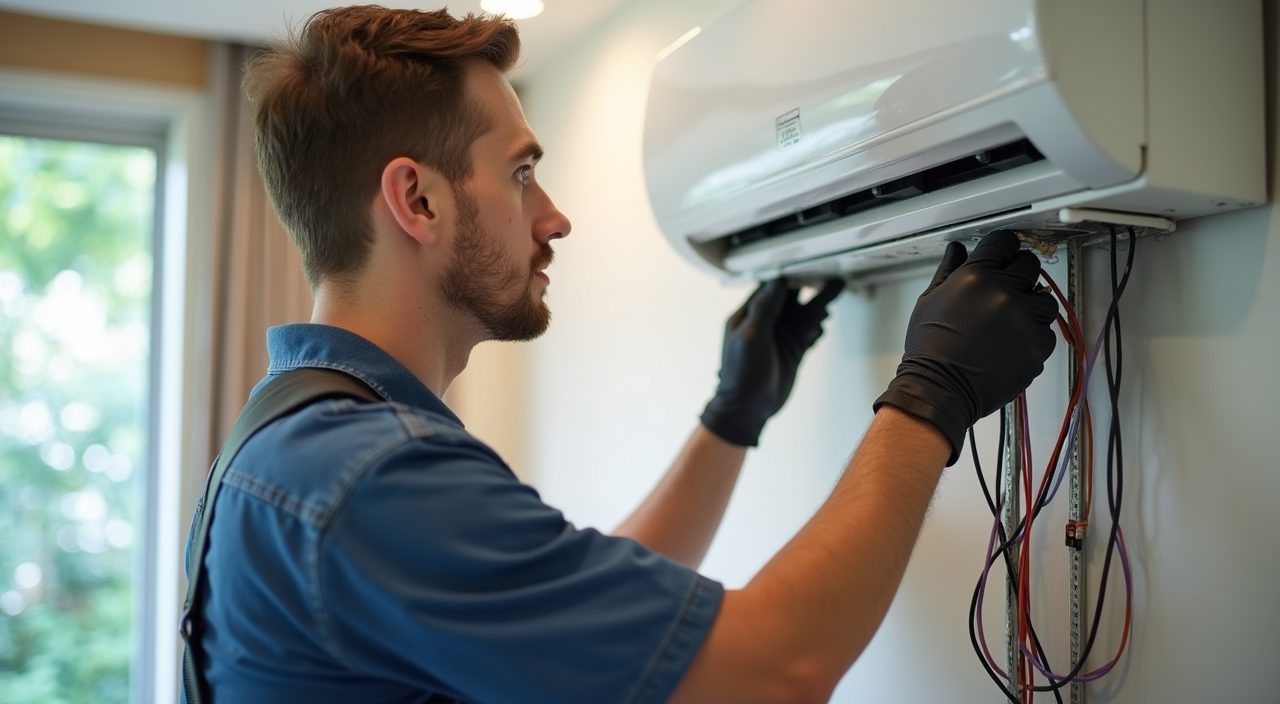
An aircon needs its own dedicated power point wired straight from the distribution board, protected by its own circuit breaker, so it does not share a circuit with lights or general sockets. In practice your aircon installer tells the electrician the total load, and the electrician then runs a correctly sized cable, fits the right breaker, and provides an isolator switch near the outdoor unit. In Singapore this electrical work should be done by a Licensed Electrical Worker (LEW) and comply with the SS 638 wiring code.
Most split and multi-split systems draw more current than a normal 13A socket circuit is meant to carry continuously, and the compressor kicks a surge every time it starts. That is why the aircon and its wiring are treated as a separate, dedicated circuit. Getting the electrical side right before the aircon crew arrives avoids tripping breakers, undersized cables, and a second visit that costs you time and money.
What is a dedicated aircon power point?
A dedicated aircon power point is a single circuit that feeds only your air conditioner. It starts at its own breaker in the distribution board (DB), runs on a cable sized for the aircon's load, and terminates at an isolator or a dedicated outlet near the unit. Nothing else, no lights, no fans, no general 13A sockets, shares that circuit.
The point of dedicating the circuit is protection and reliability. The breaker is matched to the aircon so it trips only for a genuine fault, the cable is thick enough to carry the running current without overheating, and an isolator lets a technician cut power safely for servicing or repairs without switching off half the house.
What does your aircon installer need to tell the electrician?
The electrician sizes the circuit from the numbers on the aircon spec sheet, so your installer should hand over the model details before any cable is run. If you brief both trades early, the wiring is ready and tested when the aircon crew turns up.
Ask your installer to confirm these figures for the electrician:
- The system type: single split, multi-split, or a larger inverter unit, and how many indoor units run off one outdoor condenser.
- Rated running current in amps and total power in watts or kilowatts for the outdoor unit.
- Whether the unit is single-phase (the norm in most HDB flats and condos) or three-phase (some large multi-split and landed-home systems).
- The recommended breaker rating and minimum cable size stated in the installation manual.
- Where the outdoor condenser and the isolator switch will physically sit, so cable length and routing can be planned.
How is the circuit sized: breaker and cable?
Sizing is driven by the aircon's running current, with a margin for the start-up surge. A common single-split system in a Singapore home sits comfortably on a dedicated circuit with a breaker in the low tens of amps and a matching cable, but the exact figures depend on your specific unit, so the manual and the LEW's assessment decide, not a rule of thumb.
The golden principle is that the cable must be rated to carry more current than the breaker allows through. An oversized breaker on an undersized cable is dangerous because the cable can overheat before the breaker ever trips. This is one reason the work belongs with a licensed professional rather than a general handyman.
- Breaker: a dedicated MCB sized to the aircon's running current plus surge headroom.
- Cable: copper conductor rated above the breaker current, sized for the run length and how it is installed.
- RCD or RCBO protection: earth-leakage protection is expected on modern circuits under SS 638.
- Isolator: a local switch, ideally weatherproof if it sits outdoors near the condenser.
Why does the aircon need an isolator switch?
An isolator is a dedicated on-off switch placed close to the aircon, usually near the outdoor condenser. It lets a servicing technician fully disconnect the unit for cleaning, gas top-up, or repair without hunting for the right breaker in the DB or shutting power to other rooms.
For an outdoor condenser mounted on a ledge or an external wall, the isolator should be a weatherproof type rated for outdoor use. Skipping the isolator is a common shortcut that makes future servicing slower and less safe, so treat it as part of the job, not an optional extra.
HDB, condo, and landed: what differs?
The core electrical principle is the same everywhere, but the practicalities change with the property type. Older flats sometimes have a DB with no spare way for a new dedicated circuit, so the electrician may need to reorganise the board or advise on capacity before adding the aircon circuit.
A few things to check up front:
- HDB flats: confirm there is a free breaker slot in the DB; very old boards may need tidying or upgrading before a new circuit fits.
- Condominiums: some managements require the contractor to be a registered or approved vendor, and work often must fit within permitted renovation hours.
- Landed homes: larger or multi-split systems are more likely to be three-phase, which changes cable and breaker selection.
- Any property: cable routing through walls, ceilings, or trunking should be planned so it stays neat and accessible, not just functional.
Who is allowed to do the wiring in Singapore?
Fixed electrical wiring in Singapore, including a new dedicated aircon circuit at the distribution board, should be carried out or supervised by a Licensed Electrical Worker. This is the person legally competent to work on your DB and to certify the installation is safe and compliant with SS 638. Aircon installers handle the refrigerant pipes, drainage, and mounting, but the power circuit itself is electrical work.
If you are planning aircon installation as part of a wider renovation, it makes sense to have the electrical circuits, isolators, and DB checks handled by the same team that manages your renovation and plumbing, so the trades are sequenced correctly and nothing is left half-wired. Our electrical services cover exactly this kind of dedicated aircon circuit work, from sizing the breaker to fitting the isolator, done by licensed hands and coordinated with your aircon crew.
How to coordinate the electrician and the aircon crew
The smoothest projects run the electrical work first. The electrician installs the dedicated circuit, breaker, and isolator, tests it, and leaves a live, labelled point ready. The aircon team then mounts the units and simply connects to a circuit that is already correct.
A simple order of events keeps everyone efficient:
- Confirm the aircon model and load figures before any wiring starts.
- Have the LEW run the dedicated circuit, fit the breaker and RCD protection, and install the isolator.
- Test the circuit and label the breaker clearly in the DB.
- Schedule the aircon crew after the point is live, so they connect and commission in one visit.
Frequently asked questions
Can I plug my aircon into a normal wall socket? For a small portable unit within the socket's rating, maybe, but split and multi-split systems should be on their own dedicated circuit wired from the DB, not sharing a general 13A socket. The compressor's start-up surge and continuous load can trip a shared circuit and overheat undersized wiring.
Does the aircon company install the power point, or the electrician? Aircon installers usually focus on piping, drainage, and mounting. The dedicated circuit at the distribution board is electrical work that should be done or supervised by a Licensed Electrical Worker, so many homeowners arrange the electrician separately or through their renovation contractor.
How much does a dedicated aircon circuit cost in Singapore? It varies with cable length, whether the DB has a free slot, single or three-phase, and how many units are involved, so ask for a site-specific quote rather than relying on a fixed price. Running a longer cable, upgrading an old board, or adding an outdoor isolator all shift the figure.
Do I need a permit or licensed worker for this? New fixed wiring and DB work should be carried out or supervised by a Licensed Electrical Worker and comply with the SS 638 wiring code. For everyday single-phase home circuits this is normally handled by your electrical contractor without a separate homeowner application.