
Built-In vs Freestanding Carpentry in Singapore: Which Saves You More?
Built-in carpentry costs more upfront but maximises space in small Singapore flats. Freestanding furniture is cheaper and movable. Here is how to choose.
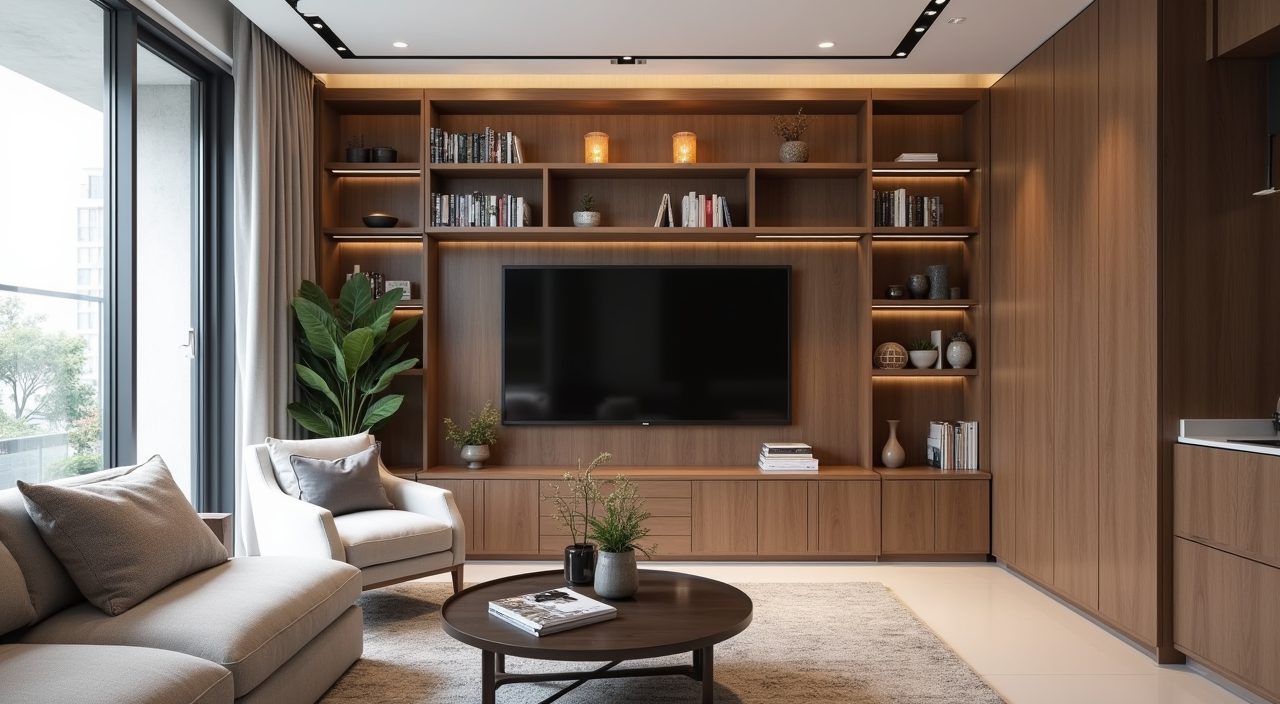
Freestanding furniture almost always saves you more money in the short term, often costing a fraction of custom carpentry for the same item. Built-in carpentry costs more upfront but can save you more over a long stay in the same home because it uses awkward corners, full-height walls, and odd nooks that ready-made furniture wastes. For a typical Singapore HDB flat or condo you own and plan to live in for years, built-ins usually win on space; for a rental or a short-term home, freestanding usually wins on cost.
The real answer depends on three things: how long you will stay, how tight your floor area is, and how much you value resale-friendly flexibility. This guide breaks down real cost ranges, space trade-offs, and the situations where each option genuinely makes sense in a Singapore home.
What is the difference between built-in and freestanding carpentry?
Built-in carpentry is custom-made joinery fixed to your walls, floor, or ceiling. Think wardrobes that run floor to ceiling, a TV feature wall, a kitchen cabinet run, or a study desk built into an alcove. It is measured and made for your exact space, so it cannot easily be moved or taken with you.
Freestanding furniture is anything you buy ready-made and place in the room: a wardrobe from IKEA, a bookshelf, a sideboard, a loose kitchen island. It sits on the floor, is not fixed to the structure, and moves with you when you shift house.
- Built-in: custom, fixed, made to measure, stays with the property.
- Freestanding: ready-made, movable, standard sizes, goes where you go.
- Built-in is a renovation item; freestanding is a furniture purchase.
How much does each option cost in Singapore?
Custom carpentry in Singapore is usually priced by the running foot (per foot of length). As a rough guide, expect somewhere around 180 to 350 dollars per running foot for standard laminate carpentry, with the exact figure depending on materials, internal fittings, soft-close hardware, and finish. A full-height wardrobe, a kitchen cabinet run, and a TV console together can easily run into five figures.
Freestanding equivalents cost a fraction of that. A large ready-made wardrobe might cost a few hundred dollars, and a decent sideboard or bookshelf even less. The catch is that standard sizes rarely fill your space perfectly, so you pay less but often lose usable storage volume.
- Built-in carpentry: roughly 180 to 350 dollars per running foot for laminate, more for solid surfaces or premium finishes.
- Freestanding: a fraction of custom cost for a comparable item, but in fixed standard sizes.
- Prices vary widely by contractor, material, and hardware; always get an itemised quote.
Which one actually saves you more space?
Built-in carpentry wins on space efficiency, and in space-tight Singapore homes that matters a lot. Because it is made to measure, it can go full height to the ceiling, wrap around beams and pipes, and fill awkward corners that a boxy freestanding unit leaves as dead air. In a compact HDB bedroom, a built-in wardrobe can add noticeably more storage than a standard freestanding one in the same footprint.
Freestanding furniture leaves gaps: the space above it, beside it, and behind it is usually wasted. It is the better choice when you want an airy, less built-up look, or when the room is large enough that squeezing every cubic centimetre does not matter.
When does built-in carpentry make more sense?
Built-in is usually the smarter spend when you own the home and plan to stay for many years, when floor area is tight, or when the layout has awkward spots that no standard furniture fits. Kitchens, full-height wardrobes, and study nooks in alcoves are classic cases where custom joinery pays for itself in daily usability.
It also gives a cleaner, more seamless look, which many owners want for a long-term home. The trade-off is cost, lead time, and the fact that you leave it behind when you sell or move out.
- You own the flat or condo and will stay 5 years or more.
- Floor space is tight and you need every bit of storage.
- The layout has beams, recesses, or odd corners to fill.
- You want a seamless, integrated finish for a forever home.
When is freestanding the better choice?
Freestanding furniture usually saves more when you are renting, when you move often, or when you want flexibility to rearrange or upgrade later. Because it is not fixed, you can take it with you, sell it second-hand, or swap it out as your needs change. That resale and reuse value is real money back.
It also suits people who want to spend now and upgrade later, or who like changing their layout. If you are unsure how long you will stay, freestanding keeps your options open and your outlay low.
- You are renting or expect to move within a few years.
- You want furniture you can take with you or resell.
- You like rearranging rooms or upgrading pieces over time.
- Your budget is tight and you want to spread spending out.
Can you mix both in one home?
Yes, and most well-planned Singapore homes do exactly that. The common approach is to invest in built-ins where they earn their keep, then fill the rest with freestanding pieces. That balances cost, flexibility, and space in a sensible way.
A typical split is built-in kitchen cabinets and wardrobes (where fixed storage and space efficiency matter most), paired with a freestanding sofa, dining set, bookshelf, and side tables that can move or be replaced. This gives you the space benefits of custom work without the full custom price tag.
- Go built-in: kitchen cabinets, wardrobes, TV feature walls, study alcoves.
- Go freestanding: sofas, dining sets, loose shelving, side tables, beds.
- Prioritise built-ins for tight, high-use zones; use freestanding elsewhere.
How do you get the carpentry done well?
Built-in carpentry is a renovation job, so the quality of measuring, materials, and installation makes a big difference to how long it lasts and how well it works. For custom joinery it is worth engaging an experienced renovation contractor who can measure your space accurately, advise on materials suited to Singapore humidity, and coordinate carpentry with electrical and plumbing points so power sockets and pipes end up in the right places behind your cabinets.
Before you commit, ask for an itemised quote broken down by running foot, confirm the carpenter, materials, and hardware brands, and check the workmanship warranty. Getting the planning right at this stage is where the long-term savings on built-ins are actually won or lost.
Frequently asked questions
Is built-in carpentry worth it in a resale HDB flat? It can be, if you plan to live there for many years and the flat has tight or awkward spaces. Since built-ins stay with the property when you sell, treat the cost as spending on your own daily comfort rather than a resale investment you recover.
Does built-in carpentry add to resale value? Not reliably. Buyers may like a well-finished kitchen or wardrobe, but many prefer to redo interiors to their own taste, so do not count on recovering the cost at sale. Build it for how you will live, not to boost the price.
How long does custom carpentry take to make? After the design is confirmed and measurements are taken, fabrication and installation typically take a few weeks, depending on the workshop's queue and the scope. Plan for this lead time in your renovation schedule.
Which is cheaper overall, built-in or freestanding? Freestanding is cheaper upfront in nearly every case. Built-ins only start to look better value over a long stay, where the extra usable space and seamless fit justify the higher initial cost.