Industrial Living Room Design Ideas for Singapore Homes
Practical industrial living room design ideas for Singapore HDB flats and condos: palettes, materials, lighting and layout that suit our humidity and small spaces.
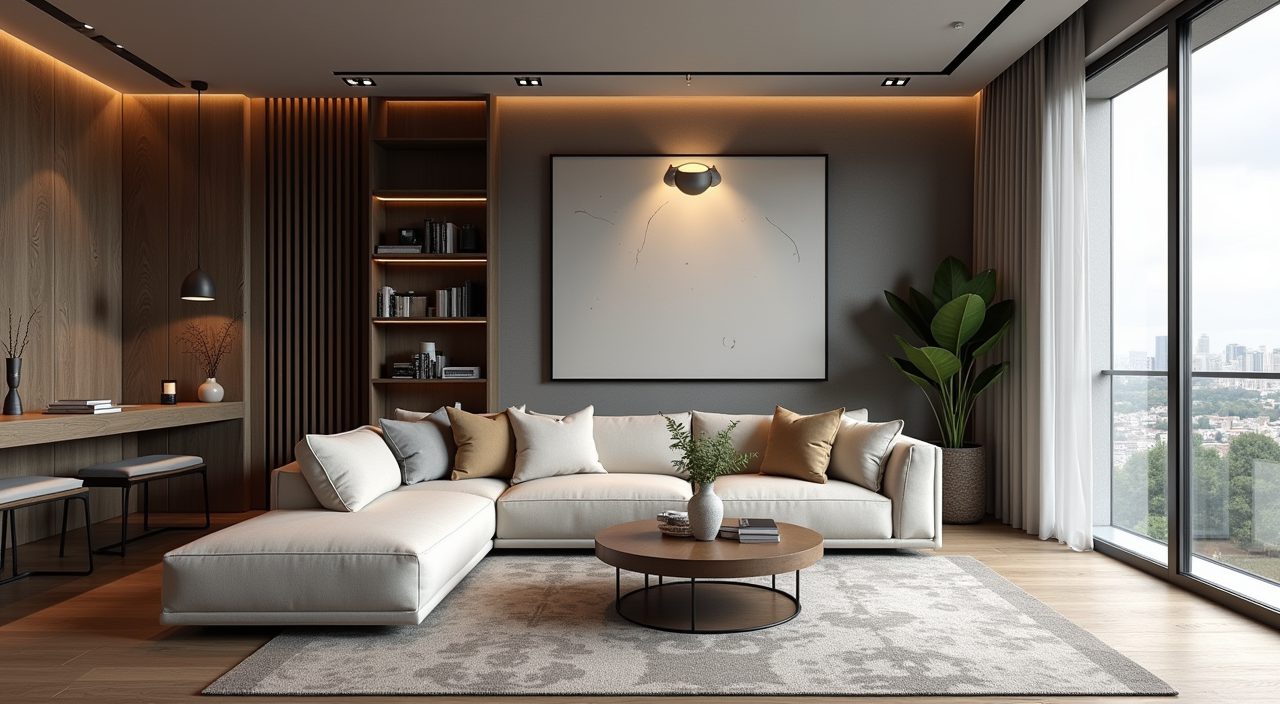
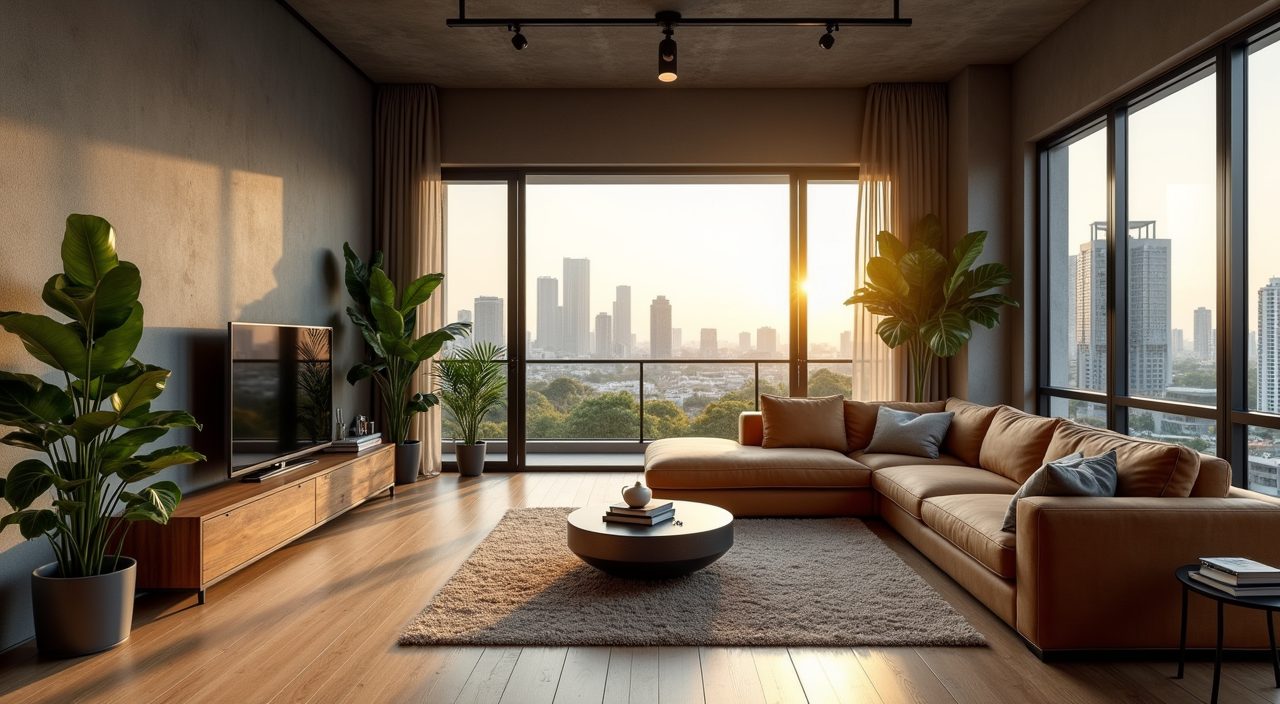
To pull off an industrial living room in a Singapore home, anchor the space with a warm grey or off-white base, add one or two raw material features (exposed brick, concrete-look render, or black metal), and layer in wood and soft textiles so it does not feel cold. Keep the ceiling and walls light in a small HDB flat, use track or spotlight lighting on the false ceiling instead of heavy hanging fixtures, and choose finishes that shrug off humidity. Done right, the look is calm and characterful rather than a warehouse pastiche.
The classic industrial style grew out of converted factories and lofts with high ceilings and big windows. Most Singapore homes are the opposite: a 4-room HDB living room is roughly 3.2 by 4 metres with a 2.6 metre ceiling, and condo living rooms are often tighter. So the goal here is industrial as a mood and material palette, not a literal warehouse. The ideas below are tuned for real HDB and condo dimensions, tropical light, and the mould-and-rust reality of living near the equator.
Build the palette on warm greys, not cold concrete
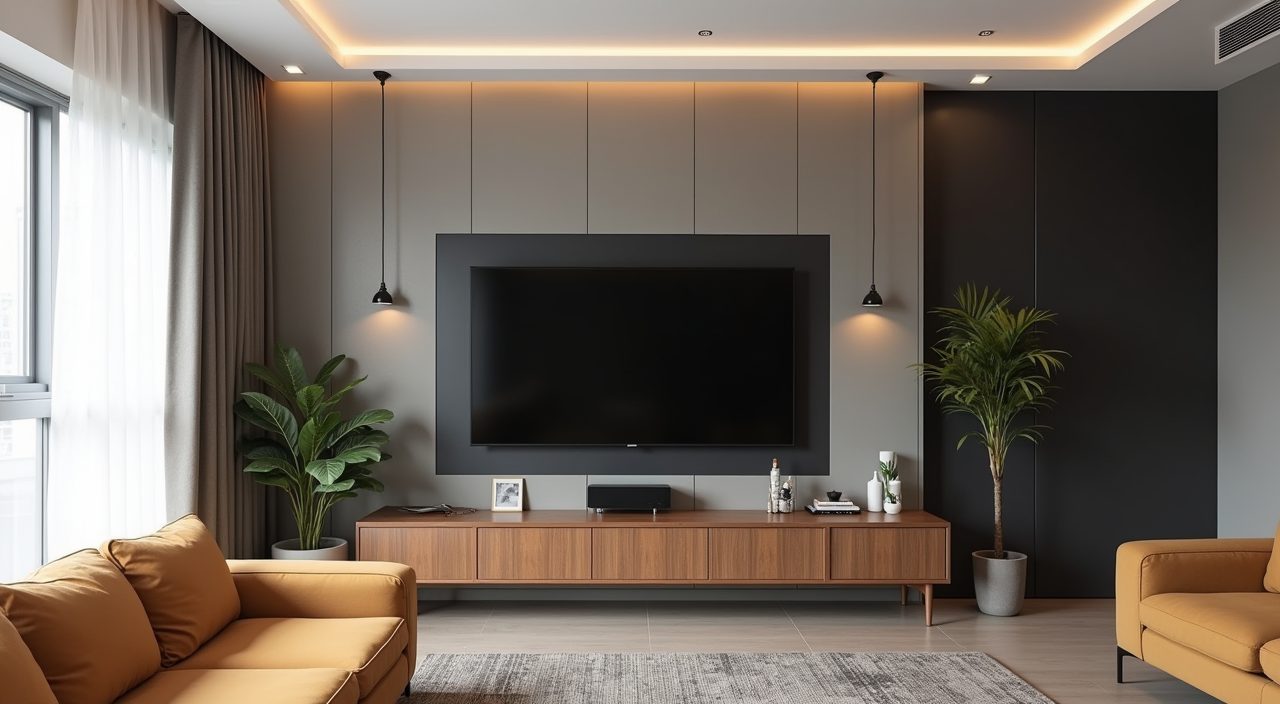
The fastest way to make industrial feel cold and gloomy in a small flat is to go full charcoal on the walls. Instead, keep large surfaces (walls, ceiling, main sofa) in warm grey, greige, or soft white, then reserve the dark tones for accents: a black TV feature wall, steel shelving, or window frames. This keeps the space feeling bigger and works with Singapore's bright but often diffuse daylight.
A useful split is roughly 70 percent light neutral, 20 percent mid grey or wood, and 10 percent black or rust accent. That last 10 percent is where the industrial character lives, so it can be bold without swallowing the room.
Use concrete screed or cement-look finishes selectively
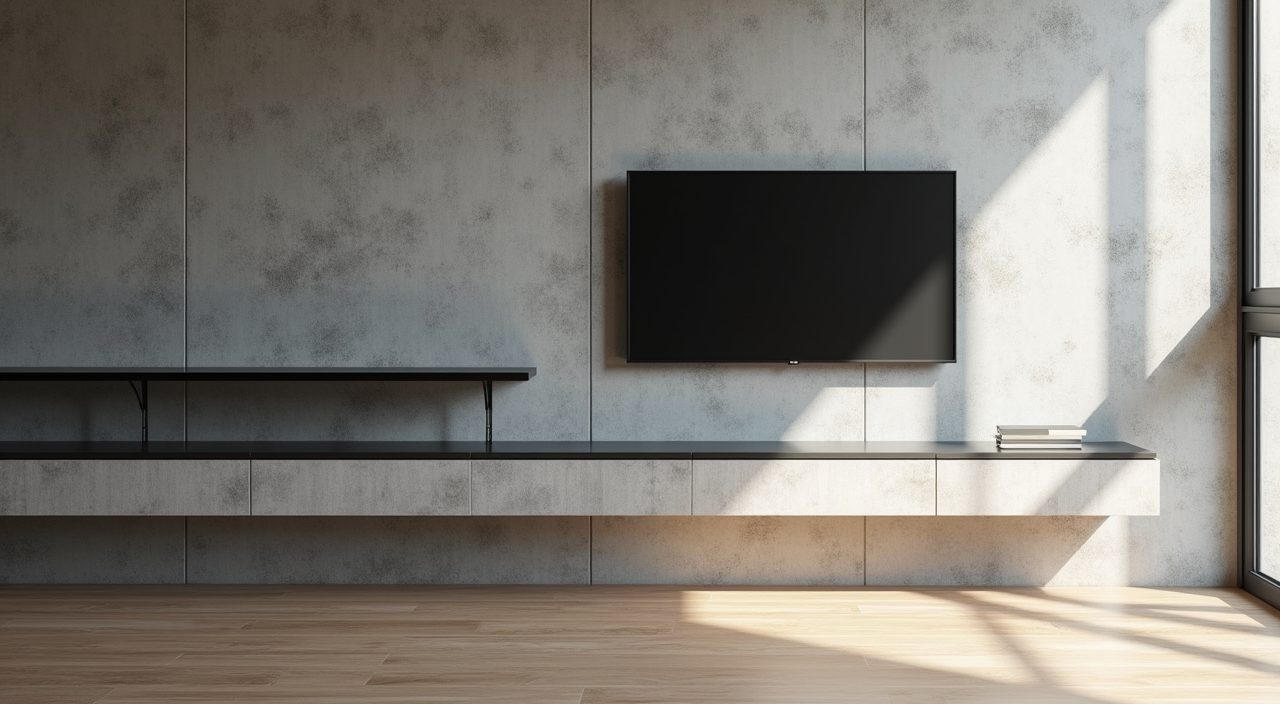
Raw cement is signature industrial, but a full cement screed floor across a whole flat is expensive, heavy, and prone to hairline cracks, and it feels hard underfoot in a home you actually live in. A more livable route is a cement-look large-format porcelain tile or a microcement feature on one wall or the TV console area. You get the texture without the cold floor and the maintenance headache.
If you want the real screed look on the floor, budget for proper sealing. In our humidity, unsealed cement can absorb moisture and stain, and it needs periodic resealing to stay presentable.
Add one exposed-brick or textured feature wall

A single brick feature wall behind the sofa or TV does most of the industrial heavy lifting. Real brick is rarely practical in an HDB flat because you cannot touch structural walls and the depth eats into a small room, so most homeowners use brick-look veneer tiles, faux brick panels, or a textured plaster finish. These add only a few millimetres to the wall and are far easier to keep clean.
Keep the feature to one wall only. In a compact living room, brick on multiple surfaces closes the space in and reads busy rather than characterful.
- Brick-effect porcelain or ceramic tile: durable, wipeable, good near the kitchen edge of an open-plan layout.
- Faux brick PU or gypsum panels: lightweight and quick to install, best kept away from wet zones.
- Textured or raw plaster: a softer, more modern read that still catches light nicely.
Choose black metal framing for shelving, screens and legs
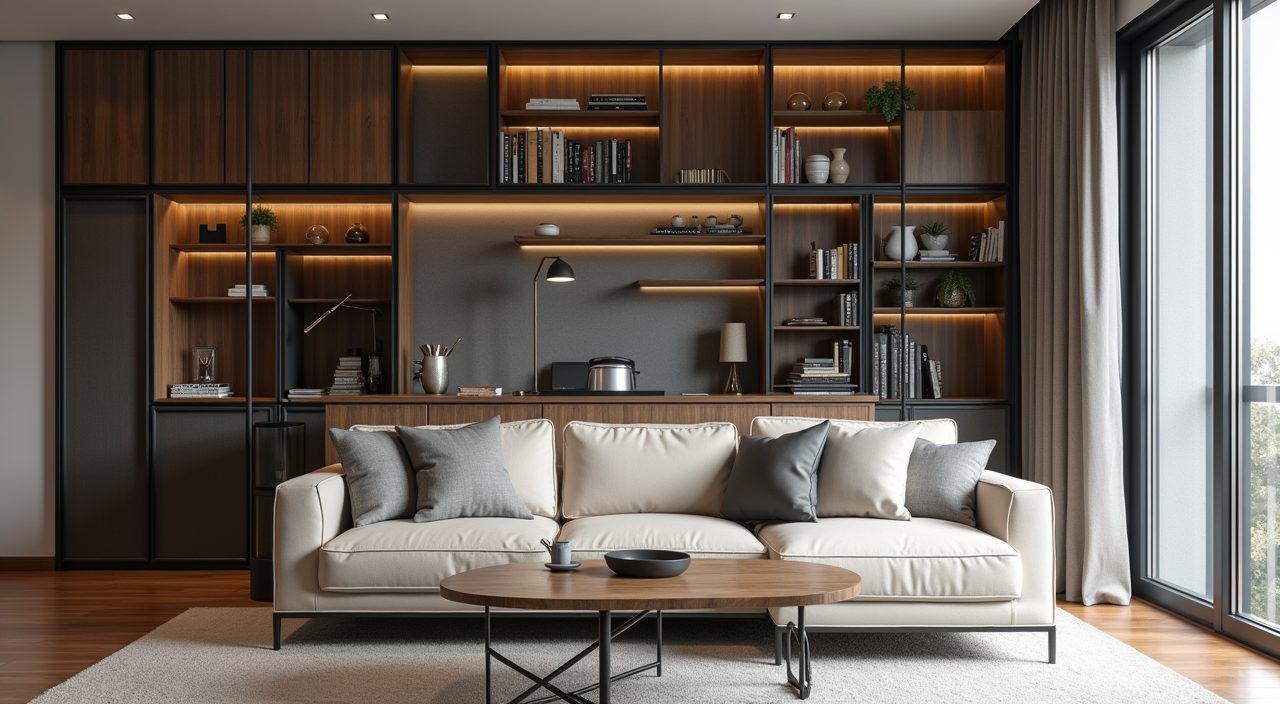
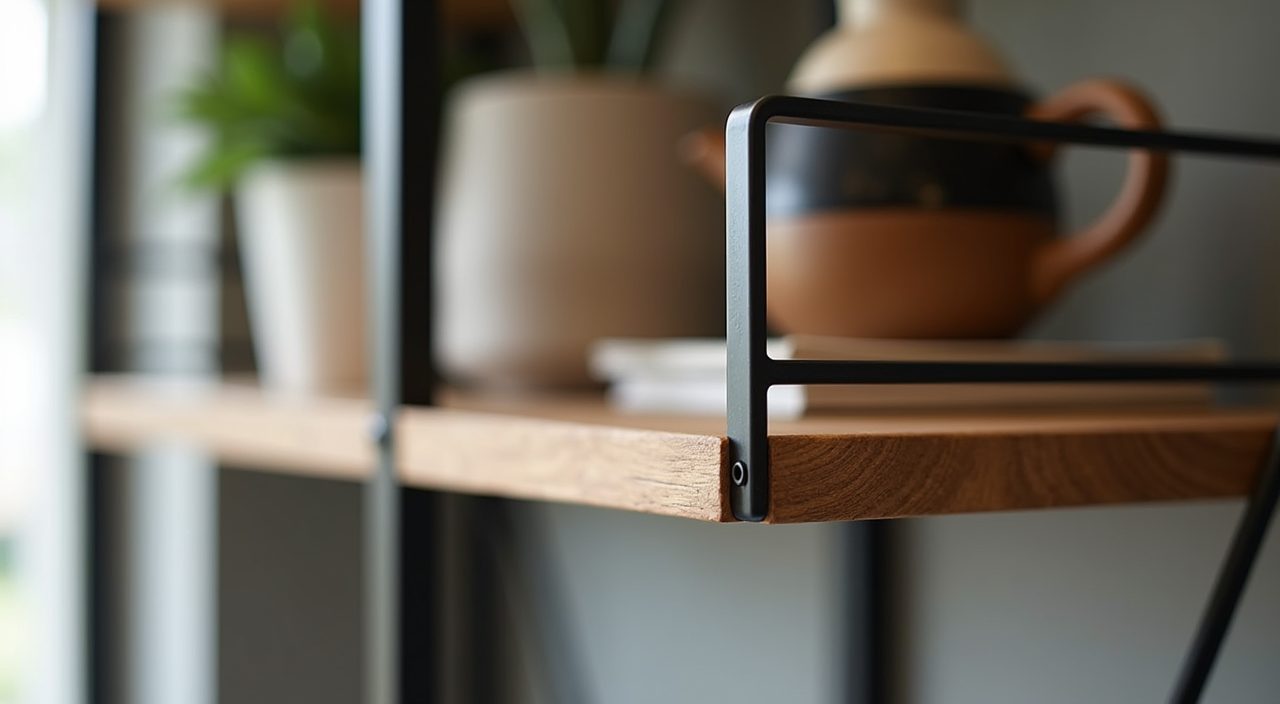
Slim black metal is the connective thread of industrial style and it suits small Singapore flats because it is visually light. Powder-coated steel or metal-framed open shelving, a black-framed glass partition between living and study zones, and hairpin or angular metal legs on the coffee table all signal the look without bulking up the room the way solid timber furniture does.
For anything metal near windows, the kitchen, or a yard-facing wall, ask for powder-coated or properly treated finishes. Bare or cheaply coated steel will develop rust spots in our humidity, especially in units that catch afternoon rain.
Warm it up with wood and soft textiles
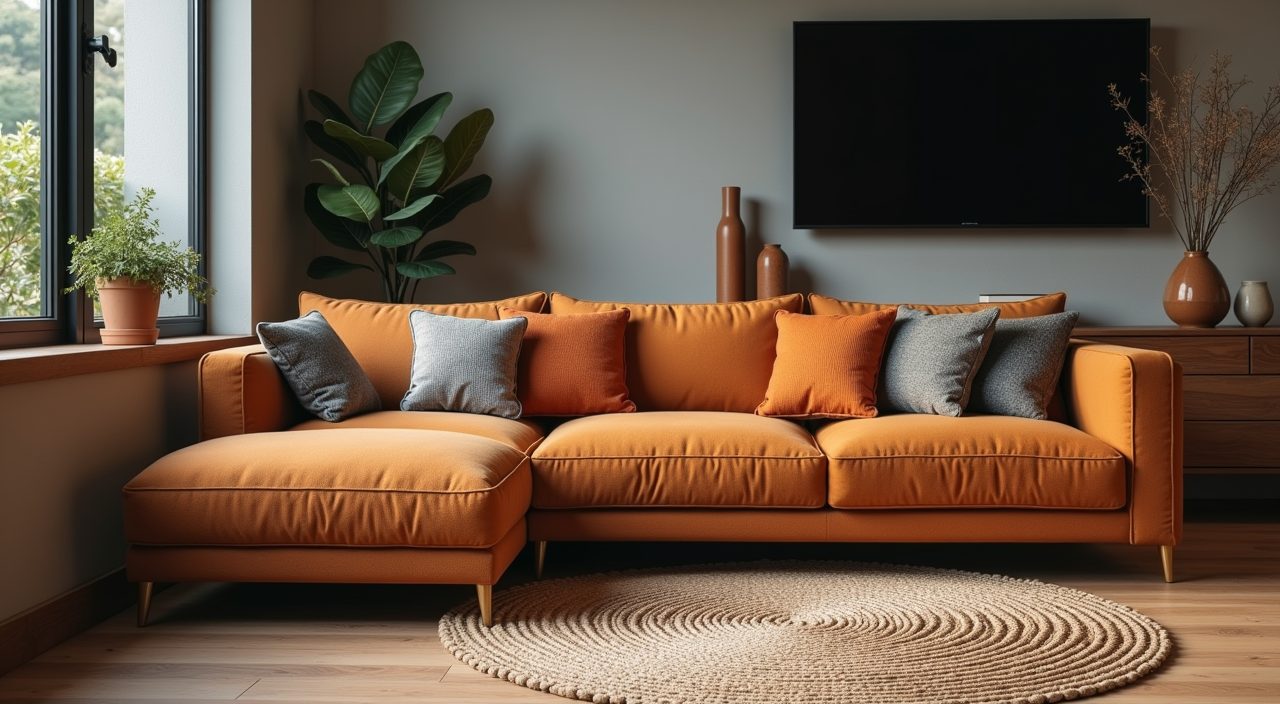
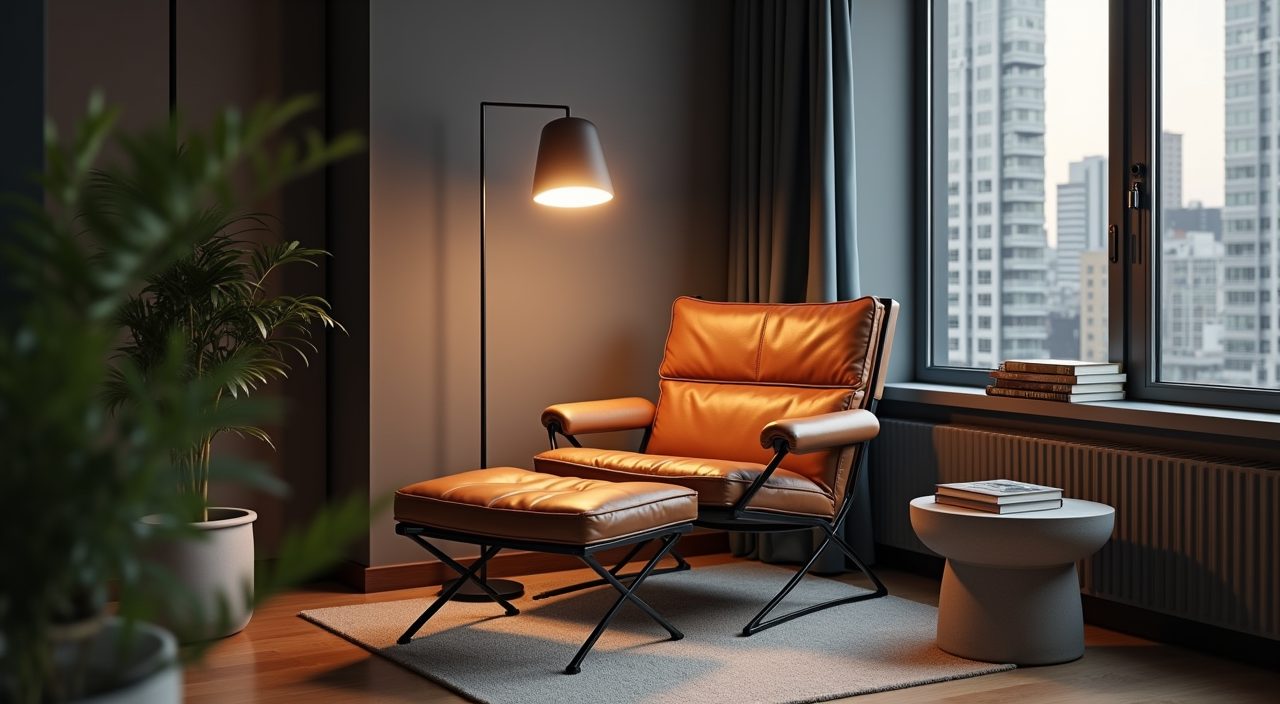
Pure metal and concrete photograph well but feel unwelcoming to live in, so the trick is to counterbalance every hard surface with something warm. Solid or veneer wood in a mid-to-warm tone (a timber TV console, a chunky dining bench, oak-look flooring) softens the palette. A nubby fabric sofa in grey or tan, a chunky-weave rug, and a couple of textured cushions do the same for touch and sound.
This warmth is not optional in a family home. It is what separates a lived-in industrial living room from a showroom that nobody wants to sit in.
Light it with tracks and spots, not a single ceiling fitting
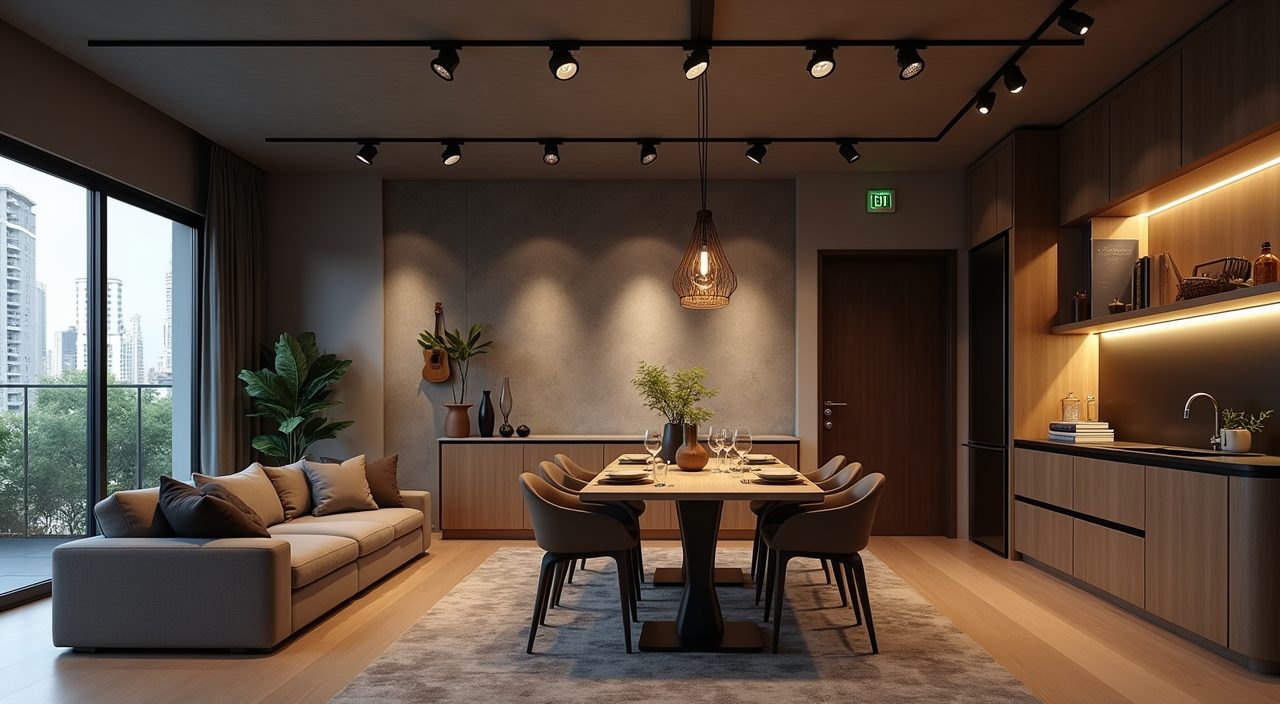
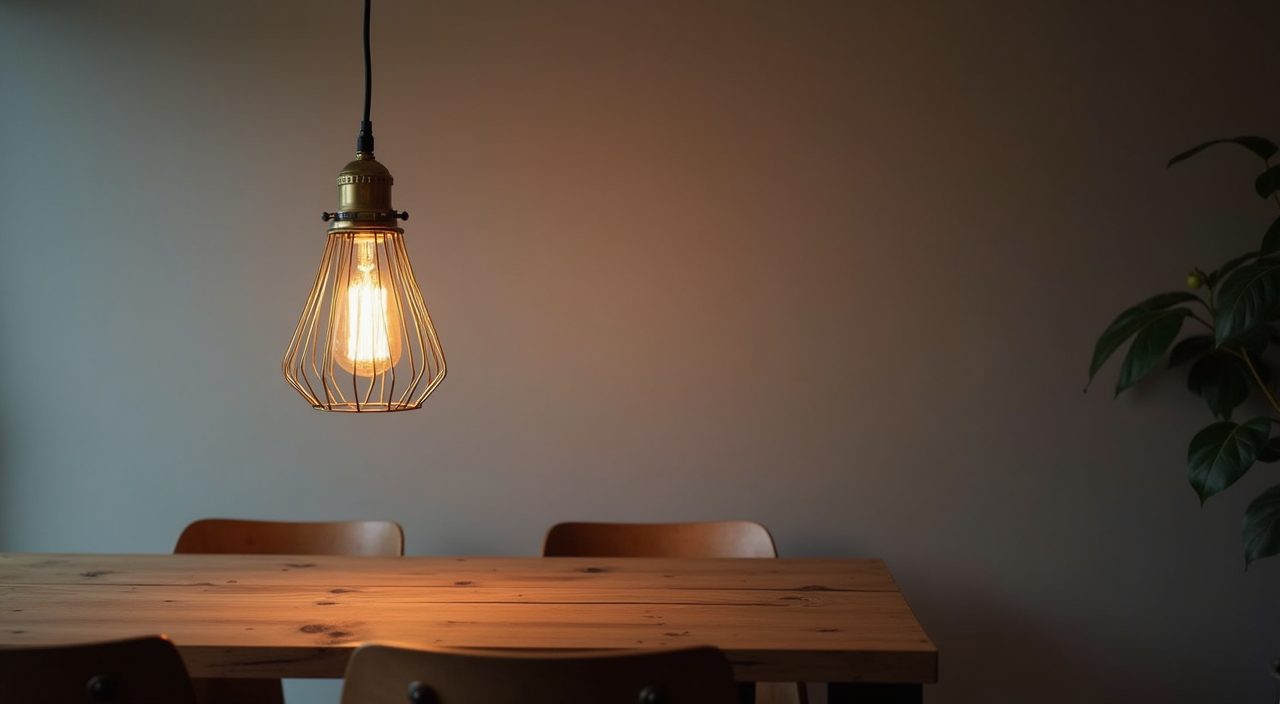
Industrial lighting is about layers and visible fixtures, but a low HDB ceiling cannot take a big cluster of hanging pendants without feeling cramped. Use a partial false ceiling or an L-box with recessed downlights for general light, add a black track light with adjustable heads to wash the feature wall, and place one or two statement pendants only over defined zones such as the dining table or a reading corner.
Go with warm white LED, around 3000K, for the main living area. Cool daylight temperatures make grey and concrete surfaces look clinical, whereas warm white keeps the raw materials cozy in the evening.
- Track lights: flexible, no big soffit needed, great for highlighting brick or art.
- Cage or Edison-style pendants: use sparingly over the dining table so they do not crowd head height.
- Dimmers: let the same room switch from bright and functional to relaxed at night.
Keep storage handsome and hidden in equal measure
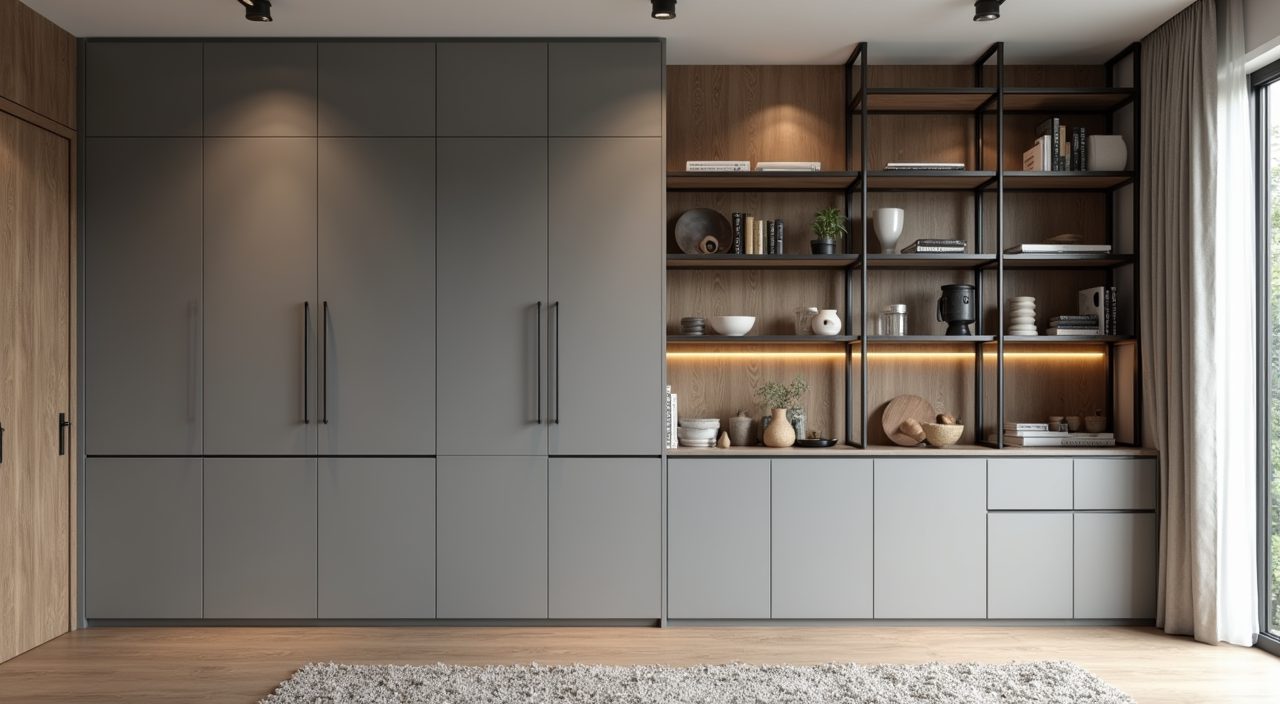
Industrial open shelving looks great in photos, but open displays gather dust fast in Singapore and clutter reads harshly against a minimal raw backdrop. The workable balance is a mix: a run of full-height carpentry with flat, handleless fronts in a matte grey or wood laminate for the bulk of your storage, plus a short stretch of black metal open shelving for the few pieces you actually want on show.
In a 4-room flat, building storage up to the ceiling along one wall reclaims space you would otherwise lose, and a laminate or fluted finish hides fingerprints and holds up far better to humidity than untreated timber.
Let the tropical light and greenery do half the work
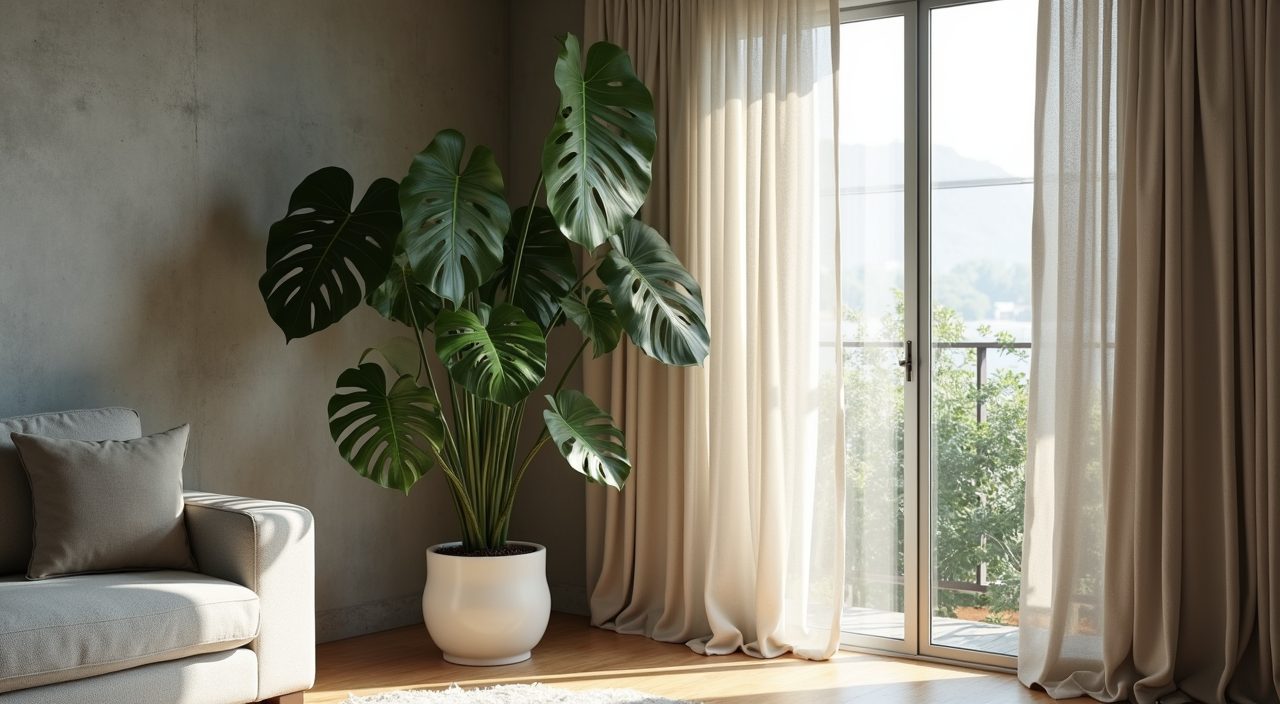
Singapore daylight is generous, so keep window treatments simple: day-and-night blinds or light linen curtains rather than heavy drapes. Bare or minimally dressed windows suit the industrial look and let sunlight bring out the texture of concrete, brick, and metal through the day.
A few large-leaf plants (fiddle-leaf fig, monstera, or a sturdy snake plant for lower-light corners) are the classic industrial softener and they thrive in our climate. The contrast of green against grey and black is what makes the whole scheme feel alive rather than austere.
What to plan and budget for
Industrial can be one of the more budget-friendly styles because raw and exposed finishes mean less fine carpentry, but the cost swings a lot with how many feature surfaces and how much built-in storage you commit to. As a rough guide, a light-touch refresh (feature wall, lighting, furniture, paint) sits at the lower end, while a fuller renovation with cement-look flooring, a false ceiling, metal partitions, and floor-to-ceiling carpentry moves well up the range. Get itemised quotes so you can see where the money actually goes, and prioritise the one or two features that carry the look rather than treating every wall.
The finishes that define this style, concrete screed or microcement, metal framing and partitions, false ceilings, and feature-wall panelling, all need proper installation and moisture treatment to survive our humidity. If you are ready to move from mood board to a real space, plan the work with a contractor who can handle the renovation, electrical, and plumbing together. A coordinated industrial living room design Singapore renovation avoids the gaps and finger-pointing that happen when trades are hired piecemeal.
Frequently asked questions
Does an industrial living room work in a small HDB flat? Yes, as long as you keep the base palette light and limit raw materials to one or two feature areas. Full charcoal walls or brick on every surface will make a compact room feel smaller and darker, so treat industrial as an accent language rather than covering everything.
Is exposed concrete a good idea in Singapore's humid climate? It can be, but only if it is properly sealed and maintained. Unsealed cement absorbs moisture, stains, and can feel damp, so many homeowners choose cement-look porcelain tile or microcement on a feature wall instead of a full raw-concrete floor for easier upkeep.
How do I stop industrial style from feeling cold and unwelcoming? Layer in warmth: mid-tone wood, a fabric sofa, a soft rug, warm white 3000K lighting, and a few large plants. The raw metal and concrete provide the character, and the wood and textiles make it a room you actually want to relax in.
Is industrial cheaper than other renovation styles? Often it can be, since exposed finishes reduce fine carpentry, but the final cost depends on how much you build in. Cement flooring, false ceilings, metal partitions, and floor-to-ceiling storage add up, so get an itemised quote before assuming it will be the budget option.