Japandi Master Bedroom Design Ideas for Singapore Homes
Practical Japandi master bedroom ideas for Singapore HDB flats and condos: palettes, materials, storage and lighting that suit our heat and humidity.
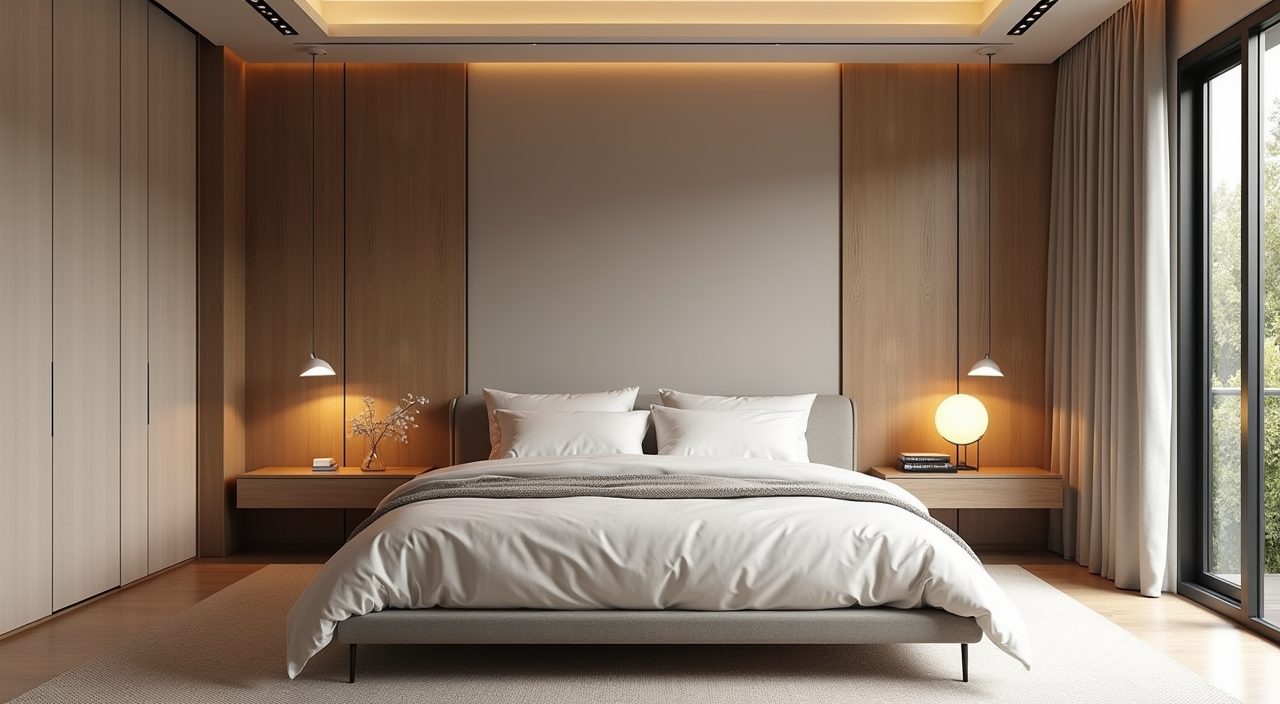
To design a Japandi master bedroom well in a Singapore home, keep the palette warm and muted, choose a low platform bed, and use natural materials like oak, rattan and linen against off-white or greige walls. Build in flush, handleless storage to keep the small footprint calm, and layer soft, warm lighting instead of one bright ceiling light. The look works here because it stays visually quiet in tight HDB and condo bedrooms while tolerating our heat and humidity if you pick the right finishes.
Japandi blends Japanese restraint with Scandinavian warmth, which is a good fit for the typical Singapore master bedroom of roughly 11 to 14 square metres in a BTO or resale flat, or a little more in a condo. The style leans on fewer, better pieces and open floor space, so it reads well when you cannot knock down walls. The tricky part locally is that some classic Japandi materials warp or grow mould in humidity, so the ideas below are chosen to look right and last.
Start with a warm, muted palette that suits tropical light
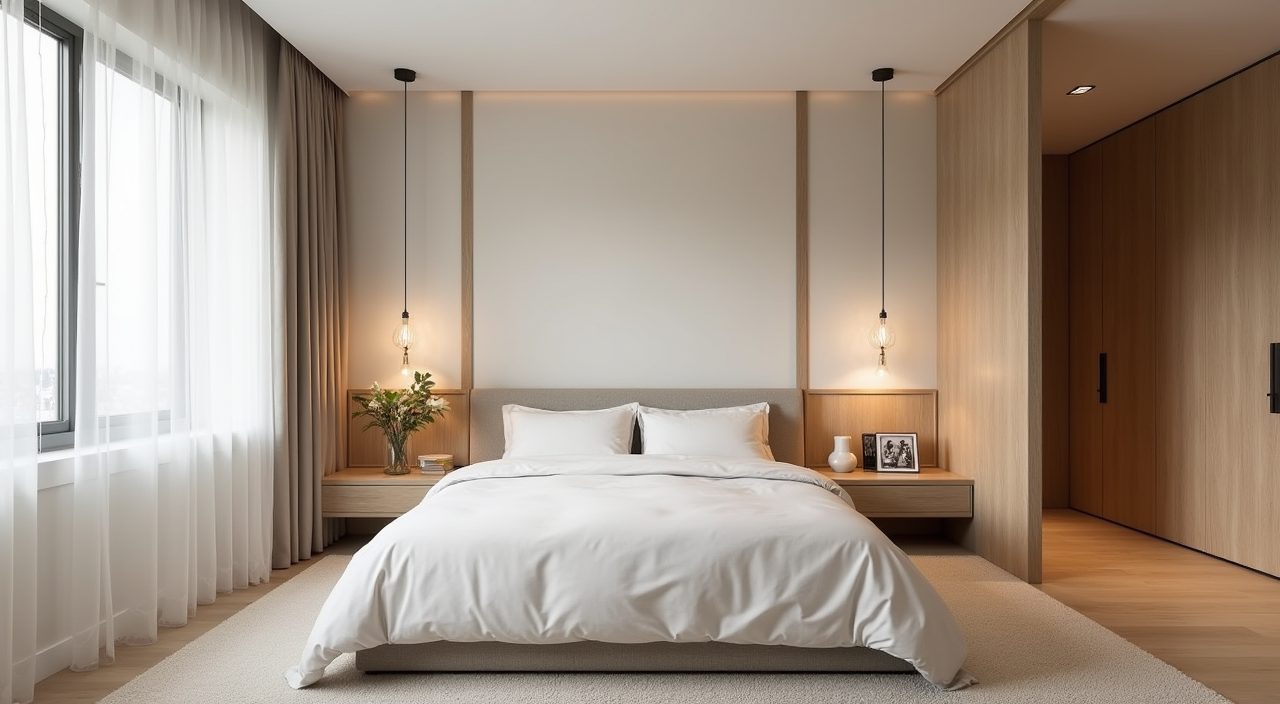
Singapore daylight is bright and slightly blue, especially in north and south facing units, so cool grey walls can feel clinical. Anchor the room with warm neutrals: off-white, oatmeal, soft greige or a pale clay, then bring in one deeper grounding tone through timber or a charcoal accent. This keeps the room feeling restful morning and night without going stark.
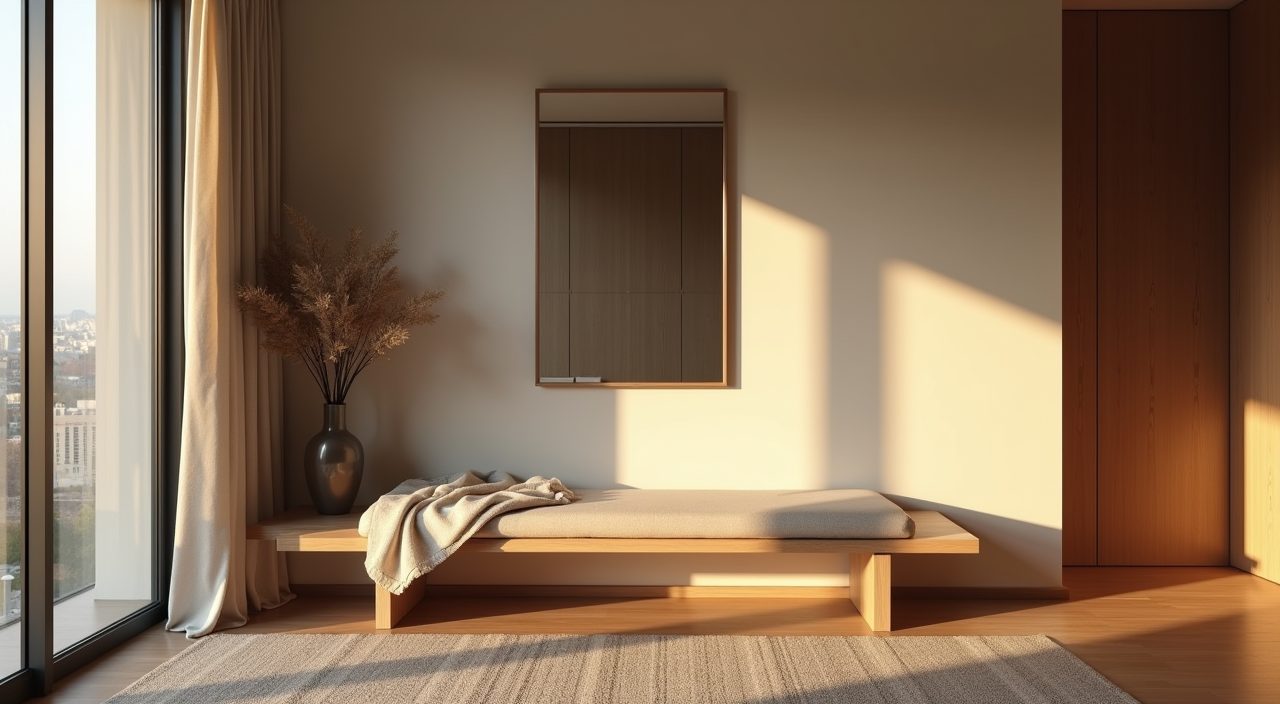
Reserve black for small doses: a slim mirror frame, cabinet handles if you use any, or the legs of a bench. Large black surfaces show dust and feel heavy in a compact room, so treat it as punctuation, not a main colour.
- Walls: off-white, oatmeal, greige or pale clay in a matte or eggshell finish.
- Timber tones: light oak, ash or walnut for warmth and grounding.
- Accents: muted sage, terracotta or charcoal used sparingly on textiles.
Choose a low platform bed to open up the floor
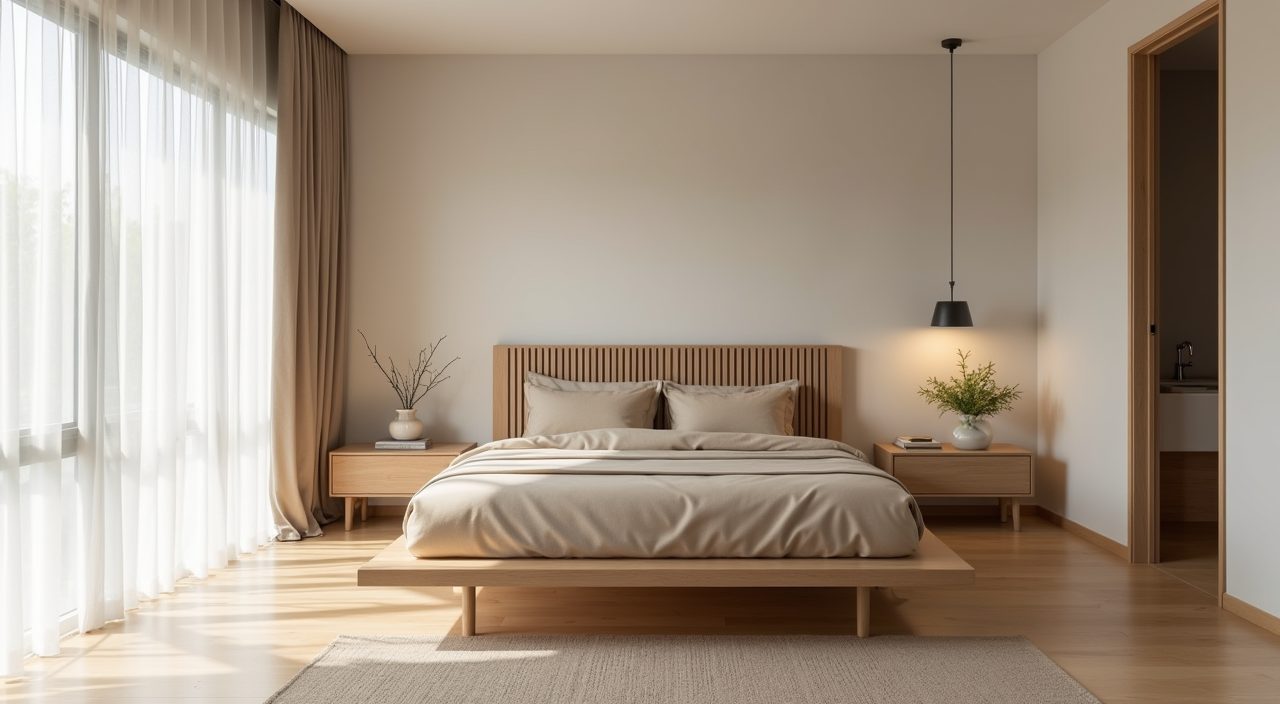
A low bed is the signature Japandi move and it genuinely helps small Singapore bedrooms feel larger, because more visible floor reads as more space. A platform or near floor frame in light timber, ideally with a slim upholstered or slatted headboard, gives you the calm horizontal line the style is built around.
Be practical about our climate. Skip solid boxed bases that trap heat and moisture against the mattress. A slatted platform lets air move underneath, which matters in humidity, and it makes the underside easier to keep clean. If you need storage, a low frame with a couple of hidden drawers beats a bulky divan with a lift up base that seals in damp air.
Use natural materials that can handle humidity
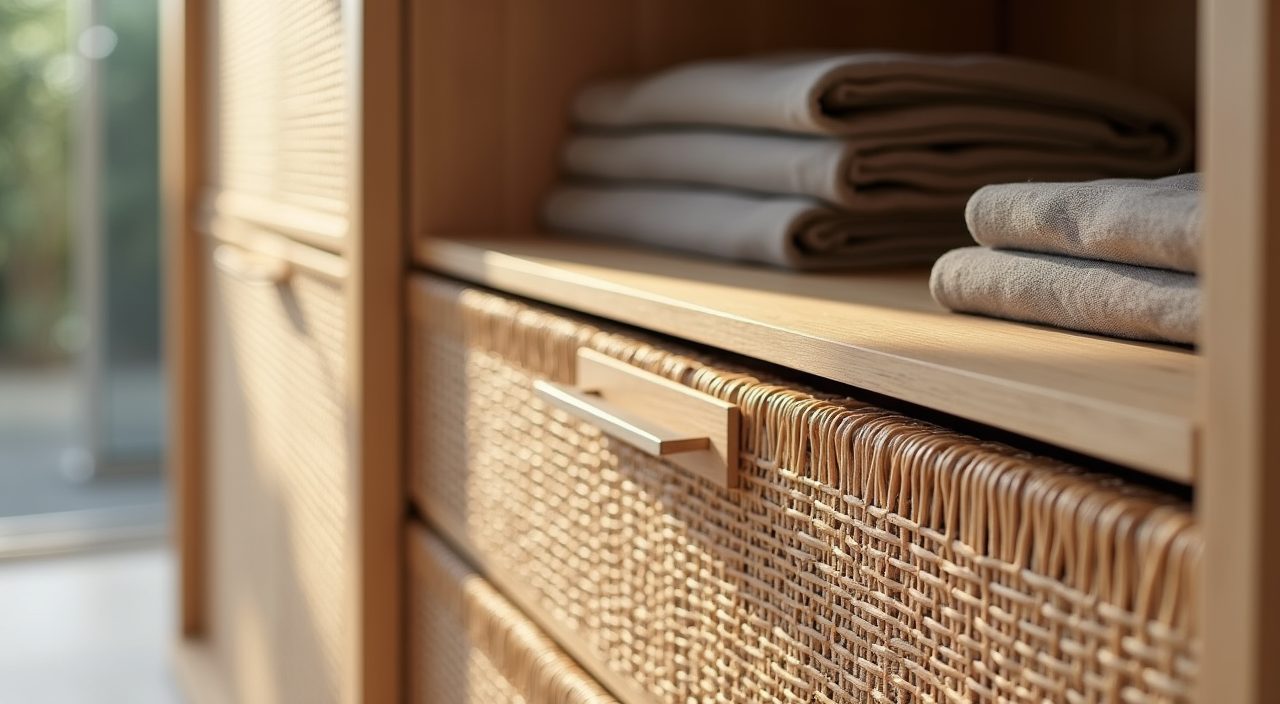
Wood, rattan, linen and paper are the heart of Japandi, but not all of them behave the same way in Singapore. Solid timber and good veneer are fine when sealed properly. Rattan and cane look beautiful on a headboard or wardrobe insert, though they can attract dust and, in very damp rooms, need airflow to avoid mould, so keep them away from a wall that gets condensation from an aircon.
For anything that touches humidity daily, choose moisture tolerant options. Engineered wood and quality laminate that mimics oak hold up better than untreated solid wood in a room that runs the aircon hard, then sits humid when it is off. Linen and cotton bedding breathe better than synthetics in the heat and suit the muted palette.
Build storage in flush and handleless to keep it calm
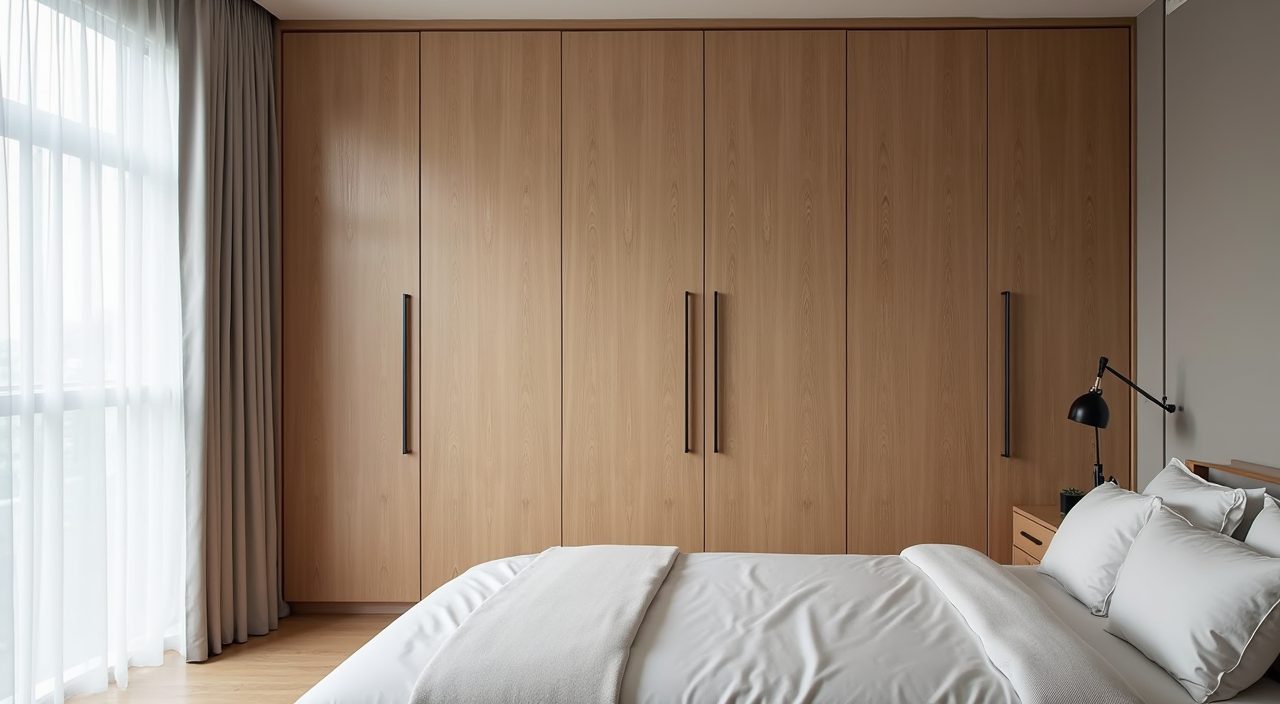
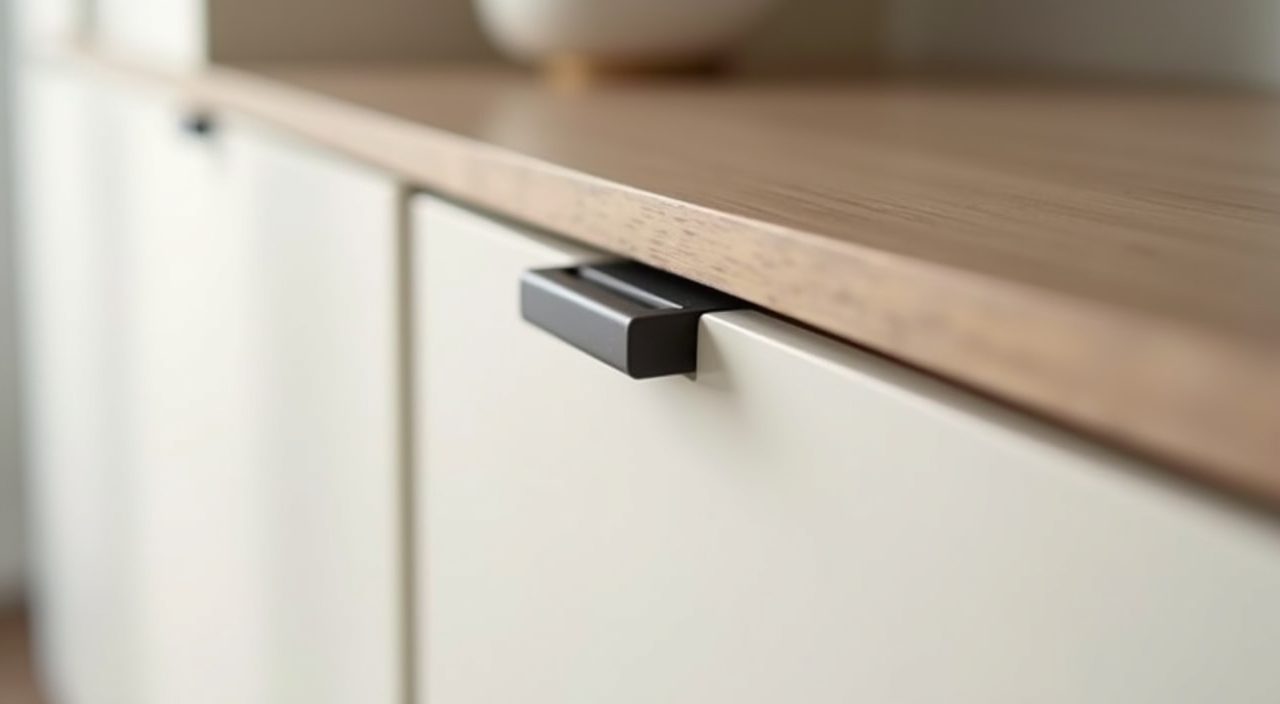
Clutter is the enemy of Japandi, and Singapore bedrooms rarely have space to spare, so the storage plan matters more than any single decorative piece. A full height, built in wardrobe in a light wood finish or matte off-white, with push to open or recessed channel handles, disappears into the wall and preserves the clean lines. Carpentry that runs floor to ceiling also stops the dust ledge you get above short wardrobes.
If you are working with an existing wardrobe, you can still get the effect by refacing doors in a light laminate and swapping loud handles for slim edge pulls. The goal is unbroken, quiet surfaces so the eye has somewhere to rest in a busy little room.
Layer warm lighting instead of one bright ceiling light
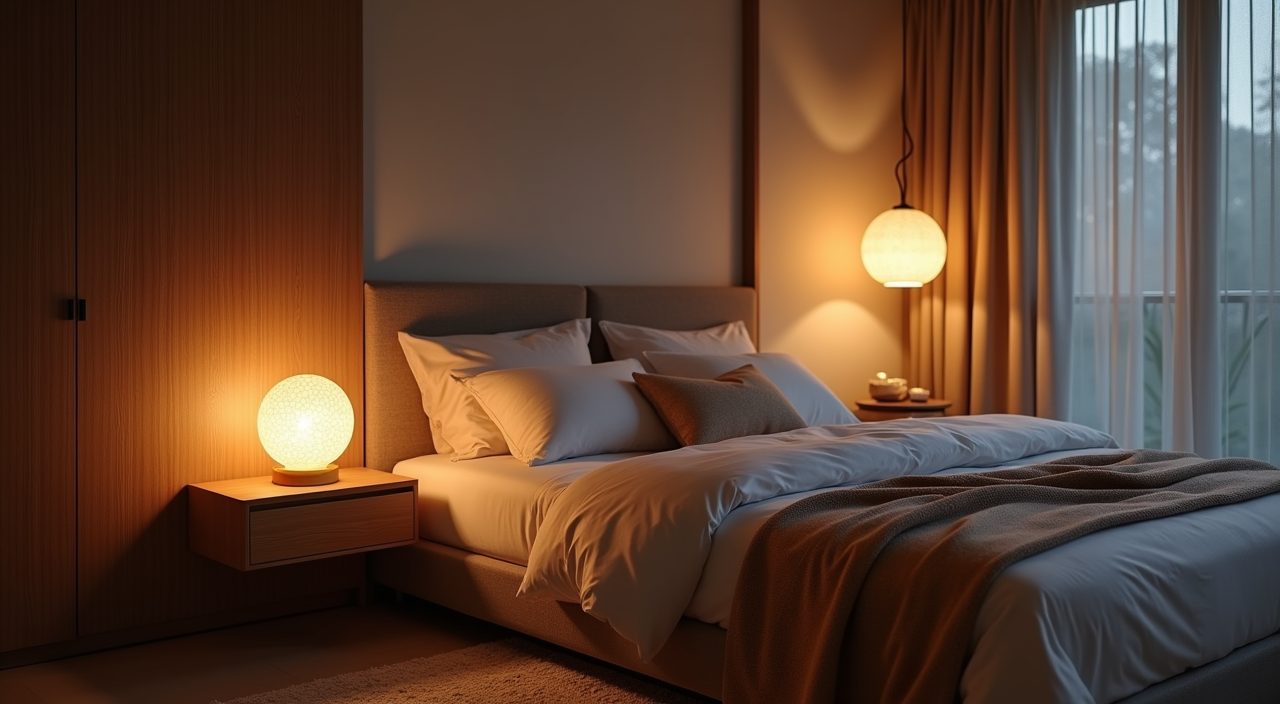
The standard developer downlight or a single fluorescent tube kills the mood Japandi depends on. Aim for warm white light around 2700K to 3000K and split it across a few sources: a soft ceiling wash, a bedside pendant or wall reading light, and a low lamp for evening. Dimmable circuits let the same room go from getting ready in the morning to winding down at night.
Paper or fabric shades, rice paper style pendants and rattan diffusers all fit the look and soften the light nicely. If you want any of this hardwired, such as wall lights flanking the bed or a dimmer, that is electrical work best done during renovation before the walls are sealed and painted.
Filter the light and hide the aircon lines
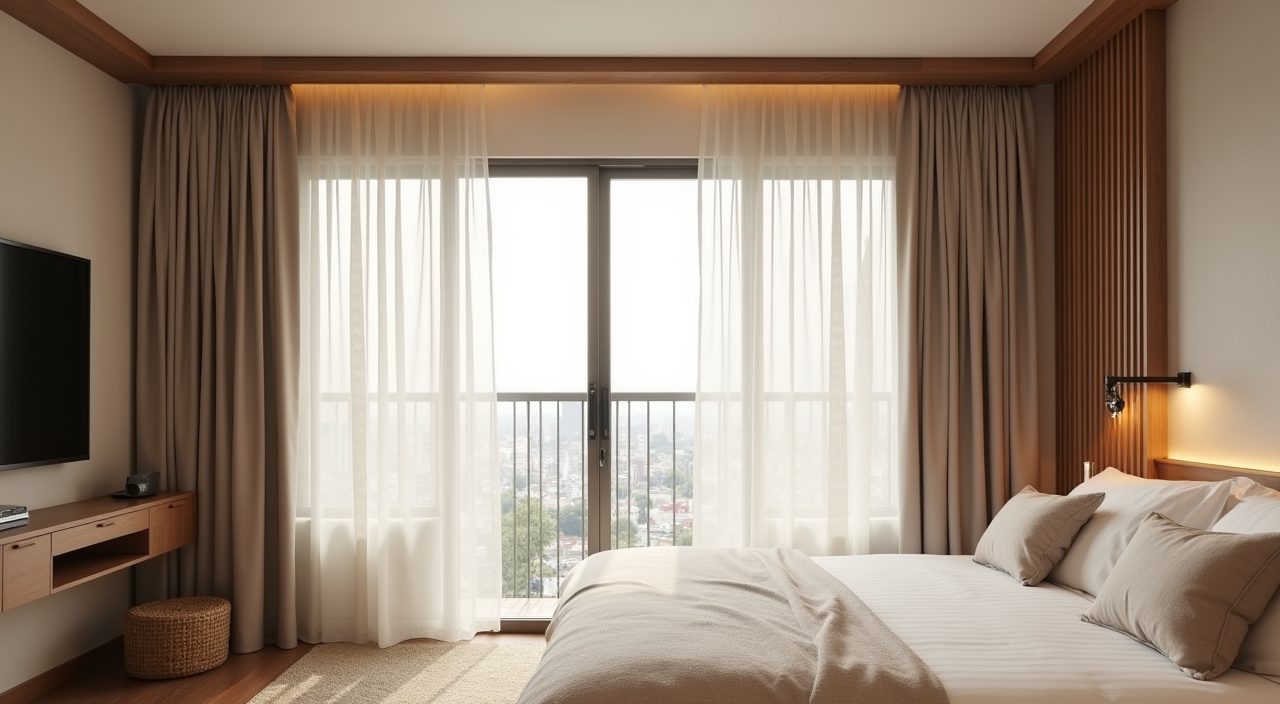
Most Singapore master bedrooms face strong direct sun at some point in the day, and glare undoes the soft Japandi feel. Layer a light linen or cotton sheer for daytime diffusion with a blackout blind or curtain behind it for sleep. Floor to ceiling curtains in an oatmeal or soft grey also make windows feel taller and the room calmer.
The wall mounted aircon and its trunking are the least Japandi thing in the room. Plan the unit position early so the piping runs cleanly, and consider a slim timber or plaster cornice, or a false ceiling section, to conceal the trunking. It is much cheaper to sort this during renovation than to chase and rehide pipes later.
Add greenery and a few honest handmade pieces
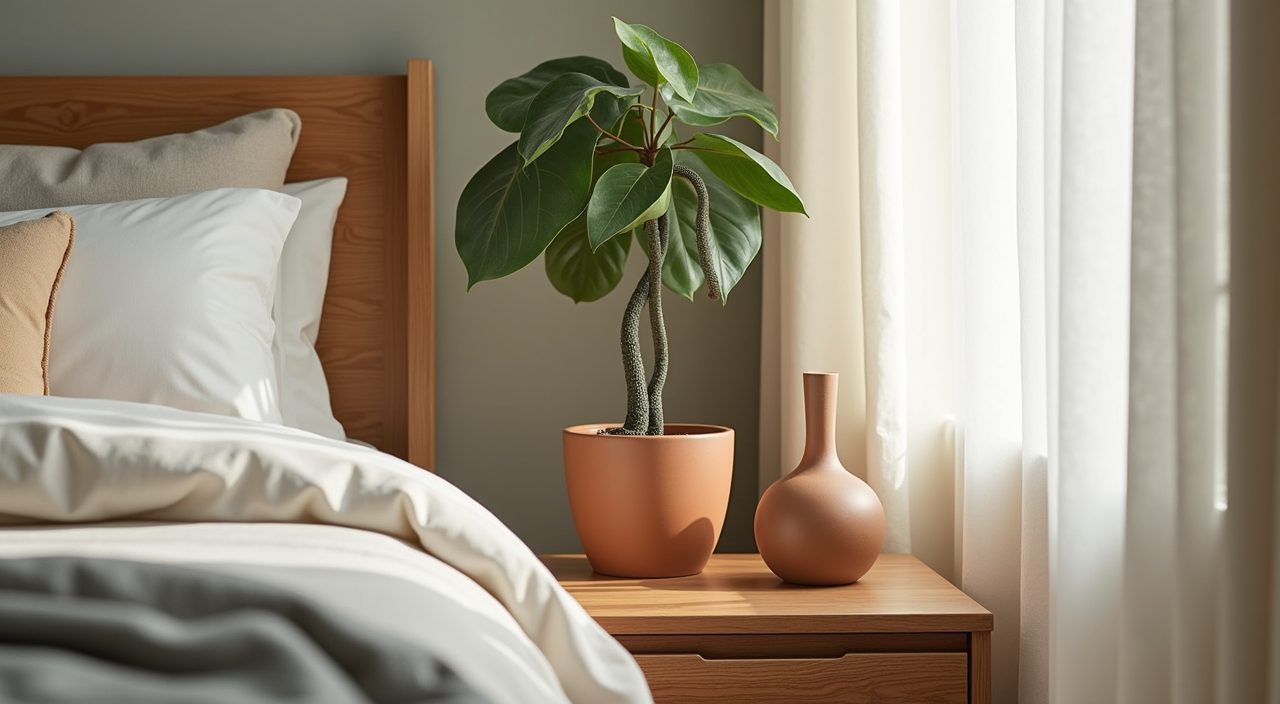
Japandi rooms are spare, but not cold, and one or two living elements bring the warmth. A single sculptural plant that tolerates indoor light and humidity, such as a snake plant or a small fiddle leaf near the window, adds life without clutter. Keep pots simple in matte ceramic or terracotta.
Finish with a small number of tactile, imperfect objects: a ceramic vase, a linen throw, a wooden tray on the nightstand. The Japandi idea of wabi sabi means you want a few things that feel made by hand rather than many that feel mass produced. Resist filling every surface.
Keep the layout open and let the floor breathe
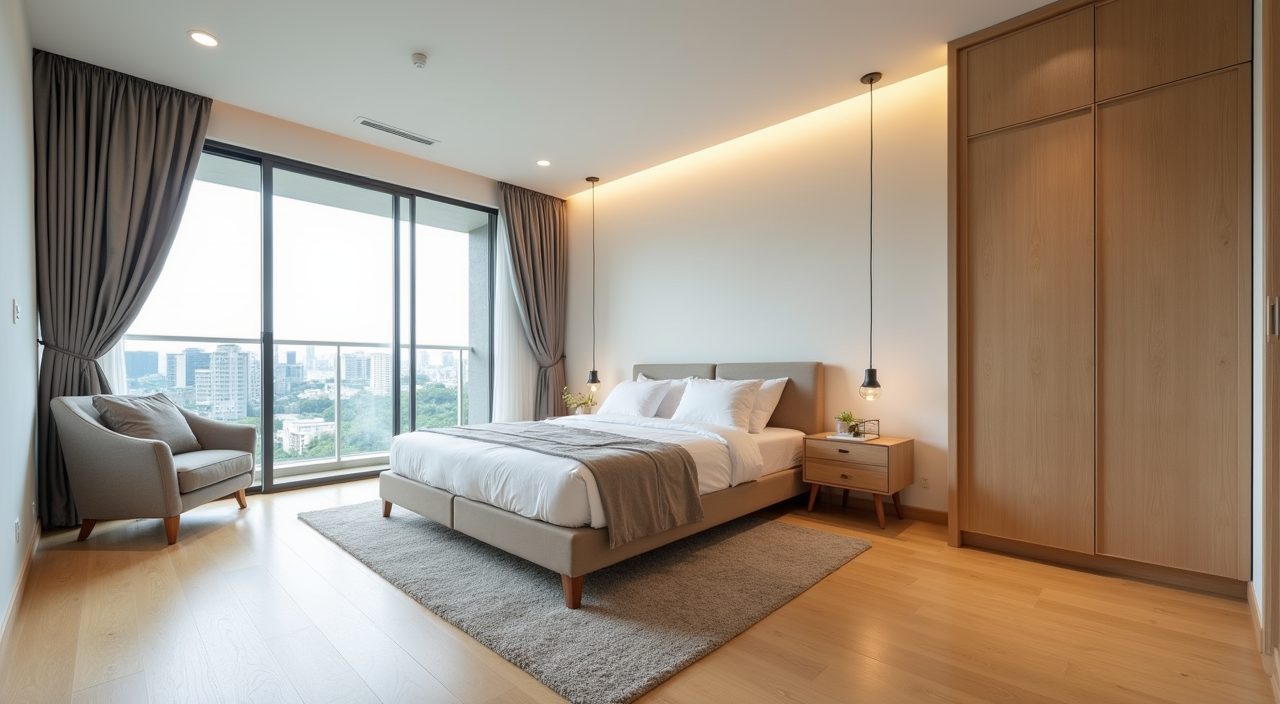
In an 11 to 14 square metre bedroom, the fastest way to ruin a calm scheme is to over furnish it. Give the bed a clear path on at least one side, avoid pushing a chunky bench and multiple side tables into the walk space, and let the floor extend uninterrupted where you can. Empty space is a design feature in Japandi, not wasted room.
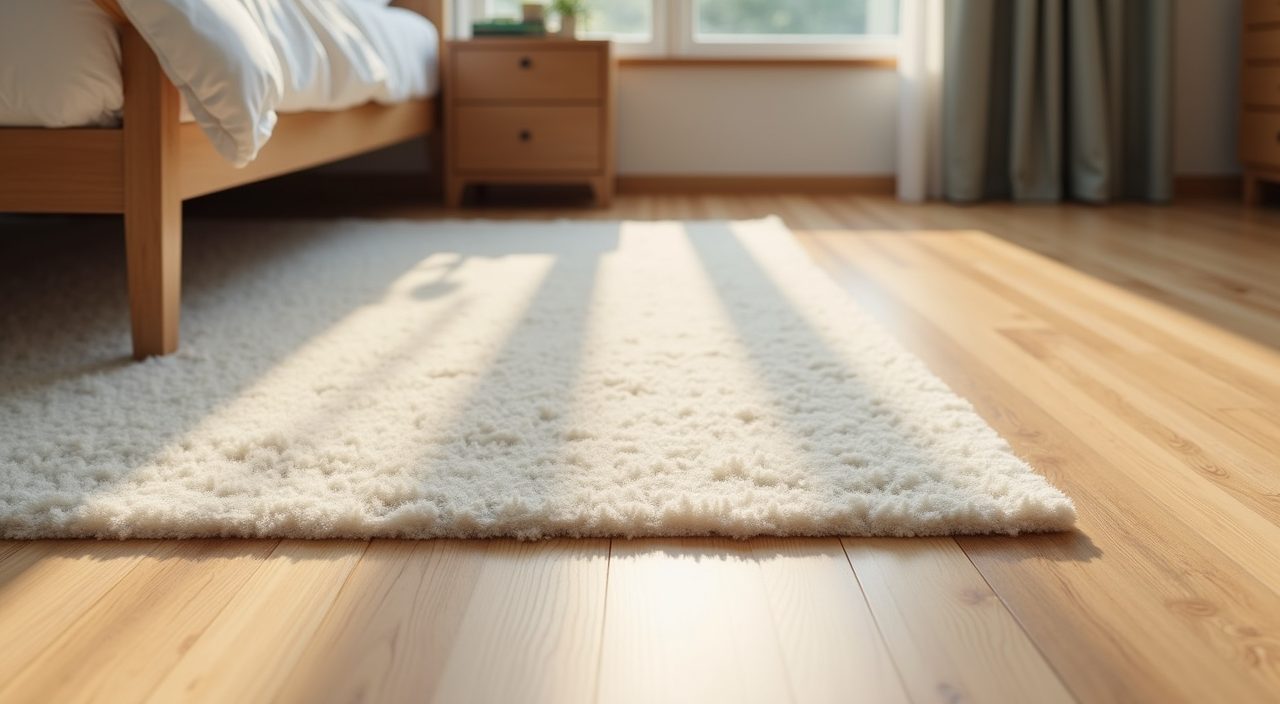
For flooring, a light oak look vinyl or laminate reads warm and works well underfoot in our climate, and a low pile wool blend rug by the bed adds softness without collecting the damp the way a thick shag can. Match the floor tone to the timber in the furniture so the room feels coherent.
What to plan and budget for
The biggest spend in a Japandi master bedroom is usually the built in carpentry, since flush wardrobes and clean lines depend on custom joinery rather than off the shelf furniture. Budget for that first, then lighting and any electrical changes such as added wall lights or dimmers, then finishes like flooring, curtains and paint. Furniture and soft styling can be phased in afterward, which helps spread the cost. Costs vary widely with material grade, the amount of carpentry, and whether you are reworking wiring, so get an itemised quote rather than trusting a single lump sum. If you would rather not manage trades separately, a japandi master bedroom design singapore renovation handled by one contractor keeps the carpentry, electrical and finishing work coordinated, so the concealed aircon trunking, hidden storage and warm lighting actually line up the way the design intends.
Frequently asked questions
Does Japandi work in a small HDB bedroom? Yes, and arguably it suits small rooms better than most styles. Its low furniture, muted palette and built in storage all make a compact space feel larger and calmer, as long as you resist over furnishing and keep the floor as open as possible.
Will natural materials like rattan and wood survive Singapore humidity? They can, if you choose and place them well. Seal solid timber properly, favour engineered wood or quality laminate for wardrobes that run against aircon walls, and keep rattan or cane away from surfaces that get condensation, with enough airflow around the room to prevent mould.
How much should I budget for a Japandi master bedroom renovation? It depends mostly on how much custom carpentry you want, plus any electrical and flooring work, so ranges are wide. Built in wardrobes and concealed lighting cost more than freestanding pieces, so decide early which elements must be built in and get an itemised quote for those.
What lighting colour temperature is best for Japandi? Stay warm, around 2700K to 3000K, and use several soft sources on a dimmer rather than one bright ceiling light. Cool white light makes the muted palette look flat and clinical, which works against the restful mood the style is going for.