Mid-Century Modern Bedroom Design Ideas for Singapore Homes
How to design a mid-century modern bedroom for Singapore HDB flats and condos: warm wood, tropical-friendly palettes, smart storage, and light.
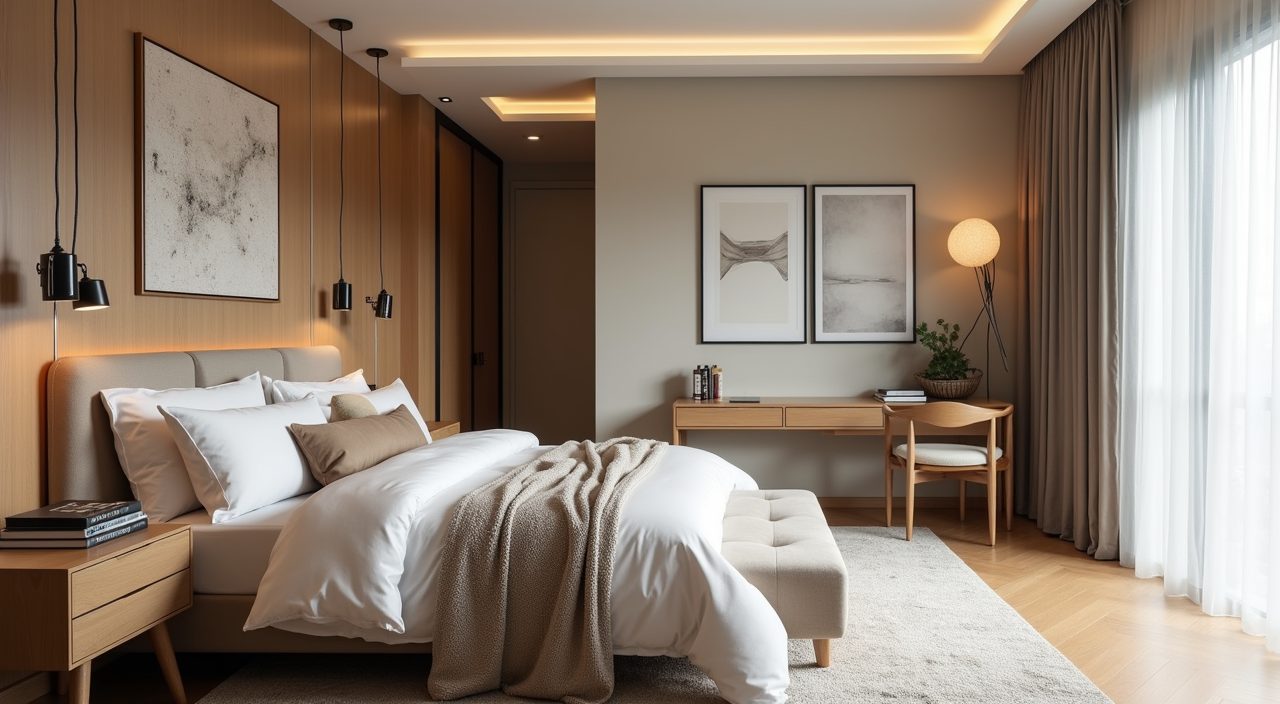
To design a mid-century modern bedroom well in a Singapore home, anchor the room with warm wood tones (teak, walnut, oak), keep the palette to a few muted colours plus one accent, and choose low, clean-lined furniture that leaves floor and wall space open. In a compact HDB or condo bedroom, mid-century works because it favours slim legs, built-in storage, and honest materials that read calm rather than cluttered. Layer in soft, warm lighting and a few tactile touches (rattan, wool, brass) so the space feels lived-in and not like a showroom.
Mid-century modern suits local flats surprisingly well. The style was born for smaller post-war homes, so its proportions fit a typical 3-room or 4-room HDB master bedroom (roughly 10 to 14 square metres) and a condo bedroom that is often tighter than the brochure suggests. The main adjustments for Singapore are practical: our strong equatorial light, high humidity, and the fact that most bedrooms sit against a single window wall. The ideas below are written around those realities.
Start with a warm wood base instead of an all-white room
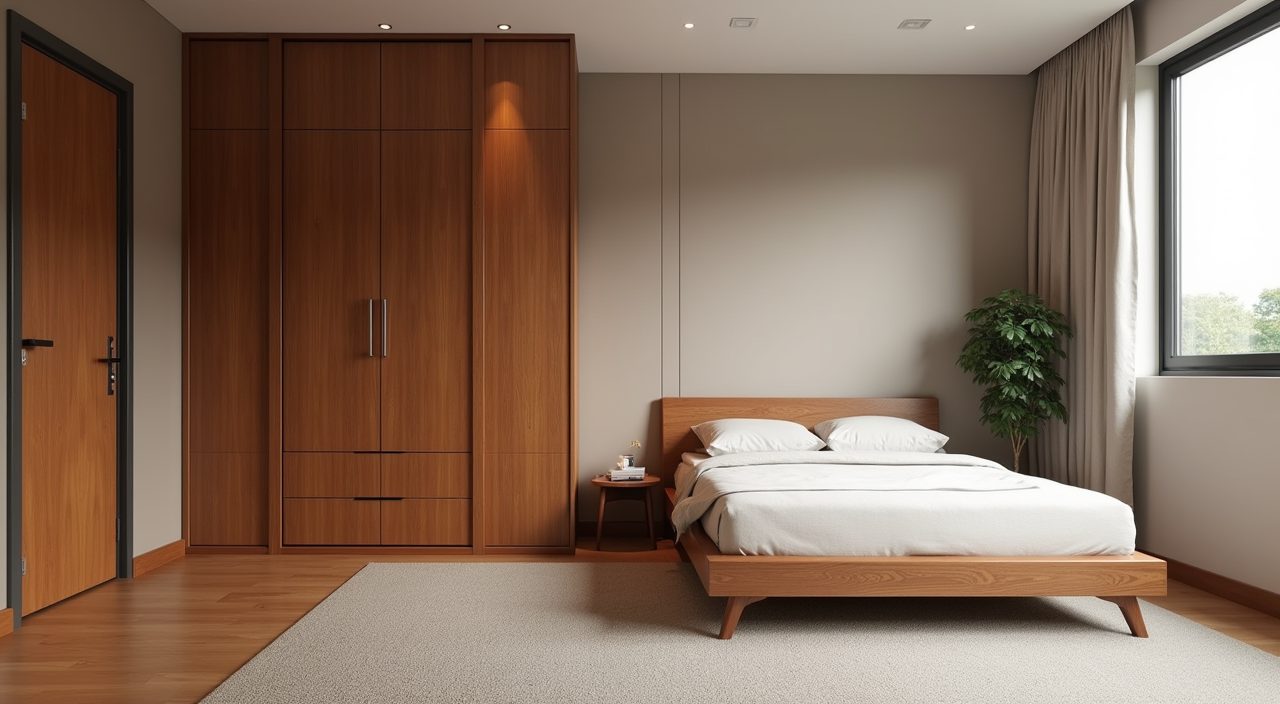
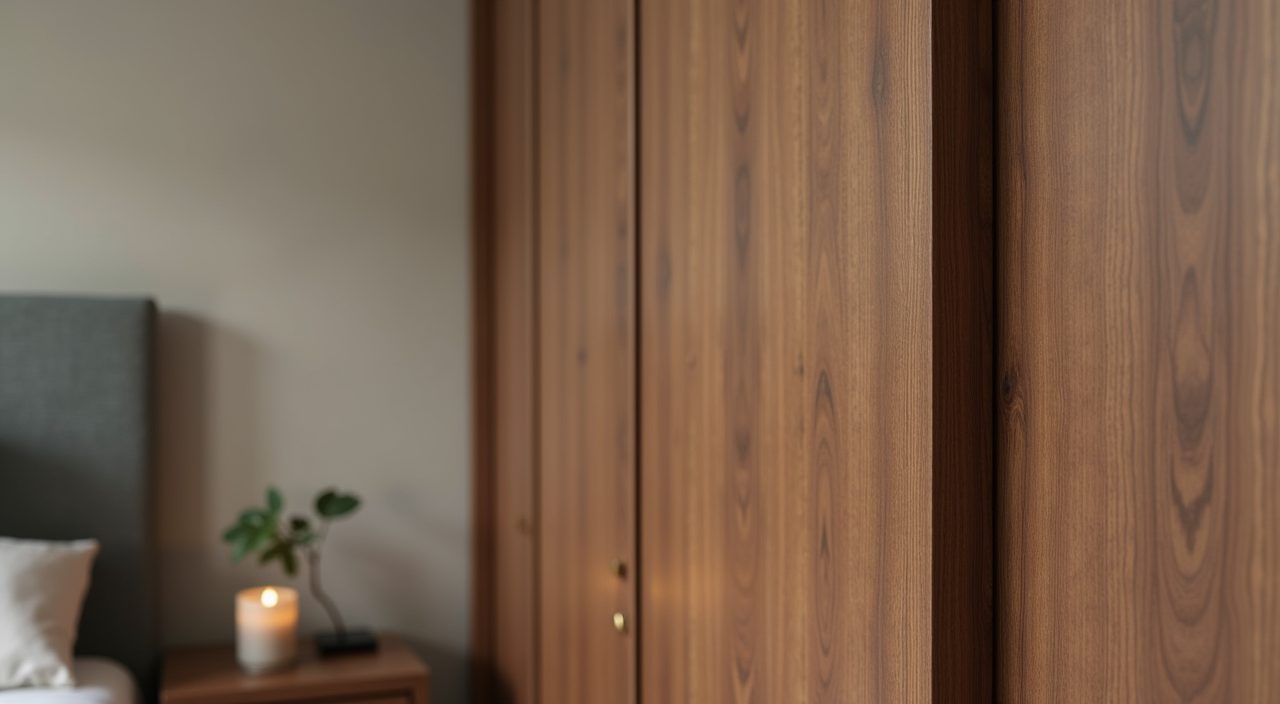
The signature of mid-century is honest timber, so let wood do the heavy lifting rather than painting everything white. A teak or walnut-veneer wardrobe front, an oak bed frame, or a timber-look laminate feature wall gives the room instant warmth and stops it feeling like a rental. In Singapore's flat, even daylight, warm wood tones also counter the slightly cool, clinical feel that bare white walls can take on.
You rarely need real solid teak, which is expensive and moves with humidity. Good-quality wood-grain laminates and veneers on plywood carcasses give you the look at a fraction of the cost and behave better in our climate. Ask your contractor or carpenter for laminates rated for humidity, and avoid cheap MDF in areas that may get damp near windows or air-con units.
Pick a muted, tropical-friendly palette with one accent
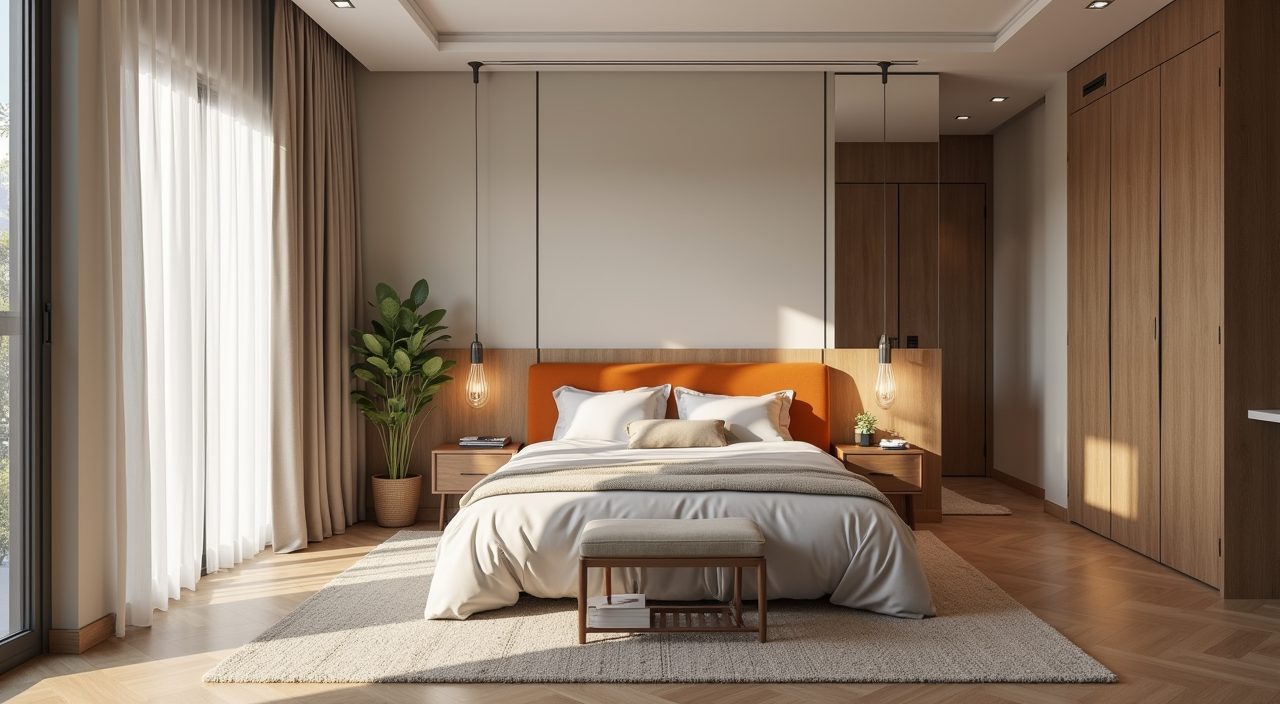
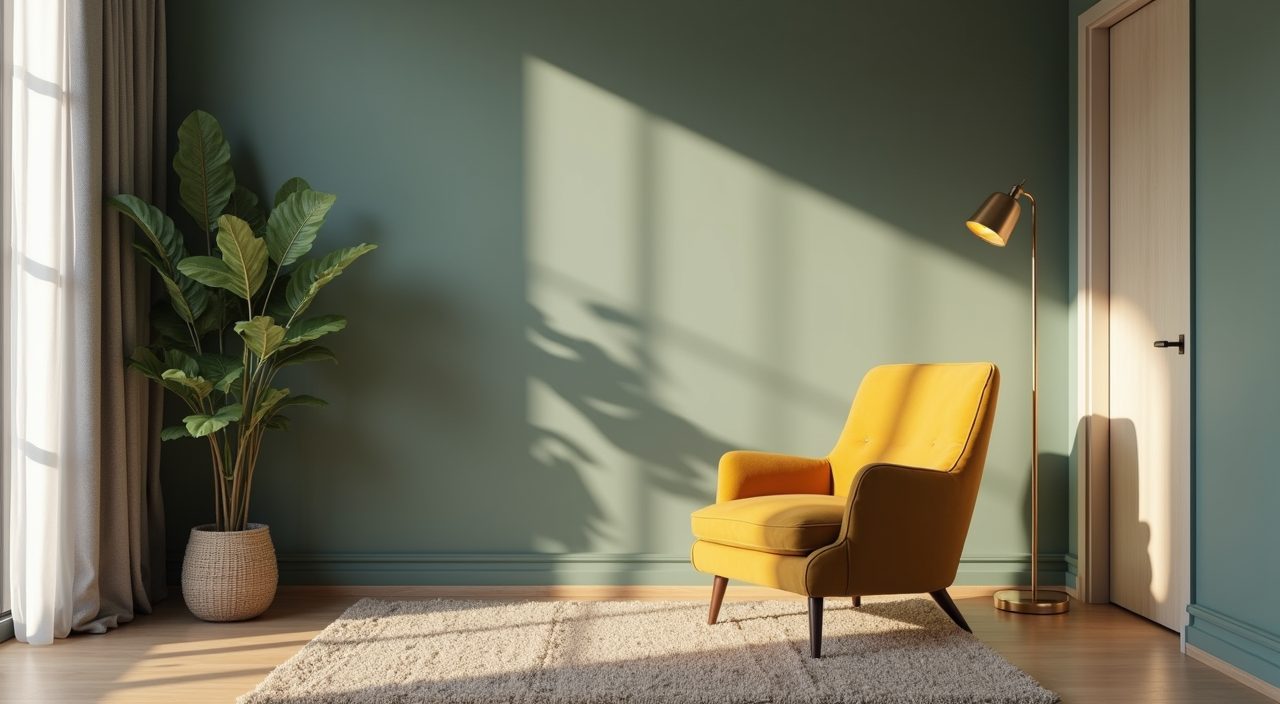
Classic mid-century palettes lean on warm neutrals with earthy or jewel accents. For a Singapore bedroom, keep the base soft (warm white, oatmeal, greige, or a muted sage) so the room stays cool and restful under bright afternoon light, then add a single accent through a headboard, an armchair, or curtains.
Accent colours that read authentically mid-century without overwhelming a small room include burnt orange, mustard, olive green, teal, and rust. Use them in about 10 to 20 percent of the room so the palette feels intentional rather than themed.
- Base neutrals: warm white, oatmeal, greige, muted sage, soft taupe.
- Accent options: burnt orange, mustard, olive, teal, rust, deep mustard-brown.
- Keep bold colour to one or two elements in a compact HDB bedroom so it does not close the space in.
Choose low, leggy furniture to make a small room breathe
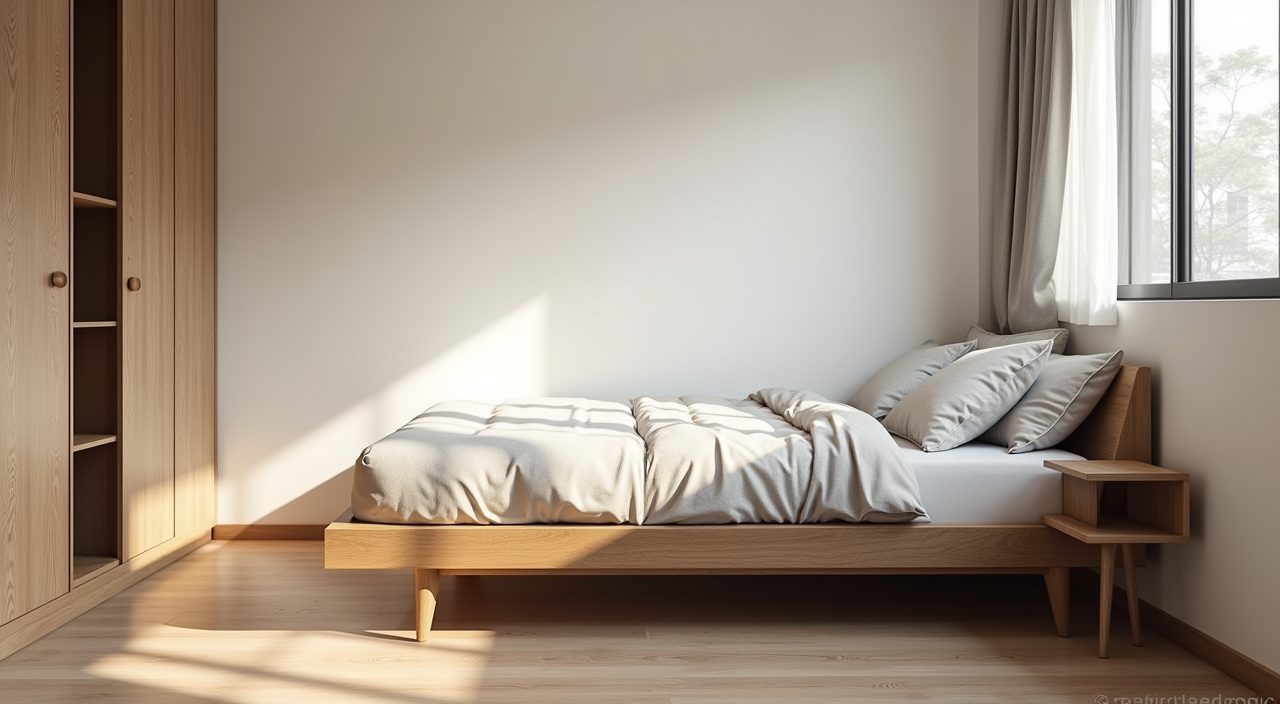
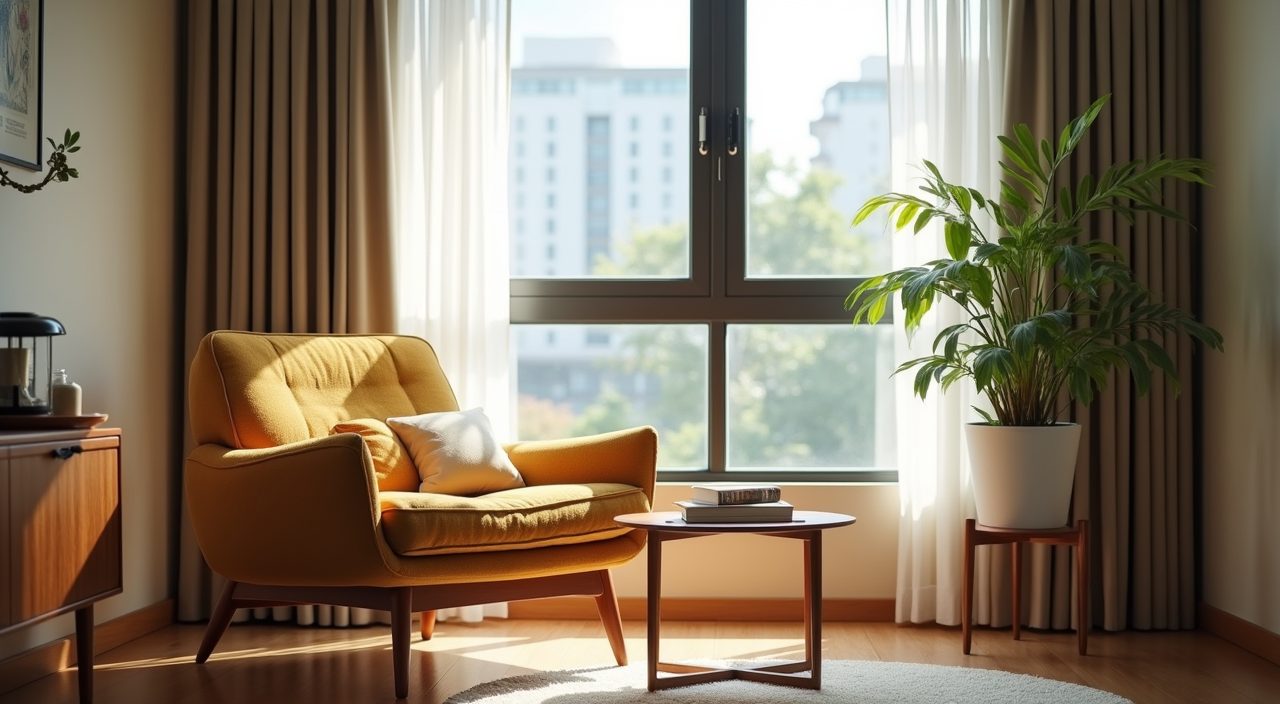
Mid-century furniture sits low and stands on slim, tapered legs, and that is exactly what a tight local bedroom needs. Raised legs let light and floor show through underneath, which tricks the eye into reading the room as larger and less crowded. A low platform bed, a slim bedside table on splayed legs, and a compact lounge chair in the corner will feel far airier than bulky, boxy pieces that sit flush to the floor.
Scale matters more than style here. In a 4-room HDB master bedroom, a king bed often leaves too little walking space, so many homeowners are happier with a queen plus proper side clearance. Measure your walking gaps (aim for at least 60cm on the sides you use) before committing to a bed size.
Build storage in, and hide it behind clean wood fronts
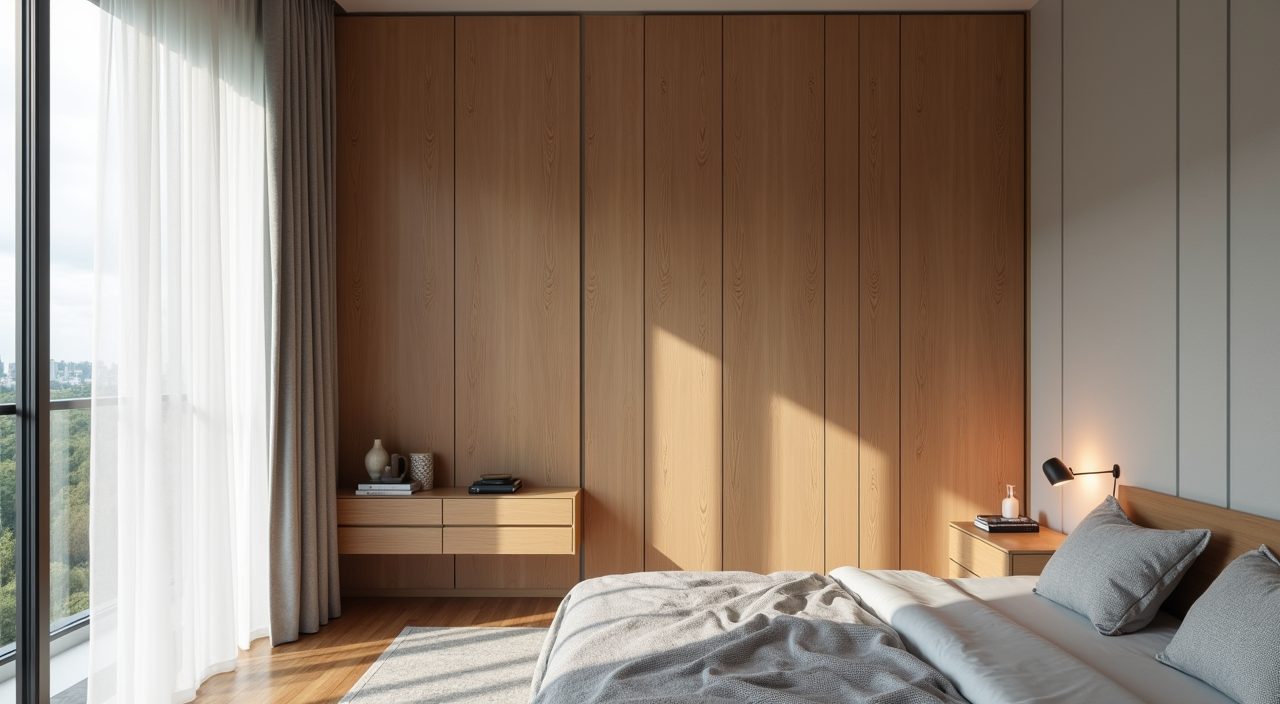
The fastest way to ruin a mid-century look is visible clutter, so storage is a design decision, not an afterthought. In most HDB and condo bedrooms the smart move is a full-height built-in wardrobe with flat, handleless or slim-profile wood-grain doors that read as a single calm plane. This keeps the mess behind one surface and lets the rest of the room stay minimal.
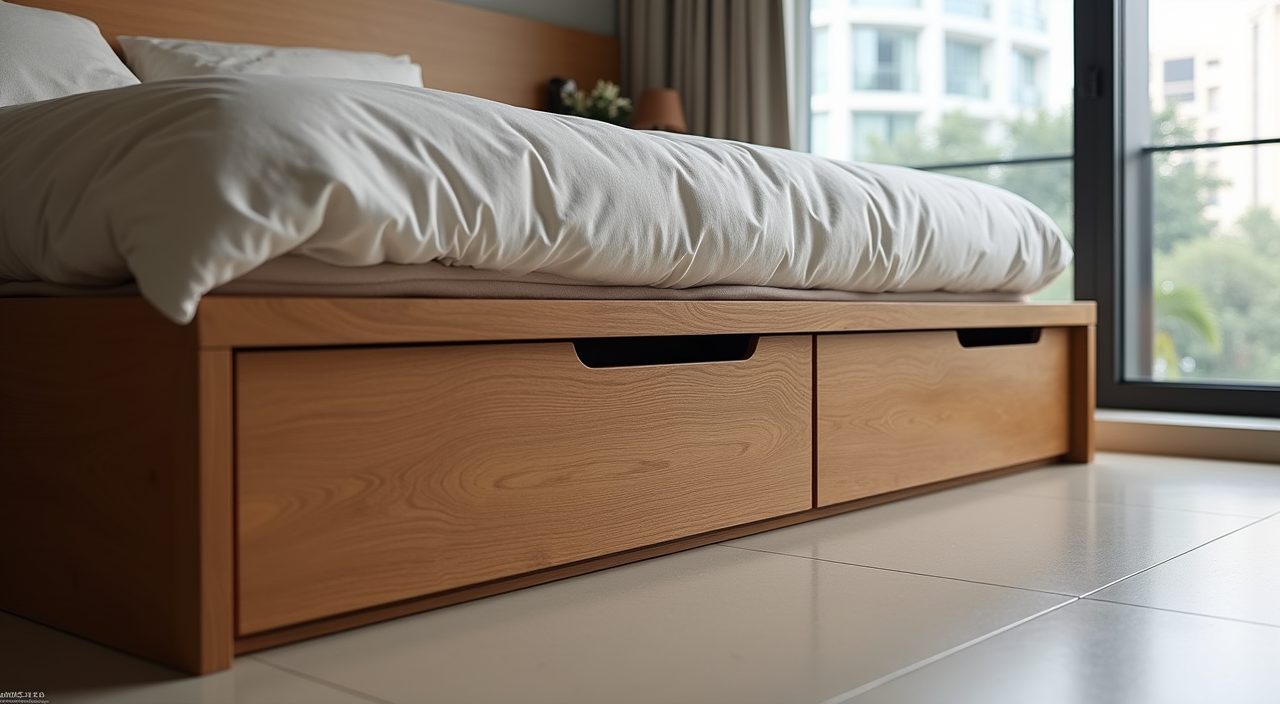
Where you can, add hidden storage under a platform bed and float your bedside units so the floor stays clear. If your room has a bay window or an awkward corner, a built-in bench with drawers turns dead space into storage plus a reading nook, which is very much in the mid-century spirit.
Layer warm lighting instead of relying on the ceiling light
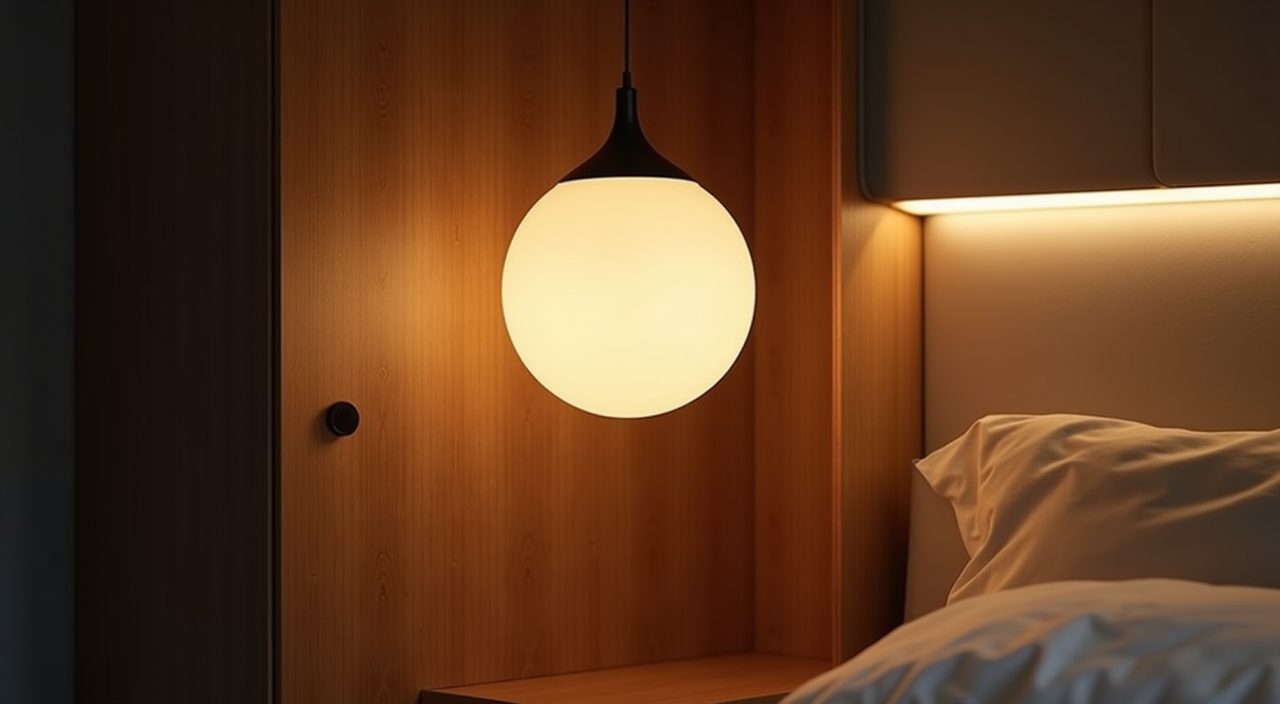
Mid-century interiors are defined by soft, layered light, not a single bright ceiling fixture. Swap or supplement the standard HDB downlight with warmer sources: a sculptural pendant or a globe light for character, bedside table lamps or wall-mounted reading lights, and a warm LED strip tucked above the wardrobe or behind the headboard for a gentle glow.
Aim for warm white bulbs around 2700K to 3000K, which flatter wood tones and feel restful at night. If you are already rewiring or moving points, plan the switch and socket positions early. Adding wall lights, extra bedside points, or a dimmer usually means electrical work, so it is far cheaper to sort during renovation than to retrofit later.
- Statement pendant or globe light for the mid-century focal point.
- Bedside lamps or swing-arm wall lights for reading without the main light on.
- Concealed warm LED strip above the wardrobe or behind the headboard.
- Use 2700K to 3000K bulbs and a dimmer for the main light where possible.
Add a feature wall or headboard as the room's anchor
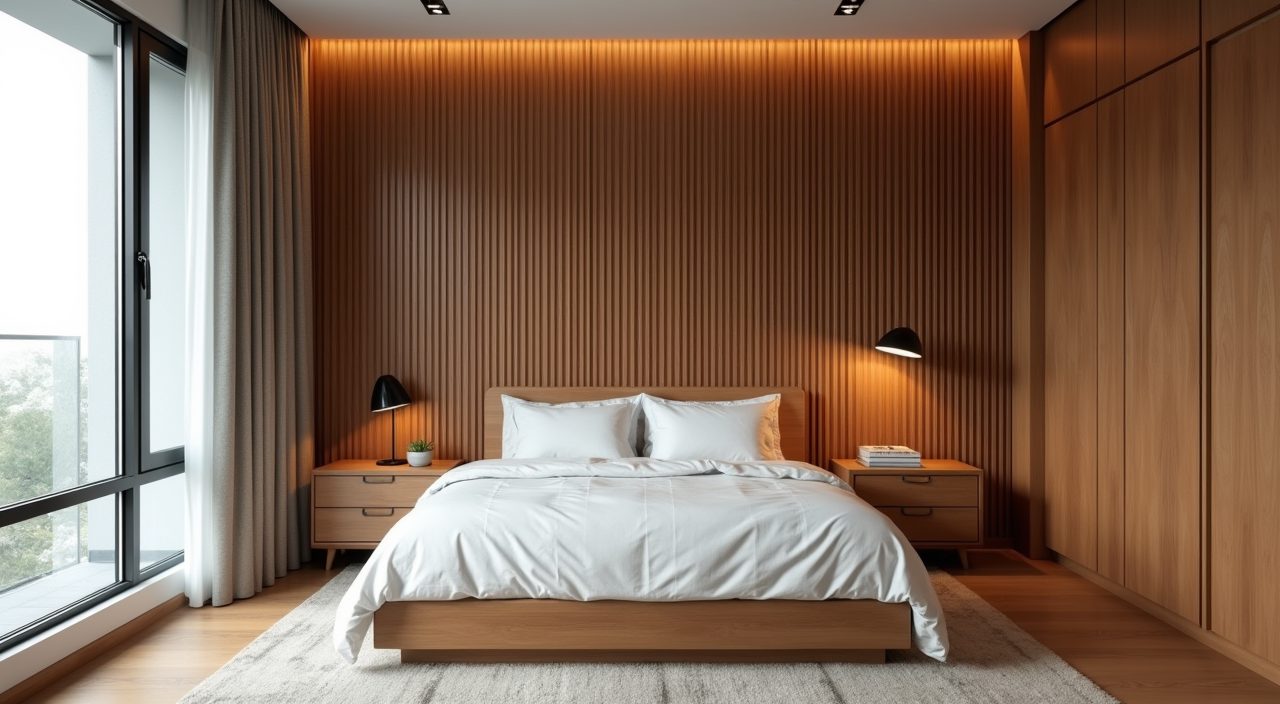
Because most local bedrooms are small and single-windowed, one strong focal point does more than scattering decor around. A slatted timber feature wall behind the bed, a fluted wood panel, or an upholstered headboard in a mid-century fabric gives the room a clear centre and a designed feel without eating floor space.
Timber slat walls are popular here for good reason: they add texture and warmth, help a little with sound, and photograph beautifully. Keep the slats in a warm wood tone and run them behind the bed only, rather than wrapping the whole room, so the effect stays refined and the budget stays sensible.
Mix in tactile natural materials for that lived-in warmth
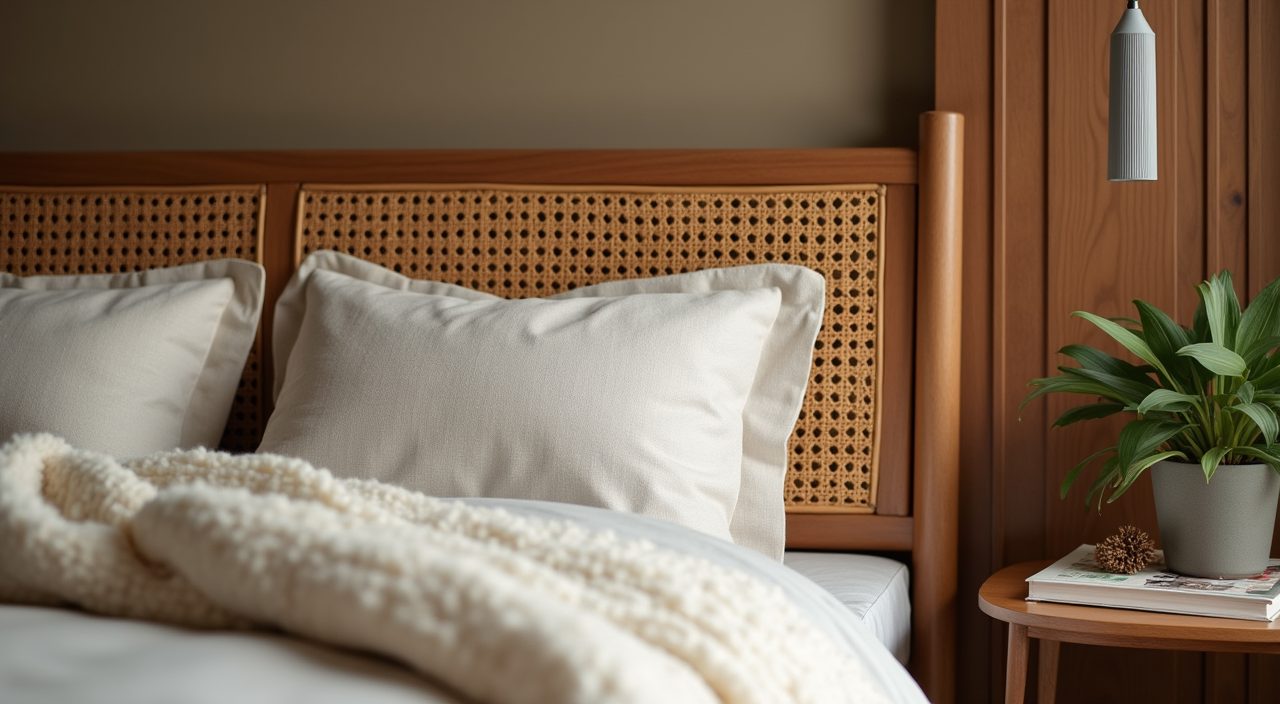
Mid-century modern is warm precisely because it mixes materials: wood with rattan, wool, leather, brass, and a little stone or ceramic. In a Singapore bedroom, a caned or rattan headboard, a wool or boucle throw, brass or matte-black handles, and a low-pile rug add the texture that stops a minimalist room feeling cold.
Be humidity-aware with your choices. Natural rattan and cane can attract moisture and, in a poorly ventilated room, encourage mould, so keep them away from direct air-con drips and run the fan or air-con enough to keep the room dry. Leather and boucle hold up well; just avoid overloading a small bed with cushions you will pile on the floor every night.
Dress the window for glare, heat, and privacy
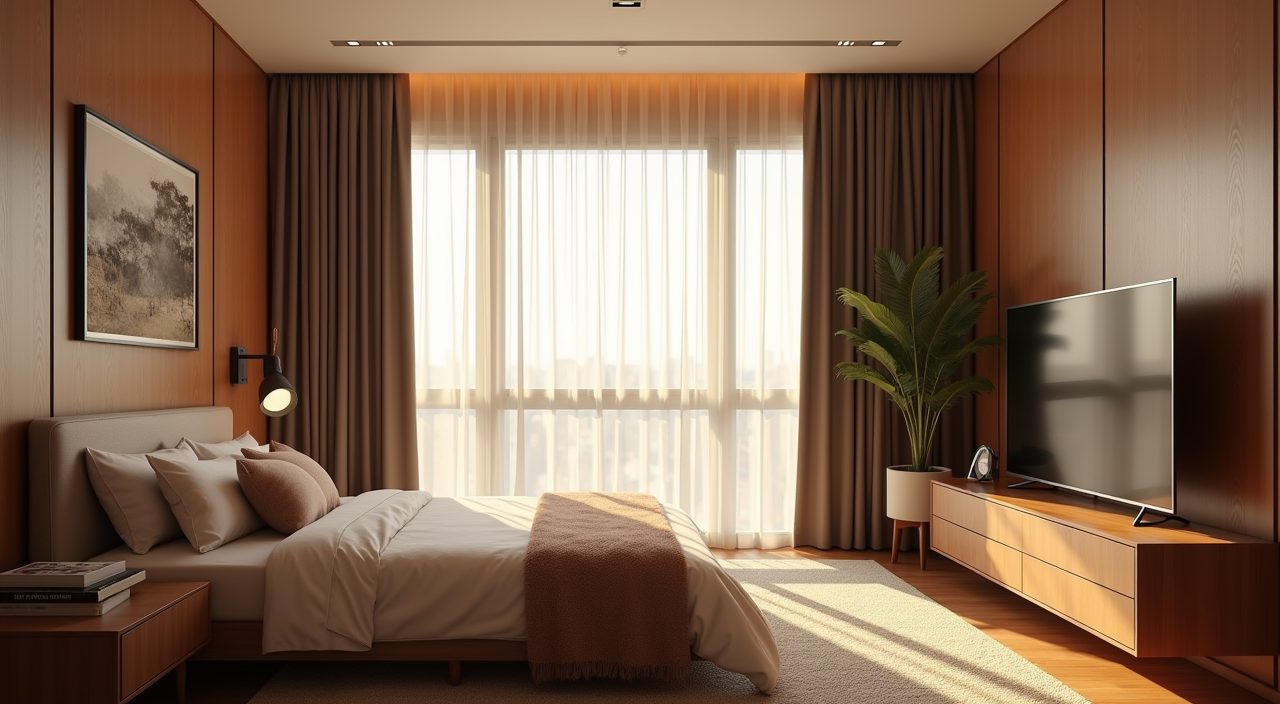
Singapore sun is intense and direct, so window treatment is both a design and a comfort decision. A day-and-night or blackout curtain in a warm, muted tone supports the mid-century palette while cutting glare and heat, which also helps your air-con work less. Floor-length curtains hung high and wide make the window feel bigger and the ceiling feel taller, a useful trick in a low-ceilinged flat.
For west-facing or afternoon-sun bedrooms, consider blackout lining or a layered sheer-plus-blackout setup so you can soften harsh light during the day and block it fully at night. Roller blinds in a natural weave can also work, but pair them with something soft so the room does not feel hard-edged.
What to plan and budget for
The biggest cost drivers in a mid-century bedroom are usually the built-in carpentry (wardrobe, feature wall, platform bed with storage) and any electrical changes for layered lighting, followed by furniture and soft furnishings. As a rough guide, a fresh coat of paint, curtains, and a few furniture swaps is a light cosmetic refresh, while custom carpentry, a slatted feature wall, and rewiring for new light and socket points sit at the higher end. Get itemised quotes so you can see where the money goes and trade off, for example, real veneer against a good laminate. If you are doing built-ins, a feature wall, or new lighting circuits, this is real construction and wiring work, so it is worth engaging a proper contractor for the mid-century modern bedroom design Singapore renovation rather than piecing it together yourself. Doing the carpentry and electrical together also avoids paying twice to open up the same wall or ceiling.
Frequently asked questions
Does mid-century modern work in a small HDB bedroom? Yes, and it is arguably one of the best-suited styles for compact flats. Its low-profile, leggy furniture, built-in storage, and restrained palette all help a small room feel open, so a typical 3-room or 4-room master bedroom takes to it well with the right scale of furniture.
How do I keep a wood-heavy mid-century bedroom from feeling dark? Balance the warm wood with a light neutral base on walls and ceiling, keep at least one large soft-light source, and choose warm white bulbs around 2700K to 3000K. Reserve the darkest wood tones for one feature (headboard wall or wardrobe) rather than every surface.
Is real teak worth it in Singapore's humidity? For most homeowners, no. Solid teak is costly and reacts to humidity swings, while quality wood-grain veneers and humidity-rated laminates give the same look, cost far less, and behave better in our climate. Save solid timber for a small statement piece if you love it.
Do I need a contractor or can I just buy furniture? You can get partway with furniture and curtains alone, but the elements that make the look land, built-in wardrobes, a slatted feature wall, platform storage, and layered lighting, involve carpentry and electrical work. For those, a contractor handling the renovation and wiring together is safer, tidier, and usually cheaper than retrofitting later.