Muji Japanese Bedroom Design Ideas for Singapore Homes
A practical guide to Muji Japanese bedroom design for Singapore HDB flats and condos: palettes, materials, storage and lighting that suit tropical living.
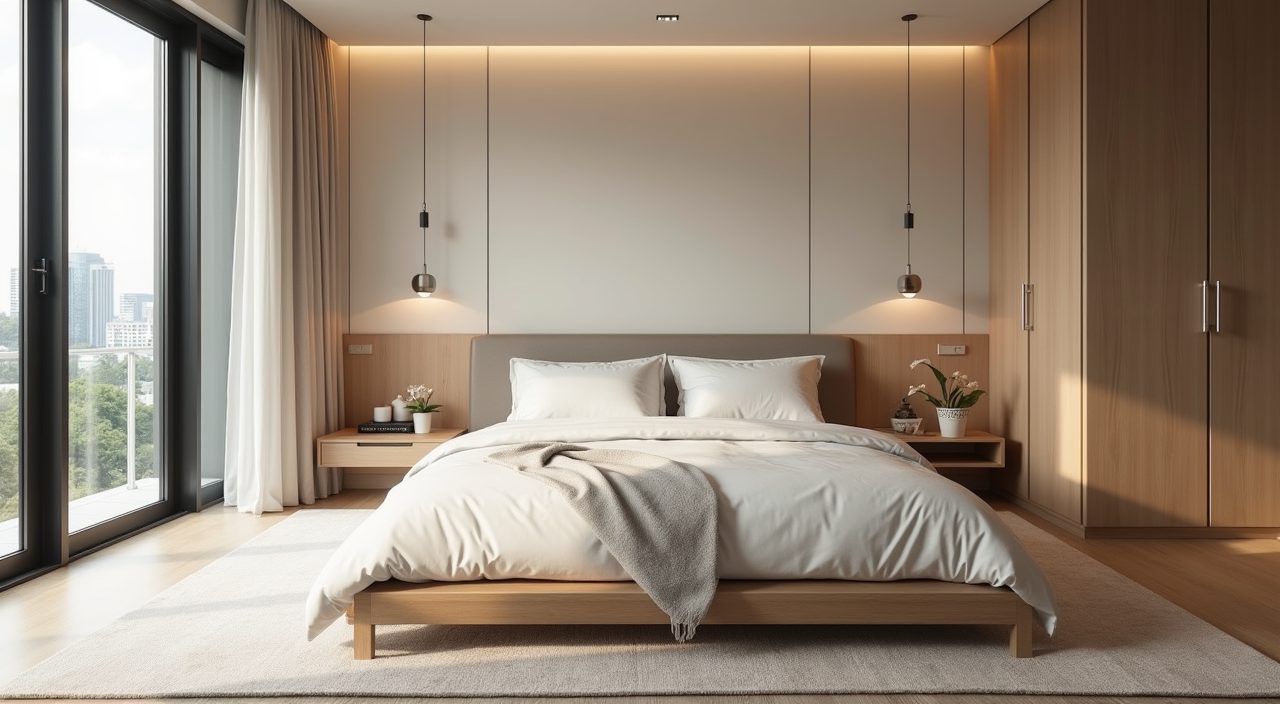
Design a Muji Japanese bedroom in Singapore by keeping the palette warm and neutral, choosing a small number of natural materials (light oak, off white, linen), and building low, calm furniture with plenty of concealed storage. Let daylight do the work, keep the floor as clear as possible, and pick humidity friendly finishes so the look survives our climate. The goal is a room that feels quiet and uncluttered, not empty.
This style works well in local homes because most HDB and condo bedrooms are compact, and Muji thinking (fewer things, better hidden, lower visual noise) makes a small room feel larger and more restful. The ideas below are ordered roughly by impact, from the palette and layout decisions you lock in early to the finishing touches you can add later.
Start with a warm neutral palette, not a cold white one
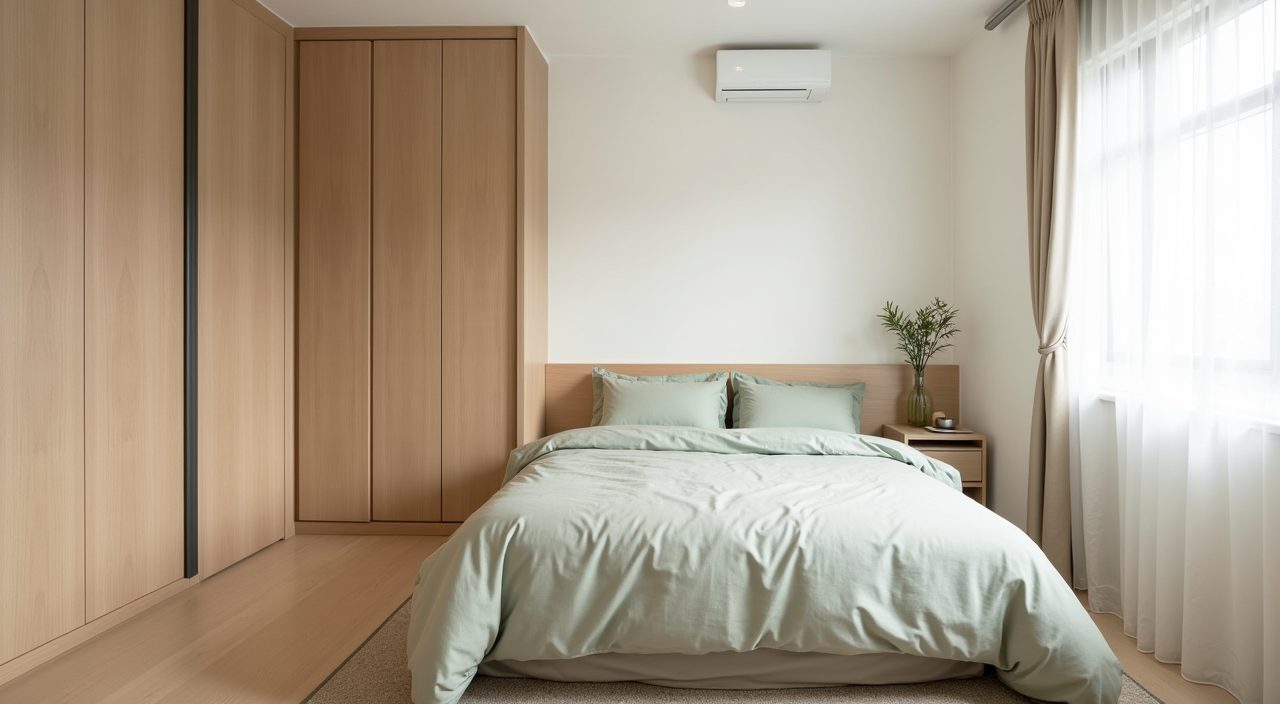
The Muji look is built on warm off whites, soft greys, oatmeal, and pale wood tones, not the stark cool white you often see in show flats. Warm neutrals read as calm and inviting under Singapore's bright daylight, while cool white can look clinical and show every scuff. A common recipe is warm white walls, a light oak or ash tone for wood, and one muted accent such as sage, clay, or a dusty blue in the bedding or a single artwork.
Keep the whole room to three or four tones and repeat them. If you paint, ask for a warm white rather than pure white, and bring a physical sample home to check it against your actual light, since west facing bedrooms in the late afternoon can push a neutral much warmer than the paint chip suggests.
Build a low platform bed to lower the visual line

A low bed is the single most recognisable Muji Japanese move, and it genuinely helps a small HDB bedroom feel taller because it drops the tallest object in the room. A simple oak or oak look platform bed, or even a mattress on a low timber base, sits closer to the floor and leaves more visible wall above it, which reads as breathing room.
In a typical HDB common bedroom (around 2.4 by 3 metres) a low queen can dominate the floor, so measure the walking gap on both sides before committing. If space is tight, a low bed frame with built in drawers or a storage headboard buys you storage without adding height or a separate chest.
Layer natural materials: light wood, linen, paper, rattan
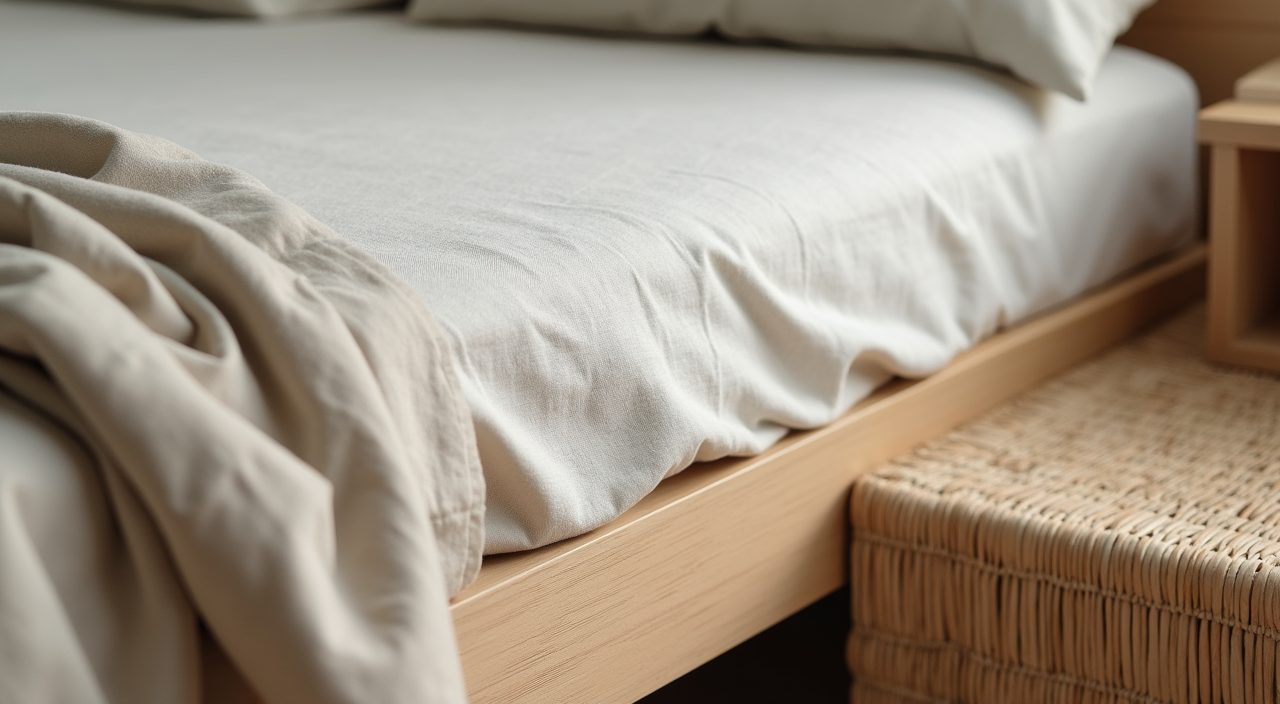
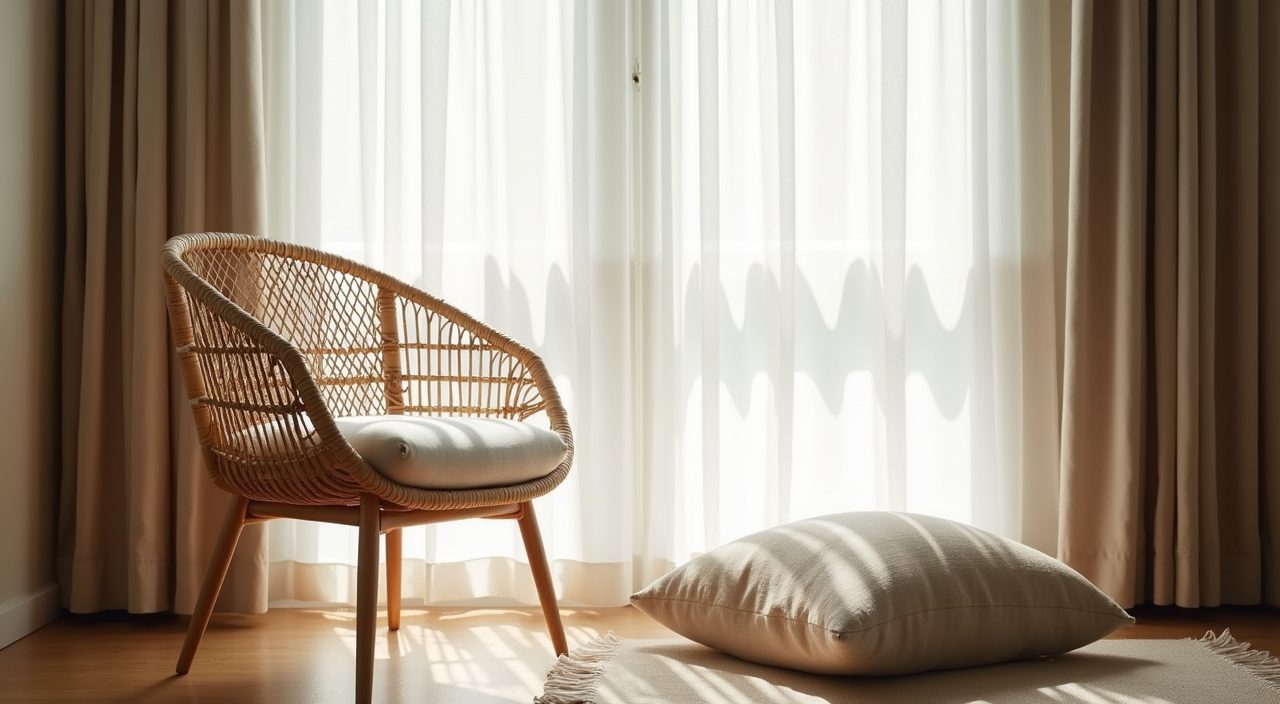
Muji rooms feel warm because they mix a few honest materials rather than relying on one. Light timber for the bed and shelving, linen or brushed cotton for bedding, a little rattan or cane on a headboard or side chair, and paper or fabric for a light shade together give the room texture without colour or clutter.
Be realistic about our humidity. Solid natural wood and untreated rattan can warp or attract mould in an unair conditioned room, so many Singapore homeowners use engineered wood or a good wood look laminate for built ins and reserve solid timber for smaller, movable pieces.
- Bedding: washed linen or cotton in oatmeal, white, or grey for a soft, lived in look
- Built ins: engineered wood or wood grain laminate, which handle humidity better than solid timber
- Accents: a rattan bench, a cane headboard, or a woven basket for tactile warmth
- Avoid: high gloss surfaces and heavy dark stains, which fight the calm, matte Muji feel
Hide almost everything behind full height storage
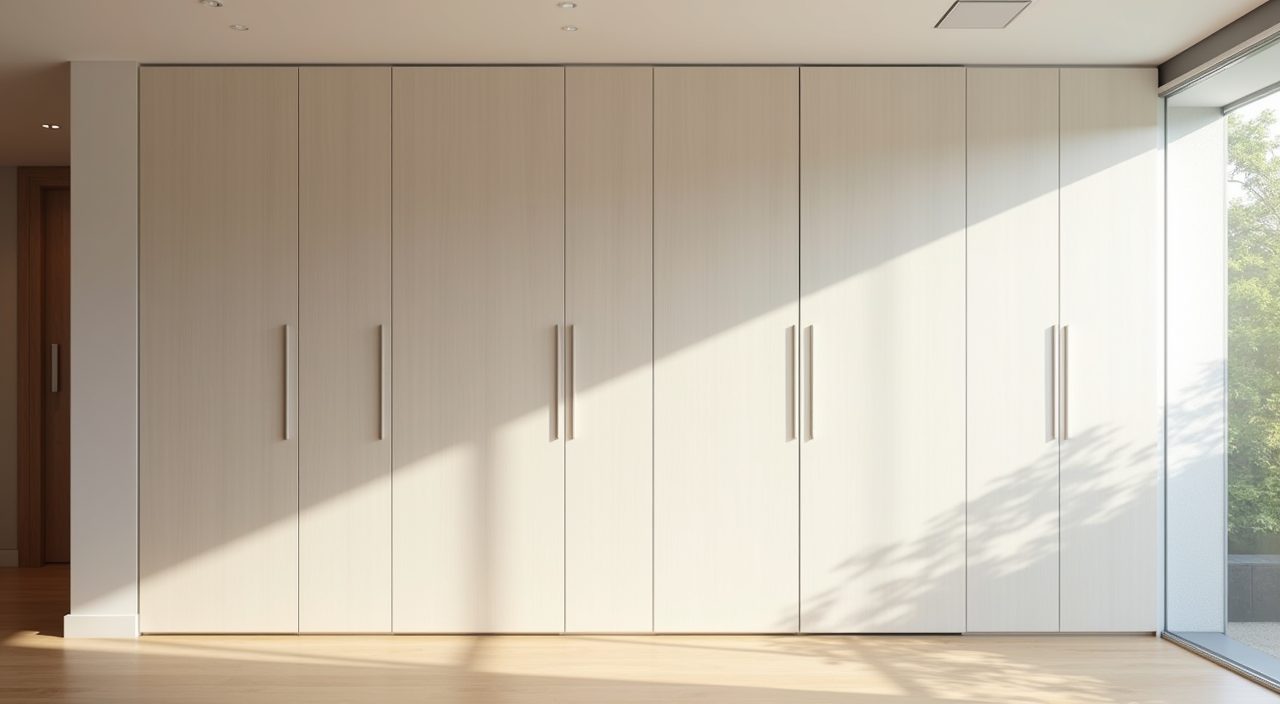
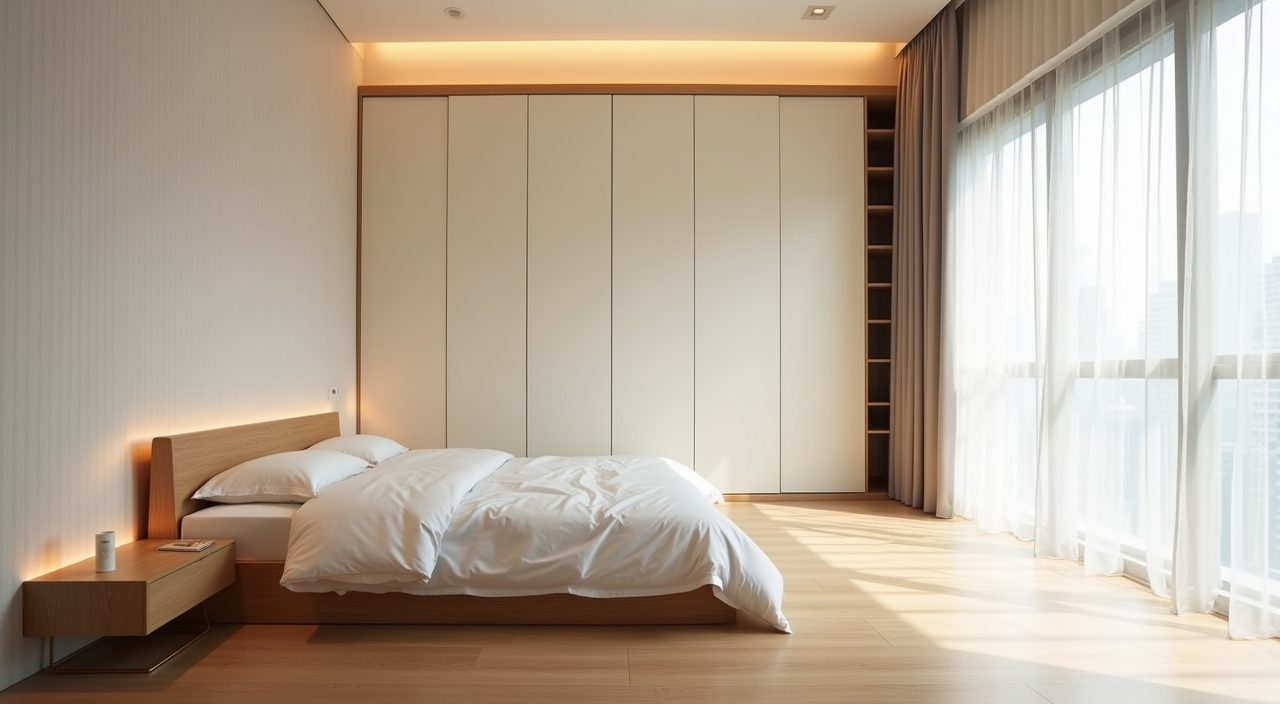
Clutter is the enemy of this style, so the storage has to be generous and mostly concealed. A full height built in wardrobe with flat, handleless doors in a wood or off white finish disappears into the wall and does the heavy lifting, while open shelves are used sparingly for a few chosen objects, not for stacking daily mess.
In HDB flats, running the wardrobe floor to ceiling also closes off the dusty gap on top of a freestanding cupboard and squeezes out extra storage near the ceiling for luggage and seasonal items. Push and open (touch latch) doors keep the fronts clean and hardware free, which suits the pared back look.
Keep the floor clear and choose a warm floor tone
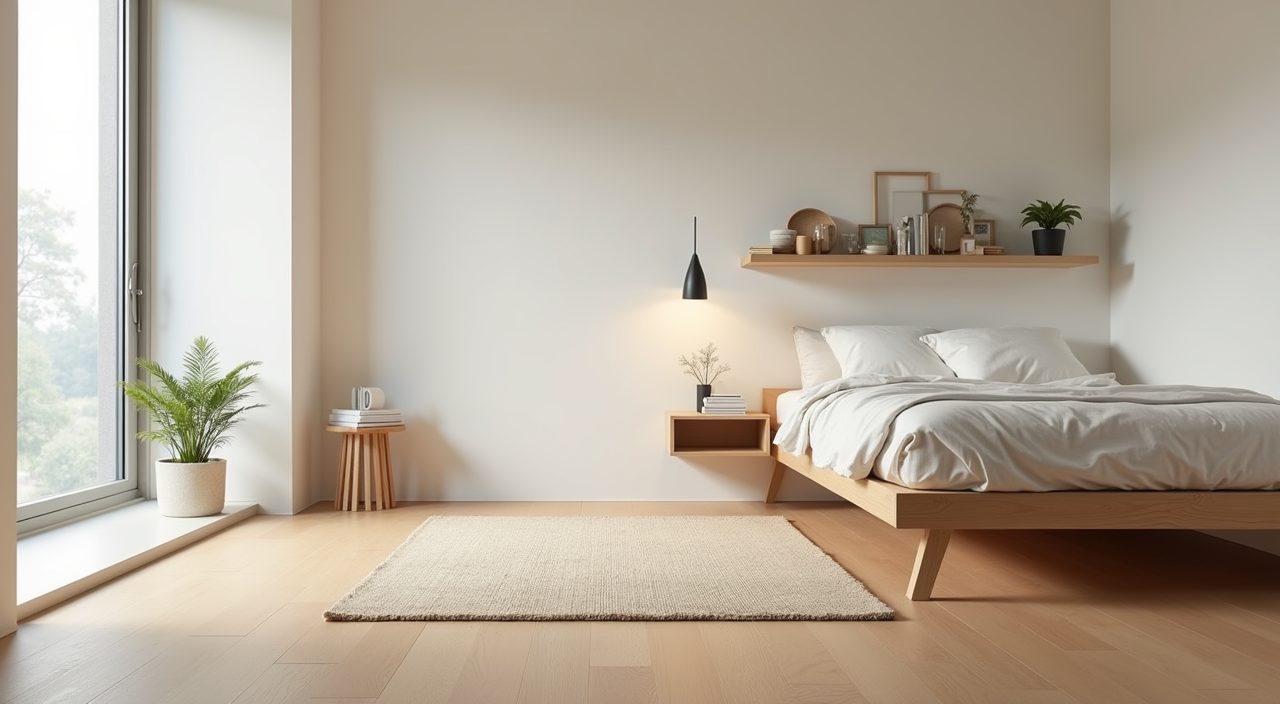
Visible floor is what makes a Muji room feel spacious, so aim to keep as much of it uncluttered as possible and lift storage onto the walls or into the bed. Wall mounted bedside shelves or a slim floating nightstand instead of bulky side tables free up floor and reinforce the light, airy feeling.
For flooring, a light oak toned vinyl or laminate suits the palette, is far more humidity tolerant than real wood, and is a practical choice for most Singapore bedrooms. If you are keeping existing tiles, a large flat weave rug in a neutral tone can warm up the floor and soften footsteps without clashing with the calm scheme.
Use soft, layered, warm lighting instead of one harsh ceiling light
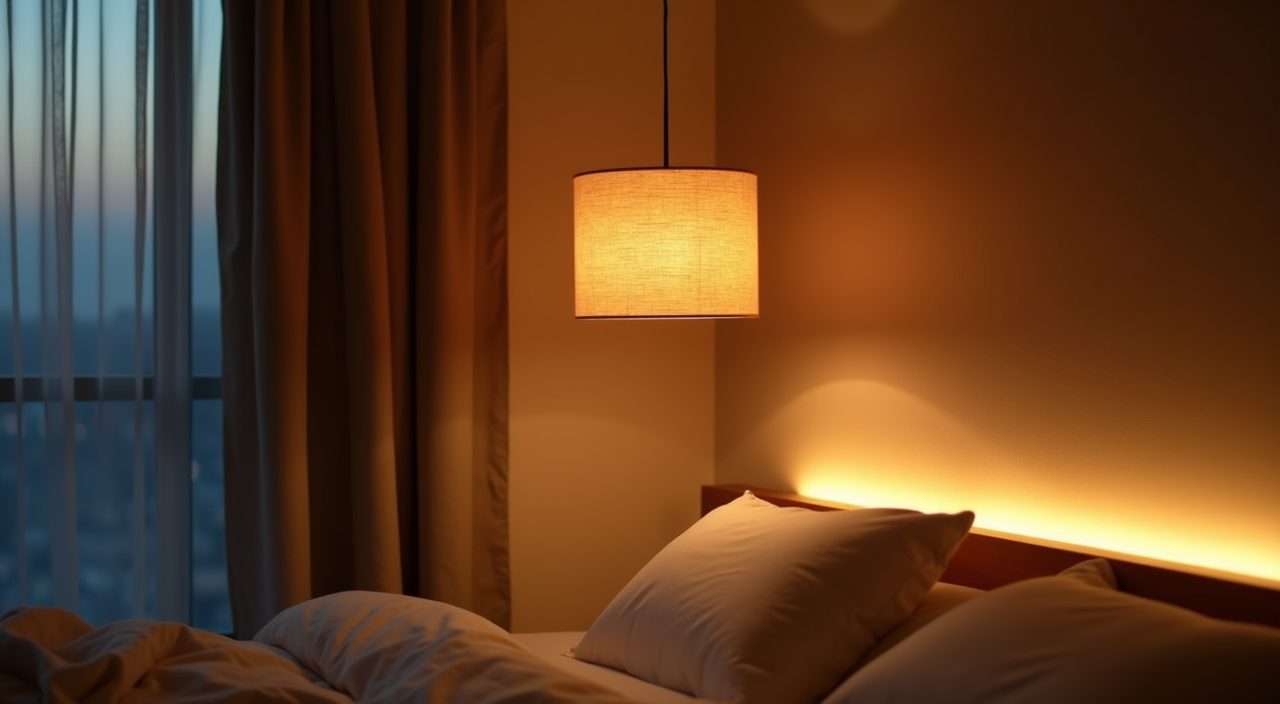
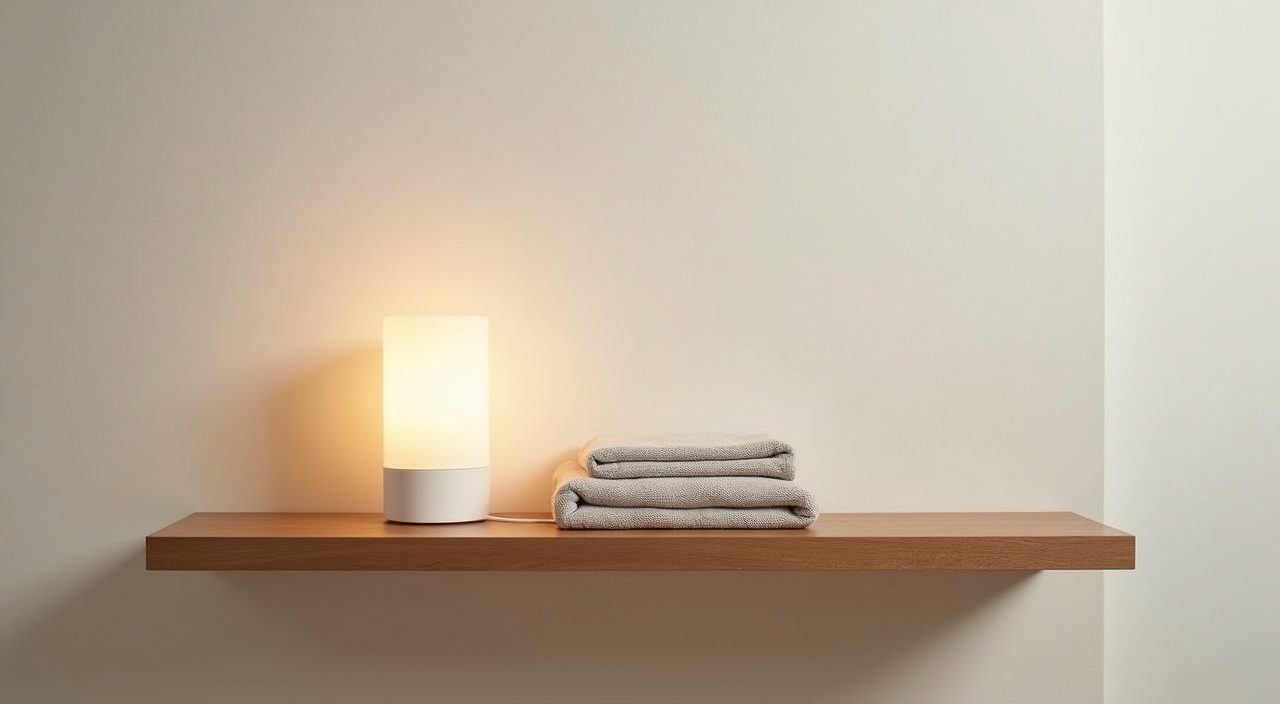
A single bright cool white ceiling light will flatten the whole mood, so the Muji approach is layered warm light. Aim for warm white bulbs in the 2700K to 3000K range, and combine a gentle ambient source with a small task light for reading and a low accent glow for the evening.
Recessed downlights or a slim ceiling fixture handle the general light, a paper or fabric shade adds soft character, and a warm LED strip tucked above the wardrobe or behind the headboard gives a calm night time wash. Putting the main lights on a dimmer is a small cost that makes the room feel far more considered.
- Colour temperature: 2700K to 3000K warm white throughout for a restful tone
- Layers: ambient (downlights) plus task (reading lamp) plus accent (hidden LED strip)
- A dimmer on the main circuit lets one room shift from morning bright to evening soft
Plan for our climate: airflow, blinds, and humidity control
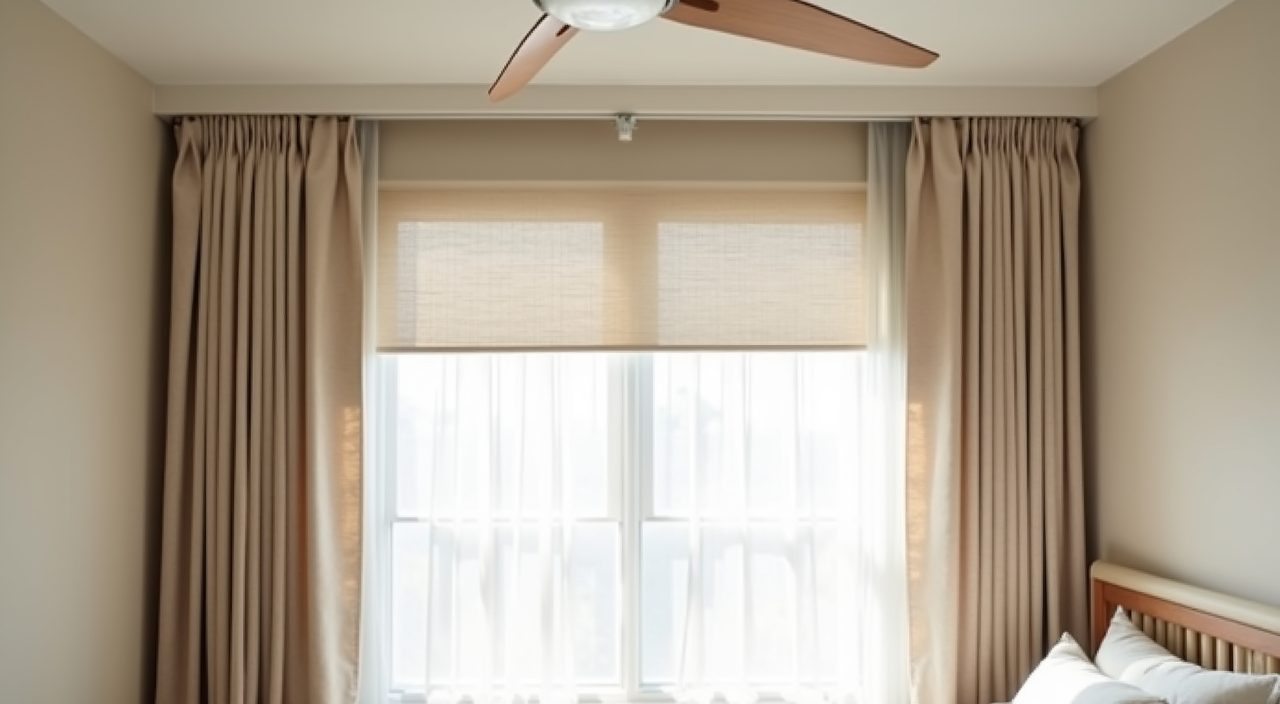
A Muji bedroom should feel airy, which in Singapore means planning for real airflow and glare control. Light linen curtains or simple roller blinds in a neutral tone filter our harsh daylight while keeping the clean lines, and they look far more in keeping than heavy blackout drapes, though many people layer a discreet blackout blind behind a sheer for sleep.
Because the style leans on natural materials, keep humidity in check so nothing warps or grows mould. Good ventilation, running the aircon or a dehumidifier in a closed room, and avoiding untreated solid wood in damp corners all help the look last. A ceiling fan in a warm neutral finish fits the aesthetic and cuts aircon reliance.
Add greenery and a few honest objects, then stop
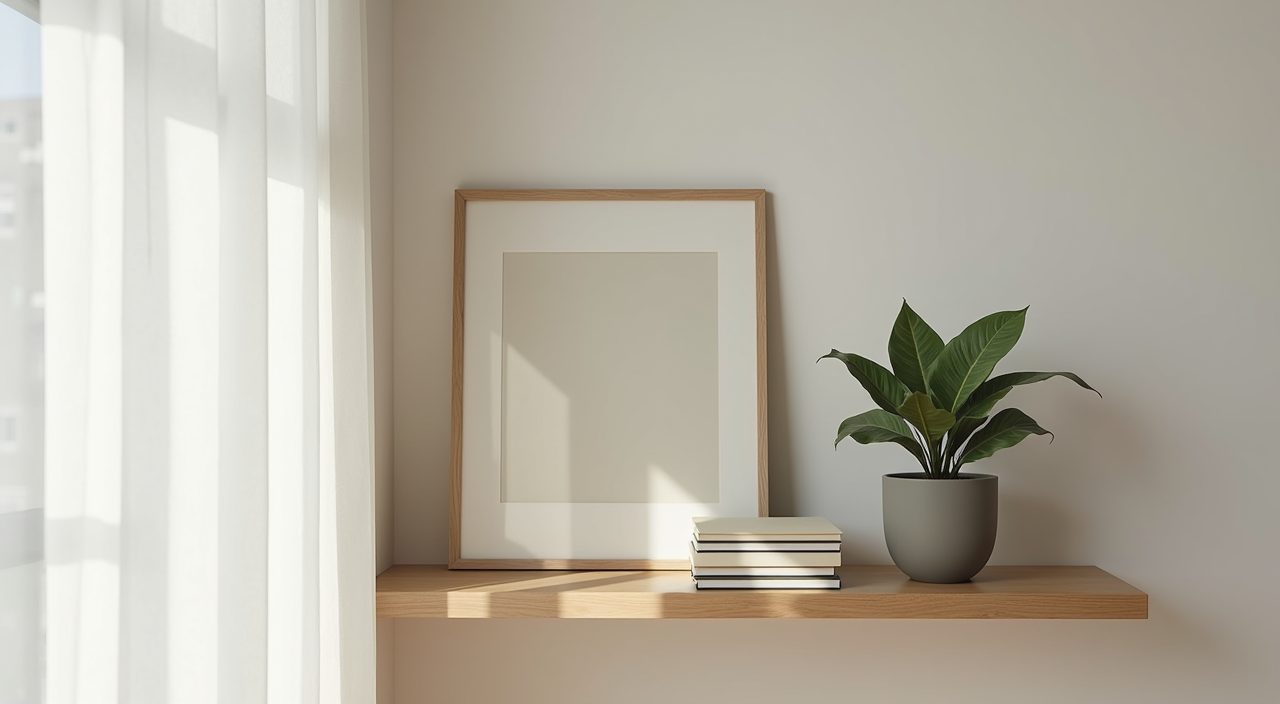
The finishing layer is restraint. One or two plants that tolerate indoor Singapore conditions (a snake plant or pothos are forgiving), a single piece of calm art, a stack of books, and a linen cushion are enough to make the room feel human without tipping into clutter.
The discipline is knowing when to stop. If a surface starts collecting objects, edit it back. A Muji bedroom is defined as much by what you leave out as by what you put in, and the empty space is the point, not a gap to fill.
What to plan and budget for
A Muji Japanese bedroom is more about restraint than expensive materials, so a cosmetic refresh (paint, a low bed, bedding, lighting, and soft furnishings) can be relatively affordable and largely done piece by piece. Costs climb once you add custom carpentry: a full height built in wardrobe, a storage bed, or floating shelves are where most of the budget goes, along with any flooring change and electrical work for layered lighting and dimmers. Budget more if you are relocating light points, adding LED strips, or replacing the floor, since those touch wiring and require proper installation rather than a weekend swap. It is worth getting a contractor to quote the carpentry, flooring, and electrical parts together, because a coordinated muji japanese bedroom design singapore renovation avoids the mismatched finishes and clumsy wiring that break the calm, seamless look this style depends on. When you compare quotes, check that the wood finishes and lighting temperatures are consistent across every element, not just cheap in isolation.
Frequently asked questions
Does the Muji Japanese style work in a small HDB bedroom? Yes, and it is arguably better suited to small rooms than large ones. The low furniture, clear floor, warm neutral palette, and concealed storage all make a compact HDB bedroom feel calmer and more spacious, which is exactly what a tight room needs.
Will natural wood and rattan survive Singapore humidity? They can, but with care. Untreated solid wood and raw rattan may warp or grow mould in a damp, unair conditioned room, so most homeowners use engineered wood or wood look laminate for built ins and keep solid timber and rattan to smaller, movable pieces in a well ventilated space.
How much does a Muji style bedroom renovation cost in Singapore? It varies widely with how much is cosmetic versus built in. A paint and furniture refresh is modest, while custom carpentry (a full height wardrobe or storage bed), new flooring, and layered lighting push the figure up. Get an itemised quote so you can see where the money goes and decide what to build in versus buy.
What colours should I use for a Muji bedroom? Stick to warm neutrals: warm white or off white walls, a light oak or ash wood tone, and soft greys or oatmeal in the textiles, with at most one muted accent such as sage, clay, or dusty blue. Keeping to three or four repeated tones is what gives the room its quiet, cohesive feel.