Muji Japanese Dining Area Design Ideas for Singapore Homes
Muji Japanese dining area ideas for Singapore HDB flats and condos: warm oak, light palettes, compact layouts, soft lighting, and humidity-smart materials.
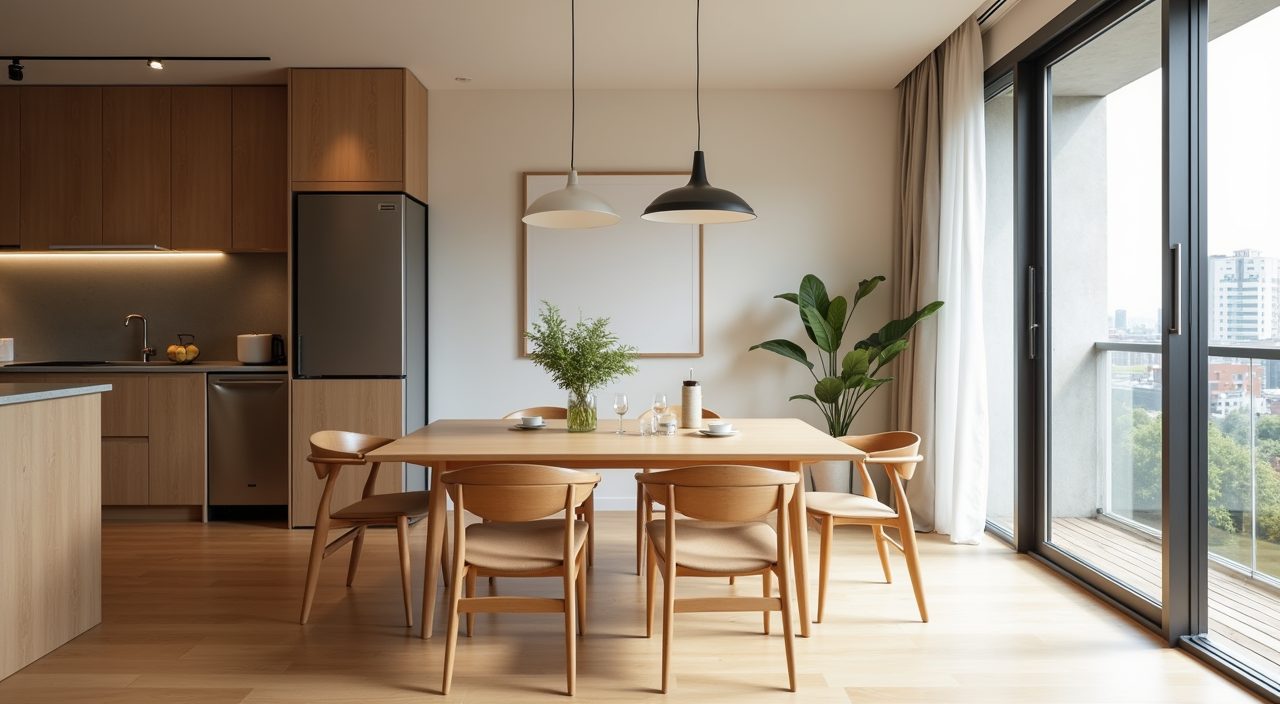
Design a Muji Japanese dining area in a Singapore home by keeping the palette light and warm (off white walls, pale oak or ash timber, muted greys), choosing low profile furniture that suits a compact HDB or condo footprint, and layering soft, warm lighting instead of a single harsh downlight. Pick moisture stable materials that hold up to our humidity, keep clutter behind closed storage, and let one or two natural textures do the talking. The result should feel calm, uncluttered, and quietly functional rather than styled or busy.
The Muji look reads well in Singapore because most of our flats are small and benefit from a light, low contrast scheme that makes a room feel larger and cooler. A typical HDB dining zone is a slice of an open plan living area (often 2.5 to 3.5 metres wide), and many condos give you even less. That constraint is actually a good fit for Muji thinking, which is about restraint, honest materials, and getting rid of anything you do not need.
Start with a warm neutral palette that suits tropical light
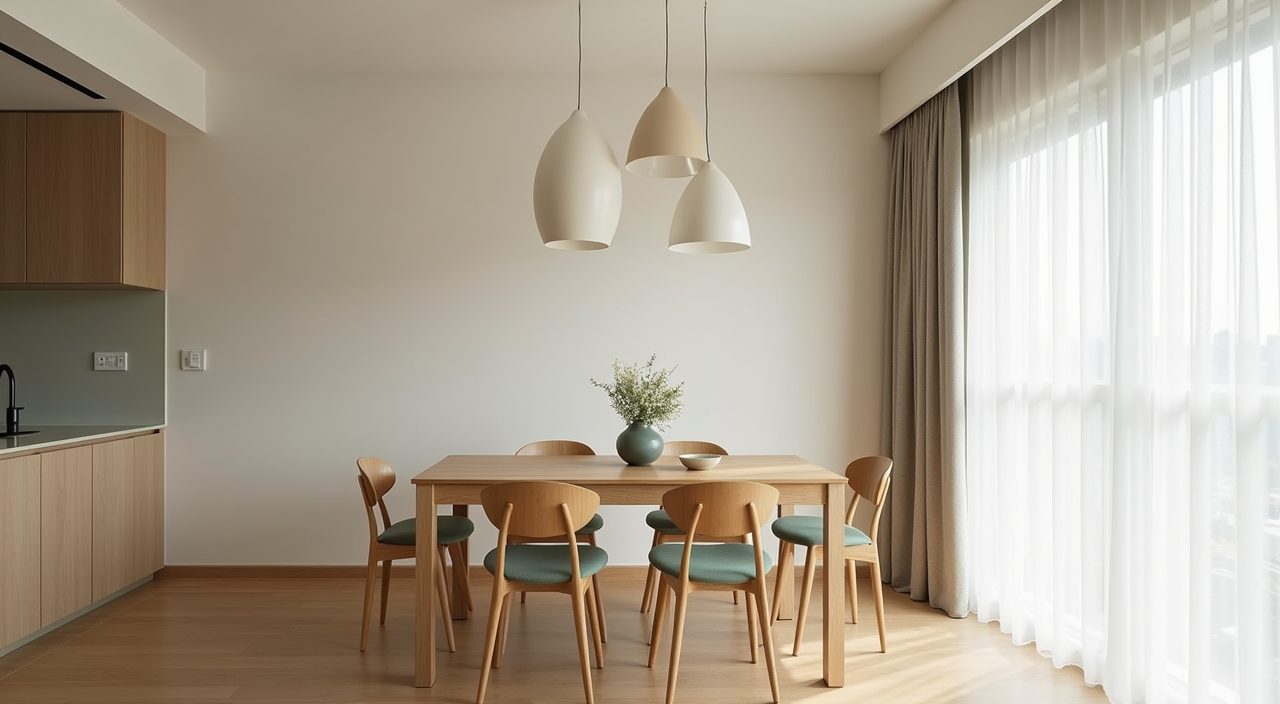
Muji interiors live on a narrow band of colour: soft white or oatmeal walls, pale timber, warm greys, and the occasional black accent for grounding. In Singapore, lean slightly warm rather than cold. Our natural light is bright and often filtered through blinds, so a warm white (think a hint of cream) stops the space from feeling clinical, while a cool grey white can look flat and blue under LED lighting at night.
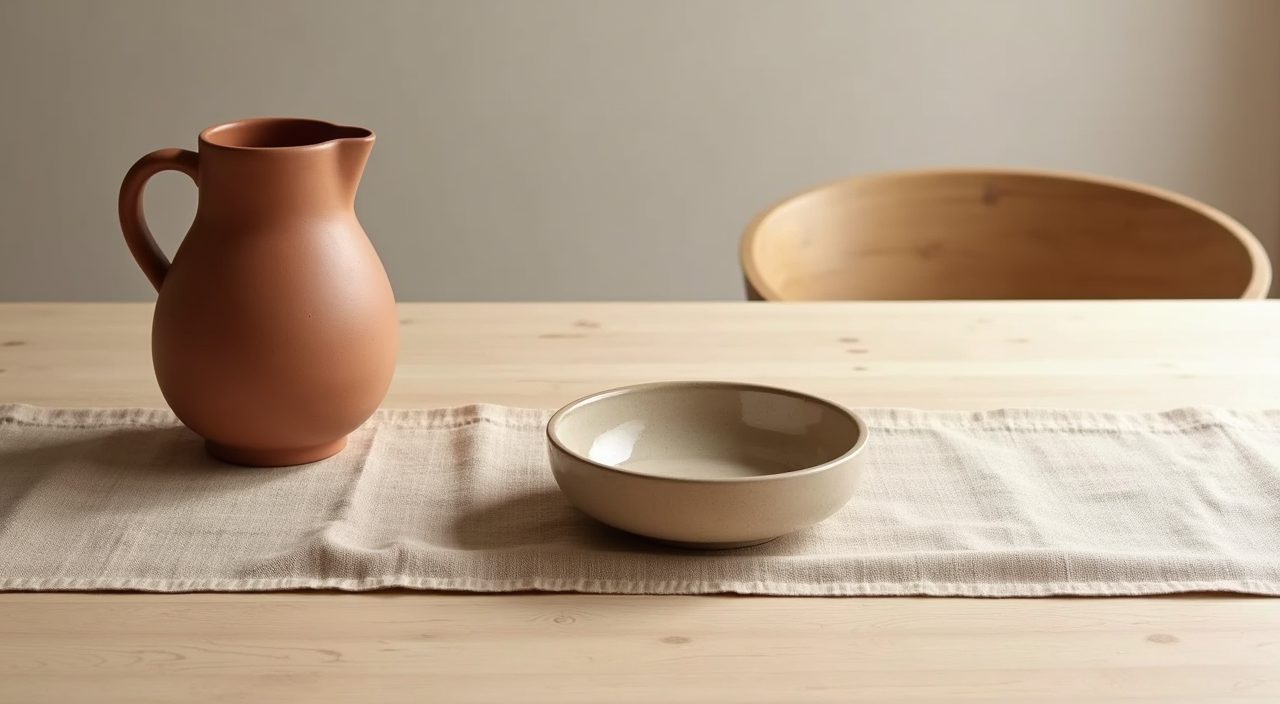
Reserve stronger colour for small, replaceable items: a clay coloured jug, a linen runner, a single ceramic bowl. Keep the large surfaces (walls, table, main cabinet) quiet so the room stays restful and easy to live with over years, not just on move in day.
- Walls: warm white or oatmeal, matte finish to hide fingerprints and glare.
- Timber: pale oak, ash, or light rubberwood for the table and shelving.
- Accents: one muted tone (sage, terracotta, charcoal) used sparingly in textiles or ceramics.
Choose a low, honest timber table sized to your real footprint
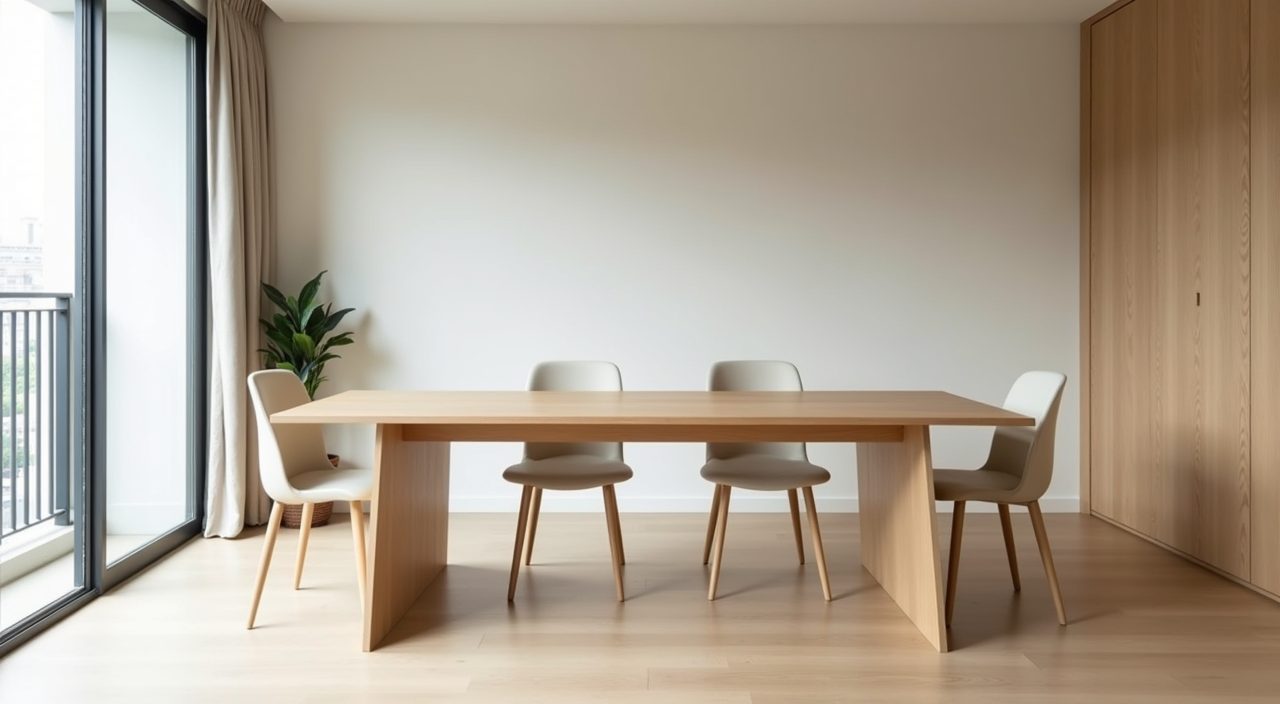
The table is the heart of a Muji dining area, and the mistake most people make is buying one too big. In a standard HDB open plan, a 1.2m to 1.4m table seating four is usually the sweet spot; a round 1.1m table is even better in tight corners because there are no sharp edges to walk into. Only stretch to a 1.6m six seater if your walkway clearance stays at least 800mm to 900mm on the main sides.
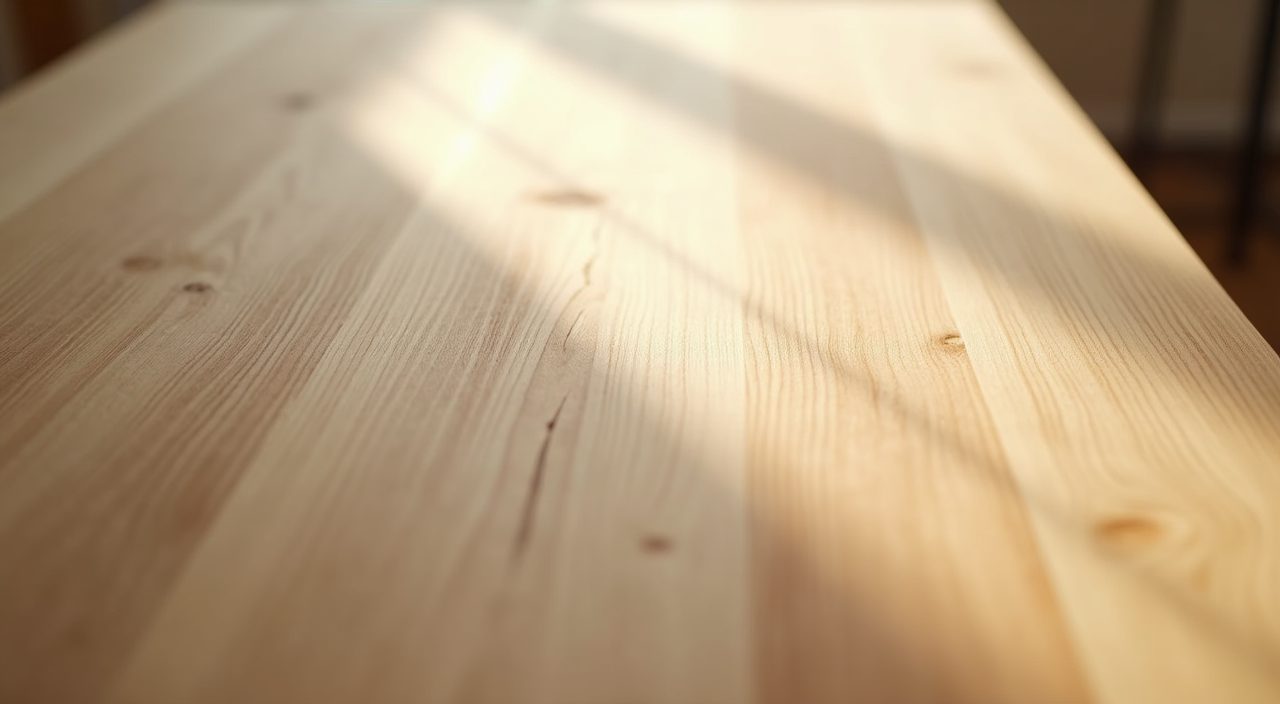
Go for solid or veneered light timber with a simple rectangular or slightly rounded frame, straight legs, and a matte or lightly oiled top. Avoid high gloss lacquer: it shows every water ring in our humid climate and fights the soft, natural feel you are after. A butcher block or fine grain oak top ages gracefully and hides small marks.
Keep seating low profile and mix in a bench to save space
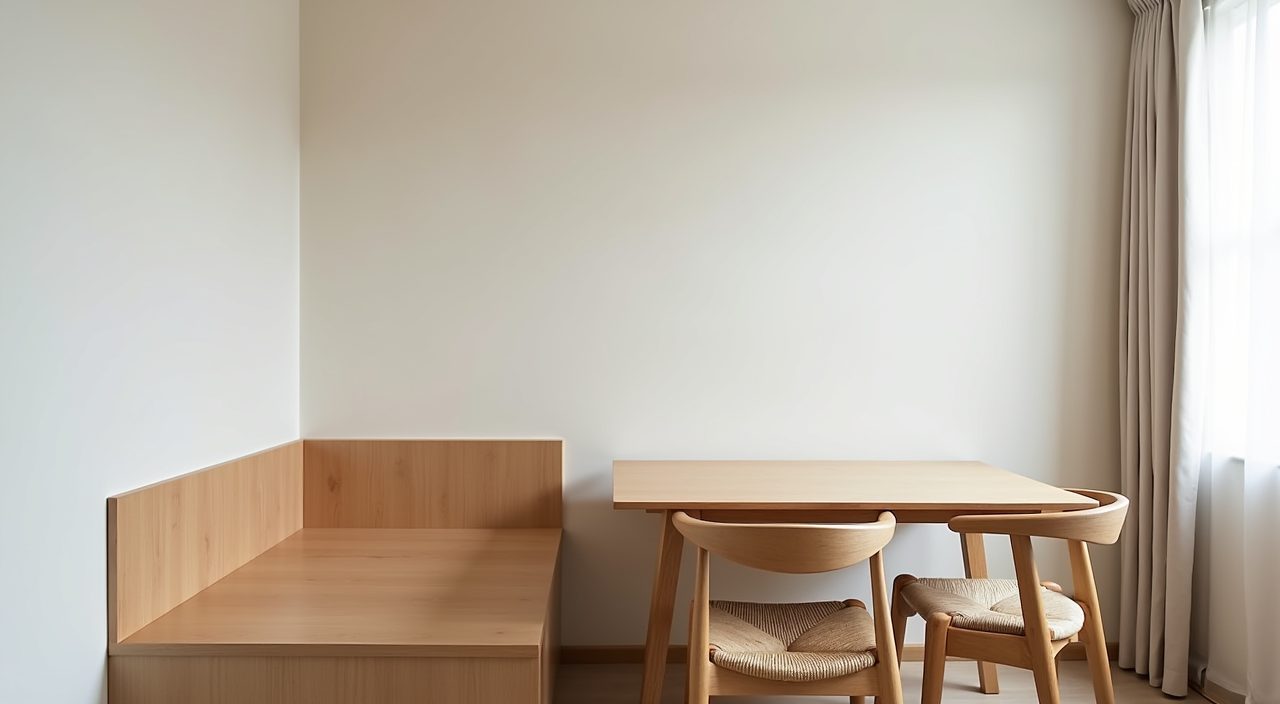
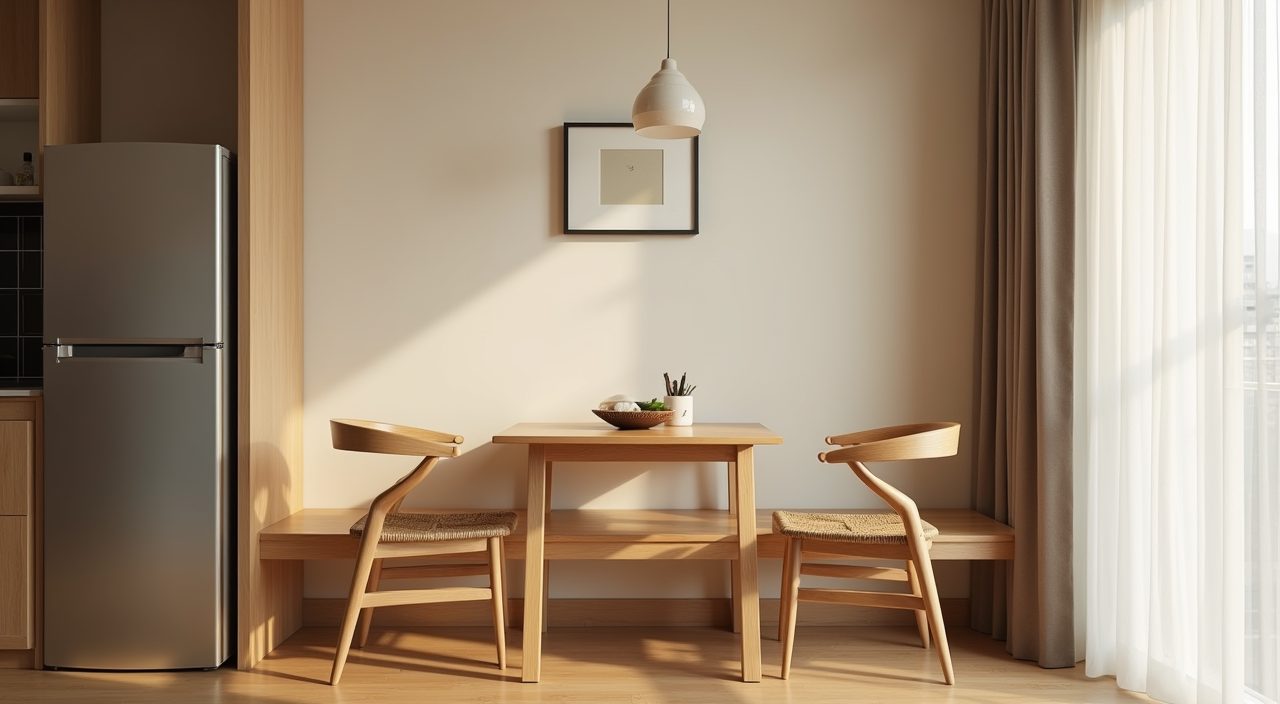
Muji dining chairs are simple: light timber frames, gently curved backs, woven or fabric seats, nothing bulky. In a small flat, chairs that tuck fully under the table matter more than they sound, since they keep the walkway clear and the room visually calm. Armless designs read lighter and are easier to slide past in a narrow dining nook.
A bench on one side is a genuinely useful Singapore move. It seats an extra person when family visits, tucks completely under the table when not in use, and removes the visual noise of multiple chair backs. If the bench sits against a wall, you free up the walking side entirely, which is often the difference between a cramped and a comfortable layout.
Build in low, closed storage so the room stays clutter free
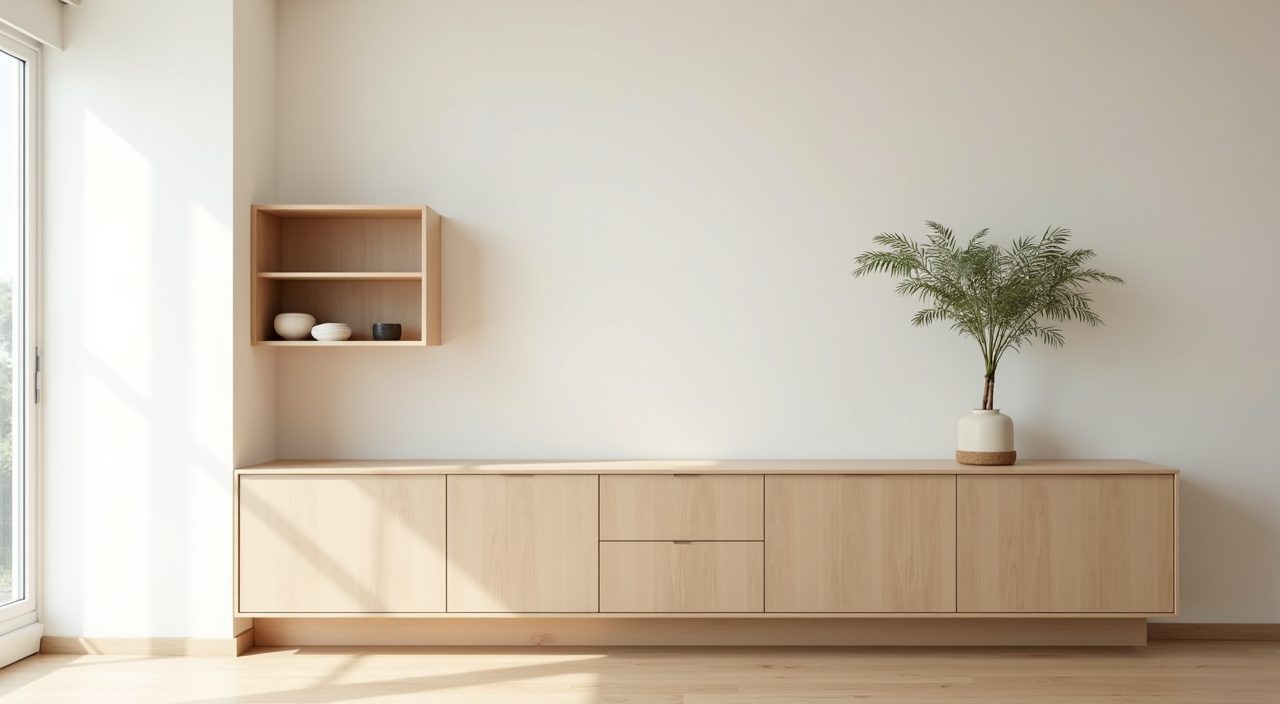
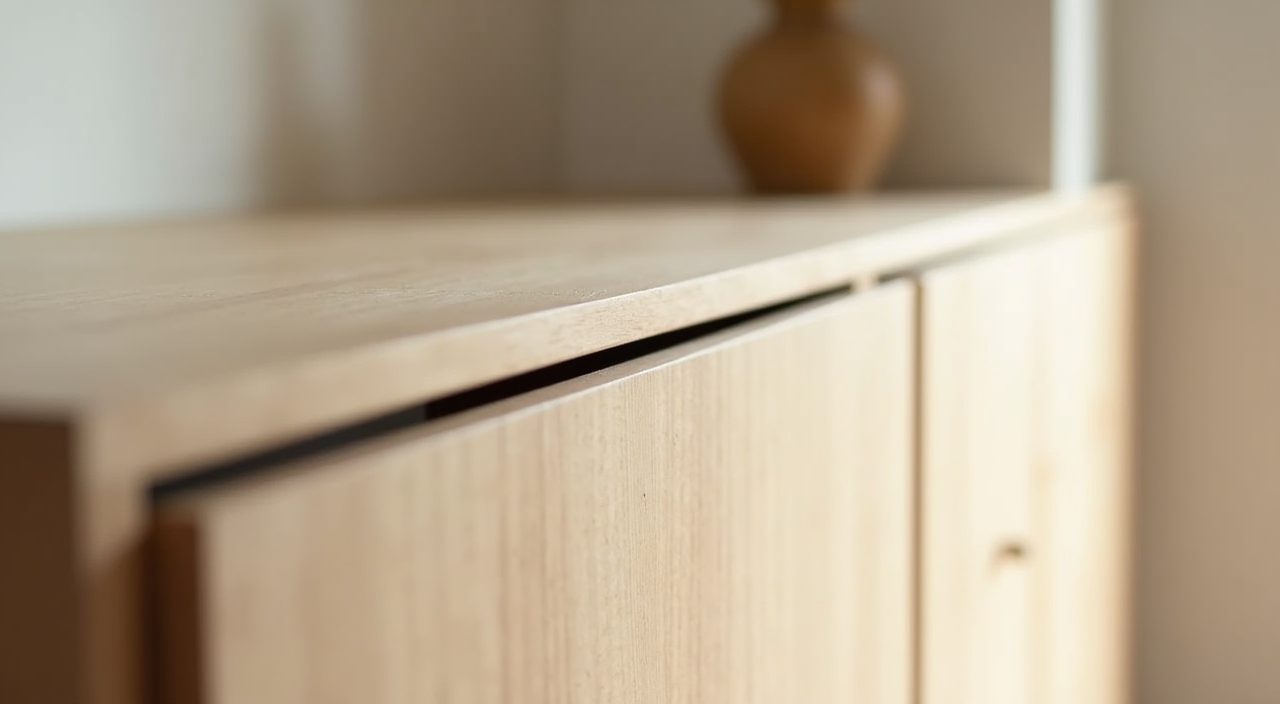
Calm comes from having somewhere to put things. A low sideboard or a run of built in carpentry along one wall gives you a home for tableware, table linens, and the small appliances that otherwise pile up on the counter. Keep the fronts flat and handleless (push to open or a slim finger groove) so the cabinetry recedes rather than announcing itself.
In HDB flats, a full height storage wall around the dining zone can double as a pantry and display, but keep open shelving to a minimum: two or three shelves for a few ceramics and a plant, everything else behind doors. For humidity, spec plywood or moisture resistant board with a proper laminate or veneer finish rather than cheap MDF, which can swell if it ever gets damp.
Light it warm and soft, not with a single bright downlight
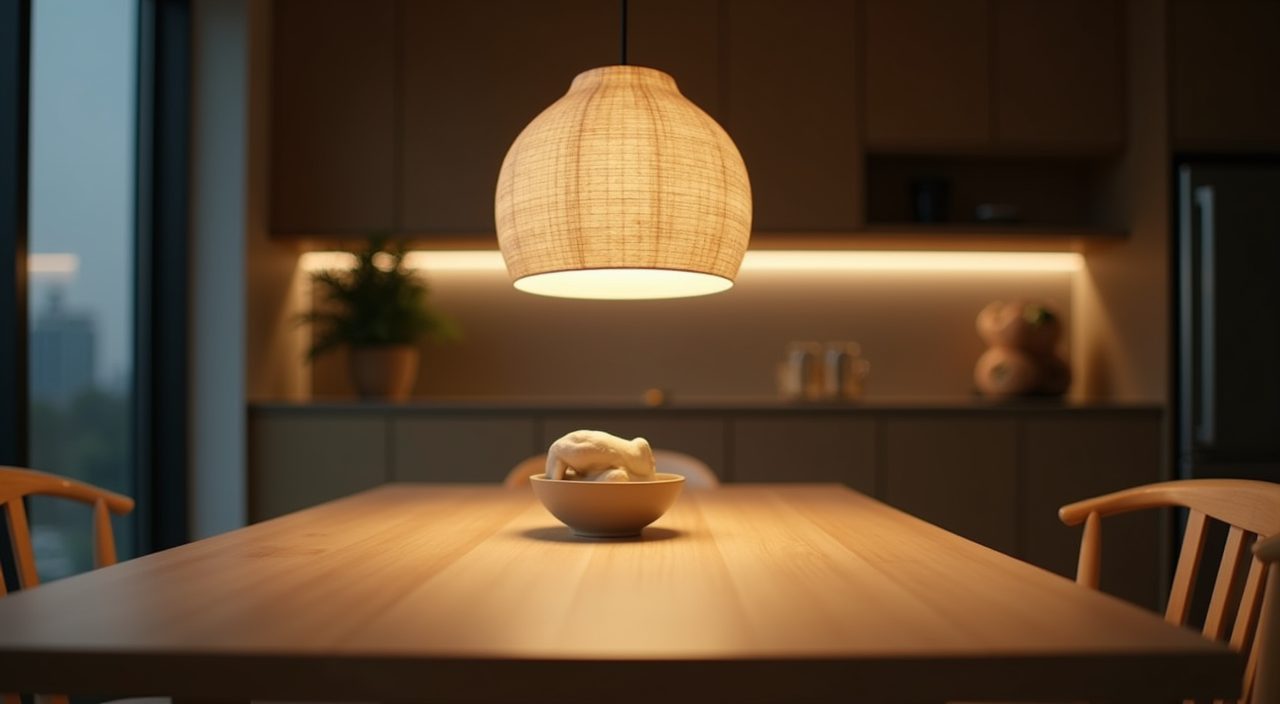
Lighting makes or breaks the Muji feel. A single cold downlight over the table flattens everything and creates harsh shadows on faces. Instead, hang a simple pendant with a paper, linen, or matte metal shade low over the table (roughly 650mm to 750mm above the tabletop) so it pools warm light where you eat.
Use warm colour temperature lamps (around 2700K to 3000K) throughout the dining zone, and add a second layer such as a wall light or a slim LED strip tucked under a shelf for evenings. Dimmable drivers are worth the small extra cost: they let you drop to a soft glow for dinner and lift the light for homework or work from home. Warm, layered light also feels cooler and more restful in our climate than a wall of bright white.
Pick humidity smart materials and finishes
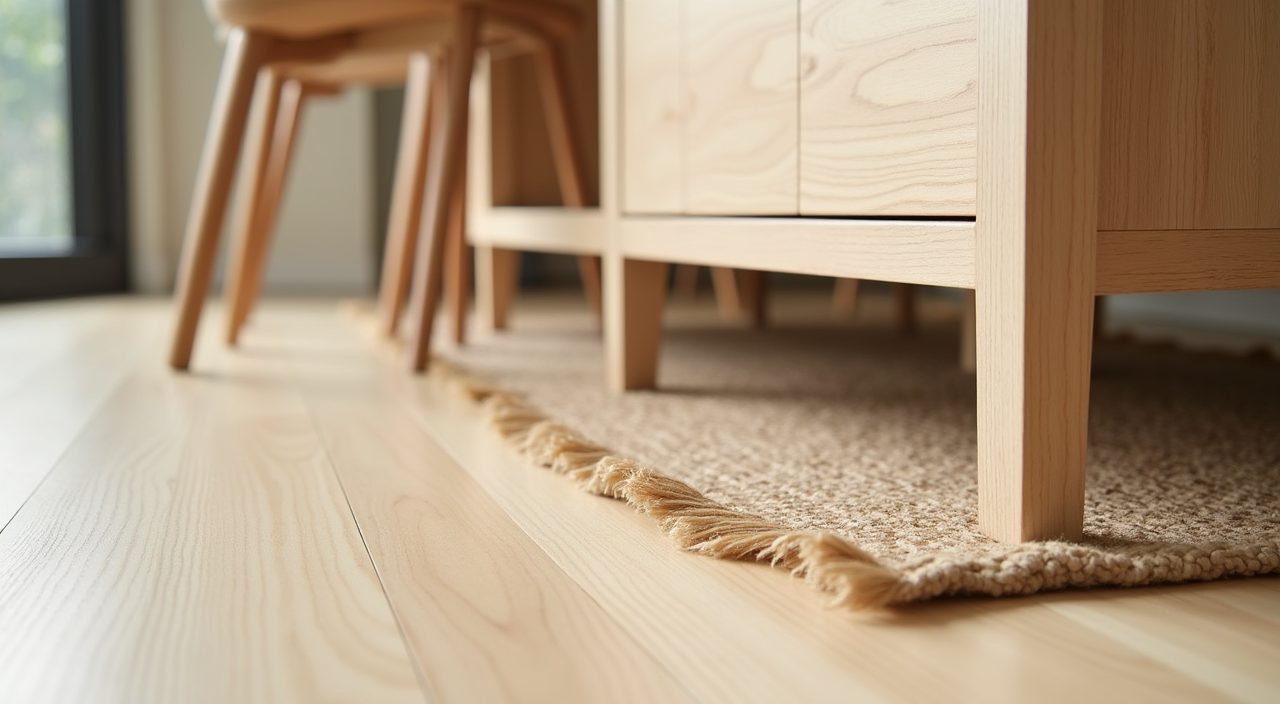
Singapore humidity is the quiet enemy of natural material interiors. Solid timber can move, rattan can sag, and untreated surfaces can attract mildew in poorly ventilated corners. This does not mean avoiding natural materials; it means choosing and finishing them properly. Ask for timber that has been kiln dried and properly sealed, and keep any rattan or woven pieces away from windows that get driving rain.
For floors, light oak look laminate or SPC vinyl gives you the pale Muji timber tone without the maintenance worry of real wood, and both handle our climate well. If you want a genuine natural touch underfoot, a flat weave cotton or jute rug is easy to lift and air out, which matters far more here than in a dry climate.
- Prefer kiln dried, sealed timber and moisture resistant carpentry boards.
- Use SPC vinyl or good laminate for pale timber floors that shrug off humidity.
- Keep rattan and woven textures away from rain exposed windows and enclosed damp corners.
Frame the space with light window dressing and one plant
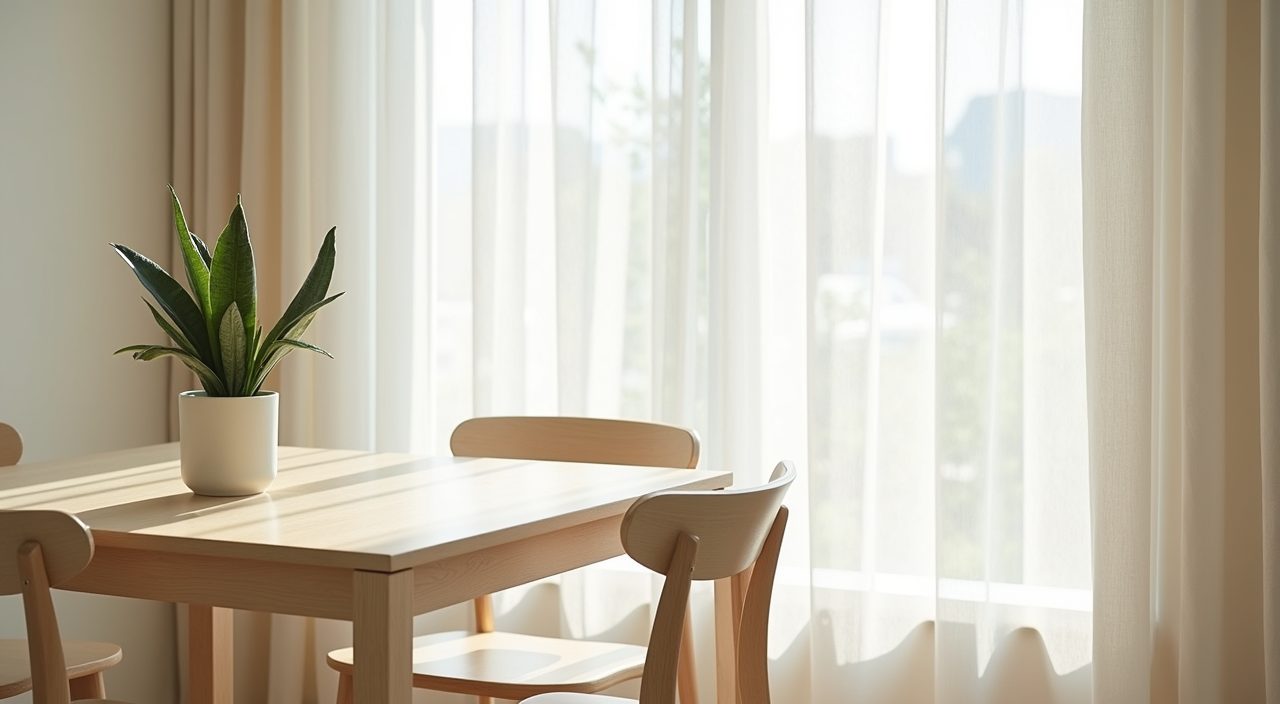
Muji interiors treat windows simply. Swap heavy curtains for light linen or cotton drapes, or fit slim roller blinds in a natural tone that filter our strong daylight without blocking it. Sheer or light textile softens the glare, keeps the room bright, and adds the gentle texture the style depends on.
Add a single, well placed plant rather than a jungle: a snake plant, a rubber plant, or a small olive style tree in a plain clay or off white pot. One healthy plant near the dining table brings life and a touch of green against the neutral palette, and these varieties tolerate indoor Singapore conditions with minimal fuss.
Use the whole open plan to make the dining zone feel intentional
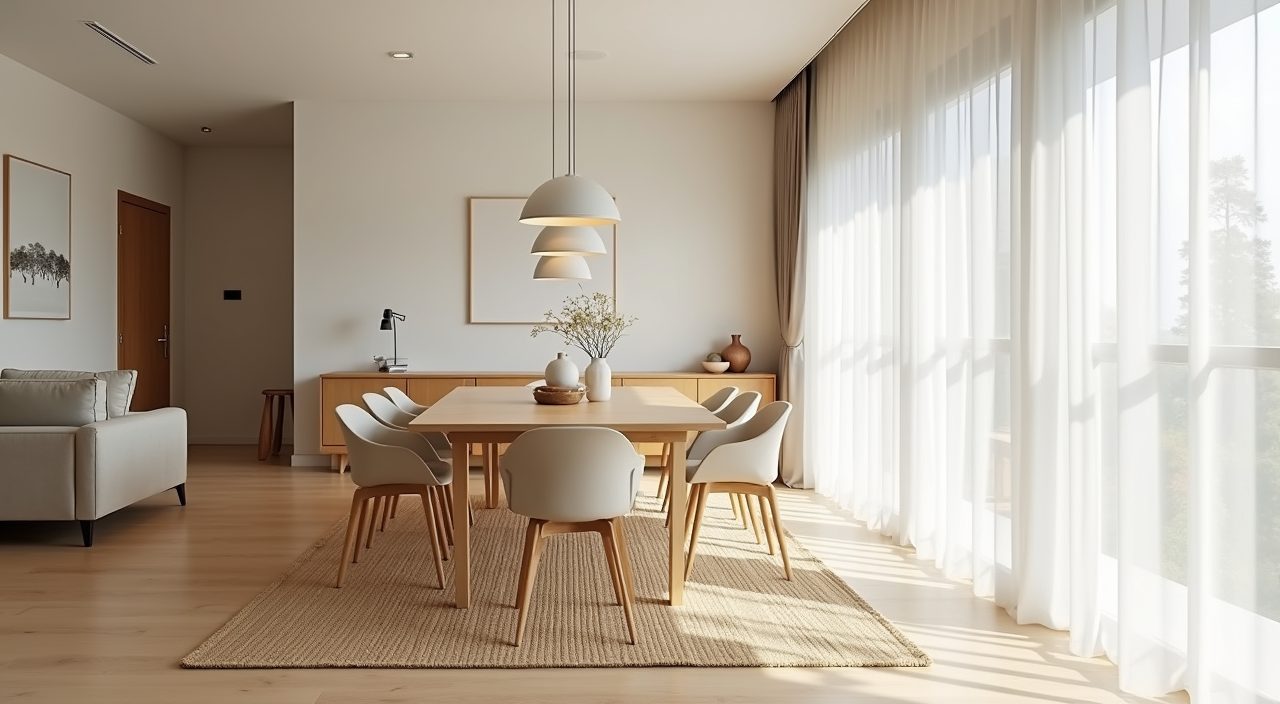
Because most Singapore dining areas are part of a larger living space, defining the zone gently is what makes it feel designed rather than leftover. A rug under the table, a pendant centred on it, and a low sideboard behind it are enough to signal a distinct area without walls. Keep the flooring continuous with the living room so the whole space still reads open and airy.
Line up the dining table with a natural sightline (the window, a feature wall, or the kitchen counter) so movement through the home stays easy. In a compact flat, alignment and clear walkways do more for the sense of calm than any single decorative piece.
What to plan and budget for
A Muji dining area is more about restraint than expense, but the costs that matter are built in carpentry, lighting, and any flooring or wiring changes, since those are hard to redo later. Loose furniture (table, chairs, a bench) can be sourced affordably, so budget for the fixed elements first: a run of low sideboard or a storage wall, an added pendant point with a dimmer, and moisture resistant board and finishes are where your money is best spent. Get real quotes rather than guessing, because carpentry pricing swings a lot with material, length, and finish. If you are doing a full muji japanese dining area design singapore renovation, plan the lighting points, power sockets, and any hacking early, since electrical and any plumbing or wall changes should be handled by a licensed contractor before the finishes go in. A good renovation contractor can also advise on which timber and boards actually survive our humidity, which saves you an expensive redo in a few years.
Frequently asked questions
Does the Muji look work in a small HDB flat? Yes, and it is arguably the best fit. The light palette, low furniture, and closed storage all make a compact dining zone feel larger and calmer. The key is scaling the table correctly (a 1.1m round or 1.2m to 1.4m rectangle for four) and keeping walkways clear at around 800mm or more.
What is the difference between Muji and Japandi style? They overlap heavily. Muji is the paler, more minimal, product driven end (soft whites, light oak, very little decoration), while Japandi blends that Japanese calm with Scandinavian warmth and can carry slightly darker woods and more texture. For a dining area, you can lean either way on the same base palette.
Will natural timber and rattan survive Singapore humidity? They can, if specified properly. Use kiln dried, sealed timber and keep woven pieces out of rain exposed or poorly ventilated spots. For floors and carpentry, moisture resistant boards, SPC vinyl, or quality laminate give you the pale Muji look with far less risk of swelling or mildew.
How much should I budget for the dining area alone? It varies widely with how much built in carpentry and lighting work you want. Loose furniture keeps things affordable, but a low sideboard or storage wall, an added pendant with a dimmer, and moisture resistant finishes are where costs sit. Get itemised quotes from a renovation contractor rather than relying on ballpark figures.