Muji Japanese Kitchen Design Ideas for Singapore Homes
Muji Japanese kitchen ideas for Singapore HDB flats and condos: warm wood, calm palettes, hidden storage, and finishes that handle our humidity.
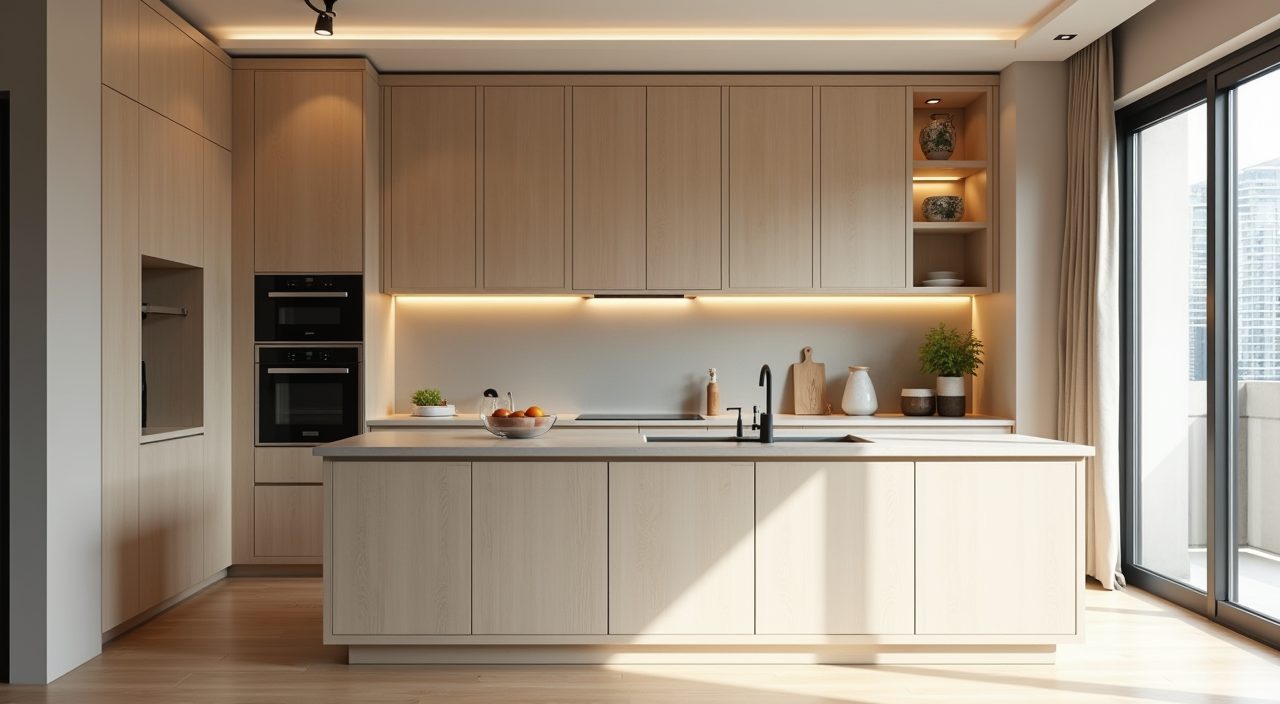
To get a Muji Japanese kitchen right in a Singapore home, keep the palette light and warm (off white, pale oak, soft grey), hide clutter behind flat handleless fronts, and pick surfaces that survive humidity and daily wok cooking. Aim for calm and function over decoration: fewer materials, clean lines, and every item with a home. The look is quiet, but the planning behind it is precise.
Muji style suits our flats well because most HDB and condo kitchens are small (a 4-room BTO kitchen is often around 6 to 8 square metres) and the pared back approach makes tight spaces feel larger and less busy. The catch is our climate. High humidity, strong afternoon light, and heavy stir-fry cooking all punish the wrong materials, so the ideas below balance the Japanese aesthetic with what actually holds up here.
Build the palette around warm off white and pale wood
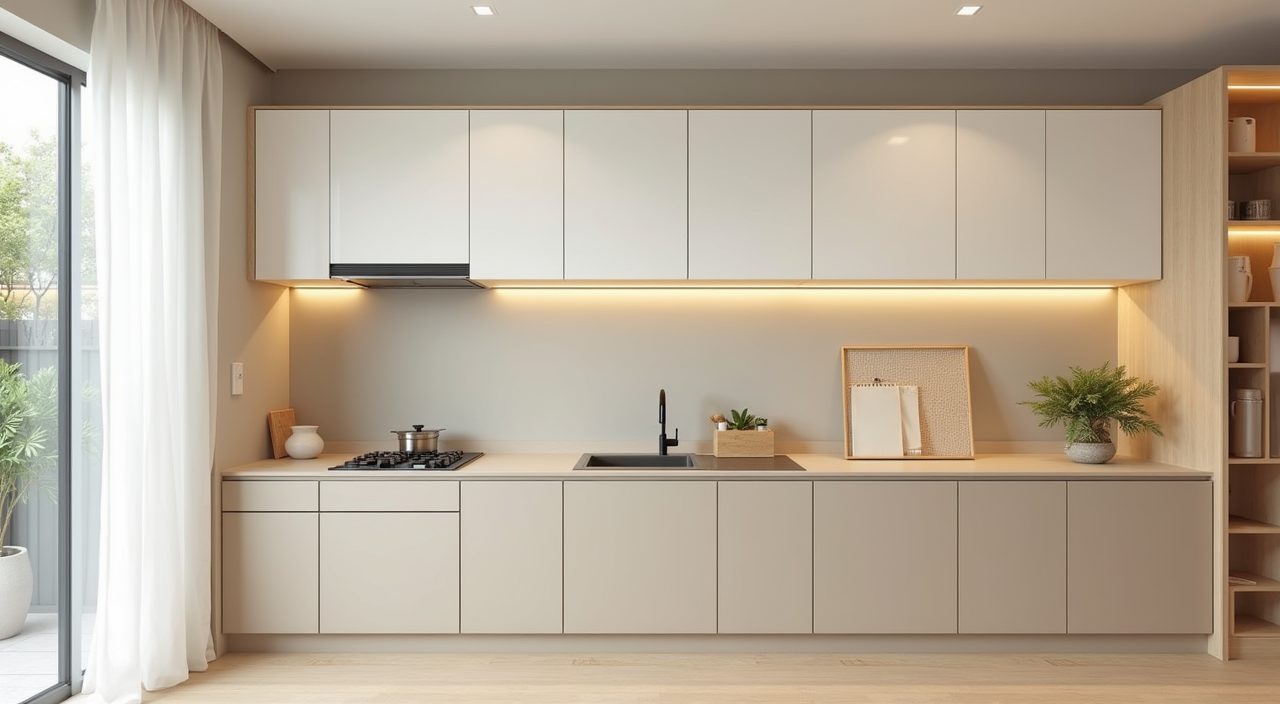
The Muji signature is a narrow, warm neutral palette. Use an off white or oatmeal base on the walls and upper cabinets, then bring warmth with pale oak or light ash on the lower units, open shelves, or a run of tall cabinets. Avoid stark cool white, which reads clinical rather than calm, and skip high contrast black fronts that fight the soft mood.
In Singapore light this matters more than people expect. West facing kitchens get intense late-day glare that makes pure white surfaces harsh, while warm neutrals stay soft. If you want wood without the maintenance of real timber in a humid, splash-prone zone, a good wood-effect laminate or melamine gives you the grain and tone without the swelling risk.
Go handleless with flat, seamless cabinet fronts
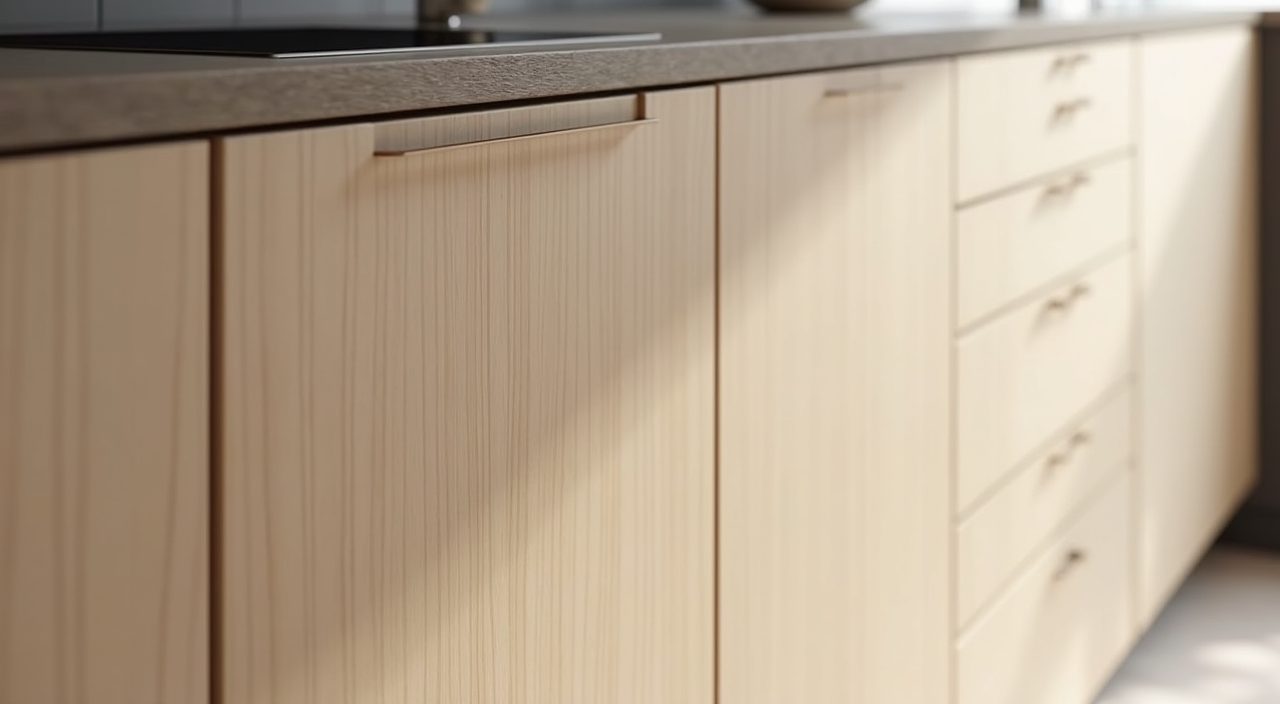
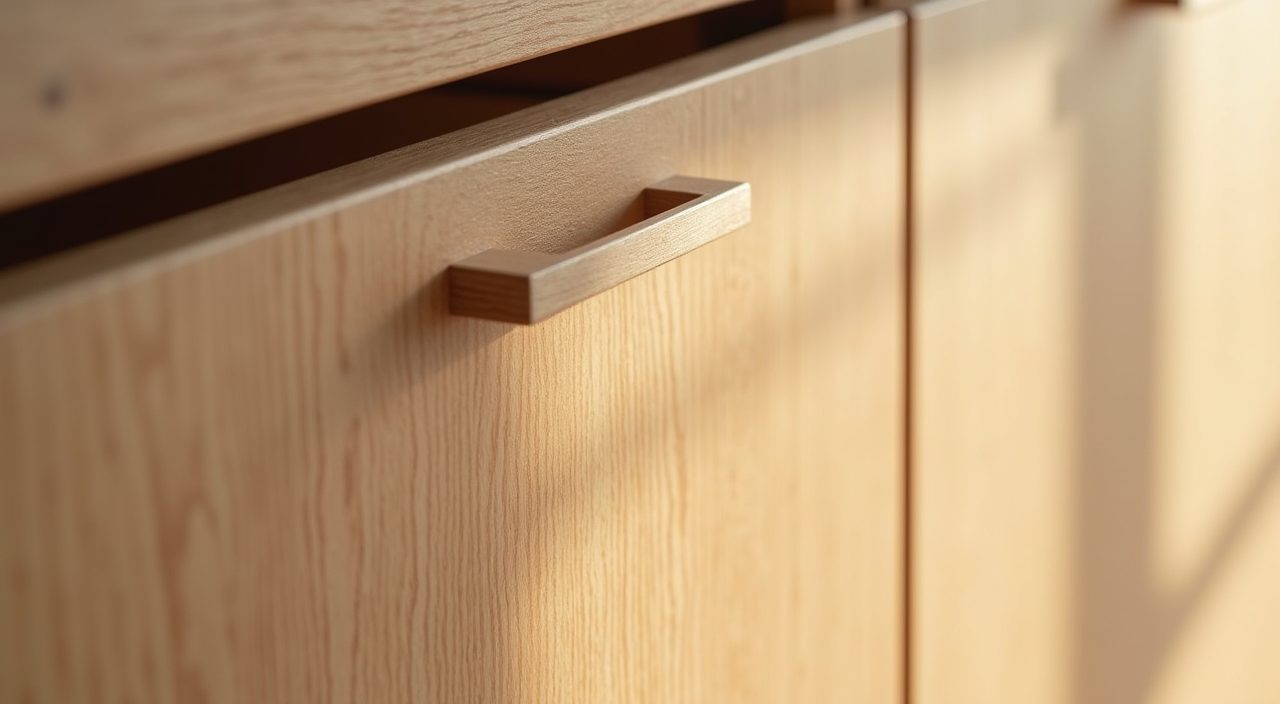
Flat slab doors with no visible handles are core to the look. Use J-pull profiles or push-to-open mechanisms so the fronts stay clean and unbroken. This reads distinctly Japanese and also makes a small galley kitchen feel calmer because there is no row of hardware to catch the eye.
There is a practical tradeoff. Push-to-open hinges can wear or misalign over years of daily use, and greasy fingers show more on matte handleless fronts near the hob. A J-pull channel is often the better call around the cooking zone since you open it with a fingertip in the groove rather than pressing the surface.
Use a mix of closed storage and a little open shelving
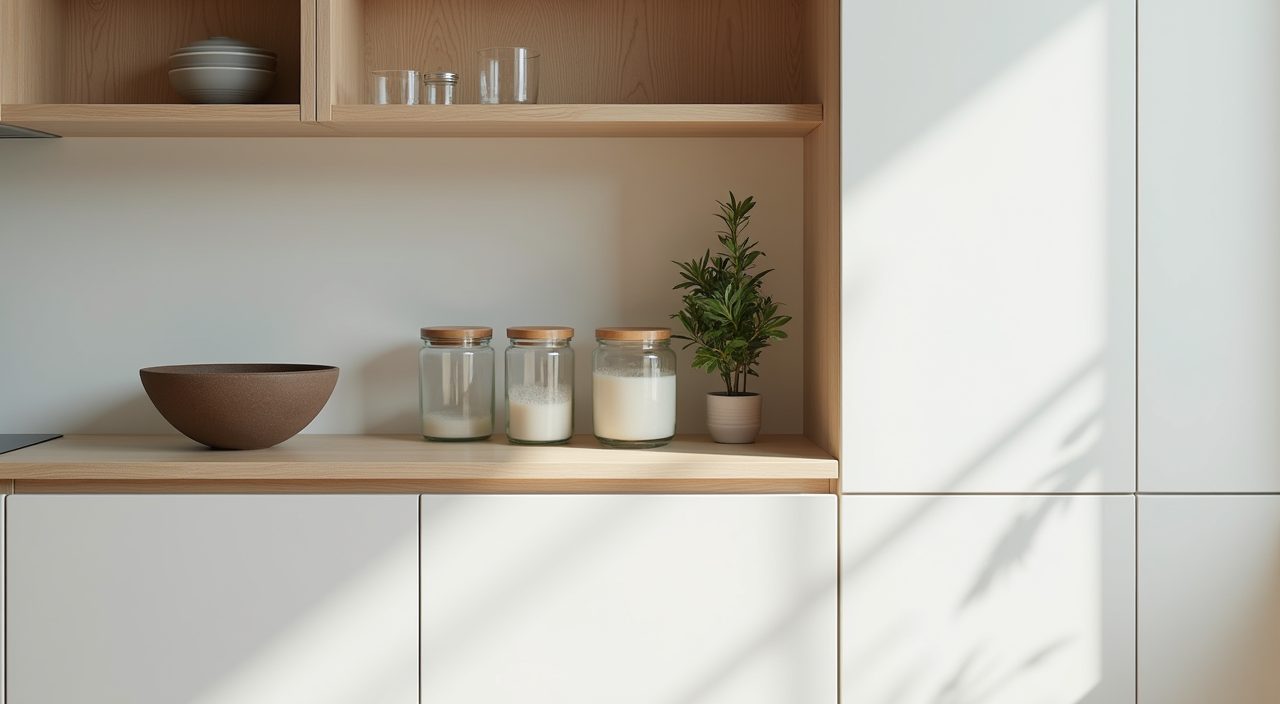
Muji kitchens hide the mess but leave a few honest open shelves for daily-use pieces: rice bowls, a kettle, a couple of plants. The rule is restraint. One or two open shelves styled simply, everything else behind closed doors. Full walls of open shelving look great in photos but collect grease and dust fast in a Singapore kitchen.
Plan storage around what you actually own before locking the layout. Practical Muji-friendly moves include:
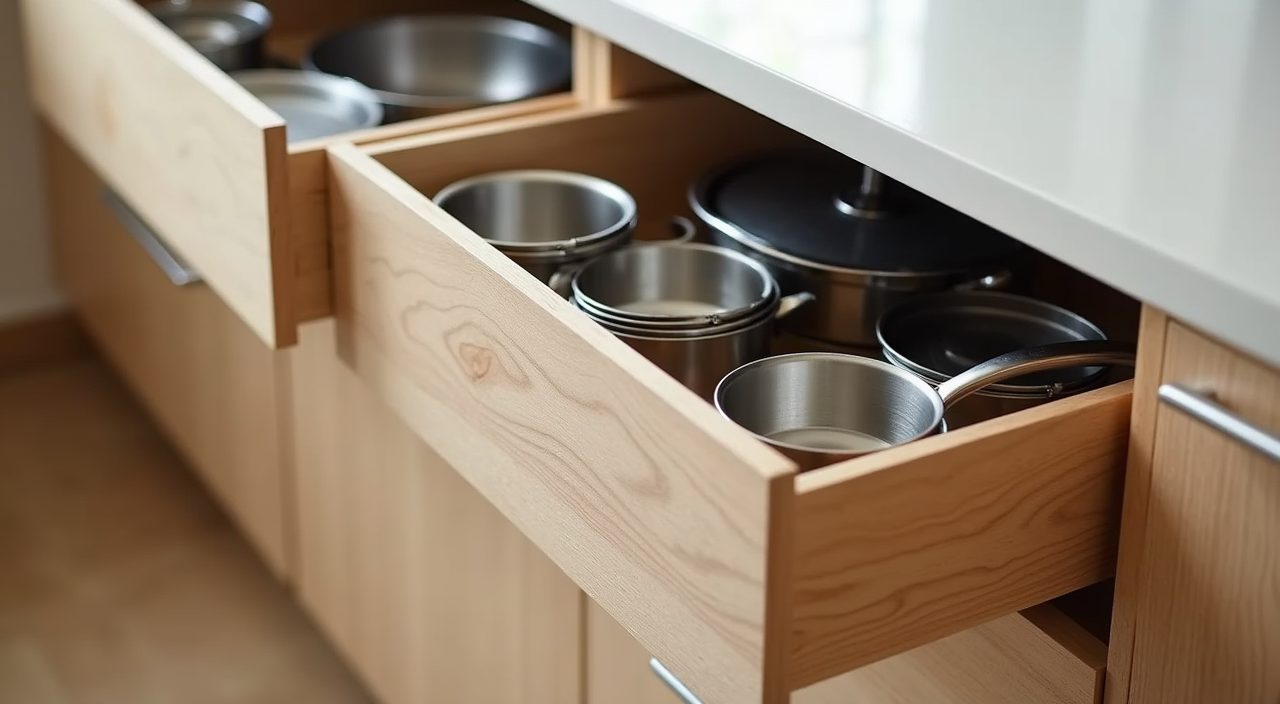
- Deep drawers instead of low cupboards, so you see pots and lids at a glance without crouching.
- A tall pull-out pantry for dry goods, ideal where a bomb shelter (HDB household shelter) eats into your usable wall.
- Sealed or glass-front containers on the open shelf, matched in size, to keep the visual noise down.
Pick calm, low-sheen worktops that handle wok heat and stains
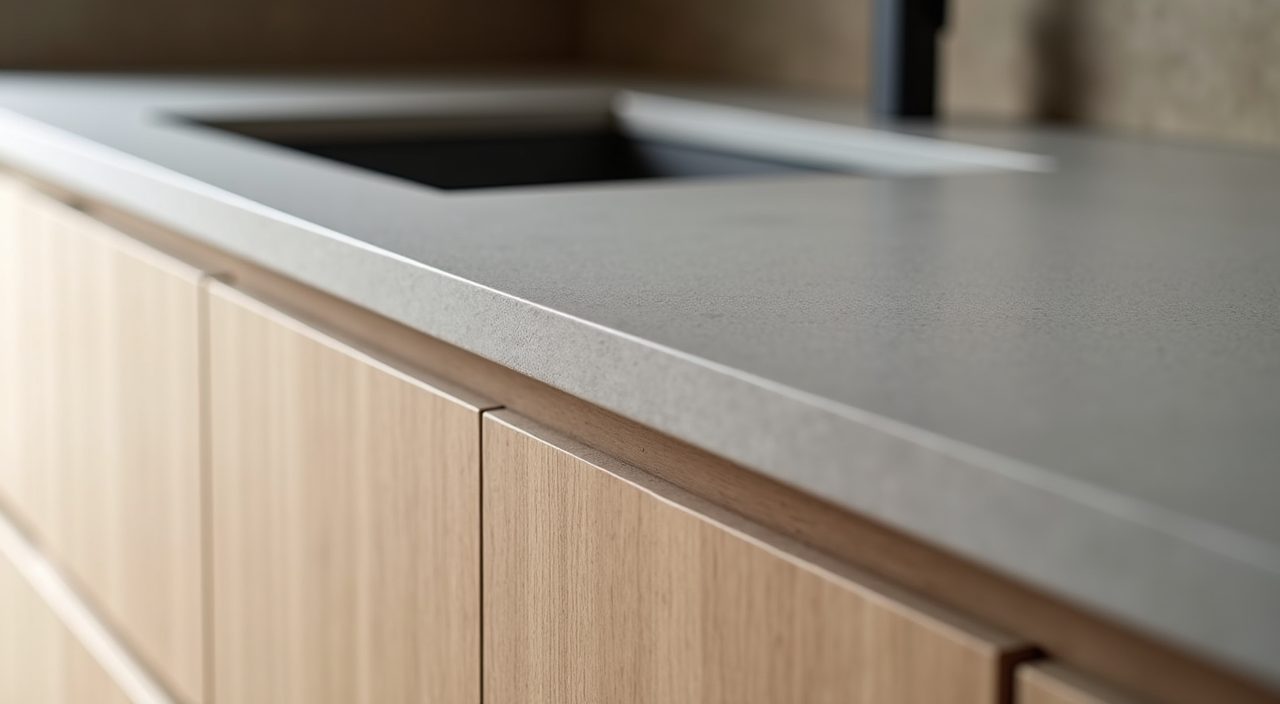
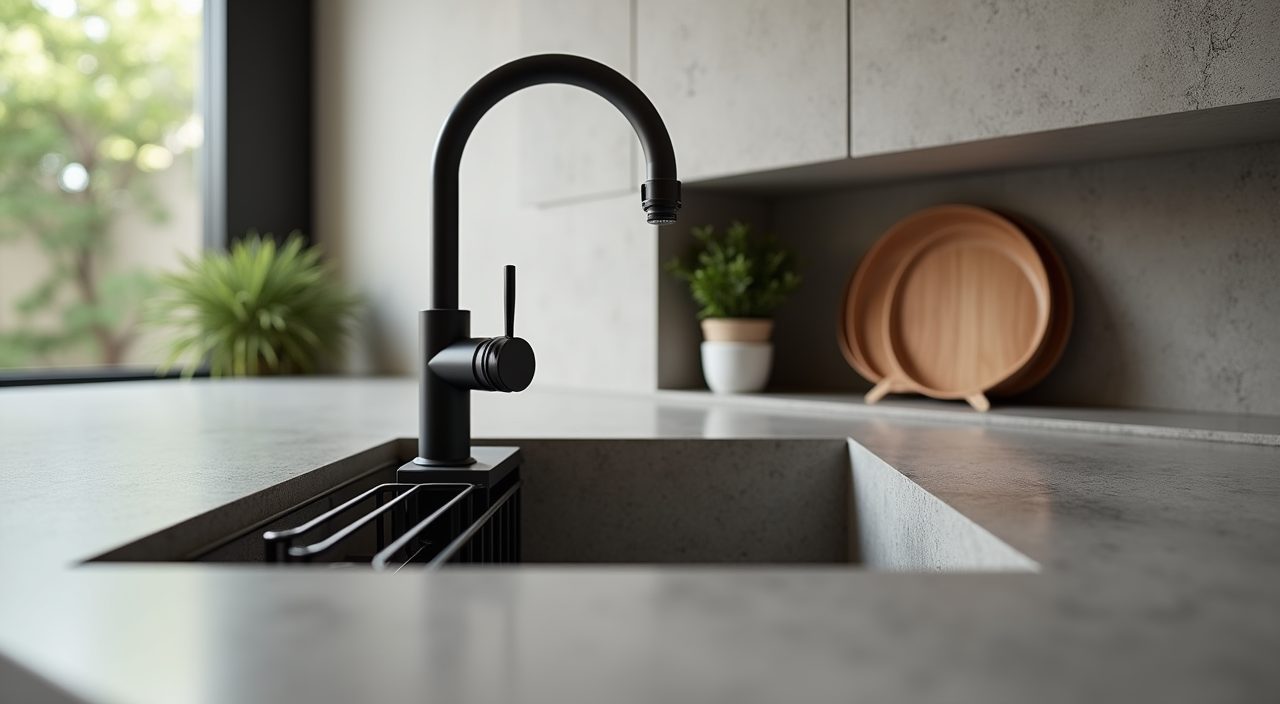
For countertops, quartz (engineered stone) in a soft white, warm grey, or pale beige fits the palette and shrugs off the daily abuse of a Singapore kitchen: turmeric, soy sauce, hot pans, and constant wiping. A honed or matte finish suits the Muji mood better than high gloss, which throws hard reflections under downlights.
Solid wood worktops give the most authentic Japanese warmth but are a real commitment here. Near a wet sink and a high-heat wok zone they need regular oiling and can stain or scorch. A sensible compromise is quartz across the work runs with a small warm-wood element elsewhere, like a breakfast ledge or open shelf, so you get the feeling without the upkeep.
Layer soft, warm lighting instead of one bright ceiling light
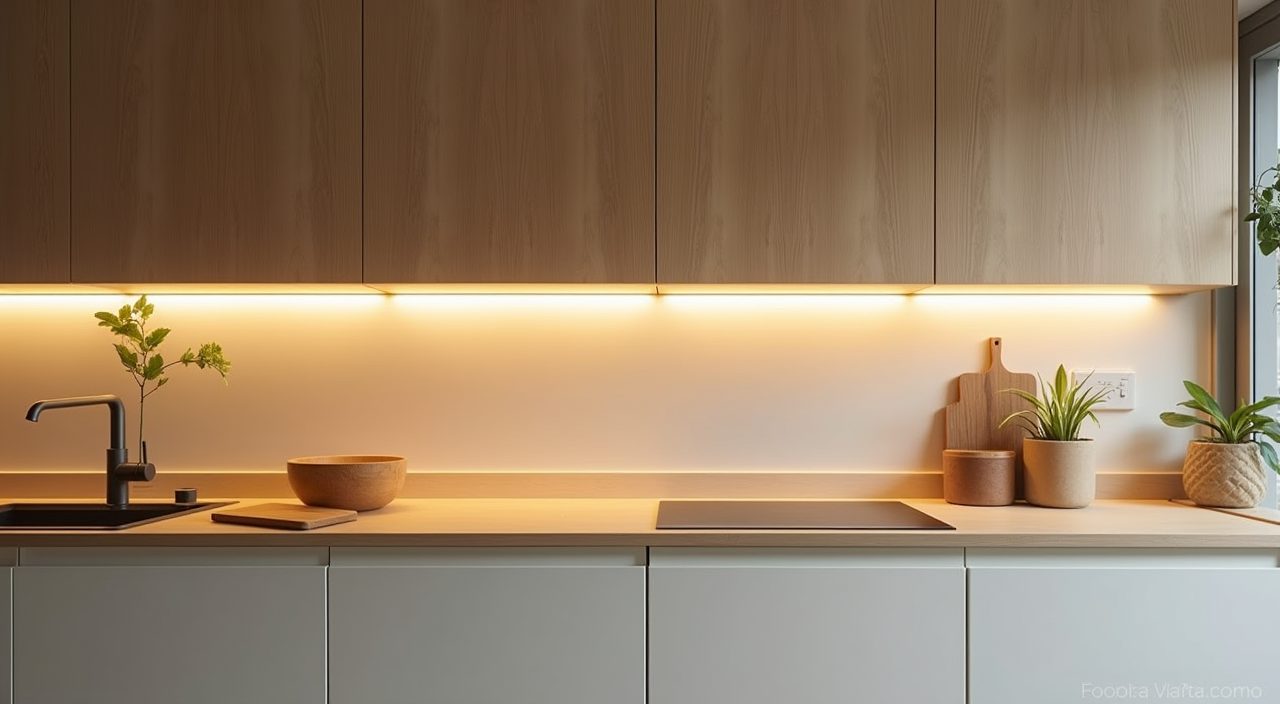
Lighting makes or breaks the calm. Swap the single cool-white ceiling tube for layers: warm-white downlights around 3000K for the room, dedicated task lighting under the wall cabinets for the worktop, and maybe a low warm glow on the open shelf. The goal is even, gentle light with no harsh shadows over your chopping.
Because many HDB and condo kitchens are enclosed and narrow, under-cabinet LED strips do a lot of work: they light the counter without casting your own shadow the way an overhead light does. Keep colour temperature consistent across every fitting so the wood tones stay warm and true rather than shifting grey or yellow.
Choose humidity-friendly finishes and real ventilation
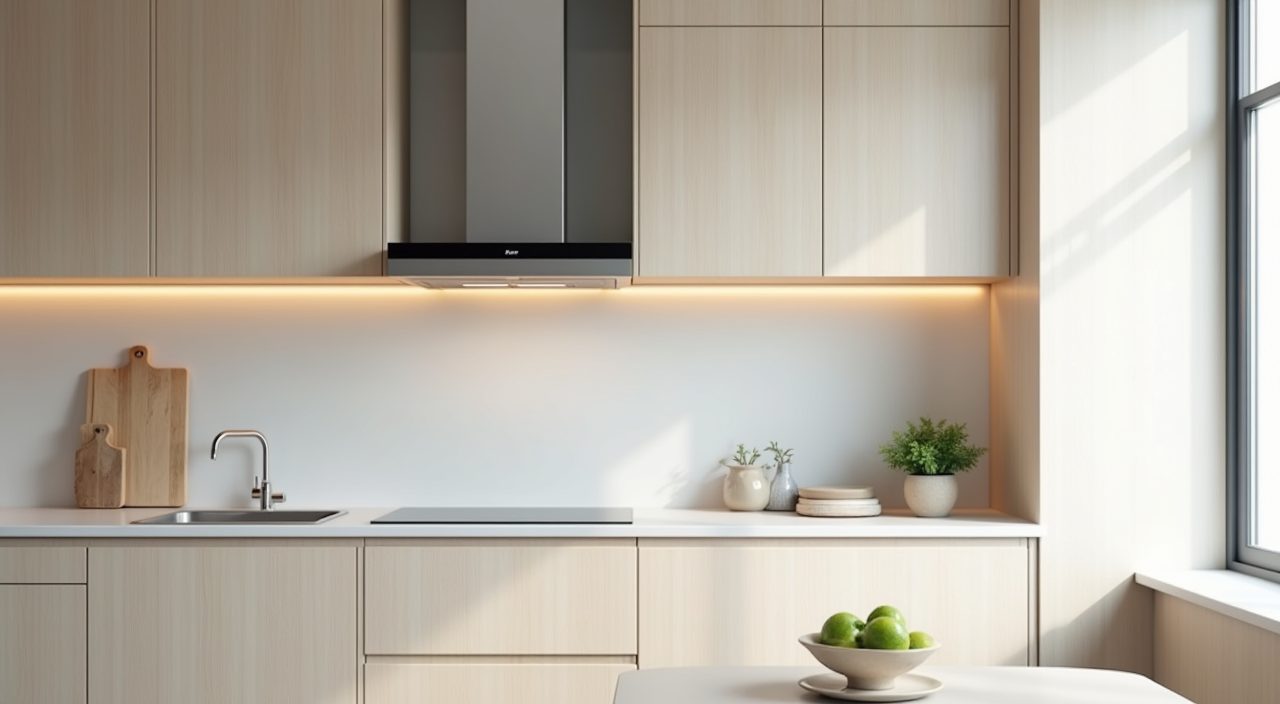
This is the idea most Muji mood boards ignore, and the one that matters most locally. Singapore humidity, plus daily frying, means moisture-resistant materials are not optional. For carcasses and fronts, moisture-resistant plywood or a quality laminate outperforms untreated MDF, which can swell at the edges near the sink over time. Keep any real timber to lower-risk spots away from constant water.
Ventilation protects both the look and the cabinets. A strong hood sized to your hob pulls out grease and steam before it films your pale surfaces and settles into open shelving. If your flat has an open or semi-open kitchen, a more powerful extraction rate helps keep the rest of the home clean, which is what keeps a minimalist scheme looking minimalist rather than grimy.
Keep the backsplash quiet and easy to clean
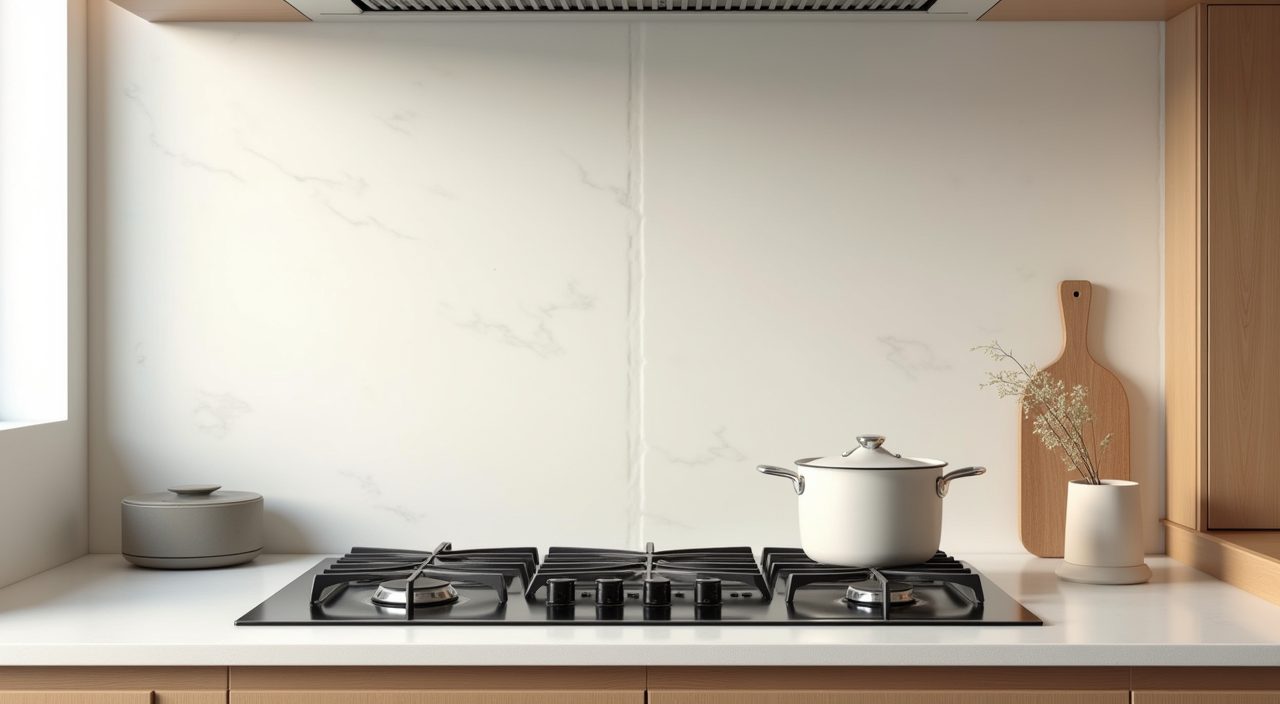
Muji backsplashes stay understated. A plain off white or soft grey subway tile, a large-format porcelain slab, or a simple microcement wall all work, ideally in the same warm family as the cabinets so nothing jumps out. Save the visual interest for the wood grain and the light, not a busy patterned tile.
Behind the hob, prioritise wipe-ability. Large tiles or a single slab mean fewer grout lines to trap oil, which is a genuine advantage in a kitchen that sees regular high-heat cooking. If you love a textured Japanese tile, use it as a small accent panel rather than the whole wall so cleaning stays easy.
Design for a small footprint: galley logic and hidden appliances
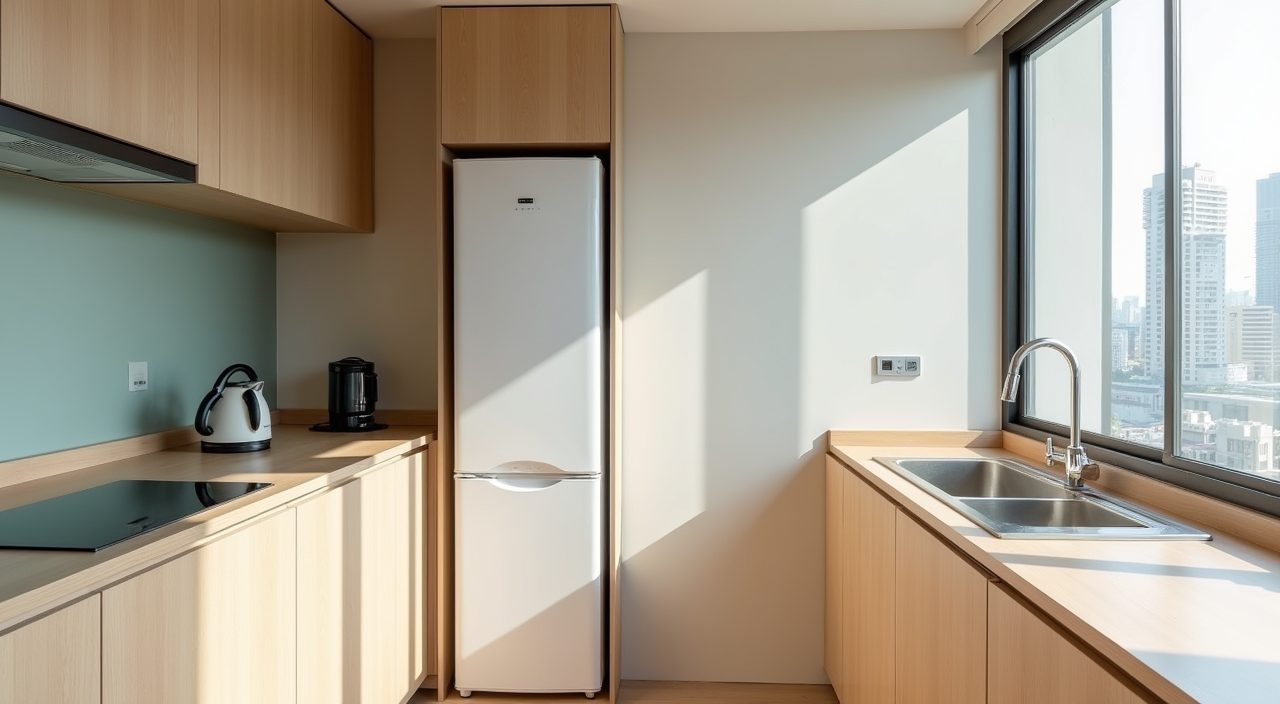
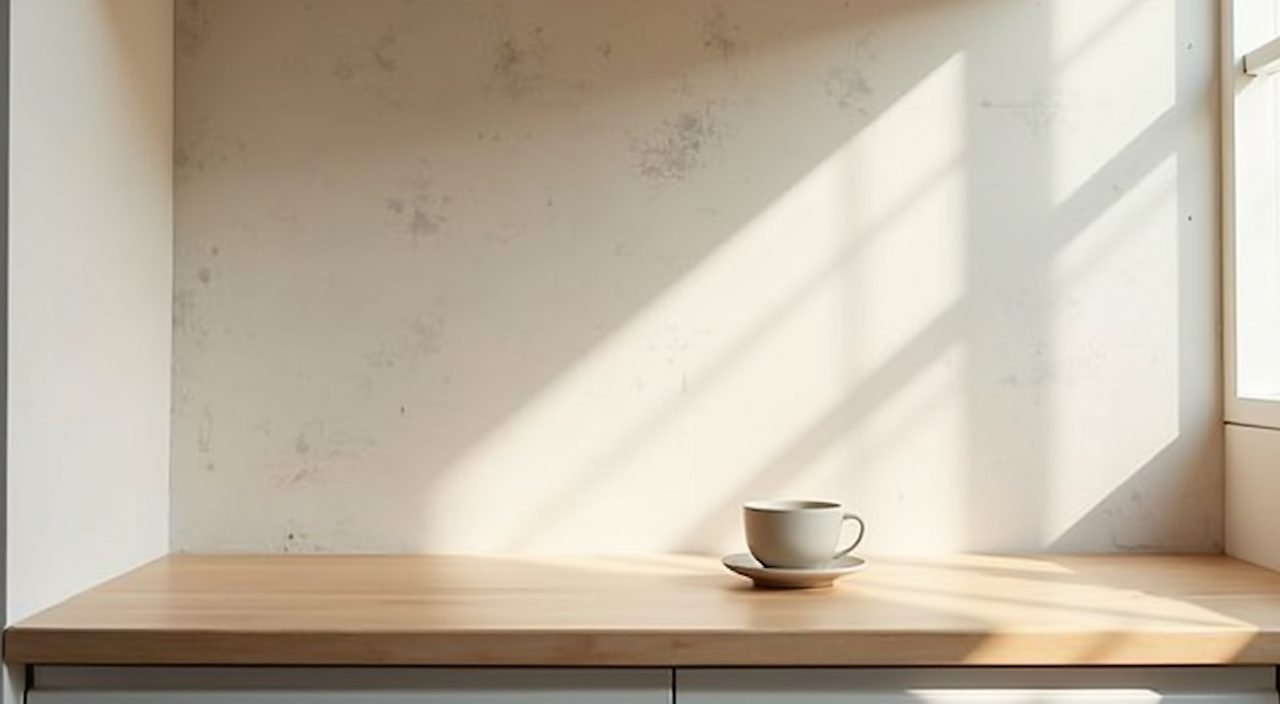
Most Singapore kitchens are galley or single-run, so lean into that rather than fighting it. Keep the counter runs clear, integrate the fridge and any tall appliances behind matching fronts where budget allows, and let the worktop breathe with only a couple of daily items out. Empty counter space is part of the aesthetic, not wasted space.
Small tricks add up. A slim pull-out beside the hob for oils and sauces, a recessed niche for the dish rack, and a single decluttered zone for the kettle and rice cooker all keep the room feeling ordered. In a compact HDB kitchen, the discipline of hiding appliances is what separates a true Muji look from a normal kitchen with beige cabinets.
What to plan and budget for
The Muji look is deceptively simple, and that simplicity is where the cost sits: flat seamless fronts, quality soft-close and push-to-open hardware, consistent lighting, and humidity-safe materials all reward doing it properly the first time. As a rough guide, a modest HDB kitchen refresh (new cabinetry, worktop, backsplash, and lighting) usually starts in the low thousands and climbs quickly once you add integrated appliances, quartz throughout, and full-height storage, so decide early where to spend and where to keep it plain. Budget a little extra for proper ventilation and moisture-resistant carcasses, since cutting corners there is what ages a minimalist kitchen fastest in our climate. When you are ready to move from mood board to real cabinets, plumbing, and wiring, it is worth getting a contractor who can handle a full muji japanese kitchen design Singapore renovation end to end, including the hidden work behind the clean fronts: the hood extraction, the under-cabinet lighting circuits, and the sink and gas connections that make the space actually work.
Frequently asked questions
Does a Muji Japanese kitchen work in a small HDB flat? Yes, and it is arguably the best style for one. The light palette, handleless fronts, and hidden storage make a compact 6 to 8 square metre kitchen feel larger and calmer, as long as you plan storage around what you own and keep the counters clear.
Is real wood a good idea in a humid Singapore kitchen? Use it sparingly. Solid timber gives the most authentic warmth but swells, stains, and needs oiling near sinks and high-heat cooking. A good wood-effect laminate or melamine gives you the grain and tone with far less maintenance, and you can reserve a small piece of real wood for a low-risk spot like a shelf or breakfast ledge.
How do I keep pale Muji surfaces from looking dirty over time? Two things matter most: strong ventilation and easy-clean finishes. A properly sized hood pulls grease and steam out before it films your surfaces, and larger tiles or slab backsplashes mean fewer grout lines to trap oil. Matte fronts hide fingerprints better than gloss, but choose J-pull channels near the hob so you are not pressing greasy surfaces to open doors.
What is the difference between a Muji kitchen and just a minimalist kitchen? Muji is a warmer, softer take on minimalism. Instead of stark white and hard edges, it leans on natural wood tones, off-white neutrals, gentle warm lighting, and a lived-in but tidy feel. The aim is calm and comfort, not a showroom, so a few honest everyday items on display are part of the look.