Muji Japanese Living Room Design Ideas for Singapore Homes
Muji Japanese living room ideas built for Singapore HDB flats and condos: warm neutral palettes, low furniture, smart storage and tropical-friendly finishes.
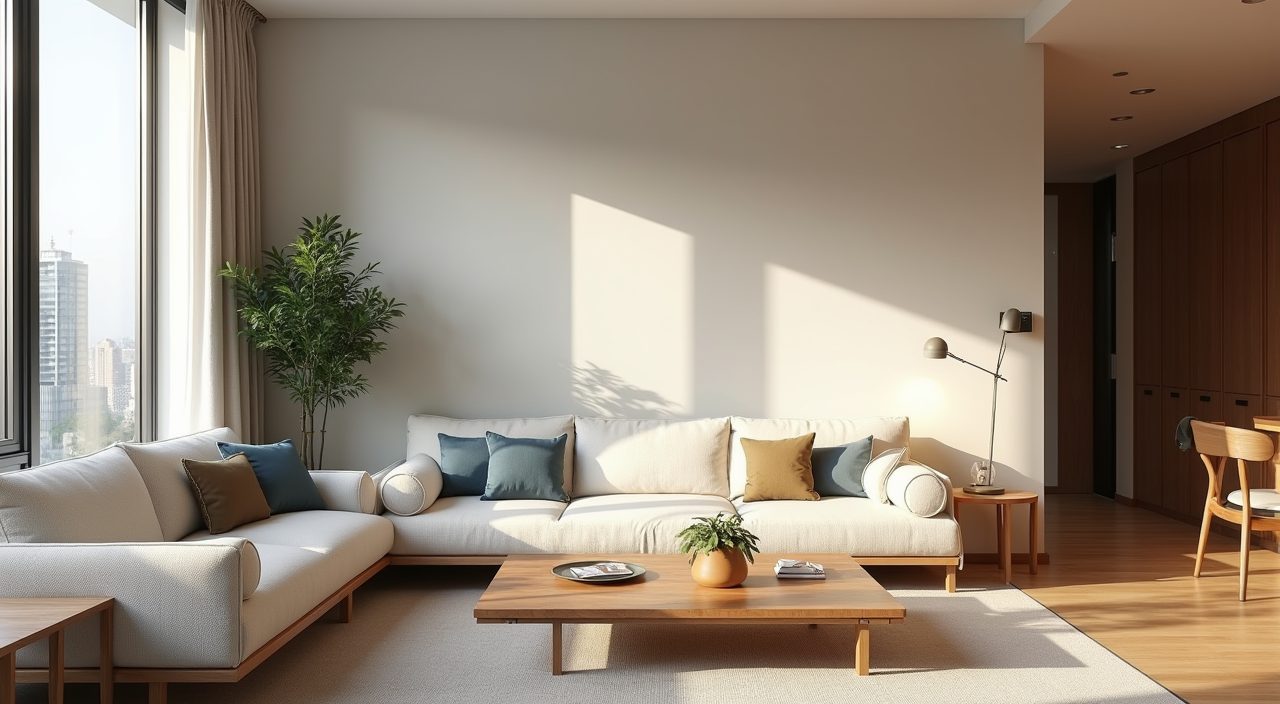
To design a Muji Japanese living room well in a Singapore home, keep the palette to warm off-whites and light woods, choose low and low-visual-weight furniture, and hide clutter behind flush, handleless storage so the room reads calm and open. Favour matte finishes, natural textiles like cotton and linen, and layered soft lighting instead of a single bright ceiling light. In small HDB and condo living rooms, the biggest gains come from restraint: fewer pieces, more breathing space, and finishes that hold up in a hot, humid climate.
Muji style (sometimes written as MUJI or Japandi when mixed with Scandinavian influences) is really a set of decisions about material, colour and proportion rather than a single look. It suits Singapore because it works beautifully in compact spaces, it reads bright under our diffused tropical light, and its love of built-in, concealed storage answers the very real problem of living with little space. The ideas below are ordered from the choices that shape the whole room down to the details that finish it.
Build the palette on warm off-white, oatmeal and light wood
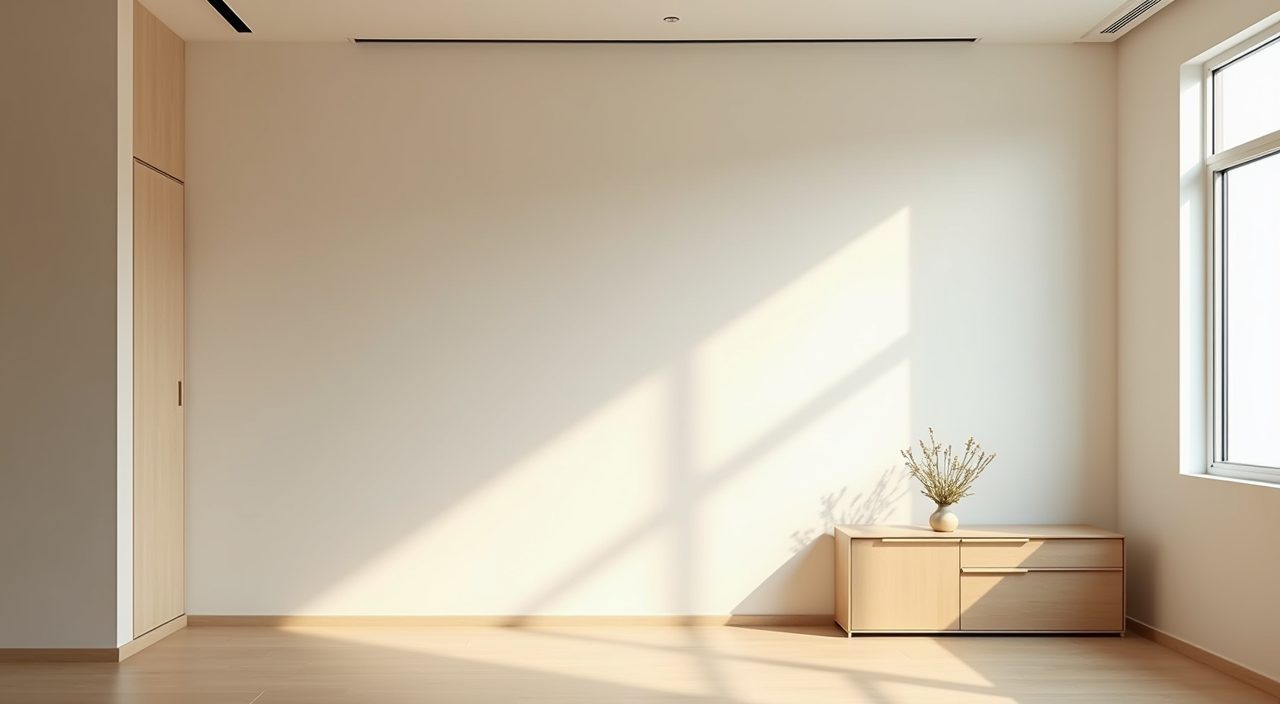
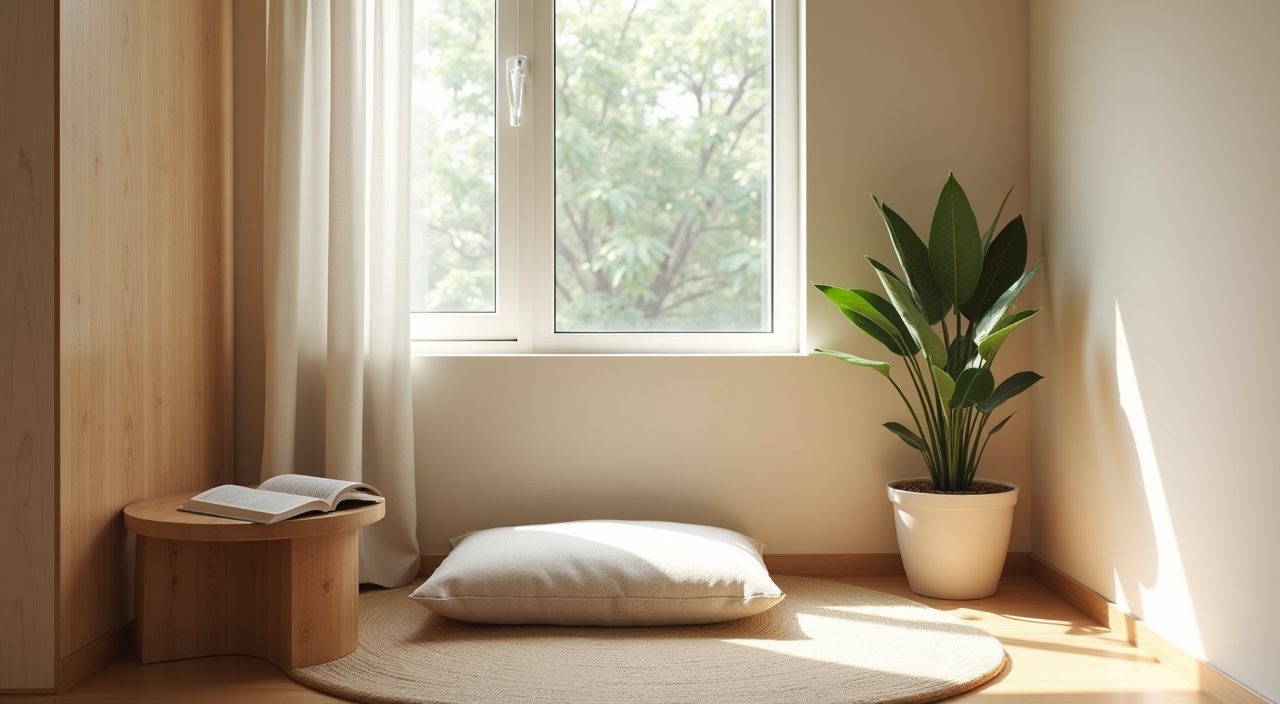
The Muji base is not stark white. Reach for warm off-whites, oatmeal, soft greige and pale sand on the walls, then let light wood carry the warmth on furniture and floors. Oak, ash and light-toned engineered wood give that honeyed Japanese feel without going orange. Keep contrast low so the eye relaxes, and add depth through texture (a nubby cushion, a raw-linen curtain) rather than through loud colour.
In a typical HDB living room, painted walls in a warm neutral will feel more expansive than a feature wall in a dark shade. If you want an accent, use a single muted tone like clay, sage or a soft charcoal on one wall or in the textiles, and keep everything else quiet. Under Singapore's bright but diffused daylight, these warm neutrals stay soft and never go cold or clinical the way pure white can.
Keep furniture low, light and few
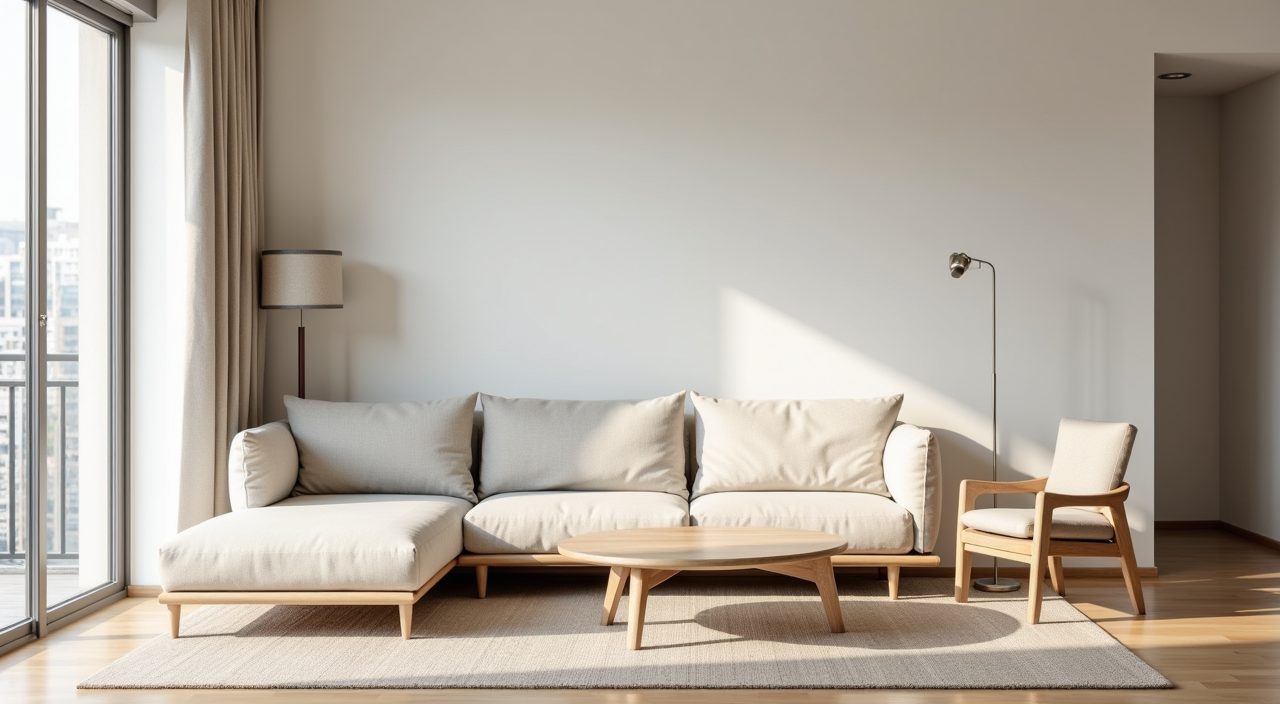
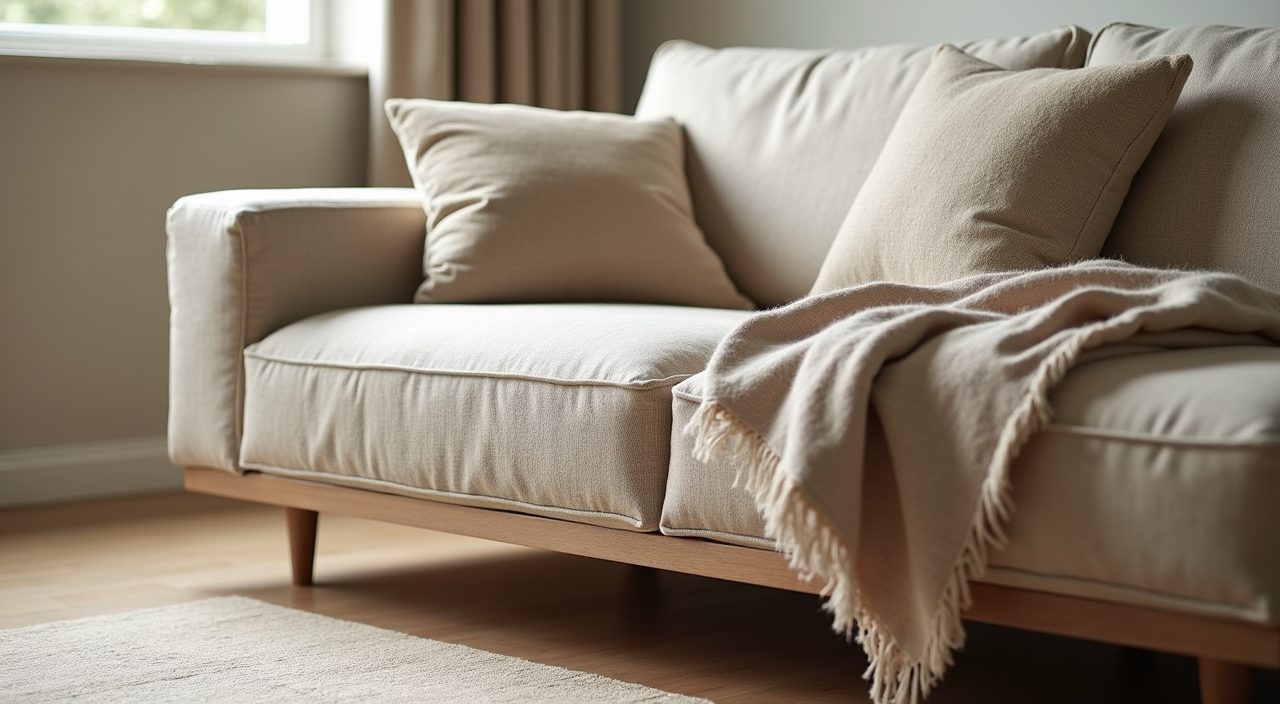
Japanese living rooms sit low to the ground, which makes ceilings feel taller and small rooms feel calmer. Choose a low-back sofa, a low timber coffee table, and slim-legged or platform pieces that let you see floor underneath. Visible floor is the trick that makes a 3-room HDB living room breathe. Resist the urge to fill every wall; negative space is part of the design, not a gap to fill.
Buy fewer, better pieces rather than a full matching set. A modular fabric sofa, one accent chair, a low sideboard and a floor cushion or two is often enough for a condo living room. If you host often, a nesting or extendable coffee table and a couple of stools that tuck away give you flexibility without permanent bulk.
Hide clutter with flush, handleless built-in storage
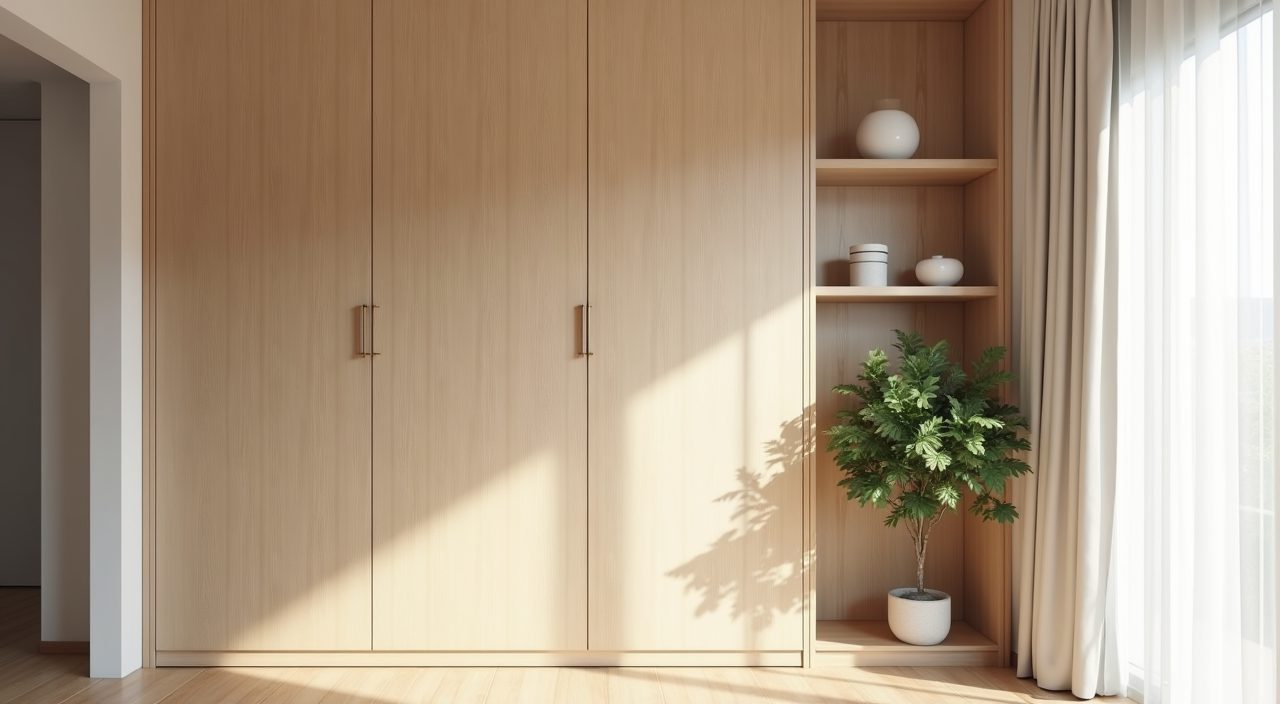
Storage is where Muji calm lives or dies. Aim for full-height built-in carpentry with flush, handleless doors (push-to-open or a slim finger groove) in a light wood laminate or matte off-white. A run of concealed cabinets along one wall can swallow the TV console, shoe overflow, cleaning gear and the general life-clutter that makes small rooms feel chaotic.
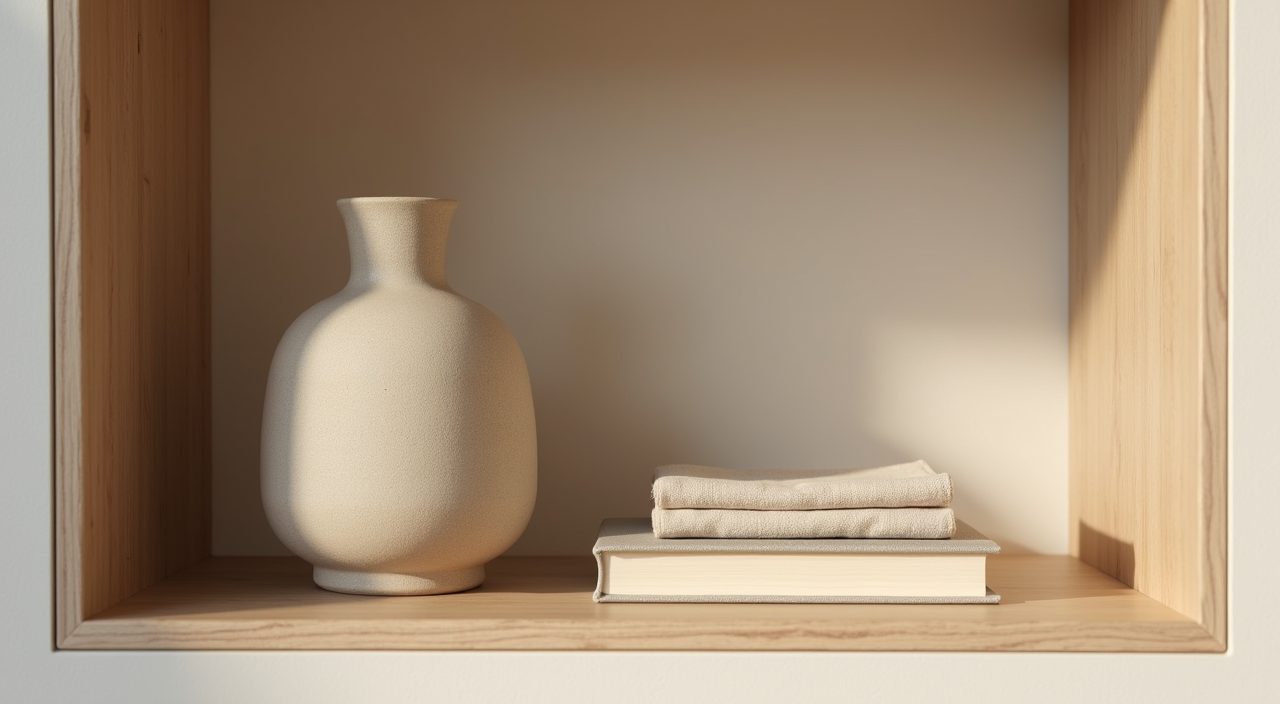
Mix closed and open storage deliberately. Keep most things behind doors, then leave a few open niches for a plant, a couple of books and one ceramic object. That ratio (mostly hidden, a little curated on display) is what separates a real Muji room from a showroom that looks empty.
- Full-height carpentry to the ceiling avoids a dust-catching gap and maximises storage in a small footprint.
- Push-to-open or finger-groove fronts keep the surface clean and hardware-free.
- Reserve one or two open shelves for styling, and keep the rest closed.
Choose finishes that survive tropical heat and humidity
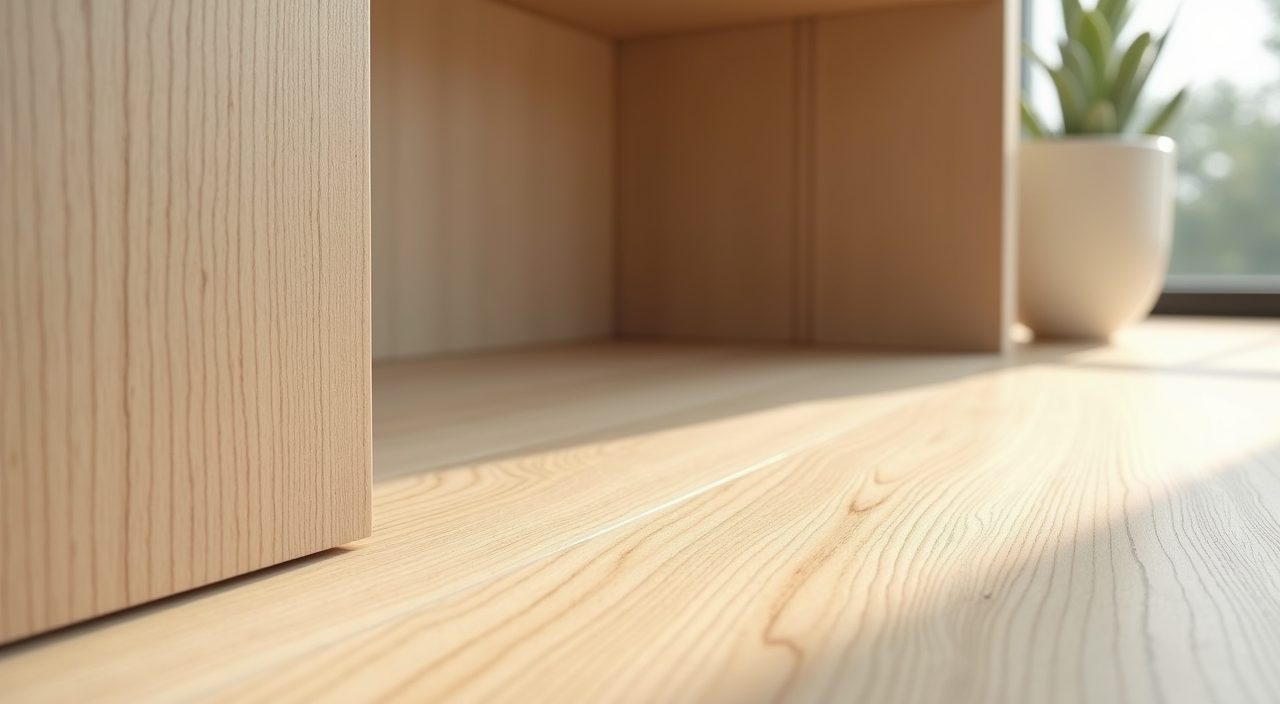
Singapore's humidity is unkind to solid timber and to anything that traps moisture. For flooring, light-toned engineered wood or a good wood-look SPC or vinyl plank gives the Muji warmth while handling humidity and the occasional mop far better than solid parquet. For carpentry, a quality laminate or a matte melamine in a light wood grain resists swelling and is easy to wipe down.
Lean toward matte over gloss everywhere. Matte hides fingerprints and the fine haze that builds up in a tropical home, and it reads softer and more natural, which is the whole point. Where you do want real wood, use it in small doses (a solid oak tray, a timber stool) that are easy to oil and maintain rather than large solid pieces that can warp.
Layer soft, warm lighting instead of one bright ceiling light
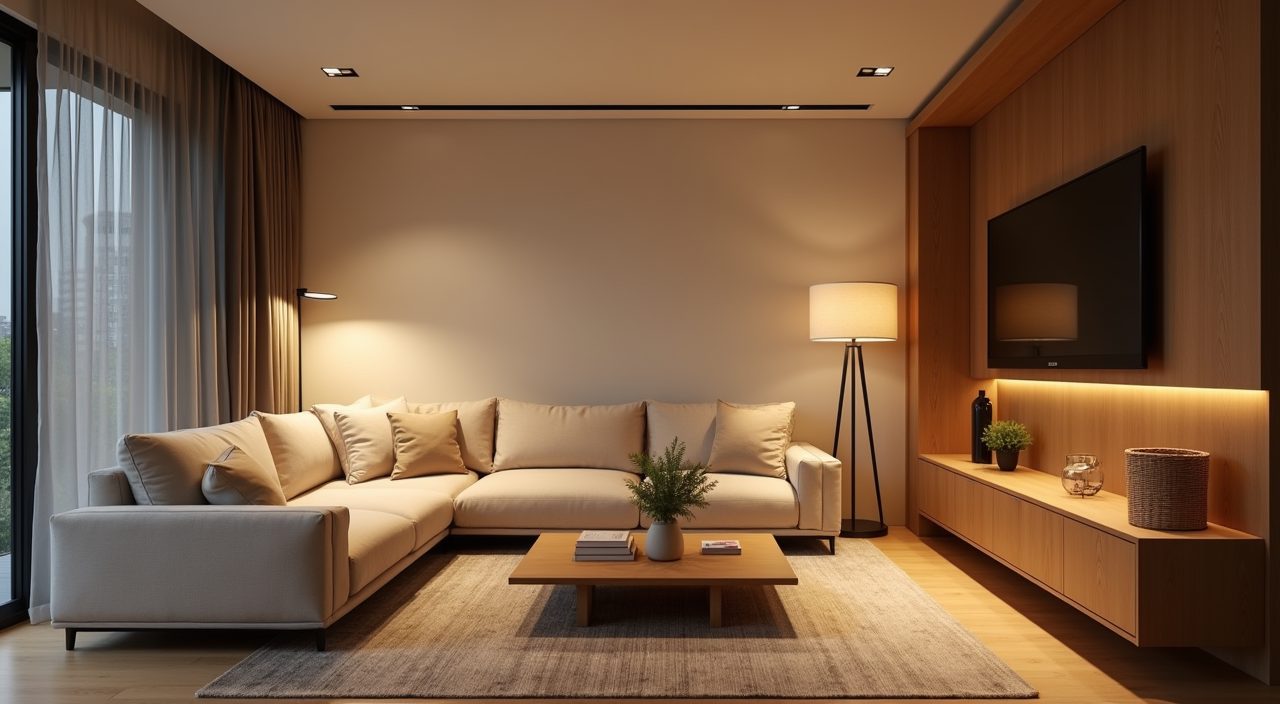
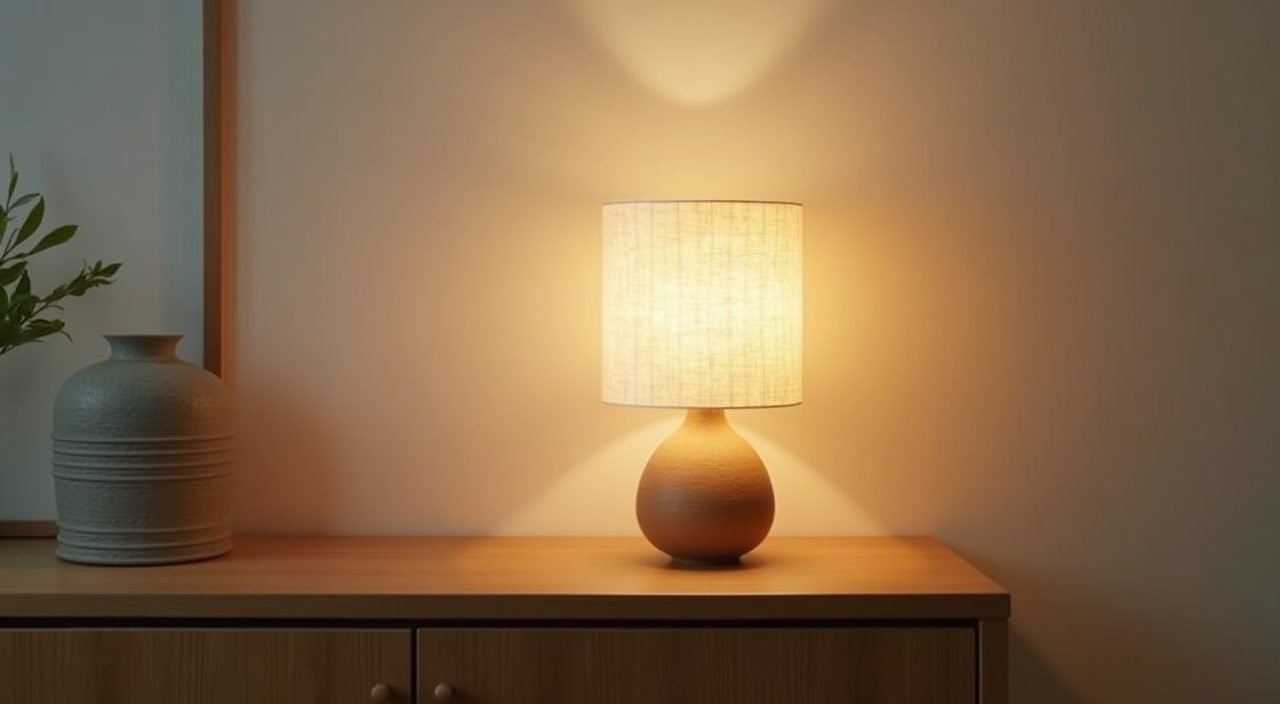
The single bright cool-white ceiling light in most Singapore flats is the enemy of a calm Muji room. Switch to warm white (around 2700K to 3000K) and build up light in layers: recessed or track downlights for general light, a floor or table lamp with a paper or fabric shade for evening warmth, and a slim strip tucked above the TV feature or under a shelf for a soft glow.
Dimmers are worth the small extra cost because they let the same room go from bright and functional in the day to low and restful at night. A rice-paper style lamp or a simple linen-shade floor lamp is a classic Muji touch that adds warmth without clutter.
Filter the harsh tropical sun with light, natural window treatments
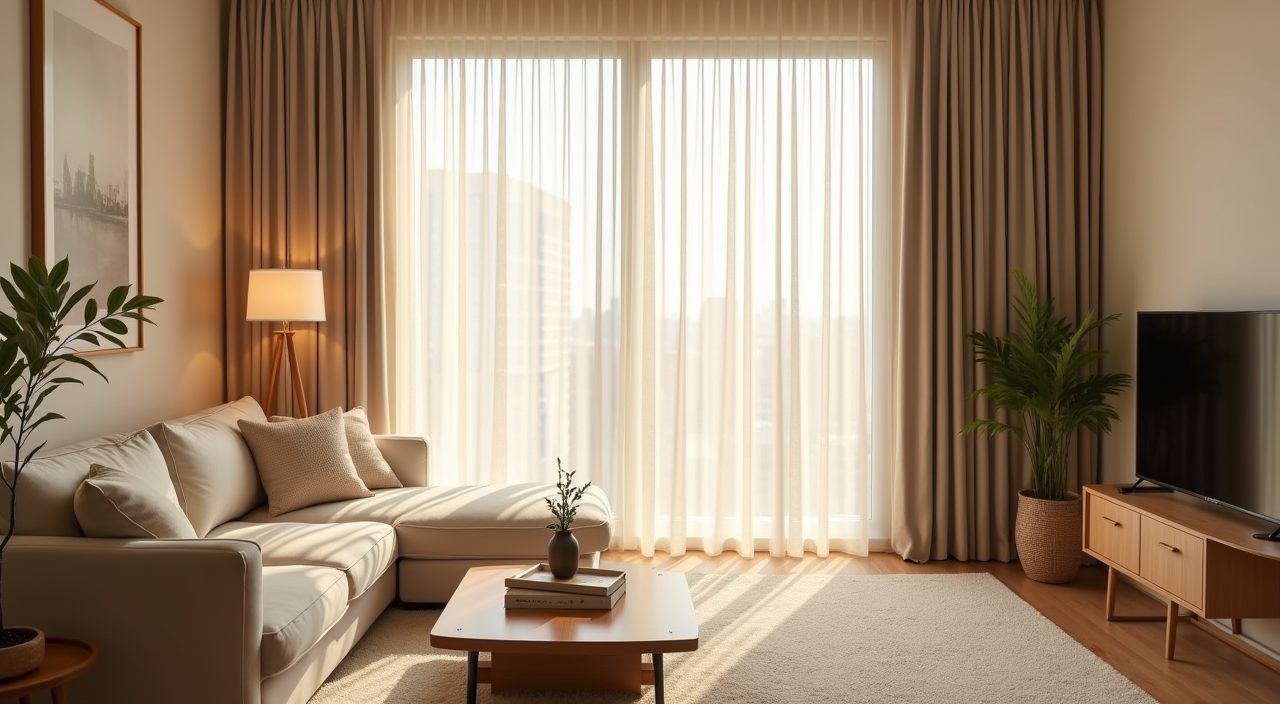
Singapore light is strong and often harsh, so the goal is to soften it, not block it. Sheer linen or cotton-blend curtains diffuse the glare and give that gentle, glowing quality you see in Japanese interiors. Pair them with a day-night or dual-track system so you can add a heavier layer for west-facing units that get brutal afternoon sun.
Keep curtain colours in the same warm-neutral family as the walls so the window reads as a soft field of light rather than a hard frame. Timber or bamboo-look blinds are a good alternative in a condo, adding natural texture while still filtering the heat and light.
Add life with a few plants and natural textures
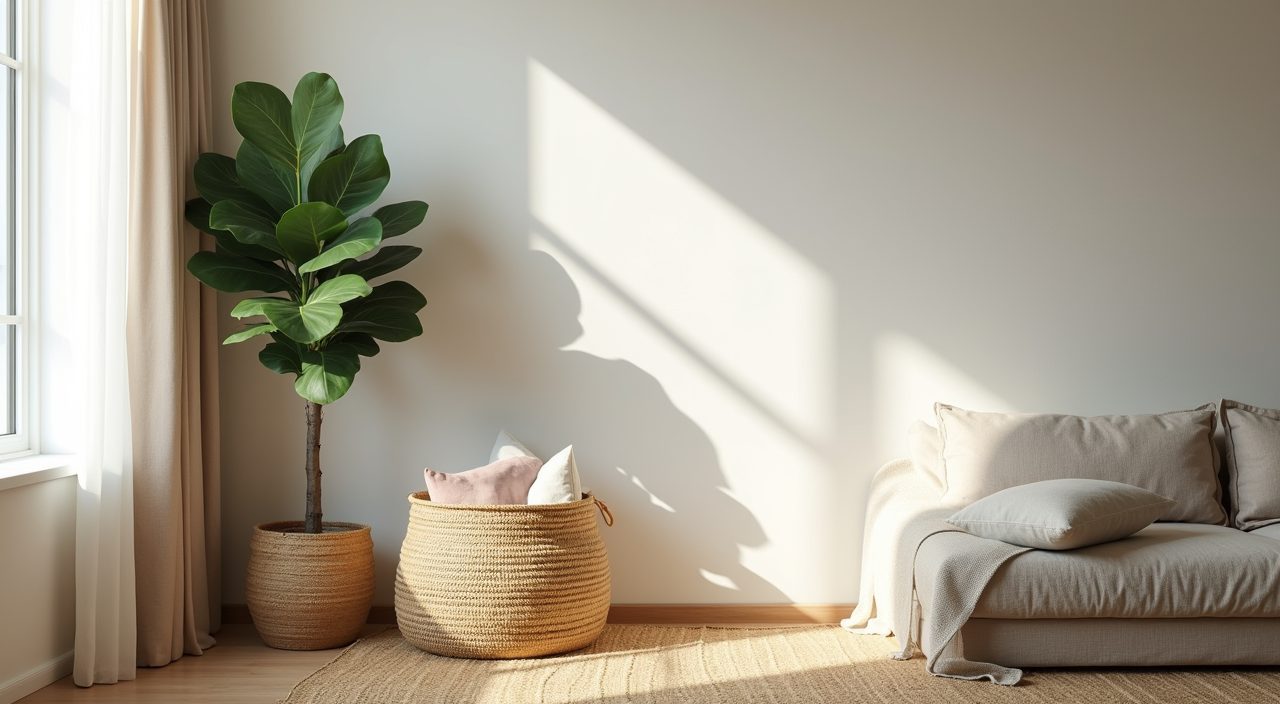
A Muji room is quiet, not cold, and greenery is how you warm it up. One or two well-chosen plants do more than a shelf full of small pots. Species that cope with indoor Singapore conditions and lower light, such as a fiddle-leaf fig near a window, a snake plant, or a pot of areca palm, bring in organic shape without demanding much.
Support the greenery with natural texture elsewhere: a jute or wool-blend rug to define the seating zone, a rattan basket for throws, linen cushion covers, and a ceramic or stoneware object or two. These textures give the neutral palette depth so the room feels layered and lived-in rather than bare.
Define zones in an open-plan layout without adding walls
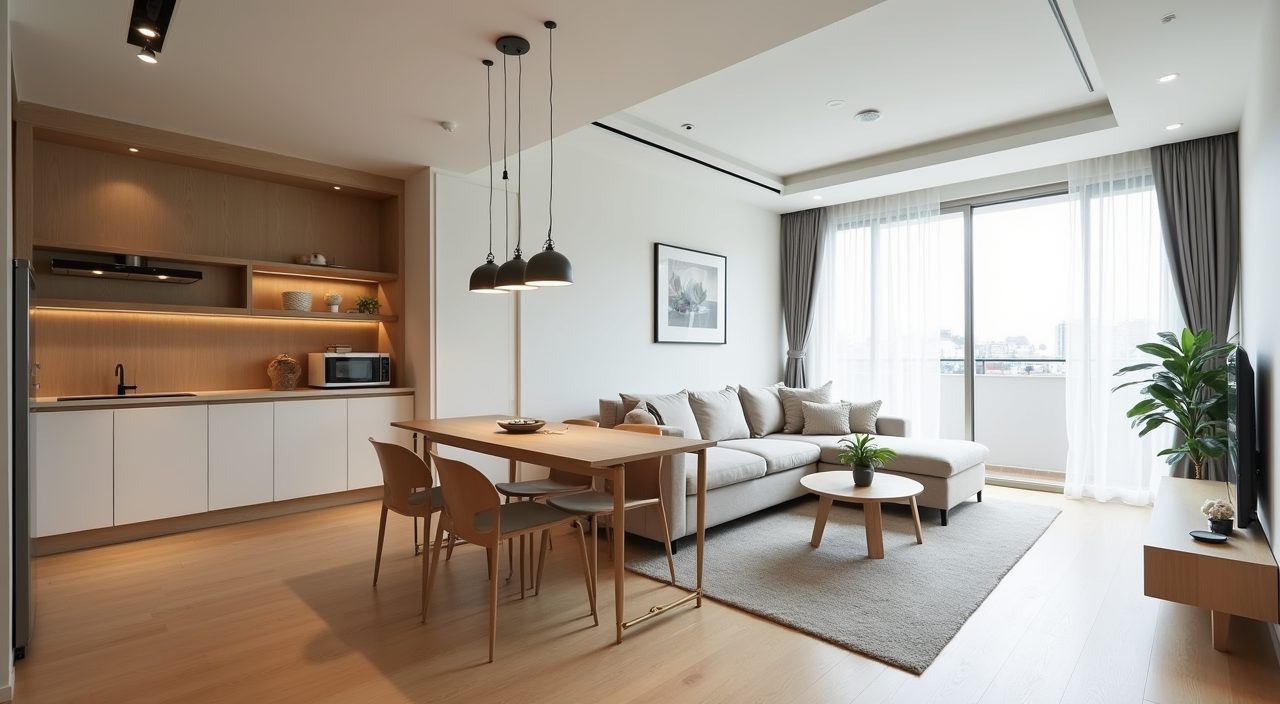
Many newer condos and BTO flats come as one open living and dining space. Rather than building walls, define the living zone with a rug, the orientation of the sofa, and a low sideboard or open timber shelf that gently separates areas while keeping sightlines and light flowing. This keeps the airy, open quality that makes small Singapore homes feel bigger.
A low bench or a slim console behind the sofa can mark the boundary between living and dining, double as storage, and hold a lamp for that layered lighting. The principle throughout is subtraction: suggest the boundary, do not wall it off.
What to plan and budget for
The look is simple, but achieving it well is mostly about carpentry, finishes and lighting, and that is where the money goes. Built-in storage is usually the single largest line item, so budget for custom carpentry priced by the running foot, and expect flooring, painting, curtains and a lighting rewire to add up on top. A light cosmetic refresh of an existing living room sits at the lower end, while full-height built-ins, new flooring and rewired lighting push the cost up considerably. Get itemised quotes and be clear about laminate grades and lighting specs, since those choices drive both the price and the final feel. Because so much of this style depends on precise carpentry, level walls, hidden wiring and proper lighting circuits, it pays to work with an experienced contractor for the muji japanese living room design singapore renovation rather than treating it as a pure furniture-and-styling job. Clarify what is contractor scope (carpentry, electrical, flooring, painting) versus what you will buy loose (sofa, lamps, plants, textiles) before you commit.
Frequently asked questions
Does the Muji Japanese look work in a small HDB flat? Yes, and arguably it works best there. The low furniture, light palette and concealed storage all make compact rooms feel larger and calmer, which is exactly what a 3-room or 4-room HDB living room needs.
Is real wood a good idea given Singapore's humidity? Use it sparingly. Light-toned engineered wood or quality wood-look SPC flooring and laminate carpentry give you the warm Muji feel while handling humidity far better than large solid-timber pieces, which can warp or swell over time.
How is Muji style different from Japandi? Muji is the pared-back, natural-material Japanese base. Japandi blends that base with Scandinavian influences, so it tends to allow slightly more contrast, a few darker accents and more sculptural furniture. For Singapore homes the two overlap heavily, and you can lean either way on the same warm-neutral, light-wood foundation.
Do I need a renovation contractor or can I just buy furniture? You can get part of the way with furniture and styling alone, but the calm, seamless result depends on built-in storage, good flooring and layered warm lighting. Those need carpentry and electrical work, so a contractor is worth involving if you want the full effect rather than a room that only looks the part.