Resale Flat Master Bedroom Design Ideas
Practical master bedroom design ideas for Singapore resale flats: palettes, storage, lighting and layout that suit HDB sizes, tropical heat and humidity.
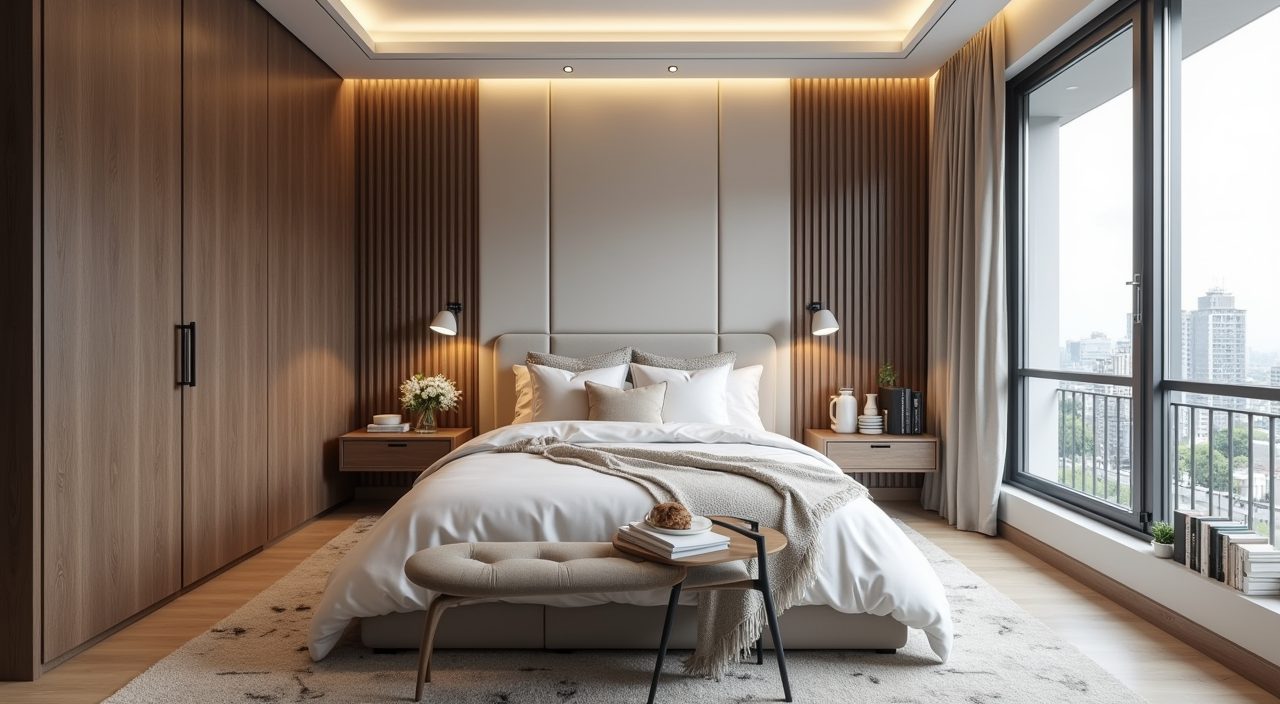
Design a resale flat master bedroom around three things: a calm light palette that reflects Singapore's strong daylight, storage that runs floor to ceiling so the small footprint stays uncluttered, and moisture-smart finishes that hold up to year-round humidity. Keep the bed on the wall furthest from the door, use layered lighting instead of one harsh ceiling light, and choose materials that wipe clean and resist mould.
A typical HDB resale master bedroom runs roughly 10 to 14 sqm in a 4-room or 5-room flat, often with an attached bathroom in newer blocks and a window or two facing an internal corridor or open sky. Older resale units may have quirks like a low false ceiling, an odd beam, or an existing built-in wardrobe that has seen better days. The ideas below work with those real constraints rather than pretending you have a showflat.
Pick a light, warm-neutral palette that handles tropical glare
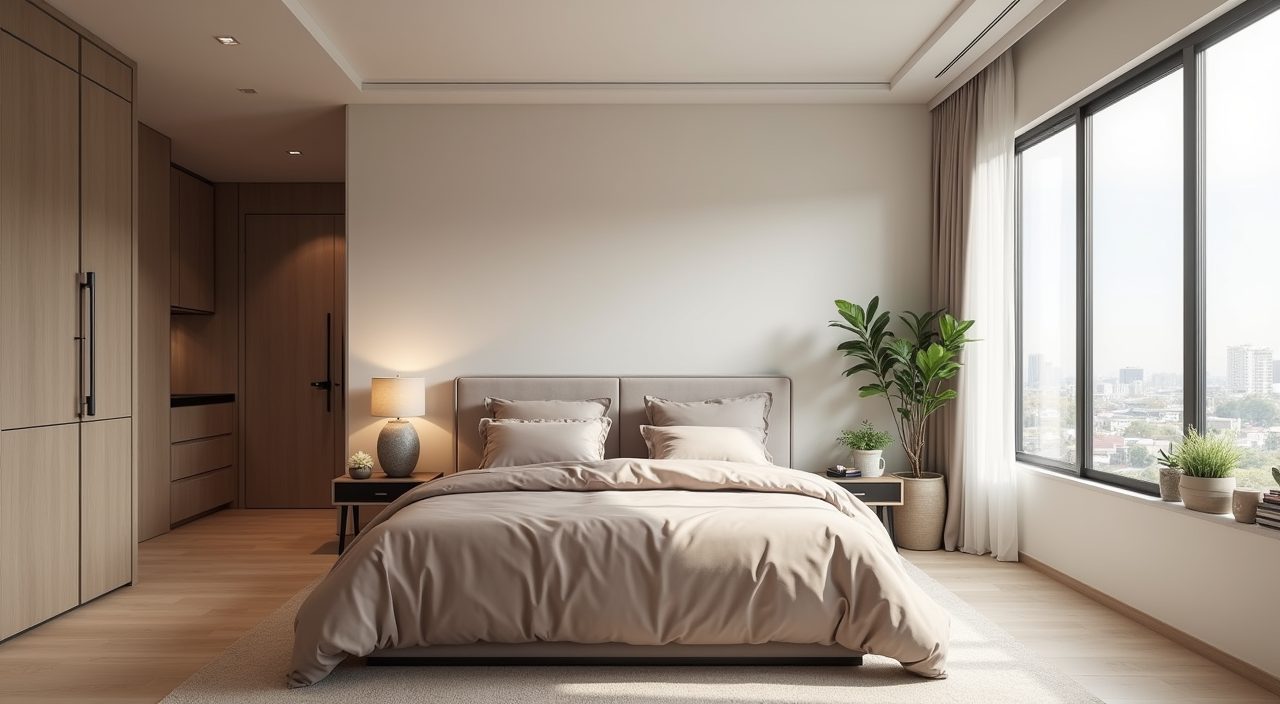
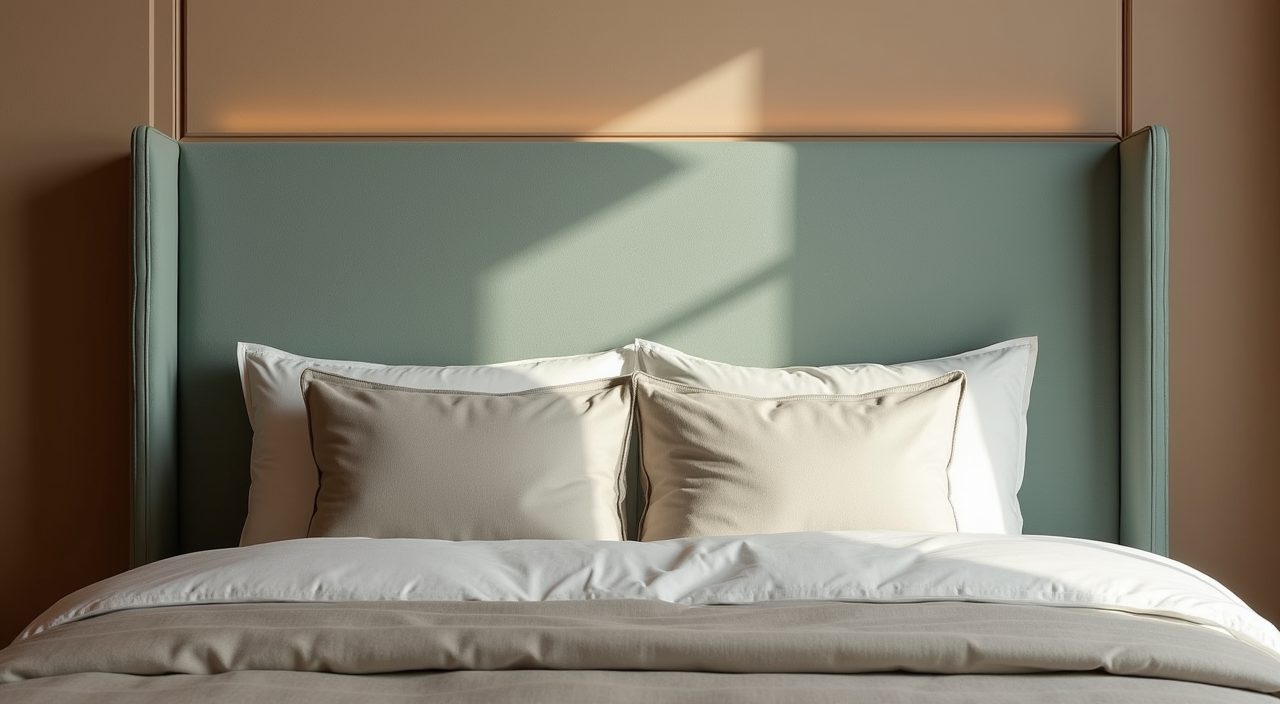
Singapore daylight is bright and slightly cool, so a warm-neutral base keeps the room from feeling clinical. Off-white, greige, soft taupe and warm grey on the walls bounce light around a small space and make low ceilings feel higher. Save any bold colour for one feature: a headboard wall, the curtains, or bedding you can swap cheaply.
Avoid very dark feature walls on the window side, since they fight the natural light you actually want in a compact room. If you love a moody look, put the darker tone on the wall behind the bed where you are not staring into glare, and keep the other three surfaces light.
- Safe base tones: warm white, greige, mushroom, muted sage.
- One accent only: headboard wall, curtains, or artwork.
- Matte or eggshell paint hides wall imperfections common in older resale units.
Build full-height wardrobes to reclaim the small footprint
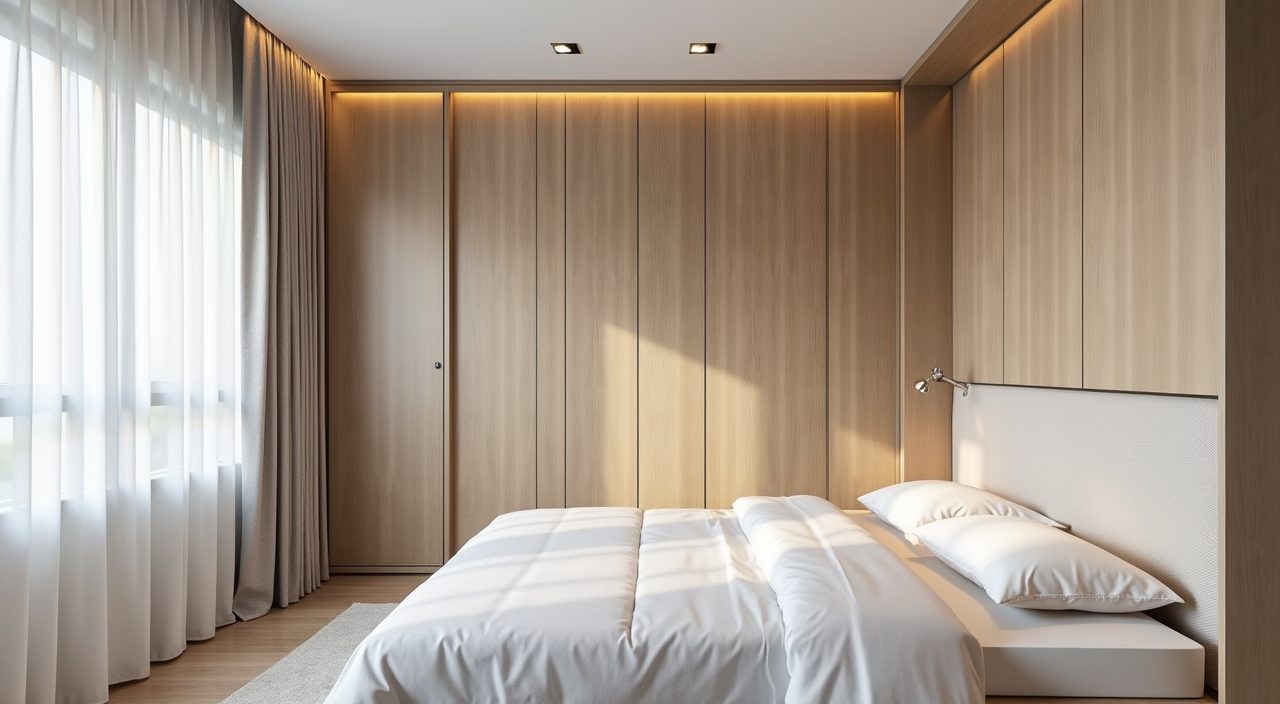
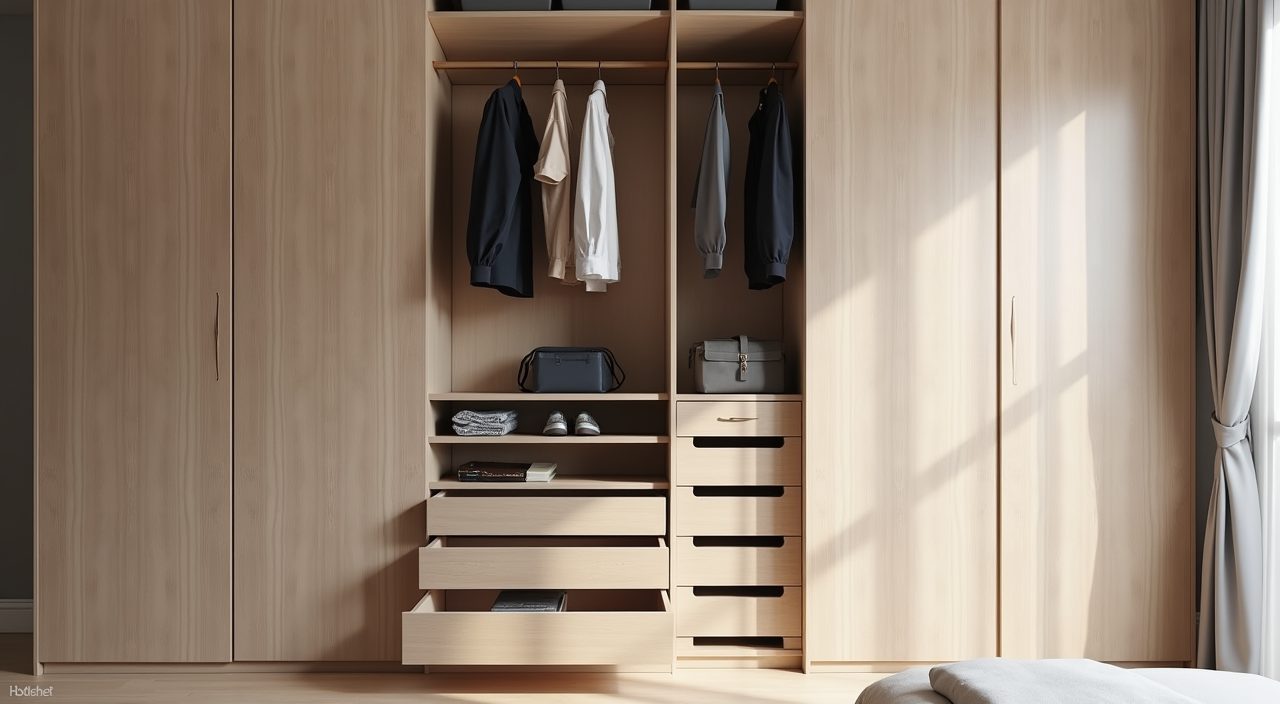
Storage is the single biggest win in a resale master bedroom. A carpentry wardrobe that runs floor to ceiling uses the vertical space a freestanding cupboard wastes, and the top section is perfect for luggage and seasonal bedding. Sliding doors suit tight rooms because they do not swing into the walking path, though hinged doors give you slightly better access and cost less.
In many resale flats the existing built-in is dated laminate that still functions. If the carcass is sound, budget for a door and internal reorganisation refresh rather than a full tear-out. That keeps cost down and cuts debris and hacking work.
Choose humidity-smart finishes, not just pretty ones
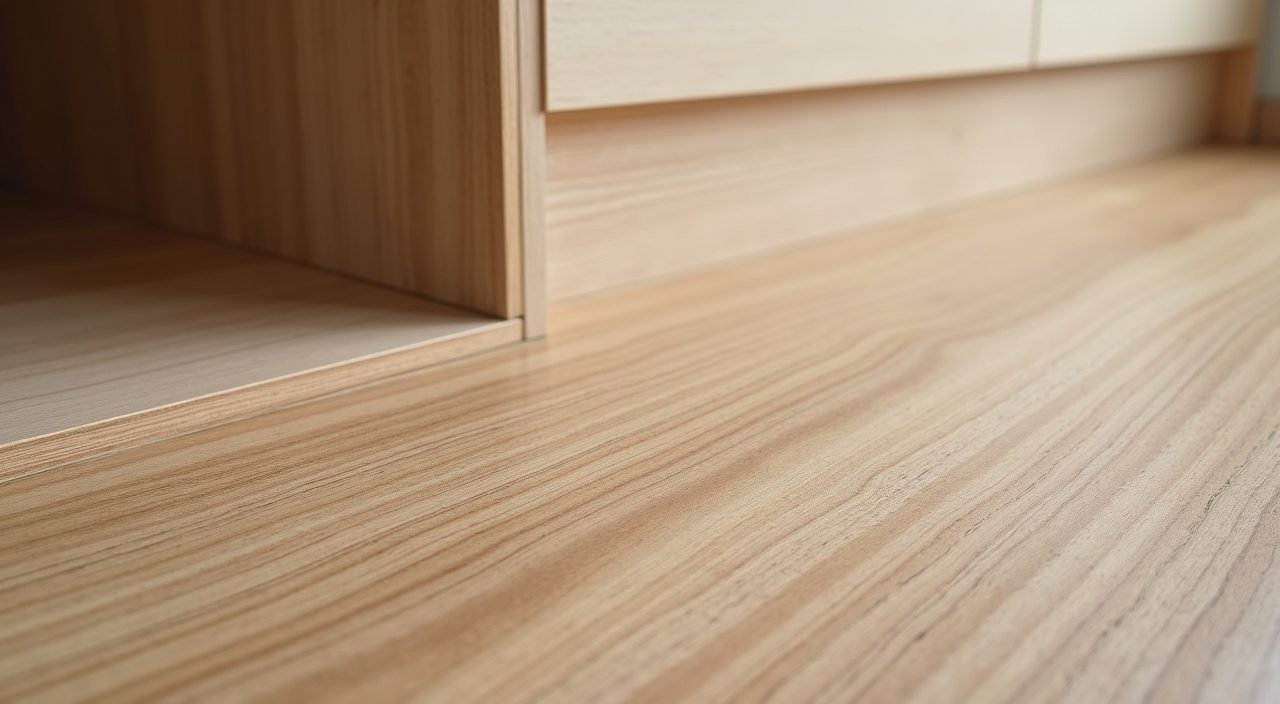
Singapore humidity sits high most of the year, and a bedroom that gets little airflow can grow mould behind furniture and along skirtings. Favour moisture-resistant laminates, HDF or plywood carcasses over cheap particleboard, and leave a small ventilation gap behind wardrobes on external or bathroom-adjacent walls. Anti-mould paint on those shared walls is a cheap insurance policy.
For flooring, vinyl and laminate are the practical resale-flat choices: warmer underfoot than tile, quiet, and easy to lay over the existing screed. If the original homogeneous tiles are in good shape, keeping them saves a lot of money and mess. Overlay only if the level and condition genuinely warrant it.
Layer your lighting instead of relying on one ceiling fixture
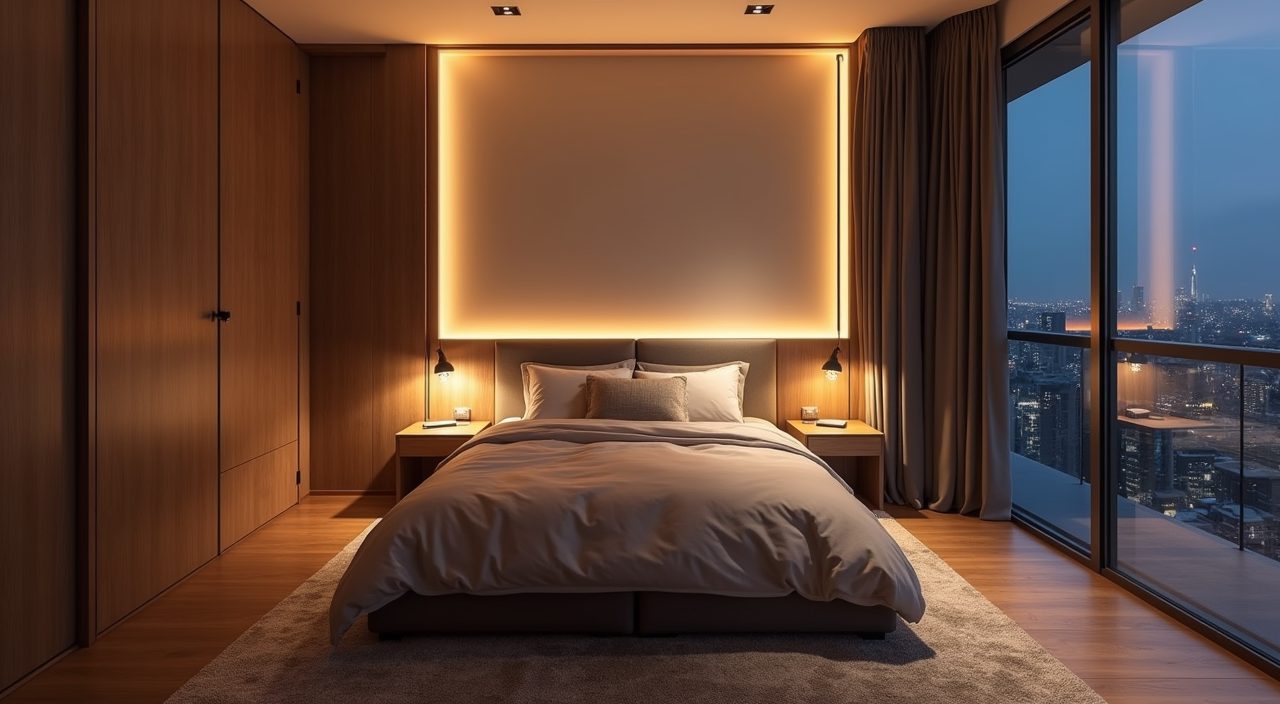
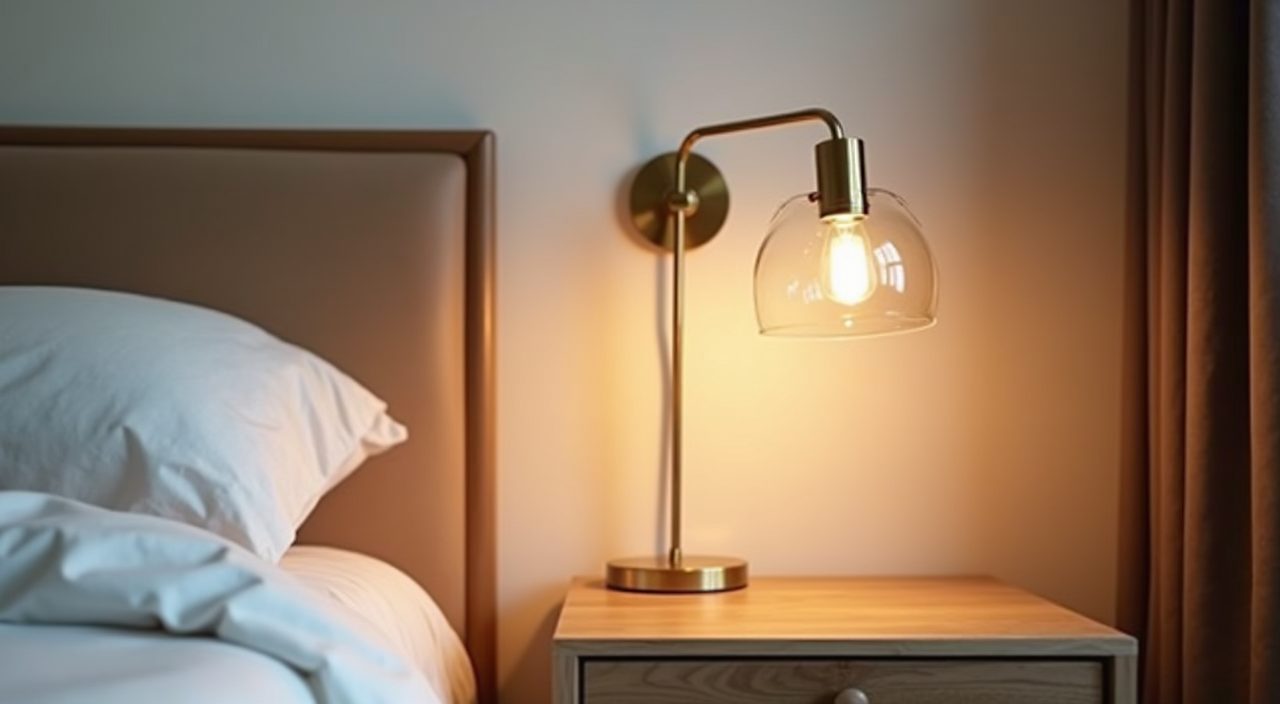
One bright ceiling light flattens a room and casts harsh shadows. Layer three sources instead: ambient (recessed downlights or a slim surface light), task (bedside reading lights or wall-mounted swing arms that free up the side table), and accent (a warm LED strip in a cove or behind the headboard). Aim for warm white in the 2700K to 3000K range so the room reads restful at night.
Wall-mounted bedside lights and pendant drops are a smart move in a tight resale bedroom because they clear the surface of the side table and give you a hotel feel. This is electrical work, so plan the wiring and switch positions before any carpentry or false ceiling goes up.
- Ambient: recessed or slim surface light on the main circuit.
- Task: bedside reading lights, ideally wall mounted.
- Accent: warm LED cove or headboard strip on a separate switch.
- Add a two-way switch by the door and the bed so you are not crossing a dark room.
Plan the layout around the bed, the walkway and the door swing
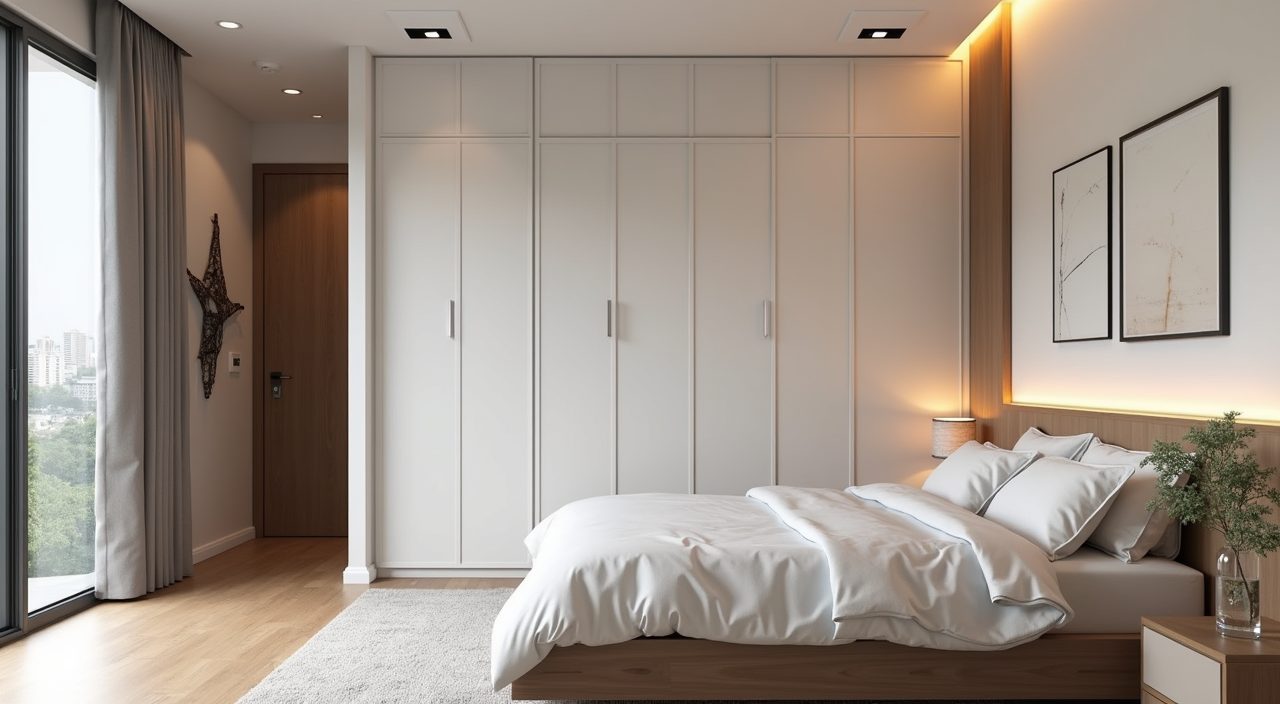
In a 10 to 14 sqm room the bed dictates everything. Place it against the wall furthest from the door so the entrance feels open, and keep at least a 60cm walkway on the side you get in and out of. A queen bed fits most resale masters comfortably; a king often eats the walkway and blocks the wardrobe, so measure before you commit.
Watch the door swing, the window position and any attached bathroom entrance. If a beam or the bathroom door forces an awkward bed position, a low platform or a slim headboard with side ledges can reclaim the space a bulky bedframe and separate nightstands would lose.
Use mirrors and glass to stretch a compact room
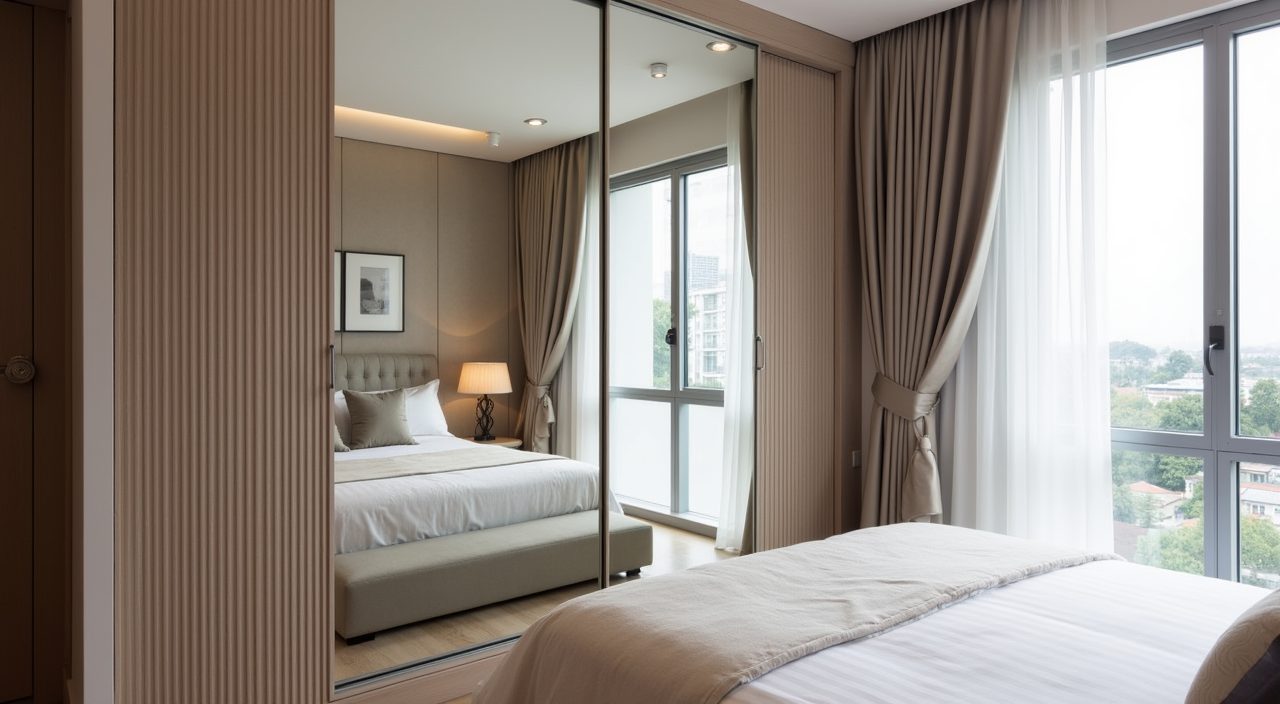
A large mirror on a wardrobe door or a full-height panel opposite the window doubles the perceived light and depth, which is exactly what a small resale bedroom needs. Position it to reflect the window or a light wall, not the doorway to a cluttered corridor. Fluted or reeded glass on a wardrobe front adds texture while still bouncing light.
Keep the reflective surfaces intentional. Too many mirrored panels start to feel like a gym, so one considered large mirror usually beats several small ones.
Dress the windows for heat, glare and privacy
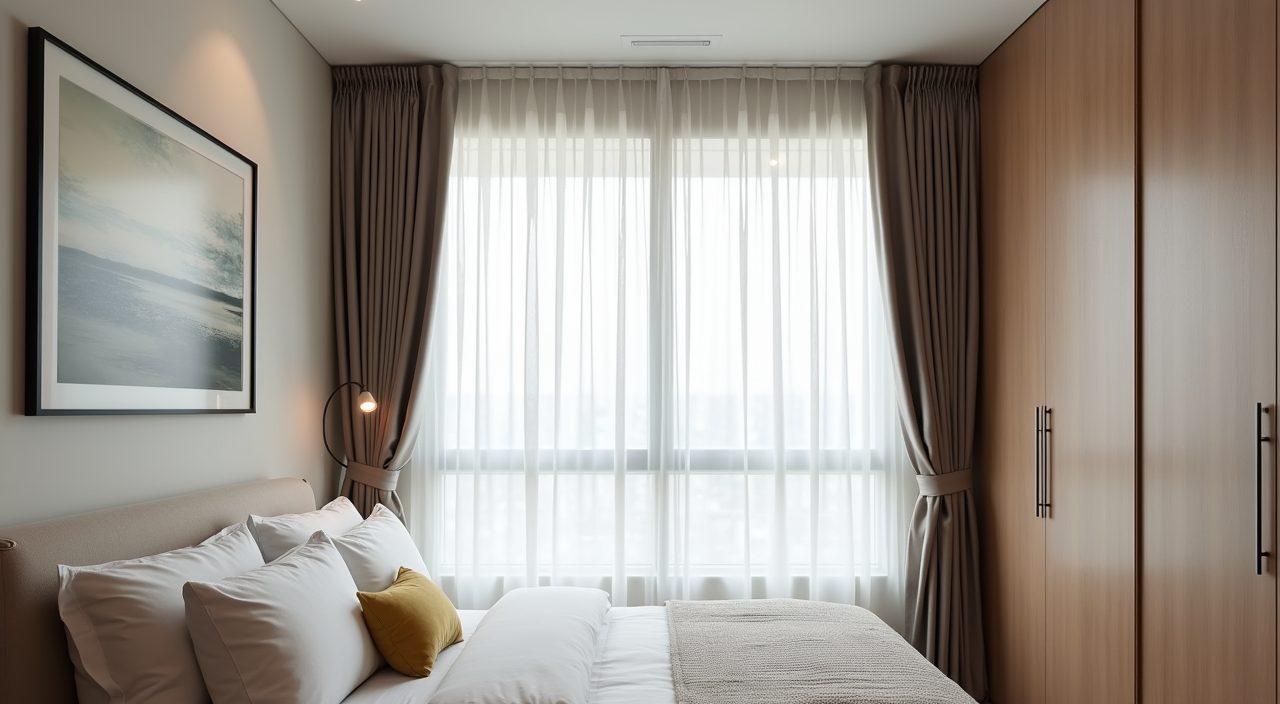
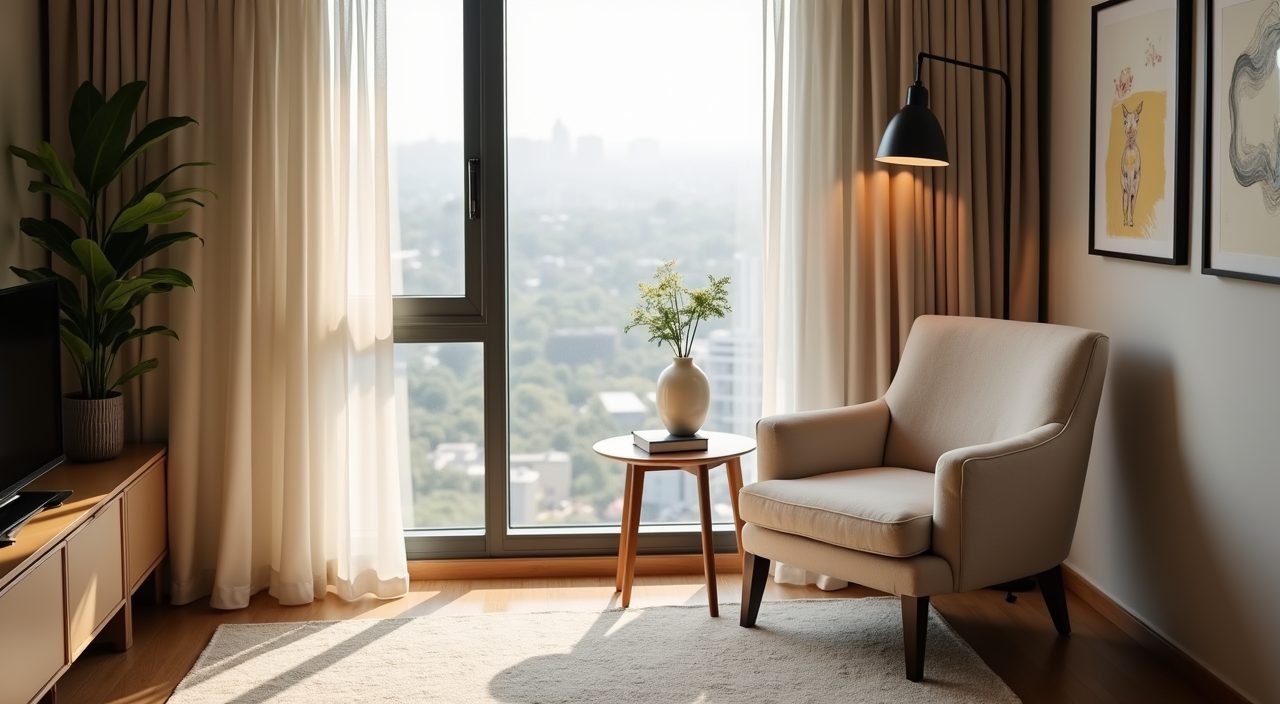
Resale flat bedrooms often face another block or an internal corridor, so privacy and afternoon heat both matter. Day-and-night blinds or a layered setup of a sheer plus a blockout curtain give you flexibility: sheers for soft daytime light, blockout for sleep and to cut heat gain on a west-facing window. Blockout linings also help the room stay cooler and reduce aircon load.
Mount the curtain track close to the ceiling and let the fabric run to the floor. That single trick makes a low HDB ceiling read taller and a narrow window look more generous.
Add a small dressing or work nook if the space allows
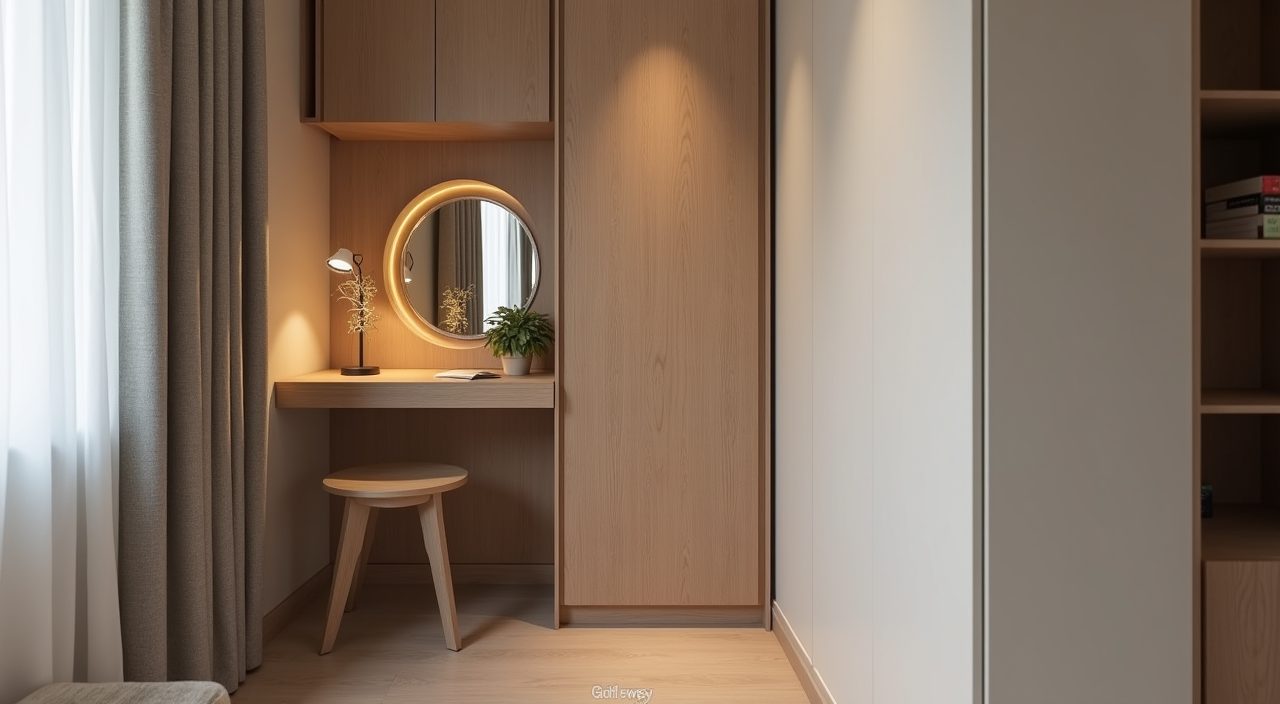
Many homeowners want a corner to get ready or to work. A slim wall-mounted vanity counter with a mirror and a stool tucks into a 60 to 80cm gap beside the wardrobe and doubles as a desk. Keep it shallow so it does not intrude on the walkway, and run a power point plus good task light to it while the electrician is already on site.
If the room is genuinely tight, skip the standalone furniture and integrate the nook into the wardrobe carpentry: an open niche with a counter and a mirror costs little extra when the joinery is already being built.
What to plan and budget for
The big cost drivers in a resale master bedroom are carpentry (the wardrobe and any platform or vanity), electrical rewiring for new light points and switches, painting, and window treatments. As rough guidance, budget for full-height wardrobe carpentry as your largest line item, with lighting and electrical, flooring, and curtains following behind. Reusing a sound existing wardrobe carcass, keeping good original flooring, and limiting hacking are the three easiest ways to control the number. Resale flats also carry age-related surprises like old wiring, uneven walls or a tired false ceiling, so leave a contingency of around 10 to 15 percent. When you are ready to move from design ideas to an actual resale flat master bedroom design ideas renovation, get a contractor to survey the room, confirm what can be reused, and price the carpentry, electrical and finishing as one coordinated scope so nothing falls between trades.
Frequently asked questions
How big is a typical HDB resale master bedroom? Most master bedrooms in 4-room and 5-room resale flats run roughly 10 to 14 sqm, usually enough for a queen bed, a full-height wardrobe and a slim walkway. Measure your exact room before buying a bed, since a king often blocks the wardrobe or walkway.
Should I keep or replace the existing built-in wardrobe? If the carcass is structurally sound and free of mould or water damage, refreshing the doors and internals is far cheaper than a full tear-out and cuts debris and hacking. Replace it only if the box itself is warped, swollen or unusable.
How do I stop mould in a Singapore bedroom wardrobe? Use moisture-resistant materials, leave a small ventilation gap behind wardrobes on external or bathroom-adjacent walls, apply anti-mould paint to shared walls, and run the aircon or a fan periodically so air is not trapped. Silica or dehumidifier boxes inside the wardrobe help with clothes.
Do I need an electrician for new bedroom lighting? Yes. Adding downlights, cove lighting, wall-mounted bedside lights or new switch positions is electrical work that should be wired and tested before carpentry and any false ceiling go up. Planning it early avoids exposed trunking and re-work later.